
How to Spot and Take Advantage of Soft Betting Lines
Soft betting lines are mispriced odds that give bettors a statistical edge over the sportsbook. They appear when a bookmaker’s line doesn’t accurately reflect the true probability of an outcome, whether due to public bias, delayed injury news, or gaps in market efficiency. For bettors who can recognize and act on them quickly, soft lines represent some of the most reliable value in sports betting.
Unlike sharp lines, which are refined by algorithms and professional action until they’re nearly impossible to beat, soft lines are the cracks in the armor. They show up across every major sport and betting market, but they close fast. Speed, research, and discipline are the three things that separate bettors who profit from soft lines and those who never even notice them.
This guide breaks down exactly how to spot soft betting lines, why they exist, and the proven strategies you can use to turn them into consistent profit, whether you’re placing $20 bets or building a serious bankroll.
What Are Soft Sports Betting Lines?
A soft betting line is an odds price that doesn’t accurately reflect the real probability of an outcome. In practical terms, it’s a sportsbook’s blind spot, a bet where the posted number is off enough to give the bettor a mathematical advantage. Exploiting these mispricings consistently is one of the core skills that separates profitable bettors from recreational ones.
A soft line is a bet that is mispriced due to factors like bookmaker errors, public bias, or inefficiency in less popular markets. Think of it as a pricing glitch in the betting world. Sharp lines, by contrast, are the “correct” odds shaped by algorithms and professional action, and they’re nearly impossible to beat.
Soft lines appear in every sport, but they look different depending on the market. Here are examples across the most popular leagues:
- NFL: A public team like the Kansas City Chiefs has inflated odds (-350) against a lesser-known but statistically strong opponent because of fan bias.
- NBA: A star player’s injury goes unnoticed by casual bettors, leaving a soft line on the opposing team’s moneyline.
- Soccer: A Champions League underdog with strong defensive stats gets undervalued because the sportsbook overweighs recent losses.
- MLB: A star pitcher’s last-minute scratch due to illness isn’t widely reported, leaving a soft line on the opposing team’s run total.
- NHL: A backup goalie starts unexpectedly, but the sportsbook delays updating the odds. The underdog’s puck line (+1.5) becomes a steal for bettors tracking lineup changes.
- Tennis: A top-10 player withdraws from a tournament, but casual bettors keep backing pre-tournament futures while the sportsbook delays adjusting odds.
- College Football/Basketball: Public bias toward ranked teams creates inflated spreads. A #5-ranked team might be favored by -12.5 against a defensive-minded mid-major, even though their last five wins were by single digits.
- MMA/Boxing: A hyped fighter’s odds stay overly favorable despite a stylistic mismatch. Casual bettors chase name recognition while sharps exploit the soft line on the underdog.
Why Do Soft Lines Exist?
Soft lines aren’t random. They emerge from predictable gaps in the betting ecosystem, and understanding what causes them is the first step toward anticipating where they’ll appear next. Four main factors drive the vast majority of soft lines across all sports.
Public Perception
Betting apps will often inflate odds for popular teams or star players to attract casual bettors, even when the math doesn’t justify it. The Los Angeles Lakers, for instance, opened as -180 favorites against the Denver Nuggets despite missing two starters. The odds stayed artificially high because of public hype, which created a soft line on Denver’s +150 moneyline. Sharps pounced, and the Nuggets won 112-105, demonstrating how fan sentiment can skew lines away from reality.
Bookmaker Errors
Bookmakers are human, and rushed adjustments or outright oversights can cause glaring mispricings, especially in fast-moving markets. When a rising UFC star replaced an injured main-event fighter on 24 hours’ notice, most sportsbooks kept his odds at +220 despite his 12-0 record. Bettors who acted early cashed in when he won via first-round KO, illustrating how operational errors create fleeting soft lines.
Market Timing
Opening lines are almost always softer than closing lines because sharps and algorithms haven’t had time to refine them yet. In a College Football Playoff opener, the University of Miami opened as -7.5 favorites over Florida State based on outdated preseason rankings, ignoring FSU’s dominant defense. Sharps hammered FSU +7.5 within minutes, moving the line to -3.5 and leaving casual bettors stuck with worse odds. Acting fast on early lines is one of the most reliable ways to lock in value.
Less Popular Markets
Niche sports lack the data and betting volume needed to maintain efficient odds. During an Australian Football League (AFL) Grand Final, sportsbooks undervalued the Western Bulldogs’ defensive stats, listing them as +180 underdogs against Collingwood. Smart AFL bettors recognized the mismatch, and the Bulldogs won outright 89-76. Lower liquidity and less analytical coverage make soft lines far more common in these markets.
The best time to find soft lines is within the first 30 minutes of a line opening, during breaking injury news, and in niche sports where sportsbooks invest fewer resources. Set up alerts and follow beat reporters to stay ahead of the market.
How to Identify Soft Sports Betting Lines
Spotting soft lines takes a mix of the right tools, thorough research, and a willingness to dig deeper than the average bettor. These six proven methods will help you uncover mispriced odds across any sport or market.
1. Compare Odds Across Multiple Sportsbooks
Sportsbooks don’t always agree on odds, especially in fast-moving or niche markets. By tracking discrepancies between books, you can pinpoint soft lines before they’re corrected. In Week 2 of an NFL season, the Kansas City Chiefs opened as -7.5 favorites against the Houston Texans at DraftKings, but FanDuel posted them at -6.5 due to a delayed injury update. Bettors who line-shopped and took Chiefs -6.5 at FanDuel cashed in when Kansas City won by 10.
- Actionable Step: Use tools like OddsChecker or OddsJam to compare live odds across 20+ sportsbooks. Focus on spreads, moneylines, and totals where differences exceed 1.5 points or +20 cents in value.
2. Monitor Line Movements
Sharp bettors move lines fast. If a line shifts dramatically within minutes of opening, it usually means a soft line is being exploited. During an NBA Playoffs game, the Boston Celtics opened as -4.5 favorites against the New York Knicks. Within an hour, the line jumped to -7.5 after sharps pounded Boston due to an undisclosed Knicks injury. Bettors who tracked the movement early locked in Celtics -4.5 before the correction.
- Actionable Step: Set up alerts on platforms like Action Network or Sports Insights to get notified of sudden line shifts. Look for “steam moves” (rapid, one-directional betting) as a signal that sharps have found value.
3. Leverage Betting Models
Betting models calculate the “true” probability of an outcome using stats like expected goals (xG), defensive efficiency, or pace of play. When sportsbook odds deviate significantly from your projections, you’ve found a soft line. An MLB model flagged the San Diego Padres as +140 underdogs against the Dodgers despite their pitcher’s elite ground-ball rate against L.A.’s power hitters. The Padres won 4-1, rewarding model-driven bettors.
- Actionable Step: Subscribe to a model (e.g., TeamRankings or Bet Labs) and bet when the sportsbook’s implied probability is 5-10% off your calculation.
4. Stay Updated on News and Injuries
Sportsbooks can’t always react to breaking news instantly. Following beat reporters, team social media, and injury trackers lets you catch soft lines before adjustments happen. When tennis star Iga Swiatek withdrew from the Miami Open 30 minutes before her match due to illness, some books kept her odds at -250. Bettors who saw the news first pounced on her opponent’s +350 line and cashed in.
- Actionable Step: Use real-time apps like Underdog NBA (for injuries) or FlashScore (for live updates) to stay ahead of the market.
5. Focus on Niche Markets
Soft lines thrive in less popular leagues where sportsbooks invest fewer resources. In a Canadian Football League (CFL) game, the Ottawa Redblacks opened as +7.5 underdogs against the Winnipeg Blue Bombers. Few books accounted for Winnipeg’s starting QB being sidelined with food poisoning, creating a soft line that sharp CFL bettors exploited for a 24-20 Ottawa upset.
- Actionable Step: Master one niche sport (e.g., Korean baseball, NCAA volleyball, AFL) where you can spot inefficiencies that the general market overlooks.
6. Use Sports Analytics Websites
Advanced stats expose mismatches that oddsmakers overlook. During an NHL season, analytics site MoneyPuck highlighted a team’s league-worst penalty kill (68%) against an opponent’s top-ranked power play (32%). Despite this mismatch, sportsbooks priced the team total at only 3.5 goals (-110). Bettors who referenced the data took the over and cashed in on a 5-2 result.
- Actionable Step: Bookmark sites like FBref (soccer), StatMuse (NBA/NFL), and FanGraphs (MLB) to uncover hidden trends and statistical mismatches.
Soft Line Scenarios by Sport
Soft lines look different in each sport because each market has unique triggers, from pitching changes in baseball to backup goalies in hockey. The table below shows common soft line scenarios, what causes them, and how quickly they typically close across three major leagues.
| Scenario | NFL | NBA | MLB |
|---|---|---|---|
| Common Trigger | Public bias on big-market teams | Late injury scratches (load management) | Starting pitcher changes |
| Example Soft Line | Chiefs -9.5 (inflated by 2-3 pts from public money) | Celtics -6.5 before star injury announced | Team total Over 4.5 after ace scratched |
| Typical Window | 15-60 minutes after open | 5-30 minutes after news breaks | 10-45 minutes after lineup card |
| Best Detection Method | Public betting % trackers | Beat reporter Twitter/X feeds | Lineup trackers (Rotowire, Lineups.com) |
| Typical Edge | 1.5-3 points on spread | 3-5 points on spread | 15-30 cents on moneyline |
Strategies to Take Advantage of Soft Lines
Finding soft lines is only half the equation. Executing the right strategy is what turns insight into actual profit. These six tactics, backed by real-world examples, cover everything from timing your bets to managing your bankroll when exploiting mispriced odds.
Timing Is Everything
Soft lines vanish fast. Betting early, especially when lines first open, lets you lock in value before sharps or algorithms correct the price. In an NCAA March Madness tournament, Duke opened as -8.5 favorites against UConn based on outdated defensive metrics. Sharp bettors noticed UConn’s top-10 adjusted defensive efficiency and hammered +8.5 within minutes. The line shifted to -5.5 two hours later, but early bettors secured the better number.
- Actionable Step: Set alerts for line releases on platforms like Action Network and prioritize bets within the first 15-30 minutes after odds go live.
Line Shopping
Sportsbooks don’t adjust lines at the same speed. Comparing odds across several platforms reveals hidden value that single-book bettors miss entirely. During a Wimbledon men’s final, Carlos Alcaraz opened at -150 on BetMGM but -130 on FanDuel due to a delayed adjustment for a minor ankle injury. Bettors who shopped and took Alcaraz -130 at FanDuel saved 20 cents in vig and cashed when he won in straight sets.
- Actionable Step: Use odds aggregators like OddsJam to scan 20+ books in real time. Focus on discrepancies of 10-20 cents or 1-2 points in spreads and totals.
Maintaining accounts at 3-5 sportsbooks is the minimum for effective line shopping. The more books you have access to, the more often you’ll find meaningful price differences. Even a half-point difference on a spread can be the margin between a push and a win.
Specialize in One Market
Deep expertise in a niche sport or league lets you identify soft lines that generalist bettors and even sportsbooks miss. In the Japanese NPB (baseball) season, the Hanshin Tigers were listed as +120 underdogs against the Yomiuri Giants. NPB specialists knew the Tigers’ ace had a 1.98 ERA in night games, while oddsmakers overlooked the split. Hanshin won 3-1, rewarding the most knowledgeable bettors.
- Actionable Step: Pick a less-covered league (e.g., Australian NBL basketball, CFL, Korean baseball) and follow beat reporters and local analytics sites for an edge.
Bankroll Management
Every bet carries risk, and soft lines are no exception. Proper staking ensures you survive losing streaks and compound your wins over time. A bettor who identified a soft line on the WNBA MVP race allocated 2% of their bankroll to A’ja Wilson at +400. When Wilson won, the profit funded future soft-line bets without risking overexposure.
- Actionable Step: Use the Kelly Criterion or flat 1-3% stakes per bet. Never chase losses with oversized wagers.
Monitor Public Betting Percentages
Soft lines often emerge when recreational bettors pile money on popular teams, inflating the odds beyond what the data supports. Fading the crowd in these situations can pay off consistently. In an NFL season opener, 85% of public money backed the Chiefs -9.5 against the Raiders. Sharps recognized the line was inflated by star-power hype and bet Raiders +9.5. Kansas City won 24-17, but Raiders backers cashed the spread.
- Actionable Step: Track public betting splits on Sports Insights or Pregame.com. Bet against teams with over 70% public support when the analytics disagree with the hype.
Target Prop Bets and Alternate Lines
Player props (strikeouts, passing yards, assists) and alternate spreads/totals are breeding grounds for soft lines because sportsbooks dedicate less staffing to pricing them. Ahead of the Masters, sportsbooks set Jon Rahm’s “Top 5 Finish” odds at +200, ignoring his recent dominance at Augusta. Prop specialists jumped on it, and Rahm placed 3rd, turning a $100 bet into $300.
- Actionable Step: Use props to exploit bookmakers’ limited staffing in niche markets. Track player and team trends (e.g., “Luka Doncic over 9.5 assists” in back-to-back games) for recurring edge opportunities.
Common Mistakes to Avoid
Soft lines can look like easy money, but even experienced bettors fall into traps that erode profits and strain bankrolls. These seven mistakes are born from real-world blunders, and avoiding them is just as important as finding the soft lines themselves.
Mistake 1: Overestimating Your Edge
Soft lines signal value, but they don’t guarantee wins. Betting too aggressively on perceived “locks” can drain your bankroll fast. In a UEFA Champions League quarterfinal, Manchester City opened as +120 underdogs against Bayern Munich due to a delayed update on Bayern’s injured goalkeeper. A bettor wagered 25% of their bankroll on City, but Bayern’s backup keeper delivered a career performance and City lost 2-1. The fix: quantify your edge using a model. If your win probability is 55%, bet 2-3% of your bankroll, not 25%.
Mistake 2: Ignoring Line Movement
Failing to track how odds shift means you’re often betting on corrected lines, not soft ones. During the Stanley Cup Playoffs, the Colorado Avalanche opened as -1.5 favorites (-110) against the Vancouver Canucks. Sharps hammered Canucks +1.5, moving the line to -1.0 within 20 minutes. A recreational bettor unaware of the shift took Avalanche -1.5 at -110 and lost when Colorado won 3-2 but failed to cover. Use tools like LineWatcher or Sportsbook Review to track line history, and if you miss the original soft line, wait for the next opportunity instead of chasing.
Mistake 3: Betting Without Context
A soft line might exist for reasons you haven’t considered, like unreported injuries or weather changes. In a PGA Championship, sportsbooks listed Rory McIlroy as a -140 favorite. Bettors pounced, unaware that McIlroy had tweaked his swing earlier that week, a detail buried in a European golf podcast. McIlroy missed the cut. Always ask: why is this line soft? If you can’t answer, don’t make the bet.
Never chase losses by forcing bets on soft lines in unfamiliar markets. After losing four straight NFL bets, a bettor forced a wager on a Turkish Basketball League soft line without understanding the team’s travel fatigue. They backed the wrong side and dug a deeper hole. Stick with the sports and leagues you know, and use a loss limit (e.g., stop after 3 consecutive losses).
Mistake 4: Overlooking Hidden Costs
Vig (sportsbook commission) and withdrawal fees can eat into your profits. A bettor who exploited 12 soft lines in one month, winning 8, saw a 22% gross ROI shrink to a 9% net gain after -110 vig on each bet and withdrawal fees. Negotiate reduced vig via VIP tiers at books like BetMGM or DraftKings, and use payment methods with low or zero transaction fees.
Mistake 5: Failing to Adapt to Market Changes
Strategies that worked last season might not work today. A bettor who relied on an outdated model for NBA player props was unaware that rule changes had increased scoring league-wide. They consistently bet unders on points totals and lost as players shattered expectations. Regularly update your models and betting strategies to reflect rule changes, player trends, and market shifts.
Mistake 6: Ignoring Bankroll Psychology
Even a winning strategy can be sabotaged by emotional decision-making. A bettor identified a soft line on a Kentucky Derby longshot and wagered 10% of their bankroll. When the horse lost, they doubled down on another soft line in frustration, ignoring their usual 2% stake. The second bet also lost, wiping out weeks of progress. Use pre-set staking plans (flat 1-2% per bet) to remove emotion from the equation, and take breaks after losses to reset mentally.
Putting It All Together
Soft betting lines are a real opportunity to outsmart the sportsbook by finding odds that don’t reflect the true probability of an outcome. When you learn to spot and exploit mispriced odds consistently, you can build a sustainable edge over time. But soft lines aren’t a free pass to guaranteed profit. Success requires discipline, research, and the right tools.
Here’s a quick recap of the core strategies for identifying and exploiting soft sports betting lines:
- Compare odds across multiple sportsbooks to find discrepancies before they’re corrected.
- Monitor line movements to identify sharp action and lock in value early.
- Leverage betting models to calculate true probabilities and identify mispriced lines.
- Stay updated on news and injuries to catch soft lines before adjustments.
- Specialize in niche markets where inefficiencies are more common.
- Use advanced analytics to uncover hidden trends and mismatches.
Start small. Track lines, compare odds, and test your strategies in low-stakes markets. As you build experience, you’ll find that soft lines aren’t just one-offs; they’re a regular path to long-term profit. For more ways to sharpen your approach, explore our sports betting guide and guide to understanding odds and lines.
Play Safe: Gambling should be fun, not stressful. Set limits, stick to your budget, and never chase losses. If you or someone you know has a gambling problem, call 1-800-522-4700 or visit ncpgambling.org. For more resources, see our Responsible Gambling page.
What is a soft betting line?
A soft betting line is an odds price that doesn’t accurately reflect the true probability of an outcome. These mispricings occur due to bookmaker errors, public bias toward popular teams, delayed reactions to breaking news, or limited data in niche markets. Soft lines give bettors a statistical edge when identified and acted on quickly.
How do soft lines differ from sharp lines?
Sharp lines are odds that have been refined by algorithms, professional bettors, and high betting volume until they closely match the true probability of an outcome. Soft lines, by contrast, haven’t been corrected yet and contain pricing errors that skilled bettors can exploit. Sharp lines are nearly impossible to beat consistently, while soft lines offer genuine value.
What causes soft betting lines to appear?
Four main factors create soft lines: public perception (casual bettors inflating odds on popular teams), bookmaker errors (rushed or delayed adjustments), market timing (opening lines before sharps refine them), and niche market inefficiency (less data and lower betting volume in smaller leagues and sports).
How quickly do soft betting lines close?
Soft lines typically close within 15 to 60 minutes, depending on the sport and the cause. NFL lines driven by public bias may stay soft for up to an hour after opening, while NBA lines affected by late injury news can close in as few as 5 minutes once sharp bettors and algorithms react. Acting within the first 30 minutes gives you the best chance of capturing value.
Can beginners profit from soft betting lines?
Yes, beginners can profit from soft lines by starting with the fundamentals: comparing odds across multiple sportsbooks, following injury news closely, and specializing in one sport or league. The key is proper bankroll management (betting 1-3% of your bankroll per wager) and patience. Start with low-stakes bets to practice identifying soft lines before increasing your wager sizes.
What tools help identify soft betting lines?
The most useful tools include odds comparison platforms like OddsJam and OddsChecker, line movement trackers like Action Network and Sports Insights, analytics sites like FanGraphs (MLB), StatMuse (NBA/NFL), and MoneyPuck (NHL), and real-time injury trackers like FlashScore and Underdog Network. Betting models from services like TeamRankings and Bet Labs can also flag mispriced lines automatically.
Can Automated Betting Bots Outperform Human Gamblers?
Casinos are crackling with a whole different kind of energy, and it’s not emanating from the human gamblers. There’s a new breed of player trying to stake its claim, and it’s one that calculates odds in milliseconds and never looks at the clock.
What or who on earth are we talking about? Automated betting bots. That’s right, bots. And they are armed with algorithms that are sharper than a card shark’s intuition on their best day. They can stalk poker tables and sportsbooks, taking apart games into binary decisions: bet or fold, raise or retreat. These are no ordinary gamblers; they’re probability assassins, and they are built to exploit statistical edges humans might miss.
But can machines, for all their precision, replicate the audacity of a bluff that’s pulled out of thin air—or the desperation of a Hail Mary parlay?
Betting bots are software engineered to turn gambling into a science. They analyze historical data, see biases in real-time (like a roulette wheel’s imperceptible tilt), and execute bets with emotionless efficiency. The one thing that they lack? The human touch that can read a rival’s twitch or sense a dealer’s tells.
Could gambling become a battle between man and machine? Is it logic vs. instinct or code vs. creativity? We are going to get scientific and compare the strengths and weaknesses of betting bots and human gamblers to see who (or what) has the upper hand!
What Are Automated Betting Bots?

What exactly are betting bots? Like we said above, they are sophisticated software that is designed to act just like tireless, logic-driven gamblers—processing data, calculating risks, and executing bets with mathematical precision. Unlike human players, these bots don’t need to rely on intuition or luck; they change gambling into a numbers game, and it’s all governed by algorithms and probabilities.
Here is how these automated betting bots get things done:
- Algorithms: Predefined rules or adaptive machine learning models dictate all of their decisions. For instance, a bot can analyze decades of football match data to predict scoring trends.
- Historical Data: Bots identify patterns in past outcomes, like a blackjack dealer’s shuffling bias or any recurring inefficiencies in sportsbook odds.
- Real-Time Analytics: Live game stats, odds fluctuations, and even breaking news (e.g., player injuries) can inform split-second betting choices.
And the following are the most common types of betting bots:
-
- Scan multiple betting platforms to find discrepancies in odds (e.g., a tennis player priced at 1.90 on Site A vs. 2.10 on Site B).
- Place opposing bets to guarantee a profit, regardless of the outcome.
-
- Calculate “value” by comparing bookmaker odds to true probabilistic outcomes.
- Bet aggressively when odds undervalue an event’s likelihood (e.g., a 40% chance priced as 30%).
-
- These automatically leverage any and all promotional offers (e.g., free bets) across bookmakers.
- Neutralize risk by covering all possible results via strategic lay bets.
-
- Use regression models to forecast game results based on variables like team form, weather, or venue history.
-
- Adapt predictions in real-time during live matches.
Bots do excel at exploiting statistical edges, but they are missing the human capacity to adapt to unquantifiable factors—like a star athlete’s off-field drama or the psychological tension at a high-stakes poker table. The war isn’t only man vs. machine; it’s also calculation vs. context.
How Betting Bots Work
Betting bots are super sophisticated systems that are built to transform raw data into profit. They are working like invisible croupiers, scanning tables, crunching numbers, and placing bets and human players are basically unaware that it’s happening. Below, we unpack all of their mechanics—and why they’re upending certain parts of the gambling rulebook.
Data Analysis & Machine Learning
Bots literally exist to get information, so they devour historical results, player stats, and real-time variables like weather or live game momentum. The machine learning models then step in to refine strategies autonomously.

- A sports bot might learn that Team X’s scoring drops by 20% in rainy conditions.
- A poker bot will adapt its bluff frequency based on opponents’ fold rates.
- Casino bots analyze thousands of roulette spins to detect if there are any wheel biases.
Real-Time Odds Monitoring
Speed is the bot’s ultimate weapon—they track odds across hundreds of bookmakers and exchanges, and are able to spot any discrepancies in milliseconds.

- Arbitrage bots compare prices on Site A (odds: 1.90) and Site B (odds: 2.10) to lock in risk-free profit.
- Value bots flag undervalued outcomes, like a 40% probability event priced at 30%.
Automated Bet Placement
Once an edge is identified, bots execute bets instantly—no hesitation and no typos.
- APIs connect directly to betting platforms for seamless transactions.
- Browser automation tools mimic human clicks to place bets on sites without API access.
Speed & Efficiency: The Bot’s Edge
- Human gamblers blink; bots capitalize.
- Odds shift? Bots adapt bets mid-refresh.
- A casino dealer pauses. Bots recalibrate.
- A sports star gets injured mid-game? Bots hedge or exit before the news hits X (aka Twitter).
Real-World Bots
- BetBurger: Scans for arbitrage opportunities across 60+ bookmakers, and its specialty is in live sports.
- RebelBetting: Concentrates on value betting—it identifies mispriced odds in soccer, tennis, and basketball.
- PokerSnowie: Employs AI to teach GTO (game theory optimal) poker strategies and adapts to table dynamics.
- Gambot: Targets casino games using statistical models to exploit any blackjack and roulette biases.
Bots don’t just have the ability to outpace humans—they can outthink them, too. But while they dominate with speed and precision, they’ll never be able to mimic the thrill of a gut-driven all-in or the agony of a bad beat. So the question really isn’t if bots win. It’s how much they’ll change the game.
Comparing Betting Bots and Human Gamblers
The rivalry between automated betting bots and human gamblers is a collision of two worlds: one is governed by calculation. The other? Fueled by instinct and adaptability. Bots really excel in structured environments but humans do their best work in ambiguity. Below is how their strengths stack up when pitted against one another.
Betting Bots
Betting bots are precise without a pulse. They are well-ordered architects, as they are built to exploit mathematical edges with mechanical discipline.
- Lightning-Fast Execution: Bots scan thousands of data points—odds, trends, live scores—and place bets faster than a human refresh a browser. A fleeting arbitrage window? Captured in milliseconds.
- Emotionless Consistency: No tilt, no overconfidence. Bots follow strategies like a metronome—it doesn’t matter if the last hand was a win or a loss.
- Data Dominance: They analyze decades of sports results, casino game histories, or poker hand logs to uncover any patterns that humans might have missed over lifetimes.
- Nonstop Endurance: Bots work 24/7 and are immune to fatigue or distraction—they don’t even know what those things are.

Human Gamblers
Humans bring creativity and nuance to the casino table, which are traits that no algorithm, no matter how advanced, will ever be able to replicate fully.
- Intuitive Mastery: A poker pro is able to detect a bluff from a wobbly voice or a delayed bet. A sports bettor intuits shifts in team morale that stats ignore. Bots only see numbers; humans can read other humans.
- Adaptive Strategy: When game conditions change (e.g., a blackjack dealer alters shuffling tactics), humans adapt on the fly. Bots? They’re stuck in their programming until they get an update.
- Psychological Warfare: Humans manipulate opponents’ emotions—trapping tilt-prone players or bluffing with calculated theatrics. Bots can’t feign weakness or exploit desperation.
- Contextual Insight: Humans recognize when “hot streaks” are luck versus skill, or when a slot machine’s “near miss” is a programmed tease. Bots treat every single outcome as hard data.
Can Betting Bots Really Outperform Human Gamblers?
The debate isn’t about if bots can win—it’s about when, where, and how much. Automated systems have already proven their prowess in controlled environments, but gambling’s wildcard—the human element—will always tip scales in unpredictable ways. Let’s take a look at the evidence, expose the flaws, and find out which one actually outperforms the other in the gambling world!

Success Rates: Bots in the Wild
Bots do their best work in structured, data-rich environments. How? The real-world examples below show their potential—and where they come up short!
- Sports Arbitrage Bots: Platforms like RebelBetting report user returns of 5-10% monthly by exploiting odds discrepancies. But the profits are shrinking as bookmakers are cracking down on arbing.
- Poker Bots: In 2024, a study found that AI poker bots outperformed 90% of human players in heads-up matches. But they struggle in multi-table tournaments with more dynamic player pools.
- Casino Bots: A 2021 experiment showed a roulette bot getting a 12% edge by exploiting wheel biases over 10,000 spins. But today, almost every online gambling site uses RNGs (Random Number Generators) to neutralize these kinds of tactics.
- Crypto Betting Bots: During Bitcoin’s 2021 bull run, some bots yielded 300%+ returns by trading volatility. The rub? A single market crash could wipe out all gains.
Bots really excel in niches that have clear rules and abundant data. But their success all hinges on stable conditions, and that is a rare luxury in the chaotic gambling world.

Bot Limitations: The Cracks in the Code
Bots aren’t infallible—far from it, and what are their weaknesses? Well, they are glaring, as evidenced by the points listed below:
- Data Dependency: Bots crumble with poor or outdated data. For example, a Premier League bot trained on pre-COVID stats failed when matches moved to empty stadiums, altering team dynamics.
- “Garbage in, garbage out” applies brutally here.
- Predictability Blindspots: Bots can’t handle black swan events. When a star quarterback ruptured his Achilles mid-game in 2023, human bettors hedged instantly. Bots? They kept betting on the outdated trends.
- No Qualitative Analysis: A bot can’t factor in a poker player’s nasty divorce affecting their focus or an NBA team’s locker-room feud. Humans are able to use these sorts of intangibles to pivot their betting strategies.
- Detection Risks: Platforms like PokerStars and Bet365 deploy anti-bot algorithms. Get flagged, and you’re banned—profits confiscated.

Human Edge: Intuition Beats Algorithms
Human beings will always come out on top in any scenario that requires creativity, adaptability, and psychological insight:
- Live Poker Reads: Pros like Daniel Negreanu exploit “timing tells”—a hesitation before a raise signals weakness. Bots can’t replicate this nuance.
- In-Play Sports Adjustments: When a soccer match turns physical, human bettors shift to “yellow card” markets. Bots stick to pre-programmed strategies.
- Exploiting Tilt: A human might goad an emotional player into reckless bluffs. Bots lack this manipulative flair.
- Narrative Betting: The 2023 Super Bowl saw a surge in bets for underdog narratives (e.g., “Cinderella story” teams). Bots, which were laser-focused on stats, missed the wave.
Case Study: In 2019, a blackjack team exploited a dealer’s subconscious card-peeking habit—a tell only humans could spot. The bot-driven rivals, who relied only on card counting? They missed this edge entirely.
Strategy & Bankroll Management: The Great Equalizer
Whether bot or human, any long-term success all hinges on discipline and that means gambling smart and responsibly no matter if you’re a man or machine.

For Bots
- Risk Parameters: Set stop-loss limits to prevent catastrophic failures (e.g., a 5% daily loss cap).
- Diversification: Spread bets across markets to avoid overexposure. A sports bot might mix arbitrage, value, and matched betting.
- Adaptive Learning: Regularly update algorithms to counter detection or market shifts.

For Humans
- Emotional Control: Use tools like session timers or loss limits to combat tilt.
- Contextual Flexibility: Shift strategies based on game flow—tighten up against bots, loosen against recreational players.
- Bankroll Rules: Never risk more than 1-2% of your roll on a single bet, which is a lesson that poker feat Phil Ivey credits for his longevity.
The Final Tally
Here’s where the betting bots do their best work:
- Speed and data matter most (arbitrage, casino biases).
- Markets are stable and predictable (pre-match sports betting).
- Emotions are a liability (grinding poker cash games).

And the humans take home the win for the following:
- Unpredictability reigns (live poker, in-play sports).
- Psychological factors dominate (bluffing, exploiting tilt).
- Nuance always wins out over numbers (narrative-driven bets).
What does the future hold? It looks like it’ll be a hybrid approach. Pros like Doug Polk use bots to analyze hand histories and then apply human intuition to adjust their strategies. On platforms like Unikrn, people are using AI predictions mixed with crowd wisdom to make sharper odds.
Bots are only tools—they are in no way replacements. Yes, they can amplify edges but they can’t replicate the ingenuity that makes gambling such a human drama. The real winner will be those who wield both.
Ethical and Legal Considerations of Using Betting Bots
Automated betting bots are smack dab in the middle of innovation and controversy, and that will force players, platforms, and regulators to grapple with all of their implications. Sure, they bring unparalleled efficiency, but their use raises some really important questions about fairness, legality, and societal impact. Below, we take a clear-eyed look at all of the challenges that they pose.
Are Betting Bots Legal?
The legality of betting bots all depends on jurisdiction and platform policies, which means it comes down to where you live. Even then, it’s a confusing patchwork of compliance risks.
- United Kingdom: The UK Gambling Commission prohibits bots that in any way manipulate game outcomes. Platforms like Bet365 use AI to detect and ban automated accounts.
- United States: Nevada and New Jersey explicitly outlaw bots in licensed casinos, but unregulated offshore sites usually will tolerate them.
- European Union: Germany enforces strict bans, but Malta’s more lenient policies do attract operators that offer bot-compatible casino games.
- Asia: Countries like Japan and South Korea impose heavy penalties for bot use, but the underground markets persist.
What’s the biggest risk of all? Even in the regions that don’t have explicit laws, using bots usually violates a gambling site’s terms of service. Violators could face account closures, forfeited winnings, or even legal action.

Ethical Concerns
Betting bots disrupt gambling’s delicate balance between luck and skill, and that brings up the following ethical dilemmas.
- Unfair Competition: Bots exploit speed and data analysis to secure edges human players can’t match. For example, arbitrage bots lock in profits before casual bettors spot discrepancies.
- Erosion of Trust: Widespread bot use might push platforms to tighten their algorithms, reduce payouts, or limit promotions for all players.
- Targeting Vulnerabilities: Deploying bots in low-stakes games against recreational players undermines the social contract of gambling, which turns it into a predatory activity.
Danger of Misuse
Automation’s efficiency can backfire, and this only magnifies some of the hazards that are associated with gambling—both emotionally and financially.
- Unchecked Activity: Bots operate 24/7, bypassing human limits. One user reported losing $50,000 in days after a malfunctioning crypto bot placed endless high-risk trades.
- Emotional Detachment: Automated systems mask the psychological toll of losses, delaying intervention until financial ruin strikes.
- Security Vulnerabilities: Poorly designed bots expose users to hacking, identity theft, or exploitation by malicious actors.
- Platform Accountability: Gambling sites like Stake.com now flag accounts with bot-like behavior, but any enforcement is still pretty inconsistent.
Addressing all of the above challenges will require collaboration between the following:
- Regulators: Modernize laws to address automation-specific risks, such as mandating “breakers” that pause bots after significant losses.
- Platforms: Invest in detection tools (e.g., behavioral biometrics) and educate users on bot-related risks.
- Users: Audit bot strategies for ethical alignment. Ask yourself this: Does this tactic harm others? Would I use it manually?
Should You Use a Betting Bot?
Betting bots are dangling a shortcut to profit in front of human players, and they are cold, calculated, and methodical. But beneath the temptation of automation is a host of trade-offs. Do the tools elevate your game or sabotage it? It all hinges on your goals, expertise, and a willingness to negotiate their risks. Next up, we go over the realities of bot-powered gambling.
Who Stands to Gain? Beginner vs. Pro
If you’re a beginner gambler, here’s how a betting bot could possibly help or hurt your game:
- Potential Wins: Bots simplify strategies like matched betting, turning promotional offers into steady, low-risk income.
- Hidden Costs: Relying solely on bots risks stunting your growth. Without a good grasp on why a bet works, you’ll struggle to adapt when conditions change.
For Advanced Gamblers
- Strategic Edge: Bots handle repetitive tasks (scanning odds, multi-tabling) which means that you can focus on high-level plays like exploiting opponent tendencies.
- Complexity Trap: Sophisticated bots demand technical skill. Misinterpreting data or mishandling settings can turn an edge into a liability.
Main Considerations Before You Go Automated
- Platform Compatibility: Not all bots work everywhere! BetBurger excels in sports arbitrage across 60+ bookies but struggles on crypto casinos.
- Poker bots face detection on gambling sites like PokerStars—they deploy AI to flag any non-human play.
- Verify API access. Platforms like Bet365 will usually block third-party tools, and that forces betting bots to use slower, less reliable browser automation.

Cost vs. Return
- Upfront Investment: Premium bots like RebelBetting cost $150+/month, so you should calculate if your expected ROI justifies the fee.
- Hidden Fees: “Free” bots may monetize your data or lack the most critical features, which will push you toward the pricier tiers.

Reliability & Security
- Opt for the most transparent providers. Open-source bots (e.g., Betfair Bot) let users audit code for fairness and safety reasons.
- Test extensively in demo modes, as a single tiny glitch could misfire bets or expose your financial details to hackers.

Strategy Synergy
Bots do their best in stable environments (pre-match sports betting, low-stakes poker) but tend to flounder in volatility (live dealer games, in-play markets).
- Customize settings to mirror your risk tolerance. A 3% max bet rule prevents catastrophic losses during unexpected swings.

Automation + Human Judgment
Bots are only collaborators—they are in no way replacements. If you want to get the most out of them, do the following:
- Delegate, Don’t Abdicate: Let bots handle all of the data-heavy tasks (odds tracking) while you concentrate on reads and adjustments.
- Stay Alert: Override bot decisions when anomalies pop up—like sudden odds drops that are hinting at insider info or breaking news.
- Audit Relentlessly: Review their performance on a weekly basis! A sports bot’s declining ROI could be a sign of outdated algorithms or tightening bookmaker policies.
Conclusion: Betting on Bots? Mind the Glitch
The emergence of automated betting bots has indeed changed gambling—but not in the way you might be thinking. The tools aren’t here to replace humans—they are here to challenge us, refine our instincts, and force a reckoning with what it means to really master the game.
Look below for a brief refresher on the strengths and limitations of betting bots vs. human gamblers:
| Bots Win At: Speed, data crunching, and grinding repetitive tasks (arbitrage, low-stakes poker). | Humans Win At: Reading bluffs, adapting to chaos, and exploiting psychological cracks. |
| Bots Lose At: Handling surprises (injuries, rule changes) and understanding why a player smirks. | Humans Lose At: Consistency, endurance, and resisting tilt. |
Bots won’t make you a gambling legend, but neither will raw instinct! But if you combine them? You could be untouchable. Play responsibly and hold onto your humanity. Use bots like your car’s GPS—they’ll follow the map, but they can’t drive the car for you. Humans are the ones behind the wheel; one’s not better, but they are inherently different.
The best approach? It’s a hybrid one. Use bots to handle the grunt work (scanning odds and repetitive tasks), but reserve your human judgment for all of the high-stakes reads and creative plays!
FAQs
Of course, you’re curious about betting bots—who wouldn’t be? You might also be skeptical, and that’s fair! That’s why we put together a list of the most frequently asked questions our readers have sent us about these automated lil buggers.
Can Betting Bots Guarantee Profits?
Absolutely not! Nothing can. What they can do is exploit statistical edges (e.g., arbitrage, value betting), but any and all profits hinge on strategy quality, market volatility, and platform crackdowns. Even if you have the best bot ever designed, it’ll experience losing streaks, especially in unpredictable markets like live sports or poker!
Are Betting Bots Allowed on All Gambling Platforms?
Nope! Most mainstream and popular gambling sites like PokerStars, Bet365, and GGPoker ban bots—they deploy AI to detect and ban any and all automated accounts. But there are crypto casinos and unregulated sites that will turn a blind eye—for now.
How Much Do Betting Bots Cost?
It all depends on the betting bot, but here are some of your choices when it comes to price:
Free: Open-source bots (e.g., Betfair Bot) exist but lack support and security.
$50–$200/month: Mid-tier bots like RebelBetting (sports) or GrindBot (poker).
Custom Builds: $1,000+ for tailored solutions (e.g., crypto casino bots).
FYI: There could be hidden costs, like getting your account banned, subscription fees, and possible losses from flawed strategies.
Can Beginners Use Betting Bots Effectively?
Sure! But there are a few caveats. Bots do simplify strategies like matched betting, but beginners will have to do the following:
– Learn core concepts (odds, bankroll management).
– Start with low-risk tactics (e.g., promo abuse).
– Don’t start to over-trust automation.
What Risks Are Associated with Betting Bots?
There are some big risks associated with betting bots (and gambling in general), and they include but are not limited to:
– Detection: Banned accounts and confiscated winnings.
– Financial Loss: Malfunctions or flawed strategies can drain your funds.
– Security: Shady bots might steal data or your payment details.
– Ethical Backlash: Exploiting casual players does harm the gambling ecosystem.
Neural Implants for Real-Time Betting: Sci-Fi or a Future Reality?
We’ve reached a point in tech that is equal parts fascinating and scary—neural implants. Why are we even bringing it up? Because in the not-too-distant future, you could be able to bet on the Super Bowl or a presidential election with your thoughts.
That’s right, you won’t need a computer or a smartphone—just your brain waves. If it sounds like we are describing a movie like Upgrade or The Matrix, you’re not too far off; but it’s not something that was ripped from a cyberpunk novel and neural implants are closing in on reality. The devices, which are made to be a conduit between biology and technology, could someday change how we interact with everything—and that includes gambling.
The question isn’t whether this tech could exist, but should it? Advancements in neuroscience, AI, and real-time data processing are making thought-controlled betting more and more plausible, but the thought of embedding chips in our brains? Um, that’s kinda terrifying if you ask us. We’re talking about merging human cognition with algorithms that predict odds, analyze risks, and will financially profit from our impulses.
And our skepticism is warranted, as companies like Neuralink have already demonstrated that brain-computer interfaces (BCIs) enable monkeys to play video games using their minds. Pair that with AI-driven gambling sites and 5G’s instant connectivity, and the line between sci-fi and reality has disappeared. So, before we hand over our gray matter to Silicon Valley, we need to ask: Are we ready to literally gamble with our brains? And if we are, should we?
Understanding Neural Implants
Okay, so neural implants, which were once the stuff of dystopian fiction, are now very real, albeit still very experimental, devices. Basically, the implants are brain-computer interfaces (BCIs): tiny electrodes or chips that interact with neural signals, translating the brain’s electrical activity into digital commands. It’s kinda like a Bluetooth but for your brain, and instead of connecting to headphones, it links directly to software, apps, or other people’s devices.
The Pioneers in Brain-Computer Interfaces
Yes, the concept sounds futuristic, but companies like Neuralink, which was founded by Elon Musk, are already testing out prototypes. Their implant, which is about the size of a coin, aims to help paralyzed individuals control external devices with their minds. In 2021, Neuralink showcased a monkey playing the video game Pong using only its thoughts. The innovators, like Synchron and Blackrock Neurotech, are developing less invasive alternatives—like BCIs that sit in blood vessels or on the brain’s surface—to avoid risky open-skull surgical procedures (yeah, no thanks).
Real-Time Data: From Brain to Bet
The critical factor that’s enabling thought-driven applications? Speed. Modern BCIs can process neural signals in milliseconds, and 5G networks and AI-powered algorithms handle data transmission and analysis pretty much instantaneously. This opens the door to scenarios where a passing thought—say, “Bet $250 on black”—could trigger a real wager before you consciously make the decision.
It’s this very speed that raises some thorny questions. If neural implants can act on impulses faster than our own self-awareness, who—or what—is really in control?
The Intersection of Neural Implants and Betting
A marriage between neural implants and gambling all hinges on one simple word: immediacy. By bypassing the physical devices and manual inputs, the interfaces would enable bets to be placed at the speed of thought. That sounds cool and convenient, but is it? It’s a huge change in how human beings interact with risk, chance, and the algorithms that profit from both aspects.
Neural implants could eliminate the friction between intention and action. A user watching a horse race, for instance, might instinctively “think” a bet as the final stretch unfolds. The implant detects their neural signals, interprets the intent, and executes the wager via a linked betting platform—all before the race ends. It takes away any kind of delay that comes from typing, tapping, or voice commands.
In fast-paced betting markets—like in-play sports or live casino games—milliseconds really matter. Neural signals travel faster than fingers can swipe, which would give the users who have implants an edge over the bettors who don’t. And for high-stakes gamblers, this could mean capitalizing on odds shifts or last-minute game developments before others have the chance to react.
Pairing neural data with AI-driven betting platforms raises the stakes even further. How? Because implants would be able to feed real-time biometric data—like adrenaline spikes or subconscious risk assessments—into algorithms that change odds or recommend bets. There could be a system that knows you’re feeling confident during a poker hand and nudges you to raise, and it’s all based on your brain.
But hold up! A seamless integration like this comes with a ton of risks. If a device can act on our subconscious impulses or preconscious thoughts, where does smart decision-making end and automated exploitation begin? The allure of speed will most likely come at the cost of our autonomy—it’ll turn our noggins into unwitting collaborators with the house, and the house always wins.
Technological Feasibility: How Close Are We Really?
The whole idea of thought-driven betting relies on three pillars: hardware capable of reading brain activity, software that deciphers it accurately, and an infrastructure that is fast enough to act on it. And although progress is accelerating, each pillar is up against its own hurdles—and not all in them are purely technical.
The Current State of Neural Implants
Companies like Neuralink, Synchron, and Blackrock Neurotech are dominating the BCI landscape, but all of their goals are different. Neuralink’s fully implantable device targets medical applications like restoring mobility, and Synchron’s stent-like “Stentrode” focuses on enabling paralyzed patients to control digital devices via blood vessels. Blackrock’s Utah Array, a microelectrode grid, has been used in research for decades. All of these devices can interpret basic motor commands (e.g., moving a cursor), but translating abstract thoughts—like betting intent—is still uncharted territory.
The Hurdles of Real-Time Processing
Even the most advanced BCIs struggle with two bottlenecks: specificity and latency. Neural signals are noisy, and isolating the exact intent to “place a bet” from the brain’s background activity is like trying to identify one voice in a packed stadium. Current systems also operate with slight delays, which could be catastrophic in fast-moving betting scenarios. A lag of 500 milliseconds? That could mean missing the window to bet on a goal in soccer.
Breakthroughs
Recent advances do suggest that some solutions are coming to the fray, like machine learning models, which are trained on vast neural datasets. They are getting much better at predicting intent from sparse signals. In 2023, researchers at Stanford used AI to decode attempted handwriting motions from paralyzed patients with 94% accuracy. Companies like Paradromics are developing high-bandwidth implants that process data 100x faster than any earlier models. Wireless BCIs, like those from Precision Neuroscience, want to decrease surgical risks, which in turn make consumer applications more viable.
Still, these are very early days. While the tech is baby-stepping toward plausibility, the leap from medical tools to seamless, consumer-ready betting interfaces all hinges on solving the ethical dilemmas as much as engineering ones. Because decoding, “I really want a cheesesteak” is one thing. Interpreting “I’ll risk $1,000 on this blackjack hand?” That’s another thing entirely.
Ethical and Regulatory Concerns
The thing with neural implants in betting isn’t only a technical challenge—it’s an ethical nightmare. From privacy breaches to the erosion of personal agency, the stakes extend way beyond financial loss. Next up, we take a look at what probably keeps ethicists, regulators, and some developers up at night.
Privacy: Who Owns Your Thoughts?
Neural implants generate a constant stream of data, including our subconscious impulses and emotional states. If gambling sites have access to this kind of info, they could exploit vulnerabilities in real time—say, targeting users when they’re emotionally vulnerable or tired. And the scariest thing? Hacked neural data could expose intimate details, like risk tolerance or decision-making patterns, to malicious actors. The question isn’t just about data security but if anyone should have access to the raw feed of a human mind.

Addiction on Autopilot
The ease at which we can bet already fuels addictive behaviors, and with neural interfaces, placing a wager would be as effortless as blinking. The lack of any physical friction—no wallet, no app, no confirmation screen—could take away the last barriers to impulsive gambling. Platforms might even be able to leverage the neural data to identify and exploit addictive tendencies and then tailor odds or incentives that are based on a user’s brain activity. Responsible gambling tools, like spending limits, would need to evolve in radical ways to keep up.
Regulation: Playing Catch-Up
Current gambling laws just aren’t equipped to handle thought-driven wagers, and they may never be. How do you actually prove consent when a bet is placed via neural signal? Can algorithms be audited to guarantee that they don’t manipulate users’ decisions? Regulatory frameworks would need to mandate transparency in how neural data is used, enforce strict consent protocols, and penalize any predatory practices. Some experts are arguing for “neuro-rights” legislation, which would treat neural data as a protected category akin to how HIPAA does with medical records.
The way forward will take so much more than innovation—it will take solid guardrails. Without the strongest ethical standards and oversight, neural betting could turn brains into profit-driven algorithms that will outmaneuver our human judgment.
Potential Benefits and Risks for the Gambling Industry
Neural implants could absolutely propel the gambling industry into a new era of innovation—or plunge it into uncharted chaos. For operators, there’s the pull of faster transactions, better user engagement, and untapped markets; that’s just an undeniable fact. But lurking beneath the opportunities are hazards that could erode consumer trust, bring regulatory crackdowns, and expose vulnerabilities that are ripe for exploitation. The industry’s ability to walk this tightrope if and when it comes to fruition—like harnessing the tech’s possibilities without succumbing to its darker implications–will have a huge role in its future relevance. The following are the very real benefits and the very real risks that come with this territory!
Benefits
For gambling platforms, neural interfaces would be a chance to redefine user engagement and revenue streams totally.
| Benefit | Details |
|---|---|
Frictionless Interaction | Eliminating the need for screens or physical inputs could super-streamline betting, and that would attract tech-savvy users who want speed and convenience. A seamless experience could also convert casual bettors into frequent users. |
Hyper-Personalization | Neural data could let platforms tailor odds, rewards, and marketing in real time. For example, detecting a user’s excitement during a basketball game could trigger targeted live-betting offers, which would boost engagement. |
Market Expansion | Thought-driven betting could open up entirely new demographics, like people who have physical disabilities and struggle with traditional interfaces, which would broaden the industry’s reach. |
Risks
The very same features that make neural betting so lucrative? Well, they also expose the industry to unprecedented dangers and we aren’t being dramatic.
| Risk | Details |
|---|---|
Security Nightmares | Neural implants create a heavenly scenario for hackers. A breach could expose sensitive neural data—like subconscious biases or emotional triggers—to manipulation or even blackmail. |
Systemic Exploitation | Malicious actors might hijack implants to make unauthorized bets or skew outcomes. Insider threats, like rogue employees altering algorithms, could undermine trust in betting platforms. |
Regulatory Blowback | Public backlash over privacy violations or addiction risks would very likely trigger harsh regulations, which would stifle innovation or shrink profit margins. |
The Survival of Traditional Platforms
If this comes to fore, the legacy betting companies will face existential pressure to adapt. Some could possibly partner up with BCI developers to stay relevant, and the ones that don’t? They risk becoming obsolete. Not to mention the smaller operators who would be unable to afford neural tech—they could lose market share to tech giants like Meta or Apple, and that would ramp up the industry’s consolidation.
The gamble here isn’t only a financial one—it’s also whether an industry that is built upon risk can responsibly navigate a future where our brains turn into the floor of a casino.
Is This the Future of Betting or Just Sci-Fi?
The concept of neural implants for gambling sits at the crossroads of ambition and reality. On paper, the pieces are falling into place: brain-computer interfaces (BCIs) are advancing, AI gets more sophisticated by the day, and the gambling industry is always hungry for innovation. But how much of this vision is grounded in today’s science, and how much is speculative fiction? Below, we separate the hype from actual possibility.
Current Tech vs. The Vision
Today’s BCIs excel at decoding basic motor commands—like moving a cursor or a robotic arm—but they struggle with abstract intentions. Neuralink’s primate experiments or Synchron’s stroke-patient trials focus on restoring lost functions, not facilitating complex decisions like with betting. The jump from “move left” to “bet $250 on Team A” all depends on interpreting nuanced cognitive patterns, a challenge neuroscientists are still grappling with. For betting-specific implants to work, devices would need to distinguish impulsive thoughts from deliberate intent, and that’s a frontier that even the best labs haven’t breached.
Expert Predictions: Optimism vs. Skepticism
- Proponents like John Donoghue, a pioneer in neurotechnology, argue that BCIs could evolve beyond medical use within 20–30 years. Startups like Neurable already market non-invasive headsets for basic brain-controlled gaming, which hints at a path toward consumer adoption.
- Critics, however, highlight ethical and technical roadblocks. Dr. Anna Wexler, a bioethicist at UPenn, warns: “Translating ‘I want to bet’ into a reliable neural signal isn’t just a coding problem—it’s a philosophical one. Where does the brain end and the algorithm begin?”
Research Accelerating the Timeline
Big breakthroughs suggest that the progress isn’t stagnant. Projects like the BrainGate Consortium have demonstrated rapid decoding of handwriting intent from neural signals. Meanwhile, AI models like OpenAI’s GPT-4 show an eerie proficiency in predicting human behavior, which could pair with neural data to anticipate betting choices. DARPA’s Next-Generation Nonsurgical Neurotechnology (N3) program has the goal of developing non-invasive, high-resolution BCIs, and that would be a super important step for mass adoption.
So, is neural betting inevitable? Nope, not yet! But there are billions of dollars that are flowing into neurotech and AI, and that means that the gap between sci-fi and reality is narrowing. Once again, the question isn’t “Can we?” but “Should we?”—and whether or not society will accept a world where the casino literally lives in our heads.
What It Means for Gamblers: Practical Implications
Neural implants could radically alter not just how bets are placed but how gamblers interact with risk itself. From split-second decisions in live sports to AI-guided poker strategies, the very nature of gambling—as a combo of luck, skill, and psychology—could be rewritten. The following is how everyday bettors would experience this shift!
Redefining Sports Betting, Casinos, and Financial Wagering
- Sports Betting: Reacting to a fumbled football catch as it happens, placing a live bet through a neural impulse before the play even ends. Delays caused by app load times or distracted scrolling vanish, turning spectators into hyper-responsive participants.
- Casino Games: In poker, neural interfaces could enable real-time “tells” detection, analyzing opponents’ subconscious micro-impulses (e.g., hesitation before a bluff) through linked implants. Blackjack players might receive instant probability calculations via augmented reality overlays, fed directly into their visual cortex.
- Financial Wagering: Betting on cryptocurrency fluctuations, commodity prices, or economic indices could happen reflexively. A gambler tracking Bitcoin’s volatility, for instance, might place a spread bet the moment their brain registers a trend shift—no screens or manual inputs required.
Skill-Based Gambling: Sped Up
Neural implants could turn gambling into a contest of neural agility. Games like esports betting or live trivia, where milliseconds determine outcomes, might favor users with faster brain-to-device latency. Over time, a “neuro-advantage” divide could emerge, similar to how high-frequency trading dominates stock markets. Competitions might even require participants to use standardized implants to level the playing field—turning gambling into a cyborg sport.
Real-Time Feedback
Implants could offer gamblers something unprecedented: a live dashboard of their cognitive biases. Think of it as a Fitbit for betting habits. Sensors might alert users when stress hormones spike during a losing streak, nudging them to pause. AI coaches could analyze neural patterns to flag impulsive bets or recommend strategies based on past successes.
But this raises a paradox: If algorithms optimize every decision, does gambling lose its soul—the thrill of uncertainty?
Neural tech does hold the promise of control but threatens autonomy for players. The line between skilled play and algorithmic dependency will blur, and that leaves us (and gamblers) to wonder if they are still betting, or is the bet placing itself?
Conclusion: Cashing in on Your Cortex
If the idea of betting with your mind sounds like a good idea, we totally get it! Just think it, and it’s a done deal. And although we agree that it’s an interesting idea, it’s also creepy to realize that it could be done. But it’s gonna be a hard “no” on the open brain surgery for us.
Let’s do a quick recap on the possible impact that neural implants could have on real-time betting:
- The Good: Instantaneous bets, hyper-personalized odds, and a sci-fi edge that could make you feel like you’re Neo in The Matrix.
- The Bad: Your brain data becomes the hottest commodity since Bitcoin, and addiction rates shoot up faster than a SpaceX rocket.
- The Ugly: Hackers, rogue algorithms, and the existential dread of wondering if that “gut feeling” was ever really yours in the first place.
Right now, neural betting is straddling the fence somewhere between “Cool story, bro” and “OMG, it’s happening.” Tech giants are racing toward BCIs, AI is getting scarily intuitive, and the gambling industry loves a shiny new toy. While we’re not quite at Black Mirror levels (yet), shrugging this off as a pure fantasy feels a little bit naïve—like when we all assumed that social media would never sell our data.
Here’s our advice: Be curious, stay really skeptical, and maybe keep your wallet (and your skull) on lockdown. Because if history has taught us anything, it’s that humanity will bet on absolutely anything—even its own obsolescence.
FAQs
Our neurons are on high alert after all of that, and we know that yours probably have some more questions—maybe even an ookie sense of existential dread. Look below for the FAQs that our readers have asked about neural implants!
What Are Neural Implants, and How Do They Work?
Okay, so just think of them as weird little brain buddies that eavesdrop on all of your neurons. The devices (BCIs) intercept the electrical signals in your skull and translate them into commands for computers. And no, you can’t pair them with AirPods…yet.
Could Neural Implants Really Be Used for Betting?
In theory, sure! But that’s only if you’re cool with letting Silicon Valley monetize your neurons. Today’s BCIs help paralyzed people type. Tomorrow’s? Maybe they’ll let you bet your life savings on a hockey game while you type.
How Close Is This Technology to Becoming a Reality?
It’s closer than your last bad beat at poker, but it’s light-years from mainstream use. Neuralink’s monkey can play “Pong.” Your grandkids might get to bet on “Pong” by only using their thoughts.
Are There Risks Associated with Using Neural Implants for Gambling?
Only if you consider brain hacking, addiction turbochargers, and corporations owning your impulses to be “risks.” Seriously, algorithms would be able to turn your emotional crisis into a revenue stream. Don’t say we didn’t warn you!
How Might Neural Implants Change the Gambling Industry?
It would be like Las Vegas, but in your head. Faster bets! Personalized losses! And if and when it finally happens? Regulators will be too busy Googling “What’s is a neuron?” to stop it.
How to Turn Free Bets and Casino Bonuses into Real Cash
Turning free bets and casino bonuses into withdrawable cash comes down to three steps: pick bonuses with low wagering requirements (under 20x), play low-house-edge games like blackjack (0.5% edge) or baccarat (1.06% edge), and size your bets at 1-2% of your bonus balance to survive variance. Most players lose bonus money because they skip the terms and conditions (T&Cs apply), chase losses, or play high-volatility slots that drain their balance before wagering requirements are met.
The offers themselves are real. Sportsbooks and online casinos hand out free bets, deposit matches, and no-deposit bonuses to attract new players and keep existing ones engaged. But the platforms design these promotions with rules that make it difficult to actually withdraw the money. The good news? If you understand those rules and play with discipline, you can consistently convert bonus funds into real cash. This guide breaks down exactly how to do it.
What Are Free Bets and Casino Bonuses?
Free bets and casino bonuses are promotional credits that sportsbooks and online casinos offer to attract and retain players. They let you place wagers or play games without risking your own money, but each type works differently and comes with its own set of rules (T&Cs apply).
Free Bets
A free bet is exactly what it sounds like: a risk-free wager provided by a sportsbook. You place a bet, and if it loses, you’re out nothing. If it wins, you pocket the profit but usually not the original stake. For example, a $10 free bet on a football game at +150 odds pays $15 in profit if it hits, but the $10 stake doesn’t come back.
Casino Bonuses
Casino bonuses are more varied and generally come with stricter conditions than free bets. The four main types you’ll encounter at sites like DraftKings Casino and similar platforms:
- Deposit Bonuses: The casino matches your deposit with bonus cash (e.g., “100% up to $200”). Deposit $100, get $100 extra to play with. T&Cs apply.
- No-Deposit Bonuses: Free cash or spins just for signing up. No deposit required, but wagering requirements still apply. T&Cs apply.
- Free Spins: A set number of slot spins without using your balance. Winnings are usually subject to wagering requirements. T&Cs apply.
- Cashback Offers: A percentage of net losses returned to you over a set period (e.g., 10% weekly cashback). T&Cs apply.
| Bonus Type | Typical Value | Wagering Requirement | Best Strategy |
|---|---|---|---|
| Free Bet | $5 – $100 | 1x (use it once) | Matched betting or high-odds singles |
| Deposit Match | 50% – 200% up to $1,000 | 15x – 50x | Low-edge games (blackjack, baccarat) |
| No-Deposit Bonus | $5 – $50 | 20x – 60x | High-RTP slots (96%+) for fast playthrough |
| Cashback | 5% – 25% of losses | 0x – 1x (often none) | Play normally; it’s a safety net |
The key difference: free bets are one-and-done (win or lose, you move on), while casino bonuses require you to wager the bonus amount multiple times before you can withdraw. That multiplier is the wagering requirement, and it’s the single most important number in any bonus offer.
What Are Wagering Requirements and Why Do They Matter?
Wagering requirements are the total amount you must bet before bonus funds convert into withdrawable cash. A 30x wagering requirement on a $10 bonus means you need to place $300 in total bets before you can cash out. This is where most players get tripped up, because the math adds up fast and the rules vary between platforms.
Key Terms to Check Before Claiming Any Bonus
- Wagering Multiplier: Lower is always better. A 10x requirement is realistic; a 50x requirement is designed to make withdrawal almost impossible.
- Minimum Odds Restrictions: Free bets typically require wagers at -200 odds or higher, so you can’t dump your free bet on a massive favorite.
- Max Winnings/Withdrawal Cap: That $500 no-deposit bonus might cap your withdrawals at $100. Check the fine print.
- Expiration Date: Most bonuses expire in 7-30 days. Miss the deadline and your bonus balance disappears.
- Game Restrictions: Some bonuses only count toward wagering on certain games. Slots usually count 100%, while blackjack might count only 10-20%.
- Max Bet Limit: Many bonuses cap individual bets at $5-$10 during bonus play. Exceed it and your bonus gets voided.
A “200% deposit bonus with 50x wagering” sounds great until you do the math. Deposit $100, get a $200 bonus, but 50x on the combined $300 means you need $15,000 in total bets before cashing out. Always calculate the full wagering amount before claiming. T&Cs apply.
How to Convert Free Bets into Real Cash
Free bets convert into real money most efficiently through matched betting, a strategy that eliminates risk by covering all outcomes of a single event. It’s not gambling in the traditional sense. It’s math.
Matched Betting: The Risk-Free Approach
Matched betting works by placing two opposing bets on the same event: a “back” bet (using your free bet) and a “lay” bet (betting against the same outcome on a betting exchange). No matter which side wins, you lock in a profit.
Step-by-Step Example With a $20 Free Bet
- Step 1: Find an event with odds around 5.0 (e.g., a basketball game underdog).
- Step 2: Use your $20 free bet to “back” Team A at 5.0. If they win, you earn $80 in profit ($100 payout minus the $20 stake you don’t keep). If they lose, you lose nothing since it was a free bet.
- Step 3: “Lay” Team A on a betting exchange like Betfair. Calculate the lay stake to offset your potential payout. For example, lay $24 at odds of 4.0.
- Step 4: Regardless of the outcome, you end up with approximately $16 in guaranteed profit. That’s roughly 80% of the free bet’s face value.
Higher odds on your free bet mean a higher conversion rate. At odds of 3.0, you’ll convert roughly 67% of the free bet’s value. At 6.0 or higher, you can push conversion above 83%. Use a matched betting calculator to find the optimal lay stake for each situation.
Alternative: Betting on Low-Risk Outcomes
If you don’t have access to a betting exchange, focus your free bets on low-risk outcomes where one side has a strong probability. Tennis matches between top-ranked players (roughly 80% win rates for favorites), moneyline favorites in major sports, and over/under totals in high-scoring leagues all offer decent conversion odds without the precision of matched betting.
Strategies for Converting Casino Bonuses into Real Money
Casino bonuses require a different approach than free bets because you’re dealing with wagering requirements that can stretch into hundreds or thousands of dollars in total bets. The game you choose and the size of your bets determine whether you’ll have anything left to withdraw when the playthrough is done.
Choose Low-House-Edge Games
The house edge directly determines how much of your bonus survives the wagering grind. Lower edge means more money left in your balance after you’ve met the requirement.
- Blackjack (0.5% edge with basic strategy): For every $100 wagered, you’ll lose about $0.50 on average. The most efficient game for clearing wagering requirements, but check the T&Cs because some casinos only count blackjack at 10-20% toward playthrough.
- Baccarat (1.06% edge on Banker bets): Simple and steady. Stick to Banker and avoid the Tie bet (14% edge).
- Video Poker (0.5% – 2% edge): Games like Jacks or Better with 99.5% RTP let you play nearly even against the house.
- European Roulette (2.7% edge on even-money bets): Better than American Roulette’s 5.26% edge. Stick to red/black or odd/even.
Games to Avoid During Bonus Play
- Low-RTP Slots (under 96%): A 92% RTP slot keeps 8% of every dollar you bet. Over hundreds of spins during a wagering grind, that adds up fast.
- Keno and Sic Bo: House edges can hit 25-30%. These are lottery tickets, not wagering tools.
- American Roulette: That double zero nearly doubles the house edge compared to European Roulette.
Smart Bet Sizing for Wagering Requirements
Bet sizing is the difference between surviving a wagering grind and blowing your balance on spin #15. The goal is to stretch your bankroll long enough to meet the full playthrough requirement.
- Bet 1-2% of your bonus balance per wager. For a $100 bonus, that’s $1-$2 per hand or spin. Small bets let you absorb losing streaks without going broke.
- Stay under the max bet limit. If the bonus T&Cs cap bets at $5, a $6 wager voids your entire bonus. Don’t risk it.
- Use flat betting. Keep your bet size consistent throughout the grind. Progressive systems like Martingale can wipe you out during an extended playthrough.
Track your wagering progress in a spreadsheet or notes app. Example: $50 bonus with 30x requirement = $1,500 in total bets needed. At $5 per hand on blackjack, that’s 300 hands. Knowing exactly where you stand keeps you from over-betting or quitting early.
Worked Example: Grinding a $50 Deposit Match
Say you deposit $50 at BetMGM Casino and receive a $50 deposit match bonus with 30x wagering (T&Cs apply). Here’s how the math works:
- Total wagering needed: $50 x 30 = $1,500 in bets.
- Playing blackjack at $5 per hand with a 0.5% house edge, you’ll need 300 hands.
- Expected loss over 300 hands: $1,500 x 0.005 = $7.50.
- Remaining balance after playthrough: roughly $42.50 withdrawable from the bonus.
That’s a realistic scenario, not a fantasy. The key is patience and sticking to the plan.
How to Spot the Best Bonus Offers in 2026
Not all casino bonuses are created equal. The difference between a profitable bonus and a money pit comes down to a few specific numbers in the terms. Here’s what to prioritize when comparing offers:
- Wagering requirement under 20x: Anything above 35x makes profitable conversion very difficult. No-wagering bonuses exist but are rare.
- Long expiration windows (30+ days): A 7-day deadline on a 30x requirement forces reckless betting. The more time you have, the more disciplined you can be.
- High or no withdrawal caps: A no-deposit bonus that limits withdrawals to $100 isn’t worth grinding if the playthrough takes hours.
- Games you want to play are eligible: If you plan to clear the bonus on blackjack but it only counts at 10%, your effective wagering requirement just multiplied by 10.
Stack Bonuses Across Multiple Platforms
Every licensed sportsbook and casino offers a welcome bonus (T&Cs apply). If you sign up at 5-10 different platforms and methodically work through each welcome offer, you can accumulate meaningful profit without relying on any single bonus. The key is to use the same disciplined approach at each site: low-edge games, small bet sizes, and full wagering completion before withdrawal.
Timing Matters
Casinos and sportsbooks boost their promotions around major events: the Super Bowl, March Madness, holiday weekends, and new platform launches. Midweek lulls (Tuesdays and Wednesdays) also tend to bring reload bonuses and enhanced offers. Keep an eye on email promotions from platforms you’re already registered with.
Common Mistakes That Cost You Money
Most players lose their bonus funds not because the bonuses are scams, but because they make avoidable mistakes. These are the four biggest ones.
Skipping the Terms and Conditions
Claiming a bonus without reading the T&Cs is the fastest way to waste your time. At minimum, check the wagering multiplier, game weighting, max bet, and expiration date before you accept any offer. A 2-minute read can save you hours of grinding on the wrong game.
Playing High-Volatility Games During Playthrough
High-volatility slots might pay out big on occasion, but they’re designed to eat through your balance in streaks. During a wagering grind, you need consistency, not jackpot swings. Stick to low-edge, low-variance games until the playthrough is complete.
Chasing Losses
Losing a few bets and doubling your wager to “win it back” is the most common way players burn through both their bonus and their deposit. Set a loss limit before you start (20-30% of your bonus balance), and walk away if you hit it. Variance works both ways, and a losing streak during bonus play doesn’t mean your strategy is wrong.
Never create multiple accounts at the same casino to claim the same bonus twice. Casinos track IP addresses, device IDs, and payment methods. Getting caught means confiscated winnings, account bans, and blacklisting from the platform’s entire network of sites.
How to Cash Out Your Bonus Winnings
Cashing out is the final step, and getting it wrong can cost you everything you’ve earned. The process varies by platform, but these rules apply almost everywhere.
Verify Wagering Completion First
Before requesting a withdrawal, confirm that your wagering requirement is 100% met. Most casino dashboards show your progress, but if you’re unsure, contact support. Withdrawing before completion can void your bonus and any associated winnings.
Choose the Fastest Withdrawal Method
- E-wallets (PayPal, Skrill, Neteller): Processed in 24 hours at most platforms.
- Debit/Credit Cards: Typically 2-3 business days.
- Bank Transfers: 3-5 business days.
- Checks: Up to 10 business days. Avoid if possible.
Avoid These Cash-Out Mistakes
- Exceeding the max bet during bonus play: A single $6 bet when the cap is $5 can void your entire bonus.
- Letting the bonus expire: If the clock runs out, your bonus balance and any progress resets to zero.
- Playing restricted games: Wagering on a game that’s excluded from the bonus means those bets don’t count toward your playthrough.
Bottom Line: Play Disciplined, Cash Out Smarter
Turning bonuses into real cash isn’t about luck. It’s about reading the rules, picking the right games, sizing your bets correctly, and having the patience to grind through wagering requirements without getting reckless. The players who consistently profit from bonuses treat them as a math problem, not a slot machine.
- Always read the T&Cs before claiming any bonus. Wagering requirements, game weighting, and expiration dates determine whether a bonus is worth your time.
- Bet small and stay consistent. 1-2% of your bonus balance per wager gives you the best chance of surviving the playthrough.
- Track your progress. Know exactly how much wagering you have left so you can plan your sessions.
- Cash out as soon as you’re eligible. Don’t keep playing with bonus winnings after the requirement is met.
For more on choosing platforms with the best bonus structures, check out our casino bonuses guide and individual sportsbook and casino reviews. And always remember: set deposit limits, take breaks, and never bet more than you can afford to lose. Visit our responsible gambling page for tools and resources.
Play Safe: Gambling should be fun, not stressful. Set limits, stick to your budget, and never chase losses. If you or someone you know has a gambling problem, call 1-800-522-4700 or visit ncpgambling.org. For more resources, see our Responsible Gambling page.
Can you withdraw free bet winnings?
Yes, but usually only the profit, not the original stake. For example, if you place a $10 free bet at +200 odds and win, you receive $20 in profit but the $10 stake is not returned. Some sportsbooks also require a 1x playthrough on free bet winnings before withdrawal. T&Cs apply.
What are wagering requirements on casino bonuses?
Wagering requirements are the total amount you must bet before bonus funds become withdrawable cash. A 30x requirement on a $10 bonus means you need to place $300 in total wagers. The multiplier varies by platform and bonus type, ranging from 1x (rare) to 60x or higher.
What is the best game for clearing casino bonus wagering requirements?
Blackjack with basic strategy offers the lowest house edge (0.5%), making it the most efficient game for clearing wagering requirements. However, check the bonus T&Cs first because some casinos only count blackjack at 10-20% toward playthrough. If blackjack is restricted, European Roulette (2.7% edge on even-money bets) or high-RTP slots (96%+) are good alternatives.
Are no-deposit bonuses worth claiming?
No-deposit bonuses are worth claiming if the wagering requirement is under 40x and the withdrawal cap is reasonable. A $25 no-deposit bonus with 20x wagering ($500 in bets) and no withdrawal cap is a solid deal. A $100 no-deposit bonus with 60x wagering and a $50 withdrawal cap is not. Always run the math before committing your time. T&Cs apply.
How much money can you realistically make from free bets and bonuses?
Using matched betting, you can convert roughly 70-85% of a free bet’s face value into guaranteed profit. For casino bonuses, expect to retain 50-85% of the bonus amount after meeting wagering requirements on low-house-edge games. Stacking welcome bonuses across 5-10 platforms can generate $500-$2,000+ in total profit, depending on the offers available in your state.
Is matched betting legal in the United States?
Matched betting is legal in the United States. It involves placing bets on different outcomes of the same event, which is permitted under US gambling laws. However, individual sportsbook terms may restrict certain betting patterns, so always review the platform rules. Matched betting requires access to a betting exchange (like Betfair), which has limited availability in some US states.
How to Use a Poker HUD to Improve Your Online Poker Strategy
You’re at an online poker table on your fav gambling site, and the player who is two seats to your left keeps raising preflop like they’re actually deathly allergic to folding. Are they a disciplined pro or a reckless gambler who someone might need to stab with an Epi-pen if they go into anaphylactic shock? Without any insider intel, it’s all a guessing game—that is, unless you’ve got a Poker HUD up your sleeve.
What’s a Poker HUD? It stands for “Heads-Up Display,” and it can be your own personal poker lab. It dissects every hand, every bet, and every opponent’s tic to serve up t he data like a mad scientist would hand over lab results. And it’s not just number-crunching, no sir; it’s also about seeing any leaks in your game and exploiting the weaknesses in others. And in an online world where pixels sometimes replace real poker faces, a HUD is your BFF if you want to play smarter, not harder.
If you are ready to stop playing with your cards face up, we can be of service—we’ll tell you how you can turn raw data into a solid ally by using a HUD to level up your online poker strategy. Deal? Deal!
What Is a Poker HUD and How Does It Work?
Alright, first up we need to figure out what a Poker HUD is and how it works! Basically, it’s software that beams important stats about your opponents onto your screen during a game. You could say it’s akin to playing poker with X-ray vision—except instead of seeing the other players’s cards, you will see habits, tendencies, and holes in your rivals’ strategies.
This is how it works: As you are playing, the HUD is silently analyzing hand histories from your current session (and previous ones, if you’ve got the data). It calculates metrics like VPIP (how loose someone plays), PFR (how aggressive they are pre-flop), and Aggression Frequency and then displays these numbers right next to each player. Now, “BluffBuster69” doesn’t seem so intimidating when you know they fold to river raises 75% of the time!
Tools like PokerTracker 4, Hold’em Manager 3, and DriveHUD are the engines behind all of this intel. They sync with your poker client, thereby tracking thousands of hands to build profiles on your opponents. It’s like having a team of minions who are taking notes on everyone’s habits—except these minions don’t sleep, never miss a detail, and they work for free after the initial buy-in.
How does it all work? We swear there is no hocus-pocus at hand—it’s just code. The HUD reads hand histories, processes trends, and serves up insights quicker than you can say, “ugh, bad beat.” You can concentrate on honing your strategy; the software will handle the spreadsheets. It’s like having a trusty golf caddie that gives you good intel, like, “They always miss putts to the right.” Only this “caddie” resides in your computer or device.
Key HUD Statistics and What They Mean
It’s hard to see through the fog of poker terms and jargon—there’s a lot to remember! That’s where HUD stats come in handy—they’re like subtitles for your opponents’ strategies, and they translate sneaky or cryptic moves into plain English. The following is your secret decoder ring for the metrics that separate the clueless from the clairvoyant in the game of poker!
| Metric | Details |
|---|---|
VPIP (Voluntarily Put Money in Pot) | This tracks how often a player will jump into the action preflop—calling or raising instead of folding. A high VPIP (say, 35%+) shouts out, “I’ll play any two cards!” and a low VPIP (under 15%) signals a nit who only shows up when they have premium hands. Spotting this tells you who you can bully with bluffs and who you should not mess with unless you’ve got the goods. |
PFR (Pre-Flop Raise) | PFR measures their enthusiasm for starting out strong. If someone’s PFR is nearly as high as their VPIP, they’re aggressive (like raising with an A-5 offsuit). If it’s way lower, they’re a passive caller who is waiting for monsters. You can use this to identify who’s controlling the table and who’s in the passenger seat during the ride. |
AF (Aggression Factor) | This gives you the tea on how a player handles the post-flop drama. Calculated as (bets + raises) / calls, a high AF (3+) means they’re firing bullets at every opportunity, and a low AF (1.5 or less) means that they’re folding or calling like they’re terrified of their own shadow. You can adapt and adjust by ramping up your aggression against passivity and tightening up against maniacs. |
3-Bet Percentage | How often do they re-raise pre-flop after someone else raises? A 3-bet stat above 8% means they’re either a totally fearless pro or a loose cannon. Below 4%? They’re folding to pressure like a Dollar Store lawn chair. You can exploit them by 3-bet bluffing the timid players and respecting the fearless ones. |
Fold to 3-Bet | This reveals what kind of backbone they have when they’re facing a re-raise. If they fold 70%+ of the time, they’re practically begging you to 3-bet them into oblivion. If they’re under 50%, save your bluffs—they’re calling stations, and they have a doctorate degree in stubbornness. |
Fold to CBET | This lil’ beauty exposes their flop resilience. If they fold 60%+ to cbets, keep shooting like you’re paid by the bet. If they’re calling or raising most cbets (under 40%), pick your spots—they’re either sticky or setting up traps. |
Setting Up Your Poker HUD for Optimal Performance
A great HUD doesn’t mean that you should overload your screen with numbers—it should surface the right data at the right time. It should look like a minimalist workspace: clean, focused, and designed to eliminate any distractions. Look below to see how you can build a HUD that works for you and not against you!
Step-By-Step Guide to Setting Up Your Poker HUD
- Install & Connect: Download your HUD software (PokerTracker, Hold’em Manager, etc.) and link it to your poker site. Confirm it’s importing hand histories—this is your data lifeline.
- Start with Core Stats: Load the default HUD, then strip it down to the essentials: VPIP, PFR, 3-Bet%, AF, Fold to Cbet—these answer 80% of your strategic questions.
- Position Stats Near Players: Place key metrics directly next to each opponent’s seat. You shouldn’t have to hunt for numbers mid-hand.
- Test Drive: Play a short session at low stakes. If a stat isn’t influencing your decisions, remove it.
Tips for Customizing Your HUD Layout
Now for the fun part—customizing your HUD layout! The following are some tips to get you started:
- Color Code Sparingly: Use subtle colors to highlight extremes (e.g., red for VPIP >30%, green for VPIP <15%). Avoid rainbow explosions.
- Group Related Stats: Cluster pre-flop stats (VPIP, PFR) together and post-flop stats (AF, Cbet) separately. Less eye-jumping = faster decisions.
- Use Pop-Ups for Depth: Reserve advanced stats (like WTSD% or Steal%) for secondary panels or mouseover pop-ups. Keep your main HUD clutter-free.
- Fonts Matter: Choose clear, readable fonts. Fancy scripts might look really cool, but they’ll probably slow you down.
Why is it so important to have a balance of simplicity and depth with a poker HUD? Because one that’s cluttered with 20 stats is like trying to drink from a firehose—you’ll drown in all of the data.
If you overload your screen, it can cause the following:
- Slower Reactions: Time spent deciphering stats is time wasted.
- Decision Fatigue: Too many numbers = paralysis, not clarity.
- Missed Patterns: Important insights can get buried in the data.
Start with a minimalist setup. As you get more experience under your belt, you can add 1-2 stats at a time but only if they directly impact your strategy. If you’re targeting weak players, add Fold to 3-Bet. If you’re battling regs, incorporate 4-Bet%. The best HUDs will evolve with your game and like Rome, they weren’t built in a day.
Using a Poker HUD to Improve Your Online Poker Strategy
A HUD isn’t only a stats dashboard—it’s a cheat code that can help you to reverse-engineer the game. The numbers tell you stories, like who’s a bluffer, who’s a rock, and who’s just praying to the heavens for a miracle. Want to turn those stats into moves that make your opponents question all of their life choices? Here’s how you can do it!
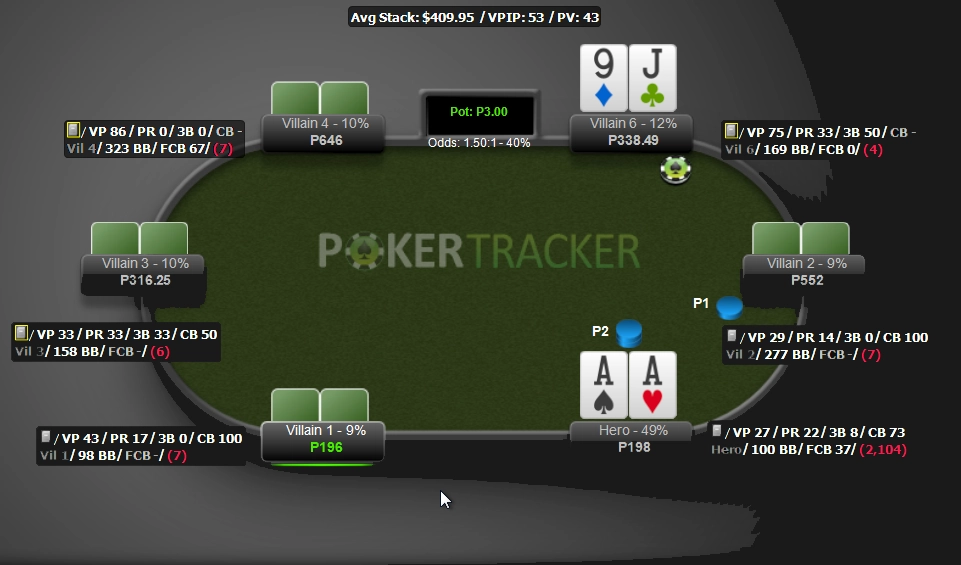
Identifying Player Types
HUD stats give you the ability to categorize opponents faster than a TikTok algorithm works. Below is how it all works:
- Tight-Aggressive (TAG): Low VPIP (12-18%), High PFR (10-15%), High AF (3+). Respect their raises, avoid bluffs, and value-bet relentlessly when you have it.
- Loose-Aggressive (LAG): High VPIP (25%+), High PFR (20%+), High AF. Trap them with strong hands, call down lighter, and exploit their overbluffing.
- Tight-Passive (Nit): Low VPIP (<15%), Low PFR (<10%), Low AF (1-2). Steal their blinds, cbet relentlessly, and fold to their rare raises.
- Loose-Passive (Fish): High VPIP (30%+), Low PFR (<8%), Low AF. Print money by value-betting thinner and avoiding bluffs (they’ll call with anything).
Exploiting Weak Opponents
Weak players leak chips like loose lips sink ships, and you can use HUD stats to poke their holes by doing the following:
- High VPIP + Low PFR: They play too many hands but don’t raise. Punish them by isolating them with strong hands and barreling on scare cards.
- Low Fold to 3-Bet: They can’t let go of marginal hands. 3-bet them less (they’ll call) and value-bet bigger when you connect.
- High Fold to Cbet: They’re literally folding machines. Cbet every flop, then shut down if they call (they most likely have something).
Adjusting to Aggressive Players
The most aggro opponents want you to panic, but you can fight back with data:
- High AF (4+): Let them hang themselves. Check-raise their cbets with strong hands and float flops to steal turns/rivers when they slow down.
- High 3-Bet% (10%+): 4-bet bluff wider (they’re likely overdoing it), but fold to their 4-bets unless you’re nutted.
- Low Fold to 3-Bet: Stop bluff-3-betting. Wait for premiums and stack them.
Improving Positional Play
Position is power, and your HUD acts as a quantifier:
- Late Position Steal%: If a player folds 70%+ from the blinds, attack mercilessly with any two cards.
- Blind Defense Stats: Notice who defends their blinds aggressively (high 3-bet from BB)? Steal less, or 3-bet back with strong hands.
- In Position AF: Players with higher AF in position? Let them bet into you, then check-raise when you’re strong.
Refining Your Own Game
Your poker stats are a mirror—and sometimes, you see a not-so-cute reflection staring back at you. Use your HUD to fix any leaks and make your game more attractive.
- High Fold to Cbet: You’re bluffing TOO much. Tighten your cbet range or double-barrel less.
- Low 3-Bet%: You’re missing a lot of chances to pressure your opponents. Start 3-betting 6-8% of hands.
- VPIP by Position: If your VPIP is 25% UTG, you’re a walking ATM. Tighten up early, widen late.
Advanced HUD Strategies for Serious Players
A HUD in the hands of a serious player? It’s more than a tool—it’s a surgical scalpel. You’re not just reacting to the stats anymore; you’re dissecting them, exploiting micro-trends and engineering edges that are invisible to the naked eye. Want to push your HUD from “helpful” to “unstoppable?” Do the following!
– Streamline your HUD layout: Use only 3-5 core stats (e.g., VPIP, PFR, 3-Bet%) to avoid a visual overload. Your brain can’t process 20 stats across 8 tables!
– Prioritize note-taking: Assign quick color tags (red = maniac, blue = nit) to other players as you see any patterns. This speeds up decisions when they show up at other tables.
– Focus on outliers: At 10+ tables, target players with extreme stats (VPIP >35%, Fold to 3-Bet >75%). These are your profit hubs.
– Use table-selection tools: Pair your HUD with table selection software so that you don’t end up at reg-infested tables and are able to stalk fish across online poker game lobbies.
– Filter for critical moments: Use your HUD to review hands where your stats spiked (e.g., high Fold to Cbet) or tanked (e.g., low W$SD—won $ at showdown).
– Replay hands with opponent stats visible: Study how the players with specific HUD profiles (e.g., 40 VPIP / 5 PFR) exploited you, and then reverse-engineer their tactics.
– Identify population leaks: Identify any trends like “most players fold 65% to river bets” and adjust your default strategy to exploit the pool.
– Lifetime vs. session stats: A player’s lifetime 3-Bet% of 6% means jack if they’re 3-betting 20% this session. Use “last 100 hands” filters to spot tilt or strategy shifts.
– Adjust for stack sizes: Some HUDs let you segment stats by stack depth. A player with a high AF at 50BB might be a legit maniac but tighten up at 100BB.
– Exploit short-term trends: If a tight player suddenly VPIPs 30% over 50 hands, they’re likely tilting or multi-tabling. Punish them, STAT.
– Color thresholds: Set alerts like “VPIP >30% = red background” or “AF <1.5 = yellow text” to flag leaks without reading numbers. - Layer pop-ups by street: Create separate pop-ups for pre-flop (VPIP, PFR, 3-Bet), flop (Cbet, Fold to Cbet), and river (AFq, WTSD%). Right-click for depth when needed. - Custom hero stats: Track your own frequencies (e.g., “Steal% from CO”) in real-time to make sure you’re not becoming predictable. If your 3-Bet% is 2%, even the fish will adjust.
Common Mistakes to Avoid When Using a Poker HUD
Using a HUD might turn you into a poker savant—or it could go the other way and turn you into a data-drunk zombie. The difference between the two states is knowing when you should trust the numbers and when you should trust your instincts. Next up, we go over the most common mistakes players make when using a poker HUD.
Treating HUD Stats as Gospel
- The Trap: Slavishly obeying a player’s 10% Fold to 3-Bet stat while missing their erratic bet-sizing or delayed reactions.
- The Shift: Treat stats as a starting point, not a finish line. Cross-reference data with real-time behavior (sudden speed-ups, chat rants) so that you don’t become a mindless spreadsheet follower.

Overreacting to Small Sample Sizes
- The Error: Declaring someone a “calling station” because they called two river bets in 20 hands. Variance isn’t a personality flaw.
- The Adjustment: Ask for larger samples: 50+ hands for basic stats, 200+ for post-flop tendencies. Until then, assume they’re a wildcard and proceed super cautiously.
Stat Overload
- The Clutter: Your screen looks like a stock ticker—it’s too much! You’re analyzing “Squeeze%” while the timer is ticking down.
- The Trim: Prioritize, prioritize, prioritize! Ask yourself this: “Does this stat change my action?” If not, bury it in a pop-up or just straight-up delete it. Your focus should be on poker, not on data science.
Forgetting You’re Being HUD’d Too
- The Blind Spot: You’ve been c-betting 75% of flops, and now your opponents check-raise you on every dry board. What a shocker (not).
- The Wake-Up Call: Audit your own stats every month. If your fold to 3-Bet is 80%, you’re a target. Rotate your strategies so that you can stay unpredictable.
The Ethics and Legality of Using Poker HUDs
Because poker HUDs have become so popular, of course, they’ve kicked off a debate that’s hotter than a rivered flush (sorry about that pun). Is it fair to use software that analyzes opponents’ habits in real-time, or does it cross over into unsportsmanlike territory? Let’s unpack the ethics, rules, and the unspoken codes that are fueling the controversy surrounding this software!
The Fairness Debate: Tool or Tech Cheat?
The critics argue that poker HUDs tilt the game toward the players who can afford them, and that turns poker into a tech arms race. Casual players logging in for fun rarely know these tools even exist, let alone invest in them. But the grinders with HUDs are exploiting the leaks that are invisible to the naked eye—like knowing that a player folds to 65% of river bets. Defenders have hit back with the argument that poker has always rewarded those who come prepared. Tracking stats manually is tedious and error-prone; HUDs just modernize the process. If the game evolves, why shouldn’t the tools? The core question is this: Is it unfair or just unfamiliar?
Platform Policies: Where HUDs Stand Legally
Most major poker sites tolerate HUDs—but there are limits. PokerStars and GGPoker allow them but ban the features like real-time hand tracking or any AI-driven advice. Others, like Zynga Poker or social gaming apps, prohibit third-party software entirely. But enforcement is another story, as it’s inconsistent. Unless a HUD directly interacts with the client (e.g., auto-folding hands), platforms are struggling to detect it. This creates a gray zone where players will self-police, and rulebreakers usually fly under the radar. Always check a gambling site’s terms of service—ignorance isn’t exactly a great defense if your account gets flagged.
Ethical Play: Balancing Edge with Integrity
Using a HUD ethically hinges on two main principles: transparency and restraint. Experienced players treat HUDs as magnifying glasses, not as hammers. They don’t use the features that violate platform rules (e.g., data mining hand histories from other players) and resist exploiting oblivious recreational players into oblivion. Why? Because killing off the fish too efficiently means there will be fewer games and softer competition in the long run. The best grinders use HUDs to streamline decisions, not to replace their skill. They respect the spirit of competition, and they know that poker is at its best when the ecosystem stays different—and alive.
Choosing the Right Poker HUD Software for Your Needs
Okay, now it’s time to choose a poker HUD if you want to try it out! It’s sort of like picking a poker table—you want one that fits your style, stakes, and your sanity. The wrong tool will be too data-heavy; the right one will feel like it’s an extension of your brain. The following are our picks for the top poker HUD contenders!
PokerTracker 4: The Data Deal
If spreadsheets give you a nice dopamine hit, PokerTracker 4 could be your soulmate. This HUD is the king of poker analytics, and it has everything from custom stat-building to in-depth leak detection. Its advanced filters let you analyze hands by position, stack size, or opponent type, and this makes it perfect for the grinders who like to live in the weeds. But with great power comes a steep learning curve. PT4’s interface isn’t winning any beauty contests, and newbies will probably feel like they’re trying to code for NASA. It’s best for high-volume players, stats nerds, and anyone who thinks “sample size” is a pickup line that will work.
Hold’em Manager 3: The Goldilocks Option

Hold’em Manager 3 is where usability meets depth. It has a clean, drag-and-drop interface that enables you to customize HUDs in minutes and features like “Player Types” auto-label opponents (Tag, Lag, Fish) based on their stats. HM3 excels in cash games, as it comes with dynamic reports that highlight your win rates by stake or time of day. It’s somewhat less customizable than PT4 but far more intuitive—a sweet spot for the players who want insights without a PhD in data mining. This one is best for the mid-stakes grinders, multitablers, and anyone who prefers “plug-and-play” over a ton of tinkering.
DriveHUD: Budget-Friendly Basics

DriveHUD is the Hyundai of HUDs—reliable, affordable, and no frills. At half the price of PT4 or HM3, it has all of the essentials (VPIP, PFR, Cbet) with a concentration on speed over any type of complexity. Its built-in equity calculator and hand replayer are great for beginners who are just getting into data. The downside here is limited customization and a lot of pop-ups. But for $49.99 (vs. PT4’s $99), it’s a steal for micro-stakes players or casuals. This tool is best for noobs, budget-conscious grinders, and players who want “good enough” without having to ante up a lot of money.
Free Trials & Budget Hacks
Most HUDs do have free trials (7-30 days) so that players are able to try them out before they commit to paying. PokerTracker and HM3 cost $99-$150 for lifetime licenses, and DriveHUD sits at $49.99. You can check Black Friday sales or poker forums for discounts—old versions sometimes get price cuts when new ones drop. The best HUD isn’t the most expensive—it’s the one you’ll actually use!
Conclusion: This is Your Poker Brain on HUD
What have we learned about poker HUDs? One, a HUD shows you lots of stats. And two, it helps you to exploit your opponents. But it isn’t only a tool—it’s a complete mindset shift. It forces you to see patterns instead of randomness and trends instead of chaos. All of those VPIP and PFR numbers? They’re not only metrics; they’re a language unto themselves.
Look below for a quick summary of how using a poker HUD can level up your online poker game:
- Instant opponent profiling: Spot nits, maniacs, and calling stations at a glance.
- Leak detection: Uncover if you’re over-bluffing, folding too often, or missing 3-bet opportunities.
- Exploitation made easy: Target players who fold to 70% of cbets or call down with weak hands.
- Efficiency boost: Juggle multiple tables without losing track of who’s who.
So, pick a HUD. Any HUD. Use it until it feels like it is a part of your poker DNA. Then—and this is really important—forget that it’s there. The stats will begin to seep into your subconscious while you concentrate on your timing and outplaying the player who is behind those numbers!
The future of poker isn’t humans vs. bots. It’s humans with bots who use data to play bolder, smarter, and more creatively. Your edge isn’t in the software; it’s in how you wield it, so play ethically and always gamble responsibly!
Looking for more help while playing poker online? Check out our helpful poker cheat sheet that will guide you through the most important aspects of the game.
The Truth About Casino Payout Rates: Are Some Slots Rigged?
No, licensed slot machines are not rigged. Every slot at a regulated casino uses a Random Number Generator (RNG) that is independently tested and certified for fairness. However, payout rates vary dramatically from game to game — ranging from around 88% to over 99% RTP (Return to Player) — and understanding that difference is the key to making smarter decisions at the casino.
The real issue is not whether casinos cheat, but how payout systems actually work, who regulates them, and how you can avoid the small number of shady operators that do exist in unregulated markets. A slot with 92% RTP will eat through your bankroll roughly twice as fast as one at 98% RTP, and most players never check the number before they start spinning.
In this guide, we break down exactly what casino payout rates mean, how slot machines are programmed, and how to identify fair games from potential traps — so you can play with confidence and a clear understanding of the math behind every spin.
What Are Casino Payout Rates and Why Do They Matter?
Casino payout rates tell you how much money a game returns to players over time, expressed as a percentage. A slot with a 96% payout rate (RTP) returns $96 for every $100 wagered across millions of spins — the remaining $4 is the casino’s profit margin, known as the house edge. Understanding these numbers is the single most useful thing you can do before choosing a game.
Three concepts drive every casino game’s payout structure: RTP, house edge, and volatility. None of them care about your gut feelings, lucky rituals, or that “hot streak” you think you are on.
What Is RTP (Return to Player)?
RTP stands for Return to Player — the percentage of all wagered money a slot machine is programmed to pay back over its lifetime. A slot with 96% RTP will theoretically return $96 for every $100 wagered, but this is a long-term average calculated across millions of spins. In any single session, you could win $500 or lose your entire bankroll.
Slots typically range from 88% to 99% RTP. The higher the number, the more of your money comes back over time. Think of RTP like fuel economy — a car rated at 40 MPG won’t get exactly 40 on every trip, but it tells you what to expect on average.
RTP is your best clue for picking games that will not vaporize your bankroll. Always check the RTP before you play — it is usually listed in the game’s info or paytable section.
How Does the House Edge Work?
The house edge is simply the inverse of RTP — it is the percentage the casino expects to keep from every dollar wagered. A 96% RTP slot has a 4% house edge. This built-in mathematical advantage is how casinos pay for the chandeliers, the free drinks, and the server farms running online casino platforms.
The house edge varies significantly across different casino games, and that variation should influence which games you choose to play.
| Game Type | Typical RTP | House Edge |
|---|---|---|
| Slots | 88%–99% | 1%–12% |
| Blackjack (basic strategy) | 99.0%–99.5% | 0.5%–1.0% |
| Video Poker (Jacks or Better) | 99.5% | 0.5% |
| Roulette (European / American) | 97.3% / 94.7% | 2.7% / 5.3% |
| Baccarat | 98.9% | 1.1% |
The house edge is baked into every single game. Over time, the math always favors the casino. Knowing this, you should gravitate toward games with the lowest house edge to stretch your bankroll — and if you are going to play slots, pick the ones with the highest RTP you can find. For more on which games give you the best odds, see our guide to the most profitable casino games for skilled players.
What Is Slot Volatility and Why Does It Matter?
Volatility (also called variance) determines the pattern of your wins and losses. It does not change the overall RTP — a 96% RTP slot pays back 96% regardless of volatility — but it changes how that money comes back to you.
- Low volatility slots pay out small amounts frequently. You might win $5 every 10 spins. These are ideal for players who want longer sessions and hate watching their balance swing wildly.
- High volatility slots pay out large amounts rarely. You might go 500 spins without a win, then hit a $500 payout. These are for thrill-seekers with larger bankrolls who can absorb the dry spells.
- Medium volatility slots split the difference and suit most recreational players.
The “hot” and “cold” slot myth is exactly that — a myth. Slots use RNGs that make each spin completely independent, like shuffling a fresh deck of cards every hand. A machine that has not paid out in hours is not “due” for a win. Your brain craves patterns, but the machine is purely random.
Are Some Slots Rigged? Separating Fact from Fiction
Licensed slot machines are not rigged. They are software governed by strict regulations, independently audited RNGs, and gaming commissions that can levy massive fines or revoke licenses for non-compliance. The real risk is not at regulated casinos — it is at unlicensed, offshore operators who operate outside the law.
How Are Slot Machines Programmed?
Every modern slot machine runs on software built around a Random Number Generator (RNG). The RNG produces thousands of random numbers per second, even when nobody is playing. The instant you press “spin,” the RNG grabs the latest number to determine where the reels stop. The outcome is decided before the reels even start spinning — the animation is just for show.
- Third-party testing: Legitimate RNGs are certified by independent auditors like eCOGRA, iTech Labs, and GLI. These organizations test millions of outcomes to confirm true randomness.
- Reputable developers: Companies like NetEnt, Microgaming, IGT, Play’n GO, and Pragmatic Play stake their entire business on fair games. If they rigged outcomes, they would lose licenses across every jurisdiction they operate in.
- Regulatory enforcement: Jurisdictions like the UK, Malta, and Nevada require games to meet strict technical standards. The UK Gambling Commission has fined operators millions of pounds for regulatory failures.
Can Casinos Change Slot Machine Payout Rates?
Casinos can choose which RTP version of a game to install, but they cannot change it on the fly while you play. Slot developers typically create games with multiple RTP tiers — for example, 94%, 96%, and 98% — and the casino selects the version during setup. Switching to a different RTP tier requires reinstalling the game software, a process that regulators monitor closely.
This means the “cold” slot you have been playing is not being throttled by a casino manager watching from a back room. It is just variance doing exactly what it is designed to do.
Slots are programmed to display “near misses” — two jackpot symbols lining up just above or below the payline. This tricks your brain into thinking you almost won, but the outcome was already decided before the reels moved. Licensed casinos must keep audit logs of every spin, so tampering would leave evidence and risk massive penalties.
Licensed vs. Unregulated Casinos: Where the Real Risk Lives
The difference between a safe gambling experience and a potential scam comes down to licensing. Licensed casinos undergo regular audits, submit RNG and payout reports, and offer player dispute resolution. Unregulated casinos — typically based offshore with no oversight — can manipulate software, delay withdrawals indefinitely, and run counterfeit versions of popular games with artificially low RTPs.
- Red flags for unregulated sites: No visible licensing information on the site, games from unknown developers, delayed or denied withdrawal requests, and bonuses that seem impossibly generous (e.g., “500% deposit match”).
- Trusted regulators: The Malta Gaming Authority (MGA), the UK Gambling Commission (UKGC), and the Gibraltar Regulatory Authority are among the most respected. Curacao eGaming licenses exist but have weaker oversight — tread carefully with those.
- Always verify: Do not just look for a licensing logo on the site. Go directly to the regulator’s website and search for the casino’s name to confirm the license is valid and current.
What Actually Affects Your Chances of Winning at Slots?
Your odds at slots come down to three controllable factors: the RTP of the game you choose, how you size your bets relative to your bankroll, and how you handle casino bonuses. Luck plays a role in any single session, but these three decisions determine whether you are playing smart or just donating money.
How to Choose Slots with High RTP
RTP is the single most important number to check before you start playing any slot. You can find it in the game’s info or paytable section, on the developer’s website, or through community sites that crowdsource RTP data.
Some of the highest-RTP slots available in 2026 include:
- Blood Suckers (NetEnt): 98% RTP, low volatility, vampire theme with free spins.
- Jackpot 6000 (NetEnt): 98.8% RTP, retro fruit machine with a “Supermeter” risk mode.
- Ugga Bugga (Playtech): 99.07% RTP, a unique tribal slot with card-game mechanics.
- Ooh Aah Dracula (Barcrest): 99% RTP, high volatility with a bonus-buy feature.
Avoid slots with an RTP below 95%. The difference between a 92% and a 98% RTP slot means you lose roughly 4x as much money per dollar wagered on the lower-RTP game. That gap adds up fast over a session.
How Do Paylines and Bet Size Affect Your Odds?
Paylines determine how many ways you can win on each spin, and bet size controls how much you risk per spin. Classic slots offer 1-5 paylines, while modern video slots can have 20 to over 1,024 ways to win. More paylines means more chances to hit a winning combination, but it also means higher minimum bets to cover all lines.
- Minimum bets stretch your bankroll and work well on low-volatility slots where small wins come frequently.
- Maximum bets unlock jackpots and progressive features but drain your balance much faster.
- The “max bet = better odds” myth: Betting max does not change the RNG outcome. It only qualifies you for larger jackpots on some games.
The smart approach is to bet 1-2% of your total bankroll per spin. If you brought $100 to play, bet $1-$2 per spin. This gives you enough runway to survive variance without blowing through your budget in 20 minutes.
How Do Casino Bonuses Affect Your Slot Odds?
Casino bonuses can extend your bankroll significantly, but the fine print determines whether they actually help you. The three most common bonus types — free spins, deposit matches, and cashback — all come with wagering requirements (WR) that dictate how much you must bet before withdrawing any winnings.
Understanding Wagering Requirements
A 30x wagering requirement on a $100 bonus means you must wager $3,000 before you can withdraw. On a 96% RTP slot, your expected loss across $3,000 in wagers is $120 (4% house edge x $3,000) — meaning you would actually lose $20 net after the $100 bonus. On a 92% RTP slot, your expected loss jumps to $240, turning that “free” bonus into a $140 net loss.
- Target bonuses with WR under 20x for the best chance of coming out ahead.
- Game weighting matters: Slots usually count 100% toward wagering requirements, while blackjack and roulette may only count 10-20%.
- Max bet limits: Exceeding the per-spin limit (often $5) while playing with bonus funds voids the bonus entirely. T&Cs apply.
- No-wagering free spins are rare but extremely valuable — any winnings are yours to keep immediately.
How Can You Play Smart and Avoid Slot Scams?
Playing smart at slots means choosing the right platform, setting hard limits, and knowing when to walk away. The difference between a good gambling experience and a nightmare comes down to a few key habits that protect both your money and your mental health.
How to Verify a Casino Is Legitimate
Legitimate casinos display their licensing information prominently, usually at the bottom of their homepage. Before depositing any money, verify the license is real by checking the regulator’s website directly.
- Malta Gaming Authority (MGA): Known for strict standards and regular audits — one of the most trusted regulators in the industry.
- UK Gambling Commission (UKGC): Sets the highest bar for player protection. UKGC-licensed casinos are held to rigorous operational standards.
- Gibraltar Regulatory Authority: Reputable but slightly less stringent than the MGA or UKGC.
- Curacao eGaming: Easier to obtain and has weaker oversight. Casinos with only a Curacao license can be hit or miss.
How to Spot Fake or Rigged Games
Unregulated platforms sometimes run counterfeit versions of popular slot games with artificially suppressed RTPs. Here are the warning signs that a game or platform may not be trustworthy:
- No demo mode available: Reputable slots let you play for free first. If a game does not offer this, that is a red flag.
- No visible licensing info: If a casino does not clearly state who regulates them, do not deposit.
- Games from unknown developers: Stick to slots from established providers like NetEnt, Microgaming, Play’n GO, and Pragmatic Play.
- Delayed or denied withdrawals: If a casino makes it difficult to get your money, leave immediately.
- Poor-quality graphics and gameplay: Counterfeit games often look and feel noticeably cheaper than the originals.
Player reviews on sites like Trustpilot and Reddit are valuable for spotting problematic operators. Avoid relying solely on reviews posted on the casino’s own website, as those are typically curated. You can also check our online casino blacklist for known bad actors.
Why You Should Never Chase Losses
Chasing losses is the single fastest way to turn a bad session into a financial disaster. The logic of “just one more spin and I will win it back” ignores the fundamental reality that every spin is independent — past results have zero bearing on future outcomes. The RNG does not know or care that you are down $200.
- Set a loss limit before you start and treat it as non-negotiable. When you hit it, stop.
- Set a win limit too. Decide in advance at what point you will walk away with your profits.
- Use session time limits. Most reputable casinos offer built-in reality check reminders.
- If gambling stops being fun, stop gambling. Self-exclusion tools like GAMSTOP (UK) can help if you need a break.
The Bottom Line: Are Slots Rigged?
No, slots at licensed casinos are not rigged. They are built on independently audited RNGs, regulated by government authorities, and developed by companies whose entire business depends on maintaining fair play. But slots are built with a house edge — which means the casino will always come out ahead over the long run. That is not cheating. It is math.
Your job is not to “beat” the system. It is to play it smart:
- Choose slots with 96%+ RTP to minimize the house edge.
- Play only at casinos licensed by the MGA, UKGC, or comparable regulators.
- Set hard loss and win limits before every session.
- Test games in demo mode before wagering real money.
- Never chase losses — walk away and come back with a clear head.
Gambling should be entertainment, not a source of financial stress. Set a budget, stick to it, and remember that the house always has the edge — but that does not mean you cannot enjoy the game responsibly.
Play Safe: Gambling should be fun, not stressful. Set limits, stick to your budget, and never chase losses. If you or someone you know has a gambling problem, call 1-800-522-4700 or visit ncpgambling.org. For more resources, see our Responsible Gambling page.
Are online slots rigged?
No. Online slots at licensed casinos use Random Number Generators (RNGs) that are independently tested and certified by auditors like eCOGRA and iTech Labs. Every spin is completely random and independent of the previous one. However, unlicensed offshore casinos may run manipulated software, so always verify a site’s regulatory credentials before playing.
What is RTP in slot machines?
RTP stands for Return to Player. It is the percentage of all wagered money a slot machine is programmed to pay back over millions of spins. For example, a slot with 96% RTP theoretically returns $96 for every $100 wagered. This is a long-term statistical average — individual sessions can vary widely above or below that number.
What is a good RTP for a slot machine?
A good RTP is 96% or higher. Slots range from roughly 88% to over 99% RTP. Games below 95% RTP have a significantly higher house edge, meaning you lose more money per dollar wagered over time. Some of the best-paying slots include Blood Suckers (98% RTP), Jackpot 6000 (98.8%), and Ugga Bugga (99.07%).
Can casinos change slot machine payout rates?
Casinos can choose which RTP version of a game to install — developers typically offer multiple tiers such as 94%, 96%, and 98%. However, casinos cannot change the RTP in real time while you play. Switching RTP tiers requires reinstalling the game software, a process that regulators monitor. A slot that feels ‘cold’ is experiencing normal variance, not a casino adjusting the payout.
How do I find the RTP of a slot machine?
Check the game’s info, rules, or paytable section — most reputable slots display the RTP there. You can also find RTP data on the game developer’s website (NetEnt, Play’n GO, Microgaming all publish this information). Casino review sites and Reddit communities also crowdsource and verify RTP data for popular games.
Are slots at physical casinos different from online slots?
The core technology is the same — both use RNGs to determine outcomes. However, online slots tend to offer higher RTPs (often 95-99%) compared to land-based casino slots (often 88-95%), because online casinos have lower overhead costs. Online slots also typically display their RTP more transparently, making it easier to choose higher-paying games.
Surveillance and AI: How Casinos Monitor and Predict Player Behavior
For better or for worse, AI (artificial intelligence) is changing entire industries and rewriting most of the rules in the process. And in the casino sector, it’s becoming more and more prevalent. The sounds of slot machines and the shuffling of cards are being fueled by algorithms. Since its inception, physical casinos have relied solely on loyalty cards, security cameras, and pit bosses to track players’ movements. But in the present? AI is turning those old analog systems into a surveillance operation reminiscent of the book “1984.”
We aren’t being dramatic about the tech, so you can either get comfortable with the idea or become a hermit because it’s not only happening in casinos. But we aren’t here to talk about other industries—we’re here to talk about gambling establishments and how the tech actually works for them.
Like what happens when facial recognition, RFID chips, and machine learning models team up to study your every move? And most importantly, does AI make gambling safer…or just more sneaky? We are rabbit-holing into the shadowy (and super interesting) world of casino AI, from the second that you walk through the doors to the algorithms that can predict when you’ll cash out. The House Edge just got a tech upgrade, but is that a good or a bad thing?
How AI Tracks Players in Casinos
Casinos have always watched their customers—but AI has changed this observation into an art form. The following is how your every move turned into data for the gambling establishment.

Player Tracking Through Surveillance and Facial Recognition
You have just walked into a casino, and before you’ve even hit the bar for a drink, AI has already ID’d you, checked out your gambling history and predicted what your budget is for the time that you’re there. Sounds like something out of the movie Minority Report, yes? Instead of pre-crime detection, it’s for what you’ll do in the joint, and it’s not some future thing—it’s already happening.
Today’s casinos have deployed AI-powered cameras that don’t just record—they analyze. Facial recognition systems like IntelliVision or FaceFirst scan crowds in real-time, and it matches faces to databases of high rollers, banned players, or even those who owe markers (aka casino IOUs). In Macau, some resorts are using AI to track VIPs from the valet to the high-limit room, making sure that the staff can greet them by name and offer them their fav drink. But it’s not all VIP treatment: AI also flags potential card counters, erratic behavior, or excluded problem gamblers who are trying to sneak in.
And these systems learn with every passing interaction. If you always hit the roulette table at 7 p.m., AI notices—and might send a host to coincidentally *wink wink* offer you a bonus right as you’re about to leave.

RFID and Smart Chips in Table Games
Gone are the days of having to take a guesstimate of who’s betting big. Say hello to RFID-enabled chips—the tiny radio-frequency ID tags that are embedded in poker chips. They enable casinos to track every wager as it’s happening. AI monitors the chips to map betting patterns, spot any anomalies, and to catch cheaters.
As an example, let’s say that a player suddenly switches from $10 bets to $500 without any warning. AI has the ability to alert security to watch for card marking or collusion. In 2021, a London casino caught a group using sleight-of-hand tricks with chips, and it was all thanks to RFID data that showed them making impossible bet sequences.
But it’s not just about security. AI uses RFID data to identify “whales” (big spenders) and tailor comps just for them. Lose $10k at baccarat? Don’t be shocked if AI triggers a free suite offer for you before you’ve even gotten up from the table!
Casino Loyalty Programs and AI Integration
That loyalty card that’s sitting in your wallet? It’s an absolute goldmine for AI data. Every single swipe at a slot machine, every buffet visit, and even your ATM withdrawals all feed into algorithms that profile your habits.
Let’s say you play slots every Friday night, usually around 8 p.m., and you cash out after losing $300. AI links this data to your email, phone, and even social media activity. The result? Hyper-targeted offers. Maybe you get a “Free $50 Slot Credit” text at 7:45 p.m. on Friday—just early enough to lure you in. Or if you’ve skipped a few weeks, AI might send out a desperate Hail Mary: “Your Favorite Machine Misses You! Claim $100 Free Play TODAY.”
MGM Resorts’ MGM 360 program famously uses this approach, as it combines loyalty data with AI in order to boost spending by up to 20% per guest.

AI in Online Casinos & Mobile Apps
As for online gambling sites, these platforms take tracking to Orwellian levels. How? Well, AI doesn’t just watch your bets—it also analyzes how fast you click, which games you hover over, and if you play more after losses, which is a red flag for problem gambling.
Platforms like Stakelogic and Playtech use machine learning to adapt game difficulty in real-time. On a losing streak? The AI might make the next slot spin “win” just enough to keep you playing. Then there are the casino apps that track biometric data via phone cameras—they are monitoring pupil dilation or heart rate to gauge excitement—and then adjust the game in order to maximize it.
In the security department, AI fraud detection tools like SEON scan thousands of transactions per second, and they flag stolen credit cards or possible instances of money laundering. But the critics of AI argue that these systems are dual-use: they protect the casino’s profits first and players second.
How AI Predicts Player Behavior
AI isn’t just watching—it’s also calculating your next move. How so? Below, we get into how casinos are turning your data into ESP machines.

Machine Learning Models for Behavioral Predictions
Casinos aren’t only trying to guess your next move—they’re simulating it. Because it funnels years of player data (win/loss ratios, time-of-day habits, and how many cocktails you order) into machine learning models, AI creates eerily accurate profiles. It’s kind of like your digital doppelgänger that’s built to predict every tap, bet, and cash-out.
How does it work? By doing the following:
- Predicting playtime: If you typically leave after losing $200, AI flags this as your “pain point.” Casinos might send over a host with a free buffet voucher right before you hit that limit.
- Game preferences: Hate slots but love roulette? AI notices and floods your app with “Exclusive Roulette Bonus!” offers.
- Staff optimization: Have you ever had a dealer suddenly become super-friendly? AI tracks which employees keep players at tables longest and rewards them—they have also been known to give the boot to the ones who drive players away.
At Wynn Las Vegas, machine learning models analyze players’ historical data to predict their “lifetime value.” High-value players get personalized treatment: reserved tables, private jet offers, or fancy room upgrades. And the casual players get drip-fed rewards to push them into spending more.
The creepiest part? The models adapt in real-time. If you start playing longer sessions on weekends, AI shifts its predictions—and the casino’s tactics—to match your playing habits.
Dynamic Game Adjustments and Personalized Experiences
We all know that casinos house games of chance—but they’re also games of manipulation. AI adapts gameplay as it’s happening in order to exploit your psychology so that you stay seated and playing. Here’s how it happens with the games and why it works!
- Slot machines: Ever feel like a machine “heats up” after a dry spell? That’s dynamic volatility adjustment. Games like Light & Wonder’s slots use AI to monitor your bets. If you’re about to walk away, the algorithm might trigger a “surprise” bonus round or a near-miss (two jackpot symbols + a loss) to trick your brain into thinking, “I’m close!”
- Table games: AI-powered blackjack tables adjust deck penetration (how many cards are dealt before shuffling) to thwart card counters. If the system detects a player who is tracking cards, it might shuffle after just 10 cards instead of 50—crushing their edge.
- Personalized difficulty: Online platforms like Stake.com use AI to change a game’s difficulty based on skill level. Newbie poker player? The AI will pair you with softer opponents. High roller? It’ll crank up the heat to keep you challenged (and betting bigger).
- The illusion of control: AI also customizes how you lose. Studies show that players tolerate losses better if they feel that they are “in control.” So, games will let you pick bonus symbols or “choose” your odds—even though the AI has already predetermined the outcome.
AI-Driven Marketing and Player Retention Strategies
Timing is everything. AI analyzes when you’re most likely to open emails (hint: it’s on Sunday nights) or respond to SMS offers. Forget about generic spam—casino marketing is now a whole new kind of mind game. AI doesn’t only know your name; it also knows your fears, cravings, and weak moments.
Below is how hyper-targeted timing works:
- Emotional states: AI cross-references data brokers to track life events. Recently got divorced? Were you laid off? Casinos buy this data and time their offers to prey on any vulnerabilities.
- Geofencing: Walk near a rival casino? You could get a push notification: “Don’t settle for less! 200% deposit match HERE.”
- Weather manipulation: Caesars’ CodeGreen AI links rainy days to increased gambling. If your local forecast shows storms, you can bank on getting an “Escape the gloom!” offer delivered to your inbox.
- A/B testing addiction: Casinos run thousands of AI-driven experiments to find what’ll hook players. Does a “$50 Free” subject line work better than “Double Your Deposit!”? Does a countdown timer (“Offer expires in 10 minutes!”) pressure you into making impulsive deposits? AI optimizes every pixel of their ads for maximum FOMO (fear of missing out).
- Loyalty traps: Even your “rewards” are engineered. AI tracks which perks you use (free drinks, hotel stays) and dangles them strategically. Skip a month of play? You’ll get a “We miss you!” offer with an expiry date, which creates urgency.
AI and Responsible Gambling: A Double-Edged Sword?
Can algorithms suss out a gambling addiction before the player does? The answer is yes—but only if casinos want them to. AI could be a real lifeline for problem gamblers—or it could be the reason they are drowning in the first place. Next up, we unpack the ethics of AI and responsible gambling.

AI for Problem Gambling Detection
AI’s role in identifying problem gambling is both groundbreaking and controversial. By analyzing thousands of data points—betting patterns (like sudden spikes in wagers), session lengths (marathon 10-hour poker nights), and deposit frequency (reloading a balance 20 times in an hour)—AI can flag any risky behavior with scary accuracy. If a player starts placing $500 bets after months of $20 blackjack hands, AI doesn’t just notice—it calculates the probability of a developing addiction.
Tools like PlayGuard (used by Entain) and BetBlocker cross-reference this data with external factors: Is the player gambling during work hours? Are they in a region that has high unemployment rates? Some systems even track mouse movements in online casinos—rapid, frantic clicks sometimes correlate with desperation.
If and when red flags appear, robotic AIs can intervene in surprisingly human ways, like the ones below:
- Pop-up warnings: “You’ve been playing for 4 hours. Take a break?”
- Deposit limits: Automatically capping daily losses.
- Self-exclusion prompts: Offering links to block access for 24 hours, a month, or indefinitely.
In the UK, regulators require online casinos to use AI for harm prevention. One operator, 888 Casino, reported a 60% reduction in high-risk bets after implementing AI-driven deposit limits. But there is a catch: The tools are sometimes buried in settings menus, and the “PLAY NOW!” buttons are always front and center.

Ethical Concerns: Does AI Keep Players Hooked?
AI knows your weaknesses—and the casino where you play? It’s betting on them.
AI can flag problem gambling, but the critics argue that its primary purpose is to exploit human psychology for profit. The same algorithms that detect addiction are also trained to prevent churn (industry jargon for “quitting”). How? By identifying the exact moment a player is likely to walk away—and dangling a proverbial carrot to keep them playing.
If AI notices you’re about to cash out after a losing streak, it might trigger a “random” slot bonus or offer a 50% match on your next deposit. No, there aren’t acts of generosity—they’re carefully calculated moves that are based on your behavioral profile.
The following are some of the tactics at play:
- Loss aversion exploitation: AI sends “You’re due for a win!” messages to players who’ve lost consistently.
- Personalized traps: If you’re a single parent who gambles after late-night stress, AI will push promotions at 11 p.m. with “Relax and Play!” messaging.
- Dynamic difficulty adjustment: Online slots quietly change odds to create “near-misses” (e.g., two jackpot symbols + a blank) that trick the brain into thinking, “You almost won!”
Even self-exclusion tools have a few loopholes. In 2022, a study found that 40% of self-excluded players returned to the same casino within a year—usually because AI bombarded them with “We miss you!” offers the moment that their ban had expired.
Are casinos using AI to promote responsible gaming—or to weaponize addiction? As long as shareholders demand profit growth, the line between “player protection” and “predatory design” will stay blurry. After all, it’s cheaper to keep a problem gambler than to find a new customer.
AI in gambling is comparable to a fire alarm that also sells matches. It might warn you about the danger—but it’s still fueling the flames.
The Future of AI in Casinos: What’s Next?
The casino of tomorrow isn’t just digital—it’s a shape-shifting beast. Imagine walking into a venue where the walls adjust to your mood, robots read your poker face, and algorithms know your credit score before you do. Buckle up, babies, because the AI gambling revolution is just getting started, and it’s shot out of the gate at record speed!

Fully Automated Casinos: No Humans in Sight
There could very well be a casino with no human staff. No dealers, no cocktail servers, no grumpy pit bosses. Just AI-powered kiosks, facial recognition turnstiles, and drones that deliver drinks to your seat, and it’s already in beta testing.
The following is how it all works:
- Facial recognition payouts: Walk up to a slot machine, and AI scans your face to deduct funds from your linked bank account: no chips, no cards, no cash.
- AI-driven floor layouts: Cameras track crowd flow in real-time, rearranging game placements to maximize traffic (and spending). Too many people clustering at roulette? The floor “morphs” to add more tables.
- Voice-activated gambling: “Alexa, bet $500 on red.”
Companies like MGM Resorts are already testing cashless, staff-less zones in Las Vegas. Meanwhile, SoftSwiss is prototyping AI casinos where even the lighting adjusts to keep players alert—dimming during losing streaks to “soften the blow.”

AI-Powered Dealers and Virtual Gaming Assistants
Robots dealing blackjack? Yup. Avatars that are reading your emotions? Double yup.
We aren’t pulling your leg: Robot dealers are real; just look below!
- Emotion-sensing AI: Dealers like Min, a humanoid robot used in Japan, analyze micro-expressions to detect bluffing. Play a bad hand? Min’s cameras will spot your nervous twitch and raise the stakes.
- ChatGPT on steroids: Just picture a blackjack dealer that trash-talks you in perfect slang, remembers your fav sports team, and jokes about your last bad beat. Some startups are training AI dealers using pro poker player interviews to mimic human banter—only it’ll have none of the human errors.
And there there are the virtual assistants!
- AI concierges: A holographic host greets you by name, recommends games that are based on your bankroll, and will book you a post-win massage. If you’re losing, it’ll “comfort” you with a free drink coupon.
- Mood-based upselling: Feeling lucky after a win? The AI will push you toward high-stakes tables. Stressed? It will suggest “calming” low-risk slots.
Regulations and Privacy Concerns: The Inevitable Backlash
As AI casinos become more common, so do the ethical landmines that surround them.
Here is what the regulatory battlefield looks like:
- GDPR for gambling: The EU is drafting laws that force casinos to disclose exactly how AI uses player data. Want to know why the roulette wheel “randomly” froze your bet? Too bad—these are “trade secrets.”
- Biometric bans: Nevada recently outlawed AI systems that scan palm veins or iris patterns without consent. But in Macau, where surveillance rules, regulators have been oddly quiet.
Privacy problems:
- Data brokers 2.0: Casinos already buy personal data (divorce records, medical bills, etc.) to target vulnerable players. With AI, they’ll predict your next life crisis before you do.
- Algorithmic addiction: Lawsuits are brewing. In 2023, a class-action suit accused DraftKings of using AI to “weaponize” gambling habits. The outcome? A $10M settlement and a lot of unwelcome attention from regulators.
The big question is this: Will governments force casinos to open their AI “black boxes”? Or will lobbyists keep the algorithms shrouded in mystery?
The future of casinos is indeed a contradiction in terms of excitingly high-tech and scarily invasive aspects. AI will create immersive, personalized experiences—while also turning every bet, blink, and breath players take into data points for profit.
Conclusion: Is AI a Game Changer or a Gamble for Players?
AI in casinos is a paradox. On the one hand, it’s a guardian angel that is detecting fraud, curbing addiction, and customizing experiences to your playing preferences. But on the other hand? It’s a puppet master that is using psychological tricks and predatory timing to keep you playing longer, spending more, and chasing losses you can’t afford.
The truth? Casinos aren’t investing billions in AI to protect players. They’re doing it to maximize profits. Sure, responsible gambling tools exist, but a lot of times, they’re simply an afterthought compared to revenue-boosting algorithms.
Look below for a brief recap on how AI is changing the gambling industry via tracking, prediction, and behavioral influence:

Tracking
- Facial recognition IDs players and monitors movements.
- RFID chips detect betting anomalies and cheating.
- Loyalty programs mine spending/gaming data.
- Online platforms log clicks, pauses, and biometrics.

Prediction
- Machine learning forecasts playtime, game choices, and quitting behavior.
- Dynamic odds adjust slot volatility, bonuses, and game rules.
- Algorithms time promotions to retain players.
Behavioral Influence
- Tailored gameplay triggers “near-misses” to prolong engagement.
- Marketing exploits personal data (credit scores, life events).
- Games optimize rewards to maximize dopamine-driven spending.
- Ethical tension: Profit-driven retention vs. responsible gambling.
What’s the verdict? Does AI make gambling safer or more addictive? The answer is both—it’s just about who’s wielding the tech. As of right now, the house doesn’t just have the edge…it now has a supercomputer.
So, the next time that you’re tempted by a “personalized” casino offer, keep this in mind: That “free” $50 might cost you way more in the long run. Stay in the loop, gamble responsibly, and don’t let the AI play you.
How to Spot and Exploit Weak Opponents in Online Poker
Allow us to paint you a picture: it’s 11 p.m., you’re two Red Bulls deep, and you’ve just lost your third buy-in of the night to someone who called your all-in with 7-2 offsuit. Again. You’re staring at the screen, equal parts baffled and furious. “How does this keep happening?”
Welp, here’s the honest truth: online poker isn’t only about the cards that you’re dealt. If you don’t size up the other players? You’re in trouble. Even if you’ve been grinding away studying ranges and pot odds, there’s an entire world of players out there who treat poker just like they would a slot machine—clicking buttons, chasing losses, and basically gifting their money to anyone who knows how to ask for it.
Before you make a rash decision like quitting playing poker altogether, you should know that the players we mentioned above? They aren’t only easy to beat—they’re a necessity to your success in the game! In fact, if you’re not actively hunting for them at the tables, you’re leaving heaps of profit on them. We aren’t going to tell you how to outsmart poker pros—we are going to teach you what the pros do: find the weakest links in the game and exploit them.
Want to know every tell, habit, and leak that basically shouts out, “I’m a weak player?” You’ll learn how to spot them in seconds, isolate them in pots, and drain their stacks with almost surgical precision. By the end, you’ll wonder why you ever wasted time playing “balanced” against opponents who don’t even know what GTO stands for. Want to find out how to turn poker’s biggest fish into your personal ATM? Let’s go fishing!
Why Spotting Weak Opponents Matters
You know that one person who is always bragging about “studying the game for hours” but still loses all of the time? Well, they’re probably playing against the wrong people.
Spotting weak opponents isn’t just a skill—it’s the basics of profitable poker. Look at it like this: you wouldn’t challenge Serena Williams to a tennis match for cash, would you? Yet most players do the equivalent every day by battling tough opponents while ignoring the soft games. Below is why hunting weak players isn’t an optional thing—it’s mandatory if you want to win.
Weak Players (The Fish)
Weak players are the lifeblood of your bankroll. They’re the ones who do the following:
- Call your river bet with third pair “just to see what you have.”
- Chase gutshot draws into a 3-bet pot because “the odds felt right.”
- Bluff $5 into a $100 pot, and then type “I HAD TO TRY” in the chat.

Every time they make a mistake, they’re handing you chips. And the best part (for you, not for them) is that they don’t seem to learn! Unlike the pros, weak players repeat the same errors over and over. They’re the guy who loses $200 chasing straights, reloads, and then does it again an hour later.
The Math Doesn’t Lie
Let’s say you’re heads-up against a weak player on the river. You bet $50 into a $100 pot, and they call with a hand that only wins 20% of the time.
- Their call costs them $30 on average (-$50 x 80% + $50 x 20% = -$30).
- That’s a $30 profit for you—from one bad decision.
If you exploit 10 of these mistakes in an hour? Poker starts to look like a profitable part-time job!
Table Selection
If you have ever thought about why poker pros are grinding at 2 a.m. on a Tuesday, we can tell you that it’s probably not insomnia—it’s table selection. Finding soft games is like striking oil, and here’s how it shakes out:
Playing against pros is like bringing a butter knife to a sword fight. They’ll 3-bet your opens, bluff-catch your rivers, and leave you questioning all of your life choices.
Weak players cluster in the following predictable places:
– Low-stakes tables (they’re here to “have fun,” not study ranges).
– Weekend nights (post-bar poker warriors).
– Tournaments with splashy names (“$10,000 Guaranteed Prize Pool” attracts casual players).
– High average pot size: Indicates loose, aggressive players (i.e., fish splashing around).
– Low VPIP (Voluntarily Put Money in Pot): Avoid these tables—they’re full of tight nits.
– Seat availability: If a table has 2-3 open seats and 5 players, it’s very likely a shark tank.
EV (Expected Value)
Expected Value (EV) isn’t a thing for math geeks. It’s the difference between the important factors below:
- Playing against weak opponents: Printing money.
- Playing against strong opponents: Donating money.
| Scenario | Hourly Win Rate |
|---|---|
Table with 3 weak players | $25/hour |
Table with 3 pros | -$15/hour |
That’s a $40/hour swing, and it’s based purely on who you’re playing. Even world-class players have slim edges against other pros (like 1-2% ROI). But against weak players? Their edge rockets up to 10-20%. It’s the difference between scraping by and living large.
Common Characteristics of Weak Online Poker Players
Weak poker players are like toddlers with AMEX cards—they don’t know what they’re doing, but they’ll keep on swiping until someone stops them. And that’s amazing for you because their leaks are glaringly obvious if you know where to look. Below, we examine the seven deadly sins of bad poker players and why they’re your golden goose.
| Characteristic | What It Looks Like | Why It’s Weak | How to Exploit Them |
|---|---|---|---|
Frequent Limping | These are the players that enter pots by just calling the big blind instead of raising. It’s like ordering tofu at a steakhouse—like, why are you even here? | Limping yells, “I have NO idea what I’m doing!” They’re passive, scared to commit chips, and usually are holding marginal hands (like K-7 suited or pocket fours). | Isolate them with raises. If they limp, bump it up 3-4x the big blind. They’ll either fold (free money) or call with a weak range. C-bet relentlessly post-flop. Most limpers will check-fold if they miss the board. |
Calling Too Much | These players treat folding like it is a moral failure. You’ll see them call down three streets with a second pair or a gutshot draw that’s mathematically doomed. | Calling stations don’t understand equity. They’ll pay $50 to chase a $10 draw, thinking, “But I felt a diamond coming!” | Value bet like you’re a sociopath. Bet big with top pair, overpairs, or even middle pair—they’ll call with worse. Never bluff. Seriously. They’ll hero-call with ace-high just to “keep you honest.” |
Over-Betting or Under-Betting | Weak players have absolutely no concept of sizing. They’ll bet $2 into a $20 pot with the nuts, then shove $100 with air on the next hand. | Their bets are all emotional, not strategic. Small bets = weak hands, big bets = strong hands. It’s kinda like they’re sending you their hole cards via Morse code. | Snap-call their tiny bets. They’re likely bluffing or plain scared. Fold to their overbets unless you have a monster. They’re not “polarizing their range”—they’re just scared you’ll call. |
Playing Too Many Hands (Loose-Passive Playstyle) | These players are in every. Single. Pot. You’ll see them showdown 8-3 offsuit like it’s a badge of honor. | They treat poker like a lottery ticket—the more hands they play, the more “chances to win.” But they’re losing money on every ticket. | Tighten up and punish. Wait for premium hands (A-K, big pairs), then extract the maximum value. 3-bet their wide opens. They’ll fold most of their junk or pay you off when you’re ahead. |
Lack of Aggression | These players check-call their way to the river, hoping to back into a win. If they ever raise, they’ve got an insanely good hand. | Passive players are allergic to pressure. They’d rather lose slowly than risk being wrong. | Bluff more often. If they never raise, you can steal pots with well-timed aggression. Float the flop. Call their weak bets, then take the pot away on later streets. |
Playing Predictably | If they bet big, they’ve got it. If they check, they’re weak. You could write their strategy on a Post-It note. | Predictable players are one-trick ponies. They don’t balance their ranges, so you always know exactly where you stand. | Adjust your bluff frequency. If they only bet big with strong hands, bluff more when they check. Trap them with slow plays. Let them bet into your monsters. |
Using the Chat Box Too Much | “RIGGED!!!” “How did you call that?!” “I never win a flip!” These are the players who type more than they fold. | Chatty players are emotionally invested. They’re on tilt, distracted, or just here to vent—not to win. | Trigger them further. A well-timed “Nice call…” after they make a bad play can send them into a full-blown meltdown. Target their stack. Tilted players spew chips. Isolate them in pots and let them self-destruct. |
How to Identify Weak Players Quickly
You don’t need Superman’s X-ray vision to see who is a weak poker player—just a knack for noticing the glaring patterns they leave in their wake. Think of it like witnessing someone trying to hide a neon sign under a blanket: their habits are super obvious, predictable, and oh-so-profitable. Below is how to sniff them out!
Pre-Flop Habits
Weak players all but announce their intentions before the flop—they just don’t know it. The following is what to watch out for:
- The Chronic Limper: They limp into 50% of pots like they’re paying entry fees to a museum. “Let me just peek at the flop…”
- Exploit them: Raise their limps 3-4x to isolate. They’ll either fold (free blinds) or play a weak range out of position.
- The Call-and-Fold Artist: They’ll flat your raises with hands like J-7 suited but never 3-bet. It’s like they’re allergic to aggression.
- Exploit them: Steal their blinds relentlessly. They’ll fold to 70% of pre-flop raises.
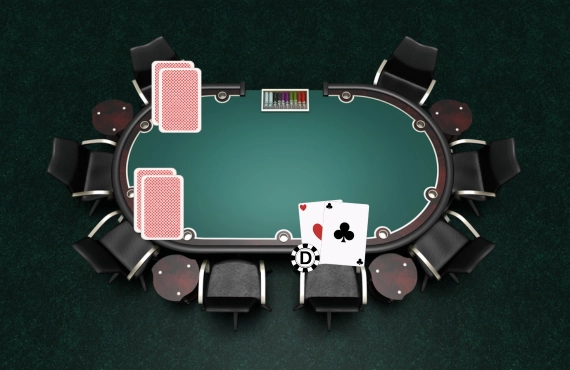
Post-Flop Play
Post-flop is where the weak players crumble like a biscotti in coffee. These are the main red flags:
- The Ghost C-Bettor: They raise pre-flop, then check-fold on a missed flop. Translation: “I have nothing, please take the pot.”
- Exploit them: Bluff them off hands by betting 50-60% pot on the flop, and they’ll vamoose.
- The Draw Chaser: They call your turn bet with a gutshot (20% equity) like they’re owed a favor by the poker gods.
- Exploit them: Charge them maximum for draws. Bet big on the turn to punish their naive hope.
- The Sizing Psychic: They min-bet the river as a “blocker” or overbet 200% pot with the nuts. There’s no in-between.
- Exploit them: Snap-call their tiny bets (they’re bluffing) and fold to their massive overbets (they’ve got it).
Showdown Clues
Showdowns are weak players’ confession booths, so listen up!
- The Open-Book Reveal: They show down 9-4 offsuit after calling three streets. “I thought a 4 might come!”
- Exploit them: Tag them as a chronic chaser and value bet thinner hands, knowing that they’ll call.
- The Bluff Baby: If they bet big on the river, they’ve got it. If they check, they’re folding—zero balance.
- Exploit them: Fold against their aggression unless you have a monster. Bluff them mercilessly when they check.
- The Tilt Volcano: After losing a pot, they type “I’m done,” reload, and shove 72 offsuit.
- Exploit them: Target them immediately—they’ll overplay their weak hands and underfold.
Strategies to Exploit Weak Opponents
Weak poker players are kinda like malfunctioning vending machines—they’re predictable, they spit out freebies, and if you know how to shake them just so, they’ll empty their pockets. How can you turn their flaws into your fortune? By doing the following!
Against Loose-Passive Players (“Calling Stations”)
These players all treat folding like it’s a deadly sin. They’ll call you down with third pair, ace-high, or even a dream. What’s your mission with these marks? To extract value, not any drama.
– If you have top pair or better, size up! They’ll call with worse (e.g., bet 75% pot on the river with two pair—they’ll pay you off with second pair).
– Example: You hold A♠K♣ on a K♥8♦3♠ board. Bet 80% pot on all three streets—they’ll cling to their K♥7♦ like it’s a life jacket.
– Bluffing a calling station is like trying to drown a fish, and they’ll hero-call with bottom pair, so stick to value hands.
– Let them catch up. Check the flop with a set, then bomb the turn and river—they’ll talk themselves into paying you off.
Against Tight-Passive Players (“Nits”)
These players guard their chips like it’s their full-time job, and they’ll fold unless they’ve got the nuts. What time is it? It’s time to bully them (but don’t be mean about it).
– Raise their big blind with any two cards. They’ll fold 80% of hands pre-flop.
– Example: You’re on the button with 7♥2♦. Raise 3x—they fold A♥5♠ in the big blind.
– If they check the flop, bet 50% pot. They’ll fold unless they’ve hit a piece.
– Example: Board is Q♣8♠3♥. They check—bet with 9♦6♦. They’ll muck A♠2♠.
Bet big when they show any sign of weakness, and they’ll fold their hands like A-J on a Q-high board.
Against Loose-Aggressive Players (“Maniacs”)
This kind of player thinks that aggression is a personality trait. They’ll bet, raise, and bluff like their rent’s due tomorrow, and they don’t have it, so all you have to do is let them self-destruct.
– Call down with marginal hands (e.g., top pair). They’ll barrel off with air.
– Example: You have K♦Q♠ on a K♥7♣2♦ board. Check-call their bets—they’re holding 5♥4♥.
– Don’t play 8♥7♥ against a maniac. They’ll out bluff you, so stay with strong holdings.
– Check your flopped flush, let them bet three streets, and then spring the trap on the river.
Against Players on Tilt
Tilted players are emotional powder kegs. They will chase losses, overbet, and curse their ancestors and the poker gods, and you can exploit their meltdown!
– Watch for chat rants (“RIGGED!!”) or sudden all-ins after a bad beat.
– 3-bet their opens light. They’ll call with junk or shove recklessly.
– Example: They raise UTG—you 3-bet with J♣9♣. They snap-shove 7♦3♦.
Check-raise their tilt-induced bluffs. They’ll stack off with ace-high.
Using Poker HUDs and Stats to Spot Weakness
How can you use poker HUDs and stats to spot player weaknesses? We have some handy cheat codes—all you have to do is tweak your strategy and watch as their leaks become your leverage!
- VPIP >35% = Loose Player – These players enter too many pots with weak hands (e.g., J♦3♣, 8♥5♠). Exploit them by 3-betting wider (target their limps or opens) and value betting aggressively (they’ll call with second pair or worse).
- PFR <15% = Passive Pre-Flop – They limp or call instead of raising, signaling a weak range. Punish them by stealing their blinds with any two cards and isolating their limps (raise 4x to force folds or trap them with weak holdings).
- AF <1.5 = Low Aggression – They check/call far more than they bet/raise. Bluff relentlessly (bet 60% pot on missed flops) and float their weak bets (call flop, steal turn) to dominate post-flop.
- WTSD >30% = Calling Station – They over-call to showdown with marginal hands (e.g., 4th pair, ace-high). Bet for maximum value (even mid-strength hands win) and avoid bluffing—they’ll hero-call with garbage.
Table Selection: Finding the Softest Games
Choosing the right poker table is like picking a ripe avocado—muck it up, and you’re stuck with a pricey, inedible fruit. But if you get it right, hey, you’ve got the main ingredient for guacamole! Or avocado toast; it’s up to you. Anyway, here’s how to find the softest poker games online:
| Characteristic | Why It Works | What To Do |
|---|---|---|
Hunt for High Average Pot Sizes | Loose players love to splash around. Big pots mean they’re calling too much, bluffing recklessly, or overvaluing weak hands. | – Scan the lobby for “Avg Pot” stats 2-3x the big blind. |
Dodge Low VPIP Tables | Tables with VPIP <25% are packed with tight players who only play premium hands. You’ll bleed chips battling their disciplined ranges. | Use your HUD to check the average VPIP before sitting. If the table VPIP is green (low) in your poker client, bounce up out of there! |
Recon the Table Chat | Recreational players treat chat like it’s a therapy session. They’ll rant about bad beats (“I had AA vs 72o!!!”), blame luck, or even apologize for winning. | Lurk at tables with active chat. Phrases like “gg” or “unlucky” = soft players. Steer clear of those silent tables—pros are concentrating on playing, not typing. |
Abuse Lobby Filters | Gambling sites with poker will let you filter for player profitability, hands per hour, etc., and Fish leave digital breadcrumbs. | Filter for “High Hand %” (indicates loose players). Don’t use the “High Winners” tabs—those are literal shark tanks. Use “Seat Preferences” to find tables with 2-3 open seats (fish swim in schools). |
Mindset: Staying Sharp and Don’t Get Cocky
Poker humility is like a seatbelt—it won’t make you invincible, but it will keep you from flying through the windshield when variance hits. The following is how to stay grounded while exploiting weak players (even when they “luckbox” their way to a win):
Weak Players Get Lucky, Too (And That’s Okay)

- The Trap: You’ve played perfectly, but they spike a two-outer on the river and type “EZ GAME” in chat. Cue the tilt tsunami.
- The Fix: Bad beats are taxes on long-term profits. If they’re chasing 5% draws, let them. You’ll win 19 times out of 20.
- Track your EV: Use tools like PokerTracker to see if you made +EV decisions, not just whether you won the pot.
- Mute the chat: Don’t let their emoji spam or “LOL” get into your head and rattle you.
Discipline Over Desperation
- The Trap: After a losing session, you start bluffing, calling stations, or folding to nits “because nothing’s working.”
- The Fix: Stick to the script! If your strategy works 60% of the time, don’t abandon it just because of a 40% bump in the road. Set stop-loss limits and quit after losing 3 buy-ins. Why? Because tilt is a silent bankroll killer.
- Review hands cold: Analyze decisions without results bias. Ask yourself: “Would I do this again?”
Keep Sharpening Your Edge

- The Trap: You have been absolutely crushing weak players for months… until they adapt (or worse, you get lazy).
- The Fix: Study their evolution! Fish eventually learn to fold pre. Update your HUD stats and adjust.
- Learn new exploits: Rabbit hole forums, courses, or hand history reviews—the best players are eternal students.
- Mix up your game: If you’ve only mastered NLHE, try PLO. Soft games are everywhere.
Conclusion: Fold’em, Hold’em, Exploit’em
Here’s the unvarnished truth: online poker isn’t a test of skill alone—it’s also a test of patience and precision. Weak players are the bankroll of your profits, and exploiting them isn’t optional—it’s an important part of the game if you want to win!
To recap our main points:
- Profit thrives on leaks: Limpers, over-callers, and emotional players will fund your wins.
- Adaptation beats perfection: No GTO mastery is required—just punish predictable mistakes.
- Table selection is king: Avoid the pros, sniff out those fish, and guard your edge like it’s the Crown Jewels.
What’s on your checklist? Spot the limpers, punish the callers, and ignore any tantrums in the chat. Stay disciplined when variance bites, and never let a bad beat mess up your strategy. Weak players will come and go, but a good mindset? That has staying power. You know what else has staying power? Gambling responsibly, so even if you are at the softest tables, don’t get carried away.
If you want a little bit of help before or even while your playing, check out our Poker Cheat Sheet. There you can get the most important information you need to be successful and even find a free printable PDF for it.
So, what’s next? Stop reading this and start playing! Find a table, spot the leaks, and stack those chips. The easy money is hiding in plain sight right across the table from you.
Can Gambling Make You Smarter? The Cognitive Skills You Build at the Tables
Yes, certain types of gambling can genuinely make you smarter. Skill-based games like poker, blackjack, and sports betting develop real cognitive abilities — probability assessment, pattern recognition, emotional regulation, and strategic decision-making — that transfer directly to everyday life. A 2019 study in Frontiers in Psychology found that experienced poker players showed measurably stronger executive function and decision-making under uncertainty compared to non-players. The caveat: none of this applies to pure-chance games like slots or roulette, which offer zero cognitive development.
That distinction matters. Lumping all gambling into a single “luck-based” category is like calling chess and coin-flipping the same activity. The games where your decisions influence outcomes are the ones that build transferable mental skills — and those skills compound over time.
Does Gambling Actually Require Skill?
Skill-based gambling requires the same core competencies that drive success in business, investing, and competitive sports: risk assessment under incomplete information. When a poker player calculates pot odds, reads an opponent’s betting pattern, and decides whether to fold or raise, they are running a miniature cost-benefit analysis in real time. That mental process is nearly identical to what a hiring manager does when evaluating candidates or what an investor does when weighing a stock purchase.
Slots, roulette, keno, and lottery-style games are designed around pure randomness. No amount of practice or study changes the house edge on these games. All of the cognitive benefits discussed in this article apply exclusively to skill-based games like poker, blackjack, and sports betting.
Games like blackjack involve running arithmetic under pressure. Card counters track ratios of high to low cards, adjust bet sizing based on calculated advantage, and know precisely when the math says to walk away. Card counting in blackjack is not mystical intuition — it is applied probability, and the mental discipline required to execute it consistently trains the same neural pathways used in budgeting, data analysis, and financial planning.
What Cognitive Skills Does Gambling Develop?
Skill-based gambling strengthens four core cognitive abilities: strategic decision-making, mathematical reasoning, emotional regulation, and pattern recognition. Each of these develops through repeated exposure to high-stakes choices with real consequences — a training environment that books and lectures simply cannot replicate.
Strategic Decision-Making
Poker forces you to weigh risks in real time with incomplete information. Should you fold a weak hand, call a suspected bluff, or raise to put pressure on a marginal holding? Every decision is a cost-benefit analysis with money on the line. Over thousands of hands, this trains you to think two or three steps ahead, anticipate responses, and allocate resources under uncertainty.
That same framework applies outside the casino. Negotiating a salary, choosing between job offers, or deciding whether to invest in a home renovation all require the same skill: evaluating risk versus reward with imperfect information.
Math Skills and Probability
Blackjack is not luck — it is basic arithmetic in motion. Players who learn optimal strategy for skill-based casino games track ratios, calculate house edges, and understand expected value. A player using basic strategy reduces the house edge to under 0.5%, and card counters can occasionally push the edge in their favor.
- Pot odds in poker: calculating whether the potential payout justifies the cost of staying in the hand
- Expected value in sports betting: determining whether a line offers positive EV based on your probability estimate
- Risk-of-ruin calculations: knowing how much of your bankroll to risk on any single wager
These are not abstract exercises. Players who internalize this math find that budgeting, investing, and even planning a road trip become more intuitive because numbers stop being theoretical and start being practical.
Emotional Regulation and Patience
Losing a big hand and going on tilt — letting emotional frustration destroy your decision-making — is the fastest way to blow through a bankroll. Experienced players have learned the instant reset: no anger, no sulking, no revenge bets. They treat each hand as an independent event because the math demands it.
Use the “three-loss rule” to build emotional discipline. If you lose three consecutive hands or bets, take a mandatory 15-minute break. Walk away, breathe, and reset. This habit trains the same composure that helps you handle workplace conflicts, difficult conversations, and high-pressure deadlines without reactive decision-making.
Pattern Recognition
Spotting a player’s tell or identifying a dealer’s unconscious habits is not intuition — it is trained pattern recognition. Experienced players process dozens of micro-signals simultaneously: bet sizing, timing, posture, verbal cues. Over time, the brain builds pattern-matching shortcuts that operate faster than conscious thought.
This skill transfers directly to reading people in business negotiations, detecting red flags in contracts, or noticing trends in data before they become obvious. Sports bettors who track line movements, injury reports, and weather patterns are essentially performing the same kind of multi-variable analysis that data scientists use daily.
Real-World Examples of Gambling Building Cognitive Skills
The connection between gambling skill and real-world success is not theoretical. Multiple high-profile professionals built their careers on cognitive abilities developed at the tables.
Poker Professionals Who Crossed Over
- Daniel Negreanu: Six World Series of Poker bracelets, over $42 million in earnings, and widely regarded as one of the greatest psychological readers in poker history
- Vanessa Selbst: Yale Law graduate who applied analytical rigor to dominate high-stakes poker, earning $11.8 million before transitioning to a hedge fund career
- Maria Konnikova: A psychologist and author who used poker as a research tool for studying decision-making — and accidentally became a professional, winning over $300,000
- Annie Duke: Former poker champion who now coaches Fortune 500 CEOs on decision-making under uncertainty, applying principles directly from the poker table
- Bill Chen: Ph.D. in mathematics who applies game theory from poker to quantitative trading on Wall Street
Chris Moneymaker turned an $86 online qualifier into a $2.5 million WSOP main event win in 2003, proving that disciplined study and strategic thinking can overcome a lack of pedigree. His win triggered the “poker boom,” drawing millions of new players who discovered that the game rewards preparation over prestige.
Can Anyone Learn These Skills?
Every cognitive skill built through gambling is learnable. You do not need to be a math prodigy or a natural-born poker face. The learning curve works like acquiring any new competency: the early stages feel awkward and slow, but consistent practice builds instinct over time.
Start With Free Play and Low Stakes
- Poker: Begin with play-money tables on PokerStars Play or WSOP Social Casino, then move to micro-stakes ($0.01/$0.02 blinds)
- Blackjack: Practice on free simulators before sitting at $5-minimum tables
- Sports betting: Track mock bets on platforms like Action Network before wagering real money
Study the Theory
Books like “The Theory of Poker” by David Sklansky cover foundational concepts including implied odds, pot equity, and bluffing frequencies. “Beat the Dealer” by Edward O. Thorp pioneered the card-counting system that proved blackjack is beatable with mathematical discipline. For the mental side, “The Mental Game of Poker” by Jared Tendler addresses tilt management, emotional resilience, and focus during extended sessions.
Use Modern Training Tools
Software has transformed how players develop skills in 2026.
- GTO Wizard: AI-powered solver for poker scenarios, equity calculations, and interactive training
- PioSolver: Analyzes hand ranges and optimizes decision trees for advanced play
- PokerSnowie: Uses AI to identify leaks in your play style and suggest adjustments
- Equilab: Free equity calculator for comparing hand ranges and running practice quizzes
Combine software analysis (GTO Wizard or PioSolver) with community feedback from platforms like Upswing Poker’s Discord or Run It Once’s forums. Cross-referencing solver outputs against real-world hand histories accelerates your learning faster than either approach alone.
The Ethical Side: Risks You Cannot Ignore
Skill-based gambling can sharpen your mind, but the risks are real and serious. Gambling disorder affects roughly 1-3% of adults globally and rewires the brain’s reward system to prioritize short-term dopamine hits over long-term consequences. Unlike substance abuse, problem gambling has no visible physical symptoms, which makes it harder to detect early.
Warning Signs of Problem Gambling
- Chasing losses with the belief that you will win it back next hand
- Lying about time or money spent gambling
- Borrowing money to fund bets
- Neglecting work, relationships, or hobbies
- Feeling anxious at the thought of stopping
Cognitive Biases That Fuel Bad Decisions
Even skilled players fall prey to cognitive distortions if they are not vigilant.
- Gambler’s Fallacy: believing past outcomes influence future results (“Red has hit five times, so black must be next”)
- Illusion of Control: overestimating your influence over luck-based outcomes
- Sunk Cost Fallacy: continuing to bet to justify prior losses (“I have already spent $500, I cannot quit now”)
The connection between gambling and mental health is well documented. Problem gamblers are three times more likely to experience depression and five times more likely to attempt suicide. The average problem gambler accumulates $40,000 to $70,000 in debt, and roughly 20% of U.S. bankruptcies involve gambling-related financial distress.
How to Protect Yourself
Treat gambling like a sport, not a side hustle. Set firm limits before every session and honor them without exception.
- Bankroll limits: risk only 1-2% of your total bankroll per session
- Time limits: set a timer and stop when it goes off, regardless of whether you are winning
- Loss limits: decide in advance how much you can afford to lose and use tools like Gamban or BetBlocker to enforce deposit caps
- Self-exclusion: programs like NCPG (U.S.) and GamStop (UK) let you block access to gambling sites for months or years
Play Safe: Gambling should be fun, not stressful. Set limits, stick to your budget, and never chase losses. If you or someone you know has a gambling problem, call 1-800-522-4700 or visit ncpgambling.org. For more resources, see our Responsible Gambling page.
The Bottom Line: Mind Over Money
Gambling at its best is less about beating the odds and more about training your mind. The tables teach you to weigh risks with real stakes, learn from losses without emotional spiraling, and maintain discipline when pressure mounts. Those lessons transfer far beyond the felt — into career decisions, financial planning, and personal relationships.
- Skill-based gambling sharpens critical thinking, math fluency, and emotional control
- The cognitive gains transfer to career moves, investing, and everyday decision-making
- Pure-chance games (slots, roulette, keno) offer none of these benefits
- Without discipline and limits, gambling’s risks far outweigh any cognitive rewards
The smartest bet you can make is on your own preparation. Study the theory, practice at low stakes, set firm limits, and treat every session as a learning opportunity. For more on building a disciplined approach to gambling, explore our full library of guides and strategy content on GamblingSite.com.
Does poker improve math skills?
Yes. Poker requires constant probability calculations — pot odds, implied odds, equity percentages, and expected value. Players who practice regularly internalize these math concepts and find they transfer naturally to budgeting, investing, and data-driven decision-making in everyday life.
Can gambling help with decision-making?
Skill-based gambling like poker and blackjack trains decision-making under uncertainty with real consequences. Research shows experienced poker players demonstrate stronger executive function and more rational risk assessment than non-players, skills that apply directly to business negotiations, career choices, and financial planning.
What cognitive skills does gambling develop?
Skill-based gambling develops four core cognitive abilities: strategic decision-making (weighing risk vs. reward with incomplete information), mathematical reasoning (probability and expected value calculations), emotional regulation (managing tilt and maintaining composure under pressure), and pattern recognition (reading opponents and identifying trends in data).
Is there a difference between skill-based and luck-based gambling for brain development?
Absolutely. Skill-based games like poker, blackjack, and sports betting require active decision-making that strengthens neural pathways. Pure-chance games like slots, roulette, and lottery tickets involve no strategic input and offer zero cognitive development. The distinction is critical — only games where your decisions influence outcomes build transferable mental skills.
How do I start gambling for cognitive benefits without risking too much money?
Begin with free-play apps like PokerStars Play or free blackjack simulators to learn fundamentals risk-free. Once comfortable, transition to micro-stakes games ($0.01/$0.02 poker blinds or $5-minimum blackjack tables). Set strict bankroll limits (risk only 1-2% per session), time limits, and loss limits before every session. Use tracking software to review decisions afterward.
Can gambling become addictive even when played for cognitive benefits?
Yes. Gambling disorder affects 1-3% of adults regardless of their initial motivation. Even players focused on skill development should watch for warning signs like chasing losses, lying about gambling activity, or feeling anxious about stopping. Set firm limits, use self-exclusion tools if needed, and call 1-800-522-4700 or visit ncpgambling.org if gambling stops being fun.
The Beginner’s Guide to Beating the House: Is It Really Possible?
No, you cannot consistently beat the house at a casino. Every casino game is built with a mathematical advantage called the house edge, which guarantees the casino profits over time. Blackjack with basic strategy carries a house edge as low as 0.5%, while slot machines typically take 5-10% of every dollar wagered. Short-term wins are absolutely possible, but no legal strategy eliminates the house’s built-in advantage.
That said, understanding how the house edge works and choosing the right games can make a real difference in how long your bankroll lasts and how much entertainment you get for your money. Games like blackjack, craps, and baccarat offer significantly better odds than slots or American roulette, and disciplined bankroll management can keep you in the game longer.
This guide breaks down the math behind casino odds, debunks common gambling myths, and walks through practical strategies that help you play smarter. You will not find a secret formula here, but you will learn how to stretch your dollars further, avoid costly mistakes, and keep gambling fun.
How Do House Edges Compare Across Casino Games?
The house edge varies dramatically from game to game, and choosing wisely is the single biggest decision you can make as a player. A game with a 0.5% house edge returns $99.50 of every $100 wagered on average, while a 10% house edge game keeps $10. Over hundreds of bets, that gap adds up fast.
| Game | House Edge | Skill Factor |
|---|---|---|
| Blackjack (basic strategy) | ~0.5% | High |
| Baccarat (Banker bet) | ~1.06% | None |
| Craps (Pass/Don’t Pass) | ~1.4% | None |
| Roulette (European) | ~2.7% | None |
| Roulette (American) | ~5.26% | None |
| Slot Machines | ~5-10% | None |
The takeaway is straightforward: if you want the best chance of walking away with money in your pocket, stick to the top of that table. Games like blackjack, baccarat, and craps give you far more value per dollar than slots or American roulette.
What Does ‘Beating the House’ Really Mean?
“Beating the house” means walking away from a casino with more money than you started with, having overcome the mathematical advantage built into every game. In practice, this happens regularly in short sessions thanks to normal variance, but it is virtually impossible to sustain over thousands of bets because the house edge grinds down every player’s bankroll over time.
The house edge is the slight mathematical advantage baked into every casino game. In roulette, the green “0” (or both “0” and “00” in American roulette) tilts the odds in the casino’s favor. In blackjack, the fact that the player acts first and can bust before the dealer even draws a card creates the edge. While individual players can and do have winning sessions, the overall game design ensures the casino comes out ahead across all players and all bets over time.
A 5% house edge means the casino expects to keep $5 for every $100 wagered over time. That does not mean you lose $5 every session, but across thousands of bets, the math always favors the house.
The allure of winning big keeps people coming back, and there are ways to improve your chances. No strategy guarantees a win, but understanding the house edge and playing with a plan can make a meaningful difference in your results.
What Are the Biggest Myths About Beating the House?
Most gambling myths are based on the false belief that past results influence future outcomes. Every spin of a roulette wheel, every pull of a slot lever, and every roll of the dice is an independent event governed by random number generators or physical randomness. No pattern exists to exploit.
- “You just need to find a lucky machine.” Slot machines operate using random number generators (RNGs), meaning every spin is independent of the one before it. There is no such thing as a “due” machine or one that is secretly luckier than others.
- “Winning streaks are all about skill.” While skill matters in games like blackjack, streaks are a random result. The belief in “hot” or “cold” streaks tricks players into betting more than they should.
- “Professional gamblers know a secret you don’t.” Pro gamblers do not have mythical strategies. They understand the odds better than most and manage their bankrolls wisely. It is discipline and knowledge, not hidden tricks.
- “You can predict slot payouts based on timing.” Some players believe slots are more likely to pay out late at night or early in the morning. RNGs ensure that every spin is independent regardless of time of day.
- “Casinos tighten or loosen games during certain times.” Odds remain fixed and are governed by game design and state regulations. Casinos cannot flip a switch to change payout percentages on the fly.
- “Always bet on the same color in roulette to win eventually.” This is the gambler’s fallacy, the belief that past results influence future outcomes. If red has hit ten times in a row, the odds on the next spin remain exactly 50/50 (minus the house edge from the green zero).
These myths persist because they feed into the hope of a big win. Separating fact from fiction before you place your bets is one of the most valuable things you can do as a player.
How Do Casinos Keep You Playing?
Casinos use a combination of architecture, psychology, and sensory design to keep players engaged longer and spending more. Every element of the casino floor, from the carpet pattern to the ceiling height, is engineered to maximize time on the floor. Understanding these tactics is your best defense against them.
Labyrinthine Layouts
Nearly every physical casino uses a maze-like floor plan with very few straight paths. The deliberate design keeps players wandering and constantly exposes them to more gambling opportunities. Finding the exit often requires passing dozens of tables and machines.
Strategic Service Placement
Essential amenities like restrooms, restaurants, and cashiers are usually situated deep within the casino. Getting to them requires crossing the entire gaming floor, increasing your exposure to more games along the way.
Ambient Environment
Lighting, sounds, and even scents are carefully controlled to create a stimulating but comfortable atmosphere. Upbeat music and the jingle of winning slot machines create a sense of excitement, while the absence of clocks and windows makes it easy to lose track of time entirely.
Illusion of Control
Certain casino games give players a false sense of control, making them believe their actions directly influence outcomes. Choosing your own lottery numbers or throwing the dice yourself in craps are examples of this psychological tactic that encourages prolonged play.
Near-Miss Effect
Slot machines frequently display outcomes that land just one symbol away from a jackpot. These near-misses trigger a psychological response that makes players believe a win is imminent, motivating them to keep playing even when they are losing.
Free alcoholic drinks are not generosity. They impair judgment and lower inhibitions, making it easier to overspend and chase losses. Stick to water or non-alcoholic drinks while you are playing.
Tips to Stay in Control at the Casino
- Be Time-Aware: Set a timer on your phone and check it regularly so you know exactly how long you have been playing.
- Set Personal Limits: Decide on a budget and time frame before you sit down, and do not deviate from either one.
- Watch the Complimentary Offers: Free drinks and perks are designed to keep you at the table longer. Enjoy them cautiously.
Casinos rely on keeping you engaged and distracted. When you recognize these tactics, you can stay in control and make smarter decisions about when to walk away.
Which Casino Games Give You the Best Chance to Win?
Blackjack, craps, and baccarat offer the lowest house edges of any popular casino games, making them the best choices for players looking to stretch their bankrolls. All three have house edges under 1.5% when played correctly, compared to 5-10% for most slot machines.
Blackjack
Blackjack is one of the most beginner-friendly options because it combines strategy with favorable odds. Knowing when to hit, stand, split, or double down can lower the house edge to as low as 0.5%, which is far lower than most other games on the floor.
Strategy cards that outline the best move for every hand combination are widely available, and most casinos allow players to reference them at the table. Even a complete novice can make informed decisions from the very first hand.
Craps
The craps table looks chaotic at first glance, but sticking to the simplest bets makes it one of the most rewarding games for players. The Pass Line and Don’t Pass Line bets carry a house edge of only 1.4%.
Once you are comfortable, you can also place Odds Bets, which carry zero house edge. The payout is based purely on the roll of the dice with no added casino advantage, making craps a hidden gem for players who want to minimize losses.
Baccarat
Baccarat is ideal for beginners because of its simplicity and player-friendly odds. You bet on either the Banker, the Player, or a Tie. The Banker bet is statistically your best option with a house edge of only 1.06%. Avoid the Tie bet, which carries a much higher house edge despite its tempting payout.
If you want to improve your chances of leaving the casino with money in your pocket, concentrate on games that combine manageable house edges with simple rules. Blackjack allows for strategy, craps offers no-edge betting opportunities, and baccarat delivers consistently low risk.
What Strategies Can Improve Your Odds?
No strategy completely overcomes the house edge, but several practical approaches can reduce your risk and help you make better decisions at the table. The difference between a player who goes broke in an hour and one who plays all evening often comes down to discipline, not luck.
Learn Basic Blackjack Strategy
Blackjack is one of the rare casino games where skill makes a measurable difference. Learning basic strategy, which tells you the mathematically optimal move for every hand combination, can cut the house edge to as low as 0.5%. Strategy cards are available everywhere online and in casino gift shops, and casinos allow you to use them at the table.
Practice Bankroll Management
Decide on a budget before you start playing and stick to it regardless of what happens. Break your bankroll into smaller amounts for each session, and never chase losses by dipping into funds you did not plan to gamble with. A solid rule of thumb: bet no more than 1-5% of your total bankroll on a single wager. This minimizes risk while extending your playtime.
Start Small with Bets
Smaller bets let you play longer, learn the game’s rhythm, and avoid losing large amounts early. This approach works well for blackjack, craps, and baccarat, where you can focus on improving your strategy while keeping losses manageable.
Avoid High-House-Edge Bets
Some bets are designed to heavily favor the house, and avoiding them is the easiest way to improve your results. In roulette, stick to even-money bets like red/black or odd/even rather than single-number bets. In craps, focus on the Pass Line or Don’t Pass Line instead of complicated proposition bets with much worse odds.
Take Breaks and Stay Focused
Casinos are designed to keep you playing as long as possible. Walking away from the table periodically helps you reset, evaluate your progress, reassess your budget, and avoid emotional betting. Short breaks keep you refreshed and lead to better decisions.
Incorporating these strategies into your gameplay means entering the casino with a plan and a sense of control. No strategy guarantees a win, but playing thoughtfully makes the experience more enjoyable and less costly.
How Does Psychology Affect Your Gambling Decisions?
Gambling is as much a mental game as a mathematical one. Your brain’s reward system, cognitive biases, and emotional responses all influence how you bet, and casinos are experts at exploiting these psychological tendencies to keep you playing longer and betting more.
Why It Feels Like Luck Is About to Change
The gambler’s fallacy is the belief that if something has not happened for a while, it is somehow “overdue.” If the roulette ball has landed on red five times in a row, many players feel black must be next. But every spin is completely independent. The wheel has no memory, and the odds reset to exactly the same probability on every spin. This false pattern recognition drives players to bet more than they should.
When Losing Turns Into Chasing
Chasing losses is one of the most destructive behaviors in gambling. After a losing streak, the urge to win it all back with one big bet can feel overwhelming. That is when gambling stops being entertainment and becomes an emotional reaction. The solution: set your loss limit before you sit down and treat it as non-negotiable. Walking away is not losing. It is keeping control.
How Near-Misses Keep You Hooked
Slot machines are specifically designed to show outcomes that land just short of a jackpot. Seeing two matching symbols with the third barely off triggers the same brain response as an actual win, making you feel like success is just one more spin away. Add in bright lights, celebratory sounds, and complimentary drinks, and the environment is engineered to override your rational decision-making.
Practical Tips to Protect Your Mindset
- Set Time Limits: Decide how long you will play before you start, and take breaks every 30-60 minutes to stay clear-headed.
- Budget Your Gambling Money: Bring only what you are okay with losing and leave credit and ATM cards at home. When the cash runs out, you are done.
- Play with a Purpose: Choose games because you enjoy them, not because you are chasing wins.
- Know the Signs of Overdoing It: If you feel stressed, frustrated, or desperate, it is time to walk away.
- Skip the Alcohol: Free drinks impair judgment and make it easier to overspend or bet impulsively. Stick to water or non-alcoholic options while playing.
Is It Really Possible to Beat the House?
In the short term, yes. In the long term, mathematically no. The house edge ensures that the casino will always come out ahead across enough bets, but individual sessions can absolutely end in profit for the player. Understanding the distinction between short-run variance and long-run expectation is the key to having realistic expectations.
The Long Run vs. The Short Run
In any given session, luck plays a huge role. You could hit a streak where the cards go your way or the dice land just right, and you walk away a winner. Many players have this experience and believe they have cracked the system. But over hundreds or thousands of bets, the house edge gradually pulls every player’s results toward the expected loss. It is not personal. It is math.
How Professionals Find an Edge
Professional gamblers do not rely on luck alone. They rely on consistency, discipline, and finding situations where they can tilt the odds slightly in their favor.
- Card Counting in Blackjack: Skilled players track the ratio of high to low cards remaining in the deck to make more informed bets. It is not illegal, but casinos will ask suspected card counters to leave.
- Exploiting Promotions: Pro players take full advantage of loyalty programs, casino bonuses, and promotional offers to boost their expected returns.
- Poker: Unlike most casino games, poker pits players against each other rather than the house. Skilled poker players can win consistently by reading opponents and applying game theory.
Why Beating the House Is Not Always the Goal
For most players, the real goal should be enjoying the experience without losing more than you are comfortable with. Gambling is entertainment, not a financial strategy. The excitement of the games, the social interaction, and the atmosphere are what keep people coming back, not the promise of guaranteed riches.
Smart Choices Make a Difference
You cannot eliminate the house edge, but you can lessen its impact by choosing games with better odds like blackjack or baccarat and sticking to bankroll management strategies. Play responsibly, set limits, and remember that gambling should always be a form of entertainment.
How Can You Maximize Fun While Gambling?
The players who enjoy gambling the most are the ones who treat it like any other form of entertainment: they set a budget, pick activities they genuinely enjoy, and do not pressure themselves to come out ahead. Here are seven ways to keep the experience positive.
- Play Games You Actually Enjoy: If you love the strategy of blackjack, the energy of craps, or the simplicity of slots, play what makes you happy. Gambling is an activity, not an obligation.
- Set Time Limits: Before you start, decide how long you want to play and set a timer on your phone. Pauses prevent burnout and help you stay sharp.
- Take Advantage of Casino Perks: Loyalty programs, free spins, and match bonuses add entertainment value. Just do not let them dictate how long you stay or how much you spend.
- Go with Friends: Gambling with friends adds a social element. You can celebrate wins together, keep each other accountable, and make the night more memorable.
- Have a Budget and Stick to It: Decide how much you are okay with losing before heading out. Only bring cash and leave cards at home so you cannot spend more than planned.
- Take Breaks: Walk around, grab food, or step outside for fresh air. Hours at the tables drain you physically and mentally, and breaks keep you refreshed.
- Focus on Fun, Not Profits: Approach gambling like a night out. The entertainment is the product you are paying for. Wins are a bonus, not the goal.
With the right mindset and a few simple boundaries, gambling can be an exciting and enjoyable experience every time.
Play Safe: Gambling should be fun, not stressful. Set limits, stick to your budget, and never chase losses. If you or someone you know has a gambling problem, call 1-800-522-4700 or visit ncpgambling.org. For more resources, see our Responsible Gambling page.
Frequently Asked Questions
What Is the House Edge, and How Does It Work?
The house edge is the mathematical advantage built into every casino game that ensures the casino profits over time. For example, if a game has a 5% house edge, the casino expects to keep $5 for every $100 wagered. Games like blackjack (0.5%) and baccarat (1.06%) have lower house edges, giving players a better shot compared to slots (5-10%) or American roulette (5.26%).
Can Skill Really Improve My Chances of Winning?
Yes, but only in certain games. Blackjack is the best example: learning basic strategy can lower the house edge to nearly 0.5%. Poker is another skill-based game since you compete against other players rather than the casino. Games like slots and roulette are purely luck-based, so no amount of skill changes the odds.
Which Casino Games Offer the Best Odds for Players?
Blackjack, craps, and baccarat consistently offer the best odds. Blackjack has one of the lowest house edges when played with basic strategy. Craps is beginner-friendly if you stick to Pass Line bets (1.4% edge), and baccarat’s Banker bet carries only a 1.06% edge. Roulette and slots are entertaining but favor the house more heavily.
Is Card Counting Illegal in Blackjack?
Card counting is not illegal, but casinos do not welcome it. If a casino suspects you are counting cards, they can ask you to leave or ban you from playing blackjack. It is a strategy that works only in specific conditions and requires significant practice, focus, and subtlety.
How Can I Avoid Losing Too Much Money While Gambling?
Set a budget before you start playing and do not exceed it. Decide how much you are comfortable losing and break your bankroll into smaller portions for each session. Never dip into non-gambling funds like credit cards or savings. When your allocated money runs out, stop playing.
Are There Proven Strategies to Beat the House Consistently?
There is no secret formula for consistently beating the house. Even professional gamblers focus on small advantages over time rather than guaranteed wins. The key is knowing the games, managing your bankroll, and playing smart. Gambling should be treated as entertainment, not as a reliable income source.
What Are Some Common Mistakes Beginners Make in Casinos?
The most common beginner mistakes include betting too much too fast, playing games without understanding the rules, and chasing losses. Always learn the basic rules and odds of a game before sitting down, start with small bets, and walk away when you hit your predetermined loss limit rather than trying to win it back.
Can You Stack the Deck in Your Favor?
Gambling is not just about luck. It is about knowing the games, understanding your odds, and staying in control. The house always has an edge, but you can still approach the casino floor with smart strategies that make the experience both fun and rewarding.
- Understand the House Edge: Knowing how casinos profit helps you make better game selections.
- Choose Games Wisely: Blackjack, craps, and baccarat have significantly better odds than slots or American roulette.
- Bust the Myths: Forget “lucky machines” and guaranteed winning streaks. Knowledge beats superstition every time.
- Stay in Control: Budget your money, take breaks, and avoid emotional decisions.
- Focus on Fun: Gambling is entertainment. Enjoy the experience without pressure to profit.
The best gamblers are not the ones who win the most. They are the ones who walk away having had a great time, with their budget intact and no regrets. Play smart, play responsibly, and remember that the real win is keeping gambling enjoyable.