
How to Effectively Manage Your Bankroll for Gambling Success
Gambling has it all: the lights, the sounds, the thrill, and, above all, the chance to win a lot of money. Like, BIG money.
And while it is exciting and can suck you into another world, there is something you need to get acquainted with before you even step foot into the online casino scene: smart bankroll management.
Sounds boring, right? You just want to play your favorite games and not think about anything else. That’s a mistake, and one that is overlooked by too many players. Even though it sounds like a snore, it is a big part of gambling success.
This isn’t just about mathematical calculations; it’s about creating a pastime that’s both fun and sustainable. Even the most seasoned gamblers can find new elements to their strategies through practical bankroll management. In our comprehensive guide, we’ll be exploring the five essential tips that can reshape and transform your entire approach to gambling, making it a more successful endeavor regardless of whether you’re a newbie or a pro!

Tip 1: Set a Realistic Budget
Think of our first tip like this: compare it to planning a vacation. You wouldn’t dare spend beyond your means, right? Of course, you wouldn’t! You don’t want to be stranded in some random tropical paradise with no way to get home! The same principle applies to gambling. Setting a budget based on your disposable income is like choosing a destination you can comfortably afford—it means you can have fun without any financial regrets or woes.
To calculate your gambling “vacation budget,” take a look at your finances and honestly ask yourself, “What can I afford to spend without affecting my daily life?” Remember, a budget isn’t a pair of shackles; it’s a way to gamble stress-free. Without one, you’re vulnerable to chance and impulse-based decisions.

Tip 2: Know Your Gambling Goals
Gambling goals are as distinctive as snowflakes—no two are alike. Some of us are in it for the sheer fun of it, while others are after the thrill of winning big money. Knowing what your personal goals are is kinda like choosing the right car for your lifestyle—it sets the pace and style of your travel. If you’re gambling for entertainment, your bankroll strategy might be more relaxed, a little like a leisurely road trip with some touristy stops along the way.
But if your ultimate goal is to make money, you’re going to have to map out a down-to-the-minute planned itinerary, where each mile is measured and deliberate. Positioning your bankroll with these goals makes sure that your gambling is not just a random walkabout in the Australian Outback but a well-charted trip toward your planned destination.
Tip 3: Keep Your Gambling and Personal Finances Separate
Think of your gambling bankroll and personal finances as two completely separate worlds. Guess what? Mixing them is like allowing the rules of one world to disrupt the balance of the other. To preserve this two-world balance, you should set up a dedicated bank account or digital wallet solely for your gambling funds.
This separation is not just practical for tracking your spending, but it’s also a safety net that guards your personal finances against the unpredictability of gambling. It’s a strong statement of responsibility—one that says, “This is my personal playground, and here are its boundaries.” Don’t cross those boundaries, and you’ll be A-OK!!

Tip 4: Know When to Walk Away
When you set win and loss limits, you are literally defining the rules of your game. It’s about recognizing that the temptation to keep playing is a carrot in front of a horse that can lead even the most seasoned gamblers astray. You must set a hard boundary, which is the point where you say, “This is enough.”
Whether it’s a win limit that lets you leave with a smile and some extra money in your pocket or a loss limit that serves as a gentle reminder to take a pause and regroup—these are the protectors of your bankroll. Adopting and practicing these limits is a testament to your strength and a reflection of your ability to practice responsible gambling.

Tip 5: Regularly Review and Adjust Your Bankroll Strategy
An effective bankroll management strategy is not static; it requires regular assessment and adjustment from time to time! Reviewing and adapting your strategy periodically allows you to make changes based on your recent gambling outcomes and any shifts in your finances—life changes, and so do financial situations.
Maybe you’ve had a streak of wins, or maybe it’s been a less-than-stellar gambling season. Adjust your strategy like you’d adjust anything else that needs a change in life. An adaptive approach means learning from your experiences while shoring up your ability to manage your bankroll in a smart and successful way.
Final Thoughts
Bankroll management is so much more than a set of rules; it’s a philosophy that guarantees your gameplay is as rewarding as it is fun. Get to know these five tips and know them well! You also have to understand that the intricacies of each game you play are just as important. For instance, understanding the house edge is pivotal in making informed decisions—it affects your gambling experience!
By combining smart bankroll management with a thorough understanding of game mechanics, you’re not just playing a game; you’re elevating an experience—one that respects your financial well-being and enriches your life. It’s a path of self-discovery, of finding balance among both the highs and lows, and ultimately, it’s about enjoying the ride.
If you want a full explanation of what this all looks like in practice, be sure to check out our guide, Bankroll Management in Sports Betting.
The Evolution of Live Dealer Casinos: How Technology is Changing the Game
Did you ever imagine you could just open an app on your smartphone or tablet and be transported into a casino? Probably not. Better yet, did you ever think you’d be able to play online with a live dealer? Definitely not!
No, you are not dreaming, so stop pinching yourself! In the dynamic landscape of online gambling, live dealer casinos have arrived and are blowing away all of our fantasies about being able to gamble online. Not only can you play whenever and wherever you please, but you can literally interact with the real, live dealers who are dishing out your poker cards or spinning that roulette wheel!
We have come so far in terms of gameplay, so we feel it’s only fair to give this industry its due props by exploring the evolution of live dealer casinos and how tech advancements have shaken up this sector, forever remolding how we gamble online.

Understanding Live Dealer Casinos
Before we get into the technological advancements, we have to explain what live dealer casinos are just in case you are unfamiliar.
Essentially, a live dealer casino is an online gambling platform that offers games hosted by real human dealers in real time. The games are streamed live from studio settings that mimic run-of-the-mill brick-and-mortar casinos. It’s like you’re actually IN the casino. Players can play games from either their computers or mobile devices and also interact with the live dealers and other players through a digital user interface.
Live dealer games are basically a combo of the online and physical casino happenings—they keep the ease of access of online games while incorporating the human element and social interaction typical of IRL physical casinos. You can play the most popular games in live dealer casinos, like blackjack, roulette, baccarat, and poker—just pick your poison and try your luck!

The Birth of Live Dealer Games
The dawn of live dealer games dates back to the early 2000s, marking a focal moment in online casino history. At the outset, these games were pretty rudimentary—they offered a basic yet new gameplay for people compared to the regular old online casino games. But the biggest attraction was the added human element: live dealers running the games in real-time, a feature that happened only in brick-and-mortar casinos. Instead of having to go to the casino, the casino came to you.

Technological Innovations Powering Change
The momentous leap in live dealer casino gameplay can be largely attributed to the amazing advancements in online casino play. There is now high-def video streaming, which has been a game-changer, and not just for the online casino industry. This allows players to see the gaming actions in crystal-clear quality, making the gameplay so much more immersive and realistic. The addition of multiple camera angles further adds to this, giving players a complete view of the gaming table, just like in an IRL casino.
Another striking advancement is the optimization of internet speeds and connectivity—if we didn’t have this and were still working with dial-up speeds, there wouldn’t be live dealer casinos! With the widespread adoption of faster (more like lightning-speed) internet services, such as fiber optics and 5G, streaming live dealer games has become smooth and uninterrupted, a major factor in maintaining the excitement and fast pace of live gaming.

Social Gaming: Interaction Between Players and Dealers
The interaction in live dealer games has undergone a tremendous transformation. Even though earlier versions did have some form of limited communication, primarily through typed chat, today, thanks to technological strides in audio and video communication, players can talk with dealers and fellow players in real time, creating a social atmosphere that’s pretty close to being seated at a table with others in a physical casino. This interactivity is not just limited to conversation; gestures and expressions of the dealers are now visible, which adds a layer of non-verbal communication that upgrades and heightens the overall gaming experience for customers.

Game Variety and Sophistication
The range of games available in live dealer format has also expanded quite a lot! From classics like blackjack and roulette to newer additions like game show-style games and VR-based experiences, the variety continues to expand. This growth caters to a much bigger base, guaranteeing that there’s something for every kind of player.
Additionally, the sophistication of these games has seen a remarkable upturn. Better graphics, augmented reality elements, and innovative game mechanics have made the games more appealing and entertaining. This sophistication not only improves playability but also reinforces the credibility and magnetism of online casinos.

The Contribution of Artificial Intelligence and Machine Learning
We can’t forget about the contributions that artificial intelligence (AI) and machine learning have made when it comes to personalizing the live dealer casino experience. AI algorithms analyze player behavior and preferences, allowing for customized game recommendations and tailored promotions and other offers. This personalized approach makes certain that players have a solitary and satisfying experience every single time they log in and play their favorite games.
Moreover, AI is instrumental in maintaining fairness and integrity in online casino games. It clears the way for monitoring and detecting any anomalies or patterns that might signal unethical practices, thus safeguarding the interests of both the online casino and its patrons.

The Future: Virtual Reality and Beyond
Looking ahead, the realm of virtual reality (VR) promises to take live dealer casinos to unprecedented heights. Players could step into a fully immersive casino world just by putting on a VR headset. This isn’t a far-fetched scenario in a sci-fi movie, mind you; it’s a reality that is happening in other tech sectors and platforms, so it’s only a matter of time before it’s available for online casinos.
As VR technology becomes more accessible, it will open doors to more immersive and interactive gaming experiences—at some point, players may not be able to tell the difference between virtual and IRL casinos.
Concluding Thoughts
The transformation of live dealer casinos is a testament to the nonstop innovation in technology and its use in the online casino gaming industry. From basic beginnings to high-tech, immersive experiences, live dealer games have reshaped the topography of online gambling. And as technology continues to push forward, it will undoubtedly introduce entirely new dimensions to live dealer casinos, further altering and polishing the player experience. In this always-changing arena, one thing remains clear: the future of live dealer casinos is bright, and it’s an evolution to keep our eyes on!
The Role of Luck vs Strategy in Roulette
Roulette is one of the most instantly recognizable casino games—it’s that wheel that could be considered ASMR as the ball clinks around before it comes to rest in a wooden slot with an assigned number.
The roulette table shows a grid divided into different numbers, which refer to those on the wheel, which are divided by the aforementioned wooden slots, into which the ball indicating the winning number is slotted in.
Players place bets on the number they think will win by selecting individual numbers or groups, rows, columns, and colors from the table grid, cross their fingers, and wait to see where the ball lands.
But is it all luck? Or is there a strategy involved in roulette? Let’s spin this wheel and see where we land in the debate on the role of luck vs strategy in roulette!

What is Roulette?
Previous versions of the pinwheel-style game had been known for centuries, but it was his invention that defined the modern game, and apart from changes to the numbers, including the addition of the green zero in European roulette, roulette has remained unchanged throughout hundreds of years in casinos.
The game has been played in its current form since the beginning of the 18th century when the French mathematician Blaise Pascal invented roulette.
In addition to the ever-expanding smartphone and device era, the gaming industry began to see the immense potential in online gaming applications, and that is where mobile roulette gaming found its home.
The online format has attracted attention for its innovative graphics, fun game design, and ability to offer customers customized experiences based on their gaming preferences, giving it an edge over other casino games.
Since roulette is such a popular game, it was one of the first games to find its way into online casinos—the rules are super simple and easily accessible to players, making it a fan favorite game among a lot of casino visitors. The game of roulette is also mostly based on luck, meaning players don’t need to learn complex strategies to compete—anyone who sidles up to the table to try their luck can win, regardless of experience.
And while we say roulette is mostly about luck, there are a few strategies players can use to minimize their losses and maximize their chances of winning.

Betting Strategies for Roulette
Betting strategies are designed to compensate for losses and reduce players’ chances of leaving the game with less than they started with. Although many would consider roulette to be purely a game of chance, there are some strategies that players use in an attempt to up their winnings.
And there are different versions of roulette to consider before you begin playing, as well as choosing if you want to play at a roulette app or in a brick-and-mortar establishment.
After that has been decided, there are some gambling experts who say knowing the differences between the European and American versions of roulette is essential if you are more than a casual player and plan to choose or bet on a roulette strategy.
Of course, no betting strategy is guaranteed and you should never, ever bet more than you can afford—always gamble responsibly! Even if your strategy calls for you to bet more money, don’t do it.
While we can’t promise you a big win if you employ these, here are some of the most common strategies when spinning the wheels of roulette:

Martingale Strategy
This is a system that most people have heard of, but it is not always the best for beginners, as you can quickly go into debt if you end up on a losing streak. A simple rule to remember is to always double your bet if you lose and go back to your original bet when you win. So if you start betting $1.30 and lose, next time you bet $2.60.
If you win, you will have a profit of $1.30 and start betting again with the same initial bet of $1.30. The aim of the Martingale strategy is to give you small wins while preventing big losses, but remember to set a limit, and if you lose it, you have to stop playing. A three-losing streak with Martingale betting will put you down $9.10, but with the Paroli system, which we’ll explain below, you’ll only be down $3.90.
Paroli System
This strategy works in reverse to the Martingale and is often a much better choice for beginners—it’s more conservative. With the Paroli system, after a win, you double your bet, but never more than three times. Reset the initial bet after three consecutive wins or after a loss. Another three-win streak with Martingale will set you back $3.90 in loss and profit, but with Paroli, you’ll now be $5.20 richer.

D’Alembert System
If you’re going to place even bets (odd/even, red/black) then this is probably the best strategy for you. Decide on a bet unit and increase it by one unit after a loss and then decrease it by one unit after a win. This will moderate your streak and prevent you from taking huge losses…or making huge wins.
Since you set a bet unit, you can effectively manage your bankroll and double any streaks, but it won’t spin out of control. Let’s say your unit is $6.50; after a loss, you now bet $13.00, and after another loss, you bet $19.50. Then circle back to $13.00 after winning.
Takeaways
The consensus is (drumroll please)…roulette is a game of luck, so there is no foolproof strategy to beat the system or guarantee a win.
But by considering the version of roulette you play, you can decide on a strategy that suits your gambling goals and possibly up your chances of getting lucky.
The three strategies we covered help you bet smart and manage your bankroll—which means you can cut your losses and maybe even walk away with a little extra cash in your pocket!
Super Bowl Hangover: Analyzing the Impact on Future NFL Seasons
For football fans, the aftermath of the Super Bowl is kinda like after you’re finished opening all of the Christmas presents—it was amazing, but then an “oh no, it’s over” feeling sets in. And you start to wonder if anything will ever live up to that feeling again.
In the NFL, this is known as the “Super Bowl Hangover.” No, we aren’t talking about a splitting headache from the after-party celebration—this is all about football, no copious amounts of champers or shots involved.
This moniker describes the challenges and dips in performance faced by teams in the season after their Super Bowl appearance. But wait—not every team succumbs to this trend—look at the Kansas City Chiefs, who defied the odds by winning the Super Bowl two years in a row, beating the Super Bowl hangover curse. But was that a one-off for the champs? Let’s take a look at how Super Bowl outcomes have historically influenced teams’ performances in subsequent seasons, which can give great insights for bettors on long-term betting on games.

What is the Super Bowl Hangover?
The Super Bowl Hangover is a simple way to describe a football team’s struggle to replicate its success in the season after reaching the NFL’s pinnacle of greatness. While the Kansas City Chiefs have shown that back-to-back championships are indeed possible, they are def an exception and not the rule. Almost every other squad, no matter how amazing their Super Bowl performance was, finds it pretty hard to hang on to their elite status.
Reasons Behind the Super Bowl Hangover
A lot of factors contribute to the dreaded Super Bowl Hangover, including:

- High Expectations: After a Super Bowl run, teams face an immense amount of pressure to perform, with heightened expectations from fans and media.
- Challenging Schedules: Super Bowl participants always face a tougher slate of games the following season, including matchups against other top teams.
- Roster Changes: Success in the NFL can lead to salary cap pressures, meaning some star players bounce to another team—lucrative deals are calling.
- Physical Toll: The extended season takes a physical and mental toll on players, which could potentially impact their performance in the following season.
Historical Patterns and Betting Implications
While the Kansas City Chiefs have successfully fought against (and won) the challenges of repeating their Super Bowl victory, history shows us that most teams experienced a decline in their follow-up season. This ongoing trend can provide bettors with valuable insights:

- Proceed with Caution: The temptation to bet on the reigning champions can be strong, but history suggests a super cautious approach, given the rarity of repeat successes.
- Seeing Value: Teams that lose the Super Bowl enter the next season as a probable loss—but don’t automatically bet against them! They made it to the Super Bowl; they could do it again.
- Early Season Performance: Pay attention to early signs of a hangover, such as preseason struggles or big roster changes, when placing bets.
- High Expectations: After a Super Bowl appearance, the bar is set incredibly high for the next season. Teams are no longer underdogs or dark horses; they have clear bullseye targets on their backs.
- Injury and Fatigue: The longer season, including the playoffs, can lead to injuries and fatigue, affecting players’ performance and recovery in the offseason.

The Chiefs’ Exception
The Kansas City Chiefs’ back-to-back Super Bowl wins underscore the importance of leadership, consistency, and adaptability. Their success story offers a counter-narrative to the Super Bowl Hangover, showing that while the phenomenon is very real, exceptional teams can overcome it.

Examples and Trends
Analyzing past Super Bowl participants can provide intel into the hangover effect. For instance, few teams manage to return to the Super Bowl the year following their appearance, and even fewer manage to win it back-to-back. The New England Patriots are a notable exception, demonstrating resilience by consistently contending for titles, but they are, like the Kansas City Chiefs, more the exception than the rule.
Betting Strategies
With what we can glean from the Super Bowl Hangover phenomenon, here are some good strategies bettors might consider for the long term:

- Future Bets: Be strategic about future bets related to Super Bowl contenders. Odds at betting apps might be skewed based on past performance rather than realistic prospects.
- Early Season Games: Teams suffering from a hangover might start off the season slow. Think about this when betting on early-season games involving the previous year’s Super Bowl teams.
For NFL teams, plotting a course for the Super Bowl Hangover is about managing expectations, maintaining a strong roster, and focusing on any needed recovery. For bettors, it comes down to recognizing patterns, understanding the dynamics at play, and making knowledgeable decisions rather than relying only on the previous season’s success!
Takeaways
The Super Bowl Hangover really does show a distinct energy in the NFL—it can affect teams’ abilities to keep up their success. But you never know— the Kansas City Chiefs’ achievements demonstrate that with the right mix of talent, strategy, and determination, it’s possible to defy the odds and beat the phenomenon known as the Super Bowl Hangover. It can be done, but it’s not a sure bet.
For bettors, understanding the nuances of the Super Bowl Hangover—while knowing that there are potential for exceptions—can help inform more nuanced, strategic betting decisions over the long term. Remember to bet smart and always gamble responsibly!
How to Trick a Slot Machine to Win: Is it Possible?
Thinking about trying to trick a slot machine? Think again because it can’t be done with the online version.
While it was possible to do in a traditional brick-and-mortar casino, those days are gone with the advent of online gambling. Unless, of course, you are in cahoots with a software developer who designs the slot games or a programmer who can access the exact game you’re playing.
See? It’s pretty much impossible to trick a slot machine to win. But that doesn’t mean it wasn’t done in the past, and in some inventive ways—we do not condone cheating, but you have to give it up for the slick methods used. That’s why we are taking a look back at the ways and lengths some have gone to in order to trick slot machines. Ready for a little gambling history lesson?

Shaved Coins & Coins on a String
One of the most common ways to cheat was using the “shaved and stringed coin trick.” To make a coin fit through the machine, someone would take it and file it down. The player would then insert the coin into the slot machine, pull the lever, and the spinning reels would roll. Since the coin was attached to a string, a player was able to pull the coin out and use it over and over because it was thinner than it should have been–and it was attached to a string.

The Yo-Yo Trick
Before inserting a coin into a slot machine, players would tie a string around it as part of the Yo-Yo slot trick, also known as the stringed coins as we talked about. After inserting the coin, they would just yank it out of the machine by pulling the string, like you would with a yo-yo.
Although this tricky hack was effective for slot machines that took coins in brick-and-mortar casinos, it is impossible to do with modern machines or online slots! Sorry, yo-yo’ers–your luck has run out.

Magnet Trick
When slot machines were mechanical, players might have used the magnet hack. This entailed pulling the lever and using a big magnet to stop the reels from spinning so they could land on a winning combo–in essence, cheating the machine. Another strategy was waiting for a winning combination to pop up, then placing the magnet on the surface of the glass placed in front of the reels, inserting coins, and pulling the lever. The magnet would lock the spinning reels in place, securing more wins.

Trick of the Light
Using light to trick the slot machines’ sensors was one innovative way to dupe the machines. The light was aimed at the machine’s light sensor, which controlled the machine’s operation. The sensor, responsible for tracking payouts, could be manipulated by players to boost the number of times the machine paid out.

The Monkey’s Paw
The “monkey’s paw,” a bendable piece of steel shaped like a paw, was created by Tommy Glenn Carmichael. A slot machine awarded him more money than it should have because of the way it manipulated the device. How did it work? The person would insert the monkey’s paw into the payout opening and raise it toward the payout outflow until they heard a clang. As soon as the reels of the machine hit a winning combination, coins began to pour out in a continuous flow. In this case, the player got a significantly bigger payout than they’d actually won.

Can You Cheat the Modern Codes?
As we said from the start, it is almost impossible to trick modern online slot games. Developers of slot machines make sure they can be audited and monitored without compromising gameplay quality.
In order to ensure that the games are fair and free of cheats, regulatory bodies license the software vendors, and independent testing firms such as Gaming Labs International and eCORGA test the games.
But there have been cases where programmers have tampered with the game code. Take Ronald Dale Harris, an engineer for the Nevada Gaming Commission, who rigged slot machines to increase his own winnings–he’d been cheating slot machines for years by knowing their source codes, and his scam was finally exposed in 1995 after winning $100,000 on a keno game.
Tsk, tsk, Ronald!
Can Slot Machines Cheat Gamers?
No! Slot machines are not designed to trick players–every slot game, whether played online or at a physical casino, has a predetermined payout rate. Once the rate is determined, the slot machine will provide payouts at the chosen rate, as long as it operates as intended.
Casinos stand to lose a lot more money if they cheat you–it would be disastrous for any gaming establishment to lose players and a great deal of money if its slot machines were found to be rigged.
Any gambling establishment would be foolish to allow such an enormous risk for the sake of a small increase in their bottom line!
Online slots are a lucrative industry and casinos prioritize maintaining their profitability by ensuring fair play for all players. If you aren’t sure about the legitimacy of an online gambling site, you can check its reputation by reading reviews and looking at its license to make sure it’s on the up and up.
Final Thoughts
Cheaters never prosper–unless you were Ronald Dale Harris, who won a hundred grand–but then he went to jail for seven years and had to pay back all his ill-gotten winnings, so the point remains. Plus, tricking slot machines in this day and age simply cannot be done. And even if it could be, it’s not worth the risk!
And although theoretically, a casino could be rigged, doing so would be financially foolish–fair games generate enormous revenue for gambling establishments.
The Evolution of Slot Machines | From Classic to Modern Games
Slot machines have come a long way since their early days—which began over 130 years ago. What started as simple, lever-operated games have now become a little more advanced but remain a staple for all kinds of players in the global gambling scene.
Online slots have always been known for their straightforward rules and approachable gameplay, which has certainly helped them stay popular through the years. From those classic one-armed bandits to the latest smartphone games, slot machines have adapted and evolved, but they’ve always kept their distinctive charm.
It’s fascinating to see how they’ve grown and changed while remaining a favorite pastime for gamblers, so we thought it’d be fun (and educational) to trace the evolution of slot machines from the classics to the modern games of today!
Inception: The Very First Slot Machines
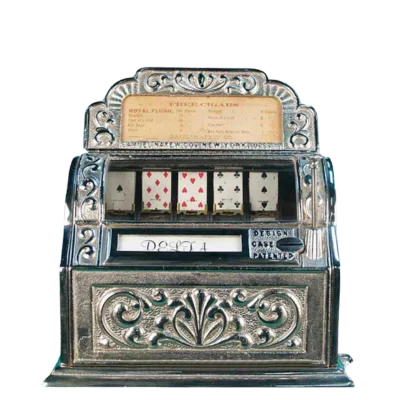
The humble slot machine’s journey began in 1891 with the New York company Sittman and Pitt. Their invention, a machine with five drums and 50 cards, required a nickel to play and rapidly gained popularity in bars.
Players operated it by pulling a lever to arrange poker hands on the reels. Then, the machine strategically omitted the ten of spades and jack of hearts, reducing the odds of a royal flush by half.
Initially, winnings were claimed at the bar, often in the form of drinks or cigars, as the machine didn’t dispense prizes or make any of the fun noises we associate with someone hitting a jackpot on a slot machine in a brick-and-mortar casino. And they didn’t win money, but at least they won some booze or a smoke!
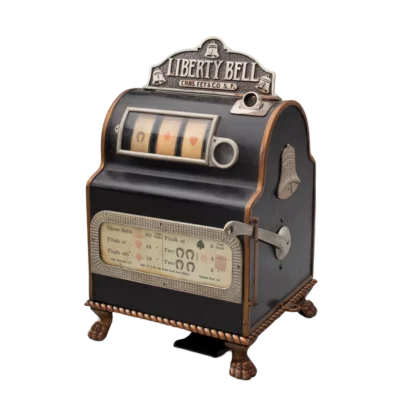
The Liberty Bell: 1894
In 1894, the slot machine world saw a major leap forward with Charles August Fey, an American inventor of Bavarian origin. He created the first slot machine in the modern sense, leading to his development of a subsequent model, the 4-11-44, and later the Card Bell in 1898–the first three-reel slot machine offering automatic cash payouts.
His 1899 creation, the Liberty Bell, marked a historic moment, bringing slot machines into the limelight. Following these, several machines came onto the gambling scene, some offering fruit-flavored chewing gum as prizes (still no real money won). Today, icons like cherries and melons on slot machines trace back to these early versions, with the BAR symbol originating from the Bell-Fruit Gum Company’s logo. How cool is that?
Herbert Mills, a manufacturer from Chicago, produced the Operator Bell in 1907, inspired by the Liberty Bell. By 1908, this machine was a fixture in numerous establishments like tobacconists and saloons.
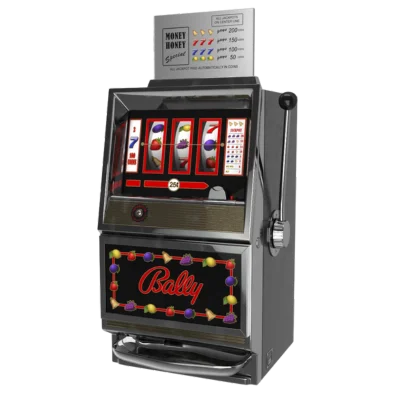
Money Honey: 1964
A big breakthrough in slot machines happened in 1964 with the Bally Manufacturing Co. introducing Money Honey, the first fully electromechanical slot machine. Despite its electrical operation, a lever was still used to spin the wheels, which gave a sense of familiarity and comfort to avid slot players. This machine could dispense up to 500 coins, thanks to its innovative hopper, marking a new era in slot machine technology.
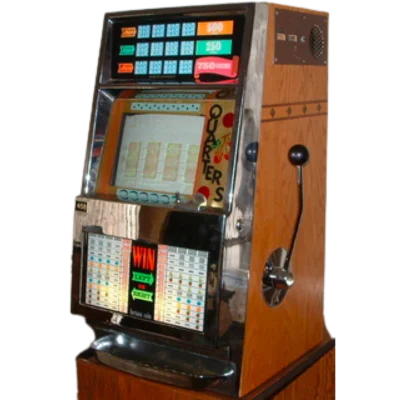
Video Slots: 1976
In 1976, another milestone was made with the introduction of the first video slot by Fortune Coin, developed in Kearny Mesa, California. It was first placed in the Las Vegas Hilton Hotel; it received state-wide approval after a few modifications. This ushered in the era of electric slot machines across Las Vegas, the American Mecca of gambling.
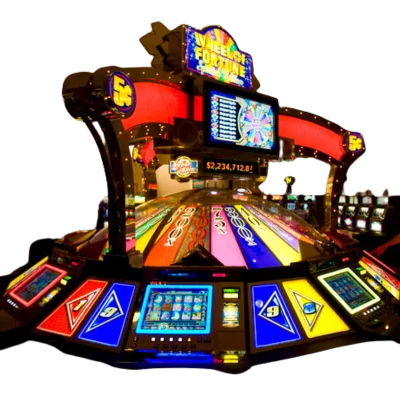
Progressive Jackpots: 1986
The concept of progressive jackpots emerged in 1986, with Megabucks by International Game Technology (IGT) at the head of the pack. These jackpots increased with each play until won, with the first payout in 1987 amounting to almost $5 million. Holy cannoli, slot prizes have come a long way since the days of winning booze and gum!
Video Slots: 1996
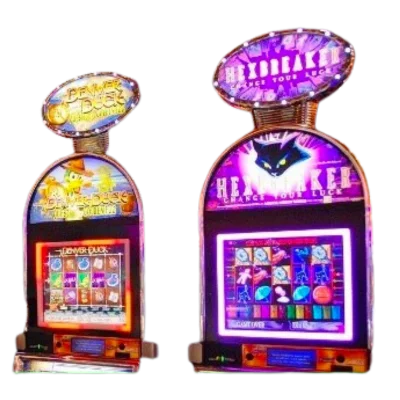
The year 1996 was pivotal in the slot world: WMS Industries Inc. released “Reel ‘Em,” which was the very first video slot with a second-screen bonus round. This invention was a huge contribution to slot machines’ growth, making them a major part of casino revenues and giving them central floor space.
The Move to Online Casinos: 1990 to Now
The 1990s marked the start of online casinos, which were met with a lot of skepticism and a lot of regulatory concerns. Among the pioneers of the online casino era were Cryptologic and Microgaming, who, together, launched the first major online casino. Their first slot game was Cash Splash from Microgaming, and since then, the development of slot games has surged, driven not just by tech advancements but by players’ desires to play the slots online.
The mobile gaming era began in 2005 with Pub Fruity, the first Java casino game, followed by the release of the iPhone and the App Store in 2007 and 2008. This enabled the direct marketing of games to consumers and the emergence of optimized mobile slot games.
In 2010, slots incorporated metagames, offering players a variety of challenges and monetary prizes—bonuses like the Red Tiger Daily Jackpot in 2016 and Pragmatic daily drops in 2020 added an entirely new dimension to slot gaming!
2016 also saw the introduction of the Megaways engine by Big Time Gaming, revolutionizing the industry with its random reel modifier and offering thousands of ways to win.
The onset of online and mobile casinos has boomed, and while doing so, it’s attracted an entirely new generation of younger players to slots. It’s no longer for “blue hairs” in a traditional casino—everyone is playing them due to the convenience of having them at your fingertips!
And as we see competition among video slot providers intensify, developers are continuously innovating to engage even more players, incorporating fun features like tournaments and dynamic, big-money jackpots.
Final Thoughts
It’s actually pretty amazing to think about how much slot machines have changed over time, and they’re not stopping anytime soon! With our phones getting smarter and internet speeds getting faster, there’s so much to look forward to in slot gaming. You could soon be playing slots in virtual reality or on your smartwatch!
It’s not just a game anymore; it’s an experience that keeps getting better and better. The slot world is buzzing with innovations, and we can’t wait to see what comes next!
Unveiling the Secrets of Casino RTP and RNG | Your Guide to Fair Play
If you ever come across abbreviations for terms that apply to online casino games and feel like a boomer trying to decipher a text thread filled with acronyms you don’t get, don’t feel dumb—or alone.
Just like OMG and IMO, casino-speak has its own shorthand—like RTP and RNG. It’s easy for us to tell you what they stand for–return to player and random number generator. But unless you know what their roles are in relation to casino games, we wouldn’t be much help, would we? Nope.
That’s why we are going to decode the role of RTP and its relationship with RNG with a complete explainer of what these terms mean and how they each operate.
Our guide is designed to eliminate any uncertainties, offering a comprehensive and simple explanation of these terms, their importance, and the impact they have on your play at online casinos.
We are going to look behind the casino curtain to unveil the secrets of casino RTP and RNG with a guide to fair play. Ready? Lets gooooo!
What is RTP and How Does it Work with RNG in Online Gaming
Today, it’s normal to see acronyms pop up in our daily text chats and online conversations. But as we said earlier, sometimes we may not truly get what they mean.
Think online gambling apps are the exception to this trend? Think again—two of the frequently used acronyms in this domain are RTP and RNG.
RTP and RNG have a pretty big role in online casino slot games. Since modern slot games are designed with super sophisticated software with lots of fun features, online casinos have to manage them productively and soundly.
For instance, they need to make sure that their digital games replicate the experience of playing physical slot machines in traditional brick-and-mortar venues like Las Vegas and Atlantic City. To accurately appreciate online slots and their functionalities, it’s consequential to first make sense of the inner machinations of RTP and RNG.
What is RTP?
RTP, which stands for Return to Player, is essentially about understanding the odds of a slot game. It calculates the average return a player gets from their bets on a particular slot game.
Expressed in percentages, RTP indicates the likelihood of winning in a slot machine or any other online casino slot game with a house edge. Generally, these percentages range between 90%, 95, and 98%.
The RTP percentage is determined from millions of spins, considering not just a single player’s experience but that of all players at the casino or globally online. As an example, an online casino slot game with a 95% RTP will give back $95 for every $100 wagered.
However, this doesn’t mean it will pay out exactly $95 for every $100 it takes in. If that were the case, the game would become too predictable.
We, and most gambling experts, recommend focusing on online casino slot games with an RTP of 95% or higher for better odds–a higher chance of winning money and a lower chance of losing it.

Benefits of RTP
Utilizing RTP as a metric can be advantageous, mainly because it helps you set a target when choosing an online slot game. For instance, a slot game with a high Return to Player percentage will include features like wilds, scatters, free spins, and multipliers to make the gameplay more fun and help get to the stated Return to Player percentage.
What is RNG?
The brain of an online slot machine is known as the random number generator or RNG. It produces a sequence of numbers or symbols that can only be anticipated by chance, not by strategizing or attempting to decode the game. This randomness ensures no pattern—and we mean none—can be manipulated so players can cheat. The RNG makes sure that the reels spin unpredictably—without RNG technology, slot games would remain mechanical duds, totally incompatible with online play.

Significance and Benefits of RNG
The Random Number Generator (RNG) forms the foundation of online gambling, including most slot games. It enables operators and game developers to establish and prove fair, transparent play in the games they offer to customers. In the simplest terms, it’s a system that assesses and certifies the authenticity of online gambling platforms to their users.
Game developers rely heavily on RNGs, ensuring that their products are transparent and impartial. Their main goal is to demonstrate the neutrality of the game, showing that it doesn’t favor either the house or the player.
RNG essentially operates as an algorithm within the game; stored within the game files on a remote gaming server, it’s either managed by a third party or the game provider themselves. Once in place, the RNG cannot be manipulated. And it’s not just used for determining jackpot winners but also for developing the content of the games.

Types of RNG
There are two primary types of RNG:
The “True Random Number Generator” (TRNG) is a mechanical device or hardware that employs physical methods to generate randomness, and the “Pseudo-Random Number Generator” (PseudoRNG) uses an algorithm or formula to perform mathematical operations on a starting value to create a random number.
Unlike TRNG, which often relies on environmental factors for unpredictability, PseudoRNG relies on a mathematical approach.
Differences and Similarities between RTP and RNG
It’s important to recognize that RNG and RTP are not the same!
While often confused for each other, RNG and RTP represent distinct concepts. As we stated, RNG is a mechanism that generates endless sequences of random numbers. Return-to-Player (RTP), on the other hand, refers to the percentage of bets returned to players as winnings.
But make no mistake, winning is never a given; RTP merely indicates the likelihood of payout for each game.
These two mechanisms work in conjunction, yet they affect different aspects of online gaming. The RNG ensures the integrity of the casino and the security of its players, whereas RTP measures the effectiveness of this system from the operator’s perspective.
Why RTP & RNG Indicate Fair Play
We’re pretty sure you already know this, but just in case you don’t, casino games are totally based on chance and luck. There is never any certainty of winning or losing, which just adds to the thrill and excitement for those who love to play. While some shady or less-than-reputable online casinos are out there, most online casinos adhere to the strict principles of fair play.
Online slot casino games use the RNG to ensure randomness in every single outcome—when you hit that spin button, the algorithm generates a random number, guaranteeing unpredictability in the game’s result. These casinos also conduct regular tests to verify the integrity of their systems.
In the last few years, online gambling establishments have been incorporating blockchain technology into their platforms, adding to the security and reliability of the online casino.
Takeaways
Now that you are thoroughly schooled on the meaning of these casino acronyms, you won’t make the mistake of thinking RTP means “rip to pieces,” or RNG stands for “really not going.”
Not you—you know that RTP and RNG are separate yet connected components in online gaming! The RNG, aka the Random Number Generation algorithm, ensures fairness and transparency in online casino games.
And the RTP, or Return-to-Player, shows the proportion of the total amount wagered on a slot that is returned to players as winnings. Go forth with this knowledge and spin those slots!
The Psychology Behind Blackjack | Why It’s More Than Just a Game
Blackjack is hands down one of the most popular casino games out there. But it’s more than just an entertaining game of cards; it’s actually a psychological puzzle. Have you ever watched people play blackjack? It’s nerve-wracking to see, let alone play.
We want to find out exactly what the psychology behind blackjack is, how it impacts the players, and why this casino fav is more than just a game!
The Thrill of Taking Risks for Big Rewards
Human beings like taking risks, especially in places like casinos where there is a chance to win and win big. Studies show that the possibility of winning big money often makes people ignore the actual risks they’re taking, and blackjack combines skill and luck, so it really plays into this attraction toward risk-taking.
Psychology Today says, “One of the main reasons that blackjack attracts regular gamblers is that it is a game that the skillful player can expect a profit in the long run. It is the only game that casinos offer where the chances of winning favor the gambler.
A gambler’s playing strategy is dictated by how they can influence the outcome simply by taking or avoiding extra cards. Research into the psychological strategies of blackjack playing has shown that gamblers fall into one of three main types.
Firstly, there is the ultra-conservative ‘never bust’ approach, where the gambler sticks on any hand that could go bust on the next card (i.e., any hand of 12 and over). Since the dealer must draw until they reach 16, this approach will certainly pay off some of the time.
A second popular strategy is ‘mimic the dealer,’ where gamblers sit on 17 or more but draw to 16 or less. The psychology here is that if it’s good for the dealer, it must be good for the gambler. However, very few regular players will follow either of these simplistic strategies.
“Most gamblers adopt optimum ‘basic’ strategies in which the decision to hit or stand depends on the ‘up-card’ held by the dealer. The player knows that as the game progresses, the number of cards left in the shoe is limited. If a player keeps count of the ratio of 10 value cards to non-10 value cards, they can place minimum bets when the deck is favorable to the gambler and maximum bets when the ratio is favorable. The smaller the ratio, the richer the deck is with ten-value cards and the greater the advantage to the gambler. This well-known card-counting method was first laid out over 40 years ago by the mathematician Ed Thorp in his classic 1966 book ‘Beat The Dealer.’
“Some people have said that the book stands in relation to gambling as Einstein’s theory of relativity does to physics—it changed perception of reality! More elaborate counting methods are available based on awarding points to low, medium and high cards and by keeping a running count of unseen cards. Over the years, many people have used elaborate systems in order to keep count.”
The Emotional Rollercoaster
Blackjack takes players on an emotional rollercoaster–when you win, you get a dopamine rush, reinforcing the behavior. But when you lose, you can fall into loss aversion, where you try to chase your losses to recover from the low of losing. And that never ends well, folks.

Feeling Like You’re in Control
In blackjack, players make a lot of decisions, such as whether to hit, stand, double down, etc. This makes them feel like they have more control over the outcome than they actually do. Studies show that people often overestimate how much influence they have in chance situations.

Skill vs Luck
Blackjack mixes skill and chance. While strategies can better your odds, the randomness of dealing cards often outweighs skill, making players overconfident.

Cognitive Biases and Blackjack
Confirmation bias matters in blackjack—players tend to remember wins more than losses, warping their idea of success, and this selective memory can make them feel luckier and more skilled when the opposite is true.

The Gambler’s Fallacy
The gambler’s fallacy is common in blackjack, too. Players might think past events, like losing streaks, influence what happens next. So they expect it is time for a win, that it is somehow owed to them, even though that is never how it works in games of chance like blackjack.

Table Talk
Playing with others adds a social component to blackjack as well, which means there is peer pressure, and fitting in with the yelling crowd around you can lead to riskier choices than playing solo.

The House Edge and Social Proof
Despite the house edge, blackjack draws in players partly thanks to social proof, and seeing others win makes people think they could, too, so they keep on playing.

Coping and Emotions
Responsible blackjack players often cope well emotionally, as handling losses matters for avoiding problem gambling, staying confident, and having fun while playing the game.

Superstitions
A bunch of gamblers come up with superstitions and rituals to handle the randomness and uncertainty of blackjack and other casino games–this gives them a sense of control and a way to cope with anxiety about the outcomes.

Blackjack and Problem Gambling
Blackjack is also addicting for some–the speed of play and the illusion you can master can get people chasing losses and gambling too much. Knowing the signs that your gambling is problematic is key.
Places that offer gambling do try to push responsible gambling so people don’t lose control. Understanding blackjack’s mental side can help all players have fun but not go overboard–if you think you have a problem, they offer resources and tools to help with gambling addiction.
Takeaways
The most important thing to remember here is that blackjack involves more than just cards; there’s a complex psychology behind it. Looking at things like risk-taking and people’s biases can improve the experience and lead to more winning, but also healthier approaches overall.
It doesn’t matter if you are a newbie or a seasoned blackjack player–knowing and understanding these factors gives you a deeper view of blackjack beyond just knowing when to hit or stand.
If you are looking to start playing online, you can check out our list of the best blackjack apps.
The Impact of Technology on Online Slots | VR, AR, and Beyond
Have you ever wondered about the journey of the humble slot machine, that once bulky arcade-like device that’s been altered into high-tech gambling action you can play on your computer or smartphone? We have! That’s why we are exploring the world of online slots, where cutting-edge technology, like VR (virtual reality) and AR (augmented reality), has turned each spin into not only a chance to win money but also a more immersive experience for players.
You do remember those old-timey big slot machines with the levers, right? They sit side by side, in rows upon rows, in areas of casinos and there is always someone pulling that lever. And while they still very much exist in real-life casinos, they have been, for the most part, cast aside in favor of their newer, sleeker, and much more convenient digital counterparts. Just like their glitzy brick-and-mortar relatives, online slots are full of interesting themes and more chances to win–and you aren’t just spinning fruits anymore.
The entire gambling industry, along with online slots, has undergone a massive overhaul due to the latest advancements in technology. In the world of gambling, we have come a long way from the days of basic fruit machines. Today, we find ourselves in an interesting era where cutting-edge technologies like virtual reality (VR), augmented reality (AR), and other advancements are transforming the experience of spinning the reels. How? Let’s find out!
Understanding Slots: The Basics
Let’s start by gaining a clear understanding of what online slots are before getting into the world of tech advancements where they are concerned. Yes, we know most of you know what they are and how they work, but we may have some new players who aren’t quite sure!
Online slots are just digital versions of those old-timey slot machines. The game involves spinning reels that display different symbols, and players can win prizes by getting certain combinations. But online slots have an expanded selection of themes, paylines, and bonus features compared to their mechanical counterparts, making them more diverse and entertaining.

Virtual Reality (VR) and the Immersive Experience
Imagine yourself strapping on a VR headset and being transported (virtually, of course) to a casino experience that rivals the authenticity of any Viva Las Vegas establishment–it’s possible now that VR technology is revolutionizing the world of online slots.
VR allows you to wander around a virtual casino, interact with fellow players, and experience the real-life sensation of sitting at a realistic slot machine. Playing the game this way is much more than just a simple activity–it’s an opportunity to lose yourself in a completely different world.

Augmented Reality (AR): A Blend of Real and Virtual
Augmented reality offers an alternative perspective, bringing the game into your world and allowing you to experience it in a whole new way. You just aim your phone at your living room table, and suddenly, a slot machine materializes right before your eyes!
AR slots seamlessly integrate digital elements with your actual surroundings, providing a one-of-a-kind and fun gaming experience.
Advanced Graphics and Sound: More Than Just a Game
The latest online slots offer an absorbing experience that goes beyond simply spinning those reels–the games have leveled up visually, thanks to their high-definition graphics and 3D animations.
Paired with immersive surround sound audio, these online slots provide a gaming experience that surpasses sitting at any conventional slot machine.
Mobile Slots in the Palm of Your Hand
Smartphones have reshaped the world of online slots, taking them to whole new heights. Now, players can enjoy their favorite games no matter where they are or when they want to play. Mobile technology has made high-quality gaming more accessible than ever before, allowing players to indulge in slots with just a few taps.

AI and Machine Learning: Smart Gaming
The advancements keep coming for improving slot games–say hello to Artificial Intelligence (AI) and machine learning! Games are enhanced by AI, creating a more engaging and personalized experience for players. AI technology enables the creation of games that are specifically designed to cater to player preferences and provide smarter bonus rounds as well!

Blockchain and Cryptocurrency: Secure and Anonymous
Blockchain technology and cryptocurrencies like Bitcoin are gaining popularity in the online slot world. The system ensures that transactions are secure, transparent, and anonymous, which helps establish trust and protect player privacy.
The Future of Slots
The future of online slots holds immense potential for technological advancements. You don’t just have to dream of a future where slot games become fully interactive, complete with compelling storylines that allow you to make choices that directly influence the outcome–it will happen.
And just think of it: You can have a real casino experience right in the privacy of your own living room with holographic slots–how cool is that?
And as for wearable technology? Well, this will boost your gaming experience via haptic feedback. There’s also a potential for the integration of social media to strengthen the sense of community in slots. At the same time, cloud gaming has the capacity to make high-end slots available on various devices. The future looks super bright for not just online slots but for the entire online gambling industry and the players who indulge.
Final Thoughts
The integration of technology with online slots is not only redefining the way we play but also completely revamping the overall experience–in a good way! VR and AR are at the forefront of a lot of tech innovation, and the combo of that with leaps and bounds of progress in graphics, mobile tech, AI, and blockchain all add up to something special coming down the pike. In the continually evolving world of online slots, it is obvious that the future holds many more exciting experiences for players to enjoy!
Virtual Reality Casinos | The Next Big Thing in Online Gambling?
Virtual reality casinos and poker sites are popping up more and more these days. As we enter the Metaverse age, gambling companies are leading the way with crazy new innovations that could totally change how we play our favorite games. From VR slots and roulette to poker and blackjack, if you love virtual gaming, things are just kicking off!
This immersive technological marvel could actually reshape the entire landscape of online gambling, offering an experience that’s as close as one can get to a physical casino without gamblers ever having to step outside of their front doors.
As we look at everything that’s potentially coming down the pike with virtual reality casinos, we need to acknowledge the impact, the benefits, any possible challenges or negatives, and the future to see if it really is the next big thing in online gambling!

The Growth of VR Across Sectors
For a lot of people, virtual reality represents the next generation of gaming and entertainment, and in fact, many believe that in the next few decades, most of what we do every day will happen in the metaverse. Whether that pans out or is a more distant dream remains to be seen, but one thing we already know for sure is that VR can be game-changing for online gaming!
According to The Insight Partners, the VR industry will make over $58 billion by 2024–as the tech gets better and better and more companies try to incorporate virtual reality into their products, some experts think this number could top $441 billion by 2030. Also, with 171 million people currently using VR already, virtual worlds are definitely not imaginary anymore, according to eMarketer research.
Gamers, not the gambling kind, really set the entire virtual reality thing in motion. Not ones to be left in the dust, online casinos hopped onto the VR trend, too! Microgaming was the first big software company to jump into VR, making a roulette game for players. At a gaming conference in 2016, their VR Roulette used the Oculus Rift and hand motion controllers to send players into a VR space, and that sparked more innovations that made VR casino and poker games a reality for players.
And then NetEnt made a VR version of their popular Gonzo’s Quest slot game—around the same time NetEnt showed that regular 2D casino games could become fully immersive 3D worlds, other gaming firms were testing what VR could do as well. Since the social VR gaming and dating scene is booming now, companies, big and small, from startups to major gaming companies, are starting to create and beta test their own versions of VR games.
As you can see, this VR gaming bus is picking up speed—and developers are showing no signs of easing up on the gas or pumping the brakes. According to one Technavio report, the worldwide VR betting market could balloon to $1.7 billion by 2025 (wow), but what does that growth actually mean?
For one, it means that instead of just VR slots and roulette, players could see and experience full virtual reality casinos where you can check out and play all kinds of games—the options are pretty much endless.
What’s Happening Now with VR Casinos
Before thinking about what’s next for VR social gambling dens and poker spots, let’s check where things stand as of this moment. While people are still in the middle of the whole gambling shakeup, r.e. transitioning from traditional brick-and-mortar casinos to online gambling apps, there are some pretty cool choices already available if you want a little taste of the future of gaming!

Pokerstars VR
PokerStars VR, which is also known as Vegas Infinite, is like a free amusement park for poker and other online casino games. Here, you can play versions of roulette, blackjack, and poker (you can even throw stuff at the other players!) and explore super fun environments. There’s even a virtual DJ to get the party going.

Social Club VR
Some VR spots can feel or look awkward, but this is one of the more realistic. Nicknamed” Casino Night,” players walk into a fancy casino venue that has virtual reality blackjack, roulette, and poker tables. Even though it seems kinda serious, they add some silly elements too, like buying drinks or getting into sword fights (yes, sword fights) with the other gamblers!

Bullet Roulette
Bullet Roulette isn’t your typical roulette setup, no sir. There is no table–just guns. It’s like a super intense Russian roulette game but set in virtual reality. And since it feels so real, it can be straight-up terrifying, and you can win big jackpots, too!
JackpotVR
JackpotVR is supposed to be one of the most realistic VR casino things out there right now, and although the graphics aren’t amazing, it does feel pretty real. You can saunter around this place like a real casino—slots are on the walls everywhere you look, and there are some tabletop games to play. You’ll hear people cheering their wins, chips moving around, and jackpot bells and whistles sounding off as you wander around.

Blackjack Billy VR
This game lets you play first-person—players just put on a VR headset and start the game, and you can play Blackjack for free with Billy, the VR dealer running things in this social casino setup.
The Future of VR Casinos
Real and social virtual reality casinos (and lottery ones, too) will probably get even bigger and more sophisticated in the next five years. The hardware that lets you get into games is getting better with every passing moment, and people are starting to realize parts of our lives are destined to be virtual, like it or not. In fact, with augmented reality (AR) able to project realistic images onto the things around us, it feels like anything could happen.

Enhanced Player Experience
One of the biggest attractions of VR casinos is the heightened level of player engagement. The immersive nature of these platforms lets players feel like they’re in the middle of the action, offering a much more engaging and realistic gaming experience. This is really appealing to the younger demographic, which has grown up with immersive video games and is accustomed to high levels of online interactivity.

Social Interaction in a Virtual World
Another significant benefit of VR casinos is the enhancement of social interaction—most online casinos lack the communal aspect of physical casinos, but VR technology addresses this by allowing players to interact with dealers and fellow gamblers in a virtual environment. This creates a sense of community and makes the gaming experience more fun and realistic.

Different Games and Experiences
Do you know what VR can also bring to the table? An extensive range of casino games. There are the classics, like blackjack and poker, and then there are the more modern games, like virtual slots and live dealer games in a realistic virtual setting. Moreover, VR technology can be combined with other advancements, like 3D sound and haptic feedback, to deliver a totally immersive sensory experience to gamblers.

Potential Challenges
Despite the immense potential that VR casinos could bring about, they also face a few drawbacks. The cost of VR equipment, since it’s not cheap, could be a big barrier, limiting accessibility for a lot of potential players.
Additionally, there are certain tech requirements to enter the VR world, like the necessity for powerful hardware and high-speed, stable internet connections.
And believe it or not, there are physical health concerns when it comes to VR use, like nausea (you can compare it to seasickness) or headaches associated with prolonged VR use. Lastly, the online gambling industry is subject to various regulations, which may need adaptation to accommodate any VR casinos.
Final Thoughts
Looking into our crystal ball, it seems like the possibilities for VR casinos are promising and vast. As technology continues to leapfrog ahead, virtual reality gambling experiences could be poised to become even more lifelike. With innovations like haptic feedback suits, better controllers, and eye-tracking technology, this only means that the realism of these virtual environments will become hyper-realistic. Not to mention that VR gambling presents opportunities for interactive, multiplayer experiences and opens up new revenue streams for online casinos that go the VR route through in-app purchases for virtual items.
Virtual reality could be on the precipice of revolutionizing the online gambling industry—its potential impact on digital gambling, including more player engagement, social interaction, and a much bigger choice of games, transports us to a future where the lines between the physical and digital gaming worlds are increasingly blurred. While there are most definitely a few challenges to address and overcome, the possibilities are endless, and this technology is here to stay.