
Gambling Horoscopes: Your Lucky Stars for Slots and Sports Bets
We all know that a lot of gamblers absolutely swear by their lucky charms. Then there are the superstitious ones who have to do that one ritual before they play, or else it will all go wonky. And then, there are the astrology stans who will tell you that the secret to winning has already been destined by your birth chart. Is it just horoscope hype, or is there actually something to it?
Are you a fickle Gemini who does all-in on an impulse? Been there, done that (twin signs, IYKYK). Or are you a more practical Taurus that’s racking up slow but steady wins? All zodiac signs have their own distinctive gambling style, and April 2026’s cosmic lineup is looking, well, um, interesting, to say the least.
With Mercury finally moving forward and Jupiter turning up the metaphorical heat on taking risks, the universe has some weird and wild energy in store. Want to know what your best bets are? How about your luckiest days or the casino game that practically has your name written on it? We can tell you with a little help from your astrological sign! Ready to find out what the stars have to say before you bet? We are gonna read your charts and tell you.
The Astrology-Gambling Connection
Astrology and gambling have way more in common than you might think. Both deal heavily with luck, timing, and the occasional leap of faith. There are those who swear by statistics and strategy, and then there are those who would never dare to place a bet if they aren’t wearing their “lucky” shirt. But add astrology into the equation, and you get a cosmic cheat sheet.
April 2026 is bringing with it some serious energy shifts—Mercury is moving after sowing weeks of chaos, Jupiter is making gamblers feel bolder than usual, and a full moon mid-month could throw a curveball into the whole thing. Before you play, we are gonna unpack how and why astrology and gambling are a match made in heaven.
Why It Works
Gamblers are a really superstitious bunch. Most have their lucky numbers, rituals, and pre-bet mantras that are all just a part of the game to them. Astrology isn’t any different! It taps into that same human need to make sense of randomness, and that gives each zodiac sign its very own style of how they take risks. Some love an all-or-nothing approach, and others stick to calculated bets.
We can feel the non-believers’ skepticism, but bear with us. Ask anyone who has ever tried to make a big decision during Mercury retrograde. You might not know it, but the stars have their own opinions.
Astro Basics
Okay, so every zodiac sign falls under its own element, and that one thing says a lot about how you go at gambling! Below are the elements and the corresponding signs:

Fire (Aries, Leo, Sagittarius): Bold risk-takers who live for excitement.

Earth (Taurus, Virgo, Capricorn): Calculated and patient—they have more of a long-game mindset.

Air (Gemini, Libra, Aquarius): Strategic, experimental, and always looking for the next trend or something more interesting.

Water (Cancer, Scorpio, Pisces): Intuitive and emotional—big wins, big losses, and a lot of gut instinct.
The positions of the planets have a say, too! You’ve undoubtedly heard someone say, “It’s because Mercury is retrograde” when something doesn’t pan out as they hoped it would. It’s fun to blame a planet, but in this case? It’s not always a convenient excuse. But Mercury is on the move, and that means that the chaos could be clearing up. And you know what that means, right? The universe could be on your side this month!
The following astrological events could change your gambling luck for the better this month:
- Mercury is back on track (thank goodness), and that translates to fewer tech glitches and miscommunications.
- Jupiter being in Gemini is making risk-taking look really tempting.
- The full moon could harken a lucky streak—or a wild swing in the other direction.
So, how does all of this star and planet alignment play out for your zodiac sign you gamble? Below are all 12 signs—you can jump to yours or read them all to see what’s in store for your fellow players!
Your Gambling Horoscope by Zodiac Sign
All zodiac signs take a different tack for gambling, and the stars are here to serve up personalized advice for April 2026. It doesn’t matter if you’re chasing those high-stakes wins or just playing for fun; your cosmic forecast has some insights that you might want to take into consideration!
1. Aries (March 21 – April 19)
You don’t just make bets; that’s boring. You run at them full speed like it’s a personal challenge. Winning isn’t simply luck for you, and it’s a full-contact, competitive sport.

- Lucky Game: High-stakes sports betting. Any big sports events going on? It was made for you.
- April 2026 Tip: Bet big—Mars is pouring gasoline on your fire. Just don’t go overboard like the people who are dropping thousands on Apple’s latest AI smartphone.
- Lucky Number: 7 / Color: Red.
2. Taurus (April 20 – May 20)
You like, nay, you crave stability, and that goes for your gambling habits as well. There will be no reckless bets for you—you’re only in it for the reliable wins.

- Lucky Game: Progressive jackpot slots. The bigger the build-up? The better.
- April 2026 Tip: Stay with the low-risk spins mid-month; Venus favors patience. And updating your gambling routine can’t hurt—there’s no need to be the old, played-out meme of casino strategies.
- Lucky Number: 4 / Color: Green.
3. Gemini (May 21 – June 20)
Your attention span at a casino (and everywhere else) is about as short as a TikTok video. You love variety, fast action, and possibly yapping your way into a better deal.

- Lucky Game: Live poker at the chattiest of tables—you live and breathe social energy.
- April 2026 Tip: Bluff your way to success—Jupiter will have your back. If Abbott Elementary and It’s Always Sunny in Philadelphia can do crossover shows and make it work, so can your super chaotic but genius strategy.
- Lucky Number: 3 / Color: Yellow.
4. Cancer (June 21 – July 22)
You don’t just play casino games—you feel the games in your soul. Every win is a triumph, and every loss is taken as personal betrayal.

- Lucky Game: Roulette. Your gut instincts are stronger than most.
- April 2026 Tip: Play on—the full moon is feeding your intuition. Just don’t get as emotionally invested as the TikTok users did during the 24-hour “ban” meltdown of 2024.
- Lucky Number: 2 / Color: Silver.
5. Leo (July 23 – August 22)
Confidence is your currency, and the casino floor is your stage. If people don’t know that you’re winning and it isn’t over the top, does it even count? Not to you, it doesn’t!

- Lucky Game: VIP blackjack tables. You belong (and fit right in) where the stakes—and the attention—are high.
- April 2026 Tip: Go all-in mid-month while the Sun is shining bright on you. Just make sure you’re remembered for a win and not for a Kanye-style (sorry, it’s “Ye” now) psychotic break at the tables.
- Lucky Number: 5 / Color: Gold.
6. Virgo (August 23 – September 22)
You don’t really believe in luck—you believe in odds. If anyone is running spreadsheets before placing a bet, it’s you.

- Lucky Game: Online sports betting with rabbit hole research.
- April 2026 Tip: This is the time for a calculated risk—Mercury will clear the fog. And please, always double-check your sources before believing any AI-generated Brad Pitt videos.
- Lucky Number: 6 / Color: Blue.
7. Libra (September 23 – October 22)
You love a good balance! Your attitude is basically you win some, you lose some, but as long as it’s all in harmony? It’s all good.

- Lucky Game: Social casino apps. Playing with friends makes it so much more fun.
- April 2026 Tip: Team up—Venus will give you a boost in your luck with partnerships. But make sure that any deal is actually fair and splits the winnings. Don’t pull a music-industry contract move or let your other half pull one on you.
- Lucky Number: 9 / Color: Pink.
8. Scorpio (October 23 – November 21)
You’re a mystery wrapped in an enigma at the tables. No one knows what your next move will be —and that’s exactly how you like it.

- Lucky Game: Crypto blackjack. Anonymity and strategy? These are in your wheelhouse.
- April 2026 Tip: Pluto amps up your edge. Play smart, and don’t let your competition see your tells—Bob the Drag Queen didn’t win The Traitors by being predictable.
- Lucky Number: 8 / Color: Black.
9. Sagittarius (November 22 – December 21)
Routine is sooo boring. If there’s a game you haven’t tried, you’re already interested.

- Lucky Game: Exotic sports bets—drone racing, camel racing, whatever’s new is what you’re into.
- April 2026 Tip: Jupiter’s luck is peaking. But please don’t go full Bear Grylls reality show and take too big of a risk, okay?
- Lucky Number: 1 / Color: Purple.
10. Capricorn (December 22 – January 19)
You’re not here for the fun of it—you’re here to win, even if it takes you all night.

- Lucky Game: Low-volatility slots. Small, steady wins fit perfectly with your gambling strategy.
- April 2026 Tip: Play conservatively—Saturn will reward your patience. If Carrie Underwood can power through a Presidential inauguration tech fail, you can ride out a slow streak.
- Lucky Number: 10 / Color: Brown.
11. Aquarius (January 20 – February 18)
You’re always ahead of the curve. If there’s a game that no one’s even heard of yet? You’ve already played it.

- Lucky Game: VR casino games—because why not gamble in the metaverse?
- April 2026 Tip: Experiment with new platforms—Uranus will spark your smarts. Just don’t get too futuristic and fall for the Hawk Tuah girl’s crypto scheme.
- Lucky Number: 11 / Color: Electric Blue.
12. Pisces (February 19 – March 20)
You bet on vibes only. Sometimes? It pays off. And others? It’s “delulu.”

- Lucky Game: Themed slots—especially ones with water and ocean vibes.
- April 2026 Tip: Trust your intuition—Neptune’s magic is flowing. But remember to keep one foot in reality… like, maybe that slot machine isn’t actually “due” for a payout (it never is).
- Lucky Number: 12 / Color: Sea Green.
Putting Your Horoscope to the Test
What do you think? Do the stars actually know their stuff, or are you better off just flipping a coin? There’s only one way to find out!
Try out your lucky game and betting tip this month and see how you fare! You never know—the universe might have its favorites.
And if you do hit a winning streak on your cosmic lucky day? Or what if Mercury still found a way to mess things up? Tag us on social media and use #AstroGambling!
Disclaimer: Astrology is fun, but gambling is always a game of chance. The stars can suggest, but the odds will decide. That sounds cryptic, but all it means is that you should bet responsibly, and don’t take our cosmic advice as gospel. Nothing can guarantee you a win, even if Mercury isn’t in retrograde.
Conclusion: Win or Lose, You Can Blame it on the Moon
The stars have spoken, but the real question is—will they align with your bets? April 2026 is jam-packed with astrological upheavals, from Jupiter calling you to make bold bets to Mercury finally clearing out of its usual chaos. If you’re an all-in Aries, a more cautious Capricorn, or an impulsive Gemini, your cosmic forecast will add an extra dab of extra fun to your gambling game.
Take your lucky numbers, circle your best betting days, and put your horoscope to the test. Maybe the universe has a jackpot in store—or, at the very least, a solid excuse for why that last spin didn’t go your way. And if April doesn’t bring the luck you hoped for, don’t worry—next month’s cosmic lineup is sure to bring some surprises.
Curious about the games that suit your sign best? You can check out the best gambling sites for your particular cosmic style!
NFL Draft 2025: Betting on the Next Big Stars
The 2025 NFL Draft is the event for bettors this spring—quarterbacks with rocket arms, Heisman heroes, and once-in-a-lifetime talents, and they are all gunning for that No. 1 slot. Will Cam Ward’s magic arm or Travis Hunter’s two-way swagger nab the spotlight in Green Bay on April 24?
The NFL Draft isn’t only about jerseys and hope anymore—it’s legit turned into a full-blown betting frenzy. You can thank legalized sportsbooks for this with an assist from college football stars like Miami’s Cam Ward, Colorado’s do-it-all Travis Hunter, and Penn State’s sack machine Abdul Carter. The four names at the top of this year’s draft (and two dark horses) are making it a Vegas-worthy to-do.
Get in position because we are breaking down the can’t-miss prospects, the hottest betting markets, and all of the pro tips that could turn all of the draft-night chaos into cash!
Why the 2025 NFL Draft Is a Betting Gold Mine
Are you ready to get this party started? And by “party,” we mean the kind of bash where your bets could turn into a lot of cash. The 2025 NFL Draft isn’t just a glorified job fair for college athletes. Nope, this is where armchair GMs and sharp bettors collide, turning mock drafts into mocktails of profit. It’s like the Super Bowl of speculation: no touchdowns, no tackles, just pure, unadulterated gambling chaos.
Why? Because this year’s draft is dripping with drama—a QB showdown, a two-way phenom, and a Titans team that is holding the keys to the kingdom. Add in legal betting’s insane growth, and you’ve got a perfect storm where every pick, trade, and combine stat could pad your bankroll. Buckle up, buttercup—this is where fortunes are made before the rookies even sign their contracts.
The Stakes
The Tennessee Titans (3-14, ouch) hold the No. 1 pick, and they’re bringing this drama to Lambeau Field—yes, Green Bay’s frozen tundra. We’ve got snow flurries, cheeseheads, and a franchise-altering decision!
Regulated Betting Boom
Legal betting is exploding faster than a quarterback’s draft stock. Missouri hopped on board in 2024, and states like Texas and Georgia might finally join the party. More states = more bets = more ways to win (or, you know, sob into your spreadsheet).
Market Trends
Never mind the MVP races—draft props are the new March Madness. We’re talking about “first overall pick” mania, position battles, and over/unders on where the prospects will end up. It’s like fantasy football, but with IRL consequences (and payouts).
During last year’s NFL Draft, Caleb Williams was a lock at -550. But in 2025? It’s pretty much anyone’s game! Why? Keep reading to find out why the odds are shifting and the field is wide open!
The Top Prospects to Watch (and Bet On)
Let’s meet the Fab Four (plus a couple of wildcards) who’ll have your bet slip sweating bullets. These aren’t just players, no, no, no. They are like human lottery tickets, and the draft is your chance to cash in before they hit the field. Cam Ward could be slinging touchdowns in a Titans jersey, Travis Hunter might be breaking ankles and hearts on both sides of the ball, and will Shedeur Sanders up to that golden last name?
But watch out: For every Patrick Mahomes, there’s a JaMarcus Russell. First up is our scouting report on who’s worth the hype (and the cash). Below, we look at arm talent, Heisman resumes, and the general vibes—because let’s face it, draft night is 50% stats, 50% drama. Ready to play GM?
Cam Ward (QB, Miami)

This is the QB1 frontrunner that has a highlight reel that’s hotter than Miami’s nightlife scene.
- Why He’s Trending: After tossing 43 touchdowns (and stiff-arming defenders into next week), this Heisman finalist rocketed from +450 to -140 (on BetMGM) for the top pick. Rumor has it the Titans see him as their “plug-and-play” savior.
- Betting Angle: Slam his -140 odds for No. 1, bet he’s the first QB off the board (-200), or gamble on his draft position over/under (2.5).
- Risk Factor: The dude is definitely electric, but his pocket presence? Eh, sometimes he’s inconsistent, which could make some QB-needy teams second-guess him.
Travis Hunter (CB/WR, Colorado)
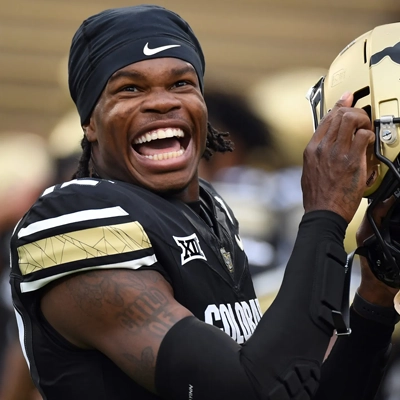
This man is literally the equivalent of a human cheat code who plays both sides of the ball.
- Why He’s Trending: A Heisman winner with +425 odds (BetRivers), Hunter’s snagging 30% of first-pick bets (BetMGM). Scouts are salivating over his “generational” versatility—he’s Deion 2.0 with better stats.
- Betting Angle: Bet that he’s the first non-QB drafted (+200), first WR taken (-150), or ride the Titans trading down (+1600 if the Giants swoop in).
- Risk Factor: Will NFL teams let him play both ways? Or will they make him pick a side?
Abdul Carter (EDGE, Penn State)

Carter is the defensive nightmare that QB prospects literally get on their knees and pray to avoid—he’s regarded as the best defensive prospect in his class.
- Why He’s Trending: Big Ten Defensive POTY with +200 odds (FanDuel). Titans execs keep hinting they’ll zag for defense, but QB bias is a very real thing (18 of 24 No. 1 picks since 2001 were QBs).
- Betting Angle: First defensive player (-180) or bet his rookie sack total (over/under 4.5).
- Risk Factor: If the Titans fall for a QB, Carter’s stock tanks faster than the market has in the last few days. There’s also the QB bias—18 of the last 24 No. 1 picks have been quarterbacks, which makes it super tough for a defensive player to go first overall.
Shedeur Sanders (QB, Colorado)
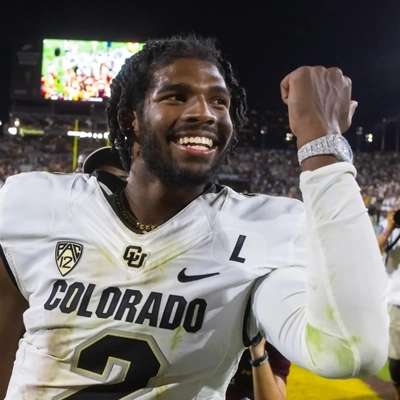
Deion’s kid has a golden arm and a big target on his back—Shedeur has the name recognition, talent, and poise to be a top pick.
- Why He’s Trending: After a 27-3 TD-INT season, Shedeur’s cooled from +450 to +1300 (FanDuel). Still, he’s a top-5 lock—blame the swagger (and the stats).
- Betting Angle: Top-5 pick (-120) or bet he’s QB1 if Tennessee trades down (+300).
- Risk Factor: Critics call him a “system QB” under Coach Prime. Prove ’em wrong and make them eat their words, Shedeur!
Dark Horses
Don’t sleep on QBs like Alabama’s Jalen Milroe (+2000) or Texas’s Quinn Ewers (+750)! These two underdogs have a sneaky upside—with good pre-draft workouts, they could make you some serious cash.
- Jalen Milroe (QB, Alabama, +2000): He’s a dual-threat wild card if he shreds the Combine.
- Quinn Ewers (QB, Texas, +750): With that arm? He could turn into a draft-day Cinderella story.
The Betting Markets to Target
Forget about spreadsheets—this is where your inner gambler gets to play Moneyball. The NFL Draft isn’t solely about who goes first overall. Oh no, it’s a smorgasbord of prop bets, over/unders, and dark-horse odds that’ll make your head spin faster than a QB in a blitz. It’s a buffet: You’ve got your “First Pick” steaks, your “Draft Position” sushi rolls, and the all-you-can-eat “Position Props.”
However, the draft is fluid—trades happen, rumors run wild, and one viral combine clip can turn a +2000 longshot into the favorite. But we’ve got you with a cheat sheet so that you can negotiate the action.
First Overall Pick
This is the crown jewel of draft bets—where fortunes are won, and front offices are second-guessed.
Odds Snapshot
- Cam Ward (-140): The Miami QB’s Heisman-finalist season and “pro-ready” label make him the odds-on favorite.
- Abdul Carter (+200): Penn State’s defensive wrecking ball is the top non-QB contender if Tennessee pivots.
- Travis Hunter (+425): He is a Heisman-winning two-way unicorn, but his positional ambiguity still has him as a risky bet.
- Shedeur Sanders (+1300): The Colorado QB’s draft stock hinges on teams buying into his Coach Prime pedigree.
Strategy
- Bet Hunter Early: If you believe that the Titans will trade down (and avoid drafting a QB), Hunter’s +425 odds could plummet as teams like the Giants (+300 to trade up) or Jets (+700) target his versatility.
- Wait on Ward: His -140 odds feel really safe, but post-Combine (March 2) measurables—like hand size or 40-time—could sway teams. Last year, a shaky Combine performance tanked Spencer Rattler’s first-round hype.
Draft Position Over/Unders
Where’s the value? Hint: Follow the QB carousel!
Example: Travis Hunter O/U 3.5
– Take the OVER if QB-needy teams (Titans, Giants, Falcons) go all-in on passers early. In 2024, four QBs flew off the board in the top five, pushing blue-chip defenders like Dallas Turner to No. 8.
– Take the UNDER if Hunter’s pre-draft workouts cement him as a “can’t miss” prospect. Think Sauce Gardner in 2022—a lockdown CB who went No. 4 despite QB buzz.
Tip: QBs always hog the spotlight. Since 2018, 14 of 32 top-five picks were quarterbacks. Draft a QB-heavy board, and non-QB studs slide.
Position Props
Bet on the types of players that are making noise—because position groups have their own drama.
Example: Over 3.5 QBs in Round 1 (-150)
– Why It’s Safer Than a Screen Pass: With Ward, Sanders, Milroe, and Ewers all grading as potential first-rounders, this bet banks on desperation. Teams like the Raiders (pick No. 7) and Vikings (No. 12) could panic-trade up for a passer.
– Sleeper Alert: Watch J.J. McCarthy (Michigan)—if he dominates the Combine, he could sneak his way into the late first round, which would make this bet a lock.
– Trend: Defensive linemen are the draft’s sly moneymakers. Abdul Carter and Georgia’s Mykel Williams (a 290-pound EDGE with 4.6 speed) could push EDGE/DE totals to 6+ in Round 1, mirroring 2023’s historic DL haul.
Team-Specific Bets
Because every fanbase deserves a heartbreak (or glory).
Example: Titans stay at No. 1 (-200) vs. trade down (+1600)
– Why Tennessee Might Stay Put: If GM Ran Carthon doubts Will Levis (14 TDs, 10 INTs in 2024), Ward becomes the pick. Levis’s rocky rookie year gives them an easy out.
– Why They Might Trade: The Giants (+300) are lurking. If New York offers future first-rounders to jump up for Ward, the Titans could stack picks and still land Carter or Hunter later.
Betting Strategies for NFL Draft Success
Winging it is for fantasy football leagues and hot dog eating contests. But on draft day? You need to know your stuff, and you need to have a game plan. The draft is a beast; it’s unpredictable, emotional, and fueled by enough smokescreens to fog up Lambeau Field.
But we have the strategies that separate the sharps from the suckers. Timing your bets? A must. Hedging your plays? Chef’s kiss emoji And don’t even think about ignoring the Combine—those 40-yard dash times move odds faster than a Karen having a meltdown in public. If you’re a rookie bettor or a pro? The following tips are your draft-night armor.
Turn all of that noise into knowledge—but don’t get played by the hype machine! Social media has always been a double-edged sword: One viral clip of Cam Ward throwing lasers in practice can send his odds through the roof, and a cryptic post from a Titans beat reporter might hint at a trade-down frenzy. So always cross-reference all of the chatter with fact-checked odds movements. If Hunter’s +425 odds suddenly tighten to +200 amid “sources say” rumors, that’s your signal to act. But if the sportsbooks aren’t budging? It’s probably just smoke. Remember last year when a fake “LeBron to the Cowboys” meme briefly tanked C.J. Stroud’s draft props? Stay sharp!
The draft calendar is your trusty co-pilot, so don’t ignore it!
– Longshots = Early Birds: Travis Hunter at +425 is a steal now if you believe his two-way hype survives the pre-draft grind. Once the Combine (March 2) and Pro Days (April) spotlight his 40-time or hands, those odds could shrink faster than a rookie’s signing bonus.
– Favorites = Wait It Out: Ward’s -140 price feels heavy, but if he stumbles in interviews or the Titans leak doubts? Post-Combine could see his odds drift to +100, giving you better value. In 2024, Anthony Richardson’s wobbly throwing session at the Combine dropped him from -300 to +150…before the Colts shocked everyone and took him No. 4.
You should be covering your bases like a defensive coordinator who is calling a prevent defense.
Example: If you bet $100 on Ward at -140 to go No. 1, pair it with a $50 bet on Abdul Carter to land in the top 5 at +150. Why? Because of the following:
– If Ward hits, you net $71 (minus the $50 loss on Carter).
– If Carter surges into the top 5, you pocket $75 (minus the $100 Ward loss).
– If both hit (unlikely, but sh*t happens), you score a nice $121 profit.
Your zip code could be the difference between cashing out and getting flagged.
– North Carolina (legal March 2025): Draft props are live, including team-specific markets like “Giants trade up for a QB.”
– Texas/Georgia (pending legislation): Check local updates—if they greenlight betting pre-draft, you can expect last-minute odds drops on in-state stars like Quinn Ewers.
– California/Florida: Still banned? Use VPNs at your own risk (we don’t recommend or endorse this, so please don’t). Only bet in the states where it’s legal to do so, or do a mock draft instead.
You should always treat your bankroll like a rookie contract—protected and structured.
– Set a Loss Limit: If you’re dropping $500 on draft bets, cap losses at $200. Once it’s gone? Stop.
– Use Tools: BetMGM’s “Cool-Off” feature (and most other gambling sites and sportsbooks) lets you pause bets for 24 hours if the Travis Hunter hype becomes a little too addictive.
– Reality Check: The house always has an edge. Even “sure things” like Caleb Williams (-550 in 2024) carried risk. Only bet what you’d spend on a night out—not your car or mortgage payment.
What’s Next for 2025 NFL Draft Betting
Hold on tight; the pre-draft buzz is louder than a goal-line stand. Why? Because the draft isn’t a one-night stand kinda deal—it’s a months-long courtship that is full of combine workouts, pro day theatrics, and enough gossip to rival a reality show.
It’s also a slow-burn thriller of sorts: Will the Titans fall in love with Cam Ward? Can Travis Hunter’s hype survive the “positionless” debates? And hey, what if the Giants trade the farm to snag Shedeur? And the Combine is just the opening act. By April? You’ll be sweating prop bets like it’s the fourth quarter on a 93-degree day.
Pre-Draft Milestones
Below are the events that’ll either make or break your bets!
NFL Combine Fallout
The NFL Combine wasn’t just a showcase—it was a market mover. After Cam Ward lit up Indy with a 4.49-second 40-yard dash (blazing for a QB) and a laser-guided passing session, his odds to go No. 1 skyrocketed from -140 to -220 on FanDuel.
- Translation: Books now see him as a near-lock…for now.
- But here’s the catch: Combine stars can become draft-day ghosts. Remember Malik Willis? Dude dominated drills in 2022, only to free-fall to Round 3.
- Bottom line: Ward’s stock is red-hot, but pro-day flubs or leaked medicals could reignite the chaos. Expect more swings as teams pick apart his game tape.
Pro Days
April is the make-or-break month for sleepers and sliders. Take Shedeur Sanders: His pro day isn’t merely a workout—it’s a Prime Time production. If he carves up defenses in scripted drills (and drops a few viral “Deion-esque” soundbites), his +1300 odds could halve overnight. Then there’s Jalen Milroe (Alabama, +2000), a raw but super electric dual-threat. A 60-yard bomb at his pro day might just convince QB-needy teams like the Raiders (pick No. 7) that he’s worth the gamble. Pro days are part football and part theater—and bettors should have front-row seats.
Trade Rumors
The Giants (+300 to trade up) and Jets (+700) aren’t just looking in the fridge for something to eat because they’re bored—they’re hungry. New York’s QB carousel is a mess: Daniel Jones is on thin ice after 14 turnovers in 2024, and Aaron Rodgers’s “I’m-here-for-three-more-years” act won’t stop the Jets from eyeing Shedeur or Milroe as rightful heirs.
The cost? For the Giants to jump from No. 6 to No. 1, they’d likely fork over two future first-rounders and a starter (hello, Dexter Lawrence?). But if either team pulls the trigger, it’ll scramble the draft order—and your bets—like a fumbled snap.
Emerging Markets
As books expand their menus, you should dig into the niche markets—that’s where value hides. Case in point: Boise State RB Ashton Jeanty at +5000 to be the first RB drafted. He’s a human highlight reel (1,847 scrimmage yards, 22 TDs in 2024), but RBs are draft kryptonite—no first-rounder since 2018.
Still, if a team like the Cowboys (desperate for a Pollard replacement) falls in love, Jeanty could shock the board. Other dark horses: “First Safety Drafted” (Miami’s Kam Kinchens, +400) or “First Coach Prime Player Selected” (Hunter vs. Sanders).
Our Prediction
Cam Ward is def the safe bet (-220), but don’t sleep on Travis Hunter! If the Titans trade down (Giants? Jets?), Hunter’s +425 odds to go No. 1 will turn into must-watch TV. Teams are drooling over his two-way upside—imagine the Packers pairing him with Jaire Alexander to terrorize NFC North QBs? Savage. By April, it could be a coin flip: QB-needy logic vs. generational talent FOMO. Either way, the odds will tighten up faster than a halftime locker room speech.
Conclusion: Draft Day Dollars: Your 2025 Betting Playbook Is Set
The 2025 NFL Draft is literally loaded with all kinds of betting opportunities—star power, market variety, and mayhem. If you’re backing Ward’s insane arm, Hunter’s versatility, or Carter’s defensive dominance, the main thing is to be adaptable, in-the-know, and in this particular case? You can be a little bit reckless. But just a little, OK? Don’t go nuts, and gamble responsibly!
Look below for a brief refresher of who’s who in the 2025 NFL Draft and the variety of bets you can make on them:
- Star Power Rules the Board: Cam Ward’s arm talent, Travis Hunter’s two-way dominance, and Abdul Carter’s defensive terror all headline a draft class that is absolutely awash with betting appeal.
- Betting Variety Galore: From first-pick odds (+200 to -140) to prop bets (over/under 3.5 QBs in Round 1), markets are as diverse as a tailgate menu.
- Regulated Markets = Bigger Action: With states like Missouri (and possibly Texas) joining the party, legal wagering is driving draft mania like nobody’s business.
- Real-Time Drama Drives Odds: Combine stats, pro days, and trade rumors all shift lines faster than a QB dodging a blitz. Stay nimble or get left behind.
- Dark Horses: Jalen Milroe (+2000), Quinn Ewers (+750), and sleeper RBs like Ashton Jeanty (+5000) all offer bettors high-risk, high-reward lottery tickets.
So research your bets, track the chatter and odds, and get ready for April 24! It’s the night that futures are made (or crushed) in Green Bay. And if you want to bet on the next NFL superstar, you can sign up with any one of the top sports betting apps, track the odds, and get in on the draft-day excitement!
The Most Profitable Casino Games for Skilled Players
The most profitable casino games for skilled players are blackjack (house edge as low as 0.5%), poker (no house edge — you play against other players), video poker (as low as 0.46% on full-pay machines), and sports betting (variable, but beatable with disciplined research). Craps and baccarat round out the list with house edges under 1.4% on the right bets. In every case, the common thread is the same: these games reward knowledge, strategy, and discipline over blind luck.
That’s the short version. The longer version is that each of these games has specific strategies that can dramatically shift the odds in your favor — or at least bring them close to even. If you’ve been dumping money into slot machines and wondering why your bankroll keeps shrinking, you’re about to find out why.
| Game | House Edge | Skill Level Required |
|---|---|---|
| Blackjack | ~0.5% (basic strategy) | Moderate |
| Poker | 0% (player vs. player) | High |
| Video Poker (9/6 Jacks or Better) | ~0.46% | Moderate |
| Sports Betting | Variable (vig-dependent) | High |
| Craps (Pass + Odds) | ~0.35-1.4% | Low |
| Baccarat (Banker) | ~1.06% | Low |
| Slots (avoid) | 4-15% | None |
How Luck and Skill Work in Casino Games
Casino games fall into two categories: pure-chance games (slots, keno, roulette) where the outcome is entirely random, and skill-influenced games (blackjack, poker, video poker, sports betting) where your decisions directly affect the result. In pure-chance games, the house edge is fixed and unbeatable — American roulette has a 5.26% edge no matter what you do. In skill-based games, playing optimally can shrink that edge dramatically or even eliminate it.
The House Edge Explained
The house edge is the statistical advantage the casino has on any given game. It’s expressed as a percentage of each bet that the casino expects to keep over time. A 5% house edge means the casino expects to pocket $5 for every $100 wagered. Skilled blackjack players can chop that down to around 0.5%. In poker, there’s no house edge at all — the casino takes a small rake fee for hosting, but you’re competing against other players, not the house.
Expected Value and Bankroll Management
Expected value (EV) measures what you can expect to win or lose on average per bet over the long run. Skilled gamblers hunt for positive EV situations — bets where their knowledge and strategy tilt the math in their favor. But even with a positive edge, short-term variance (luck) causes wild swings. That’s where bankroll management comes in: risking no more than 1-3% of your total bankroll on a single bet means a cold streak won’t wipe you out before the math catches up.
The single most important concept in profitable gambling is game selection. You could be the best roulette player in the world and still lose — because roulette doesn’t reward skill. Pick the right game first, then learn the right strategy.
Blackjack — The King of Skill-Based Casino Games
Blackjack is the single most profitable casino game for skilled players, offering a house edge as low as 0.5% with basic strategy and the potential for a 1% player edge with card counting. The premise is simple — get closer to 21 than the dealer without busting — but the strategic depth is what makes it a goldmine for players willing to study.
Why Blackjack Is So Profitable
Unlike pure-chance games, every decision you make in blackjack — hit, stand, split, or double down — directly impacts the outcome. A player using a mathematically proven basic strategy makes the optimal move for every possible hand combination, cutting the house advantage to roughly 0.5%. That tiny edge makes a massive difference over hundreds of hands.
Advanced players take it further with card counting, which involves tracking the ratio of high cards to low cards remaining in the deck. When the deck is rich in tens and aces, the player has an edge and can raise bets accordingly. Proficient card counters can turn blackjack’s 0.5% house edge into roughly a 1% player edge. It’s not illegal, but casinos will ask you to leave if they catch you doing it.
Key Blackjack Strategies
- Learn basic strategy: Memorize the strategy chart that tells you the statistically best move for every hand matchup. With 16 against a dealer 10, you hit. With 16 against a dealer 6, you stand. Many casinos even allow you to use a small strategy card at the table.
- Use card counting where applicable: In live-dealer settings where deck penetration is deep enough, card counting can flip the odds. At a true count of +1, the odds tilt about 0.5% toward the player. Online casinos shuffle too frequently for this to work.
- Manage your bankroll: Even with a slim edge, variance is real. Bet a consistent 1-2% of your bankroll per hand so a losing streak doesn’t wipe you out before the math kicks in.
Look for tables with favorable rules: 3:2 payouts for blackjack (not 6:5), dealer stands on soft 17, and the option to double after splitting. These small rule differences can shift the house edge by more than 1%.
Poker — A Game of Pure Skill and Psychology
Poker is the only casino game where you’re not playing against the house at all — you’re competing against other players, and the best player at the table wins the money. The casino takes a small rake for hosting, but there’s no inherent house edge working against you. That’s why you see the same pros at World Series of Poker final tables year after year: skill, not luck, is the deciding factor over time.
Why Poker Is Profitable
What makes poker especially lucrative for skilled players is the combination of strategy, psychology, and information asymmetry. A strong player can win with weak cards by bluffing effectively, or lose the minimum with second-best hands by reading the situation correctly. Noticing betting patterns, timing tells, and behavioral tendencies gives experienced players a massive edge over casual opponents. Even in online poker, where you can’t see faces, betting behavior analysis — like someone who always check-raises the turn with strong hands — provides exploitable information. If you put in the effort to study strategy (see our poker cheat sheet), practice at low-stakes tables, and maintain emotional discipline, poker can be a consistently profitable pursuit.
Key Poker Strategies
- Master position play: Acting last (on the button) lets you see what opponents do before you decide, which is a huge advantage. Play more hands in late position and fewer in early position.
- Calculate pot odds and expected value: If you need one card for a flush and the odds of hitting are about 4-to-1 against, the pot needs to be paying better than 4-to-1 for a call to be profitable. Good players run these calculations constantly.
- Study opponent tendencies: Effective bluffing means representing a strong hand when you sense weakness. In live games, watch for physical tells. Online, track betting patterns and timing. The better you read opponents, the more you capitalize on their mistakes.
Video Poker — Beating the Machine with Math
Video poker offers some of the best odds in any online casino — a full-pay 9/6 Jacks or Better machine returns 99.54% to the player with perfect strategy, giving the house an edge of just 0.46%. Some rare variants like full-pay Deuces Wild actually return over 100% (around 100.8%), meaning a skilled player has a mathematical edge over the casino.
Why Video Poker Is Profitable
Video poker looks like a slot machine, but the comparison ends there. Your hold/discard decisions directly determine the return. The profitability comes from two factors: the paytable and your strategy execution. A “9/6” Jacks or Better machine (9-to-1 on full house, 6-to-1 on flush) has that 99.54% return. But an “8/5” version drops the return significantly and bumps the house edge above 2%. Small paytable differences have a massive impact, and spotting them is a skill in itself.
Every time you make a suboptimal hold/discard decision, you’re giving back some of that edge to the house. The game rewards precision and consistency over reads or psychology — if you love numbers and methodical approaches, video poker is your game.
Key Video Poker Strategies
- Choose machines with the best paytables: Always verify the pay schedule before playing. Look for “full-pay” or “9/6” versions of Jacks or Better. Most online casinos list paytable info — use it to pick the highest-returning game available.
- Follow optimal strategy charts: Each video poker variant has an established strategy chart telling you exactly which cards to hold and discard for every possible hand. Training apps and strategy cards can help you memorize the correct plays.
- Always bet max coins: The royal flush payout jumps disproportionately on max bet (usually 5 coins). If max bet is too expensive, play a lower denomination machine so you can still bet 5 coins without stressing your bankroll.
Sports Betting — Winning Through Research and Analysis
Sports betting is the one form of gambling where your research and knowledge most directly translate to profit. Unlike a slot spin, a sports bet’s outcome isn’t random — it’s based on the real performance of teams and athletes, which means data analysis, injury tracking, and line movement expertise can all give you an edge over the book.
Why Sports Betting Is Profitable
Skilled sports bettors succeed by finding value bets — situations where the odds offered by the sportsbook underestimate the true probability of an outcome. If your analysis gives Team A a 60% chance to win but the moneyline implies only 50%, that’s a profitable bet over time. The key is doing this consistently, not on one lucky game.
Line shopping amplifies your edge further. Checking multiple sportsbooks to find the best odds on the same bet is like getting paid more for the same work. If one site offers +150 and another offers +160, you always take +160. Over time, those extra 10 points of value compound significantly. Arbitrage opportunities take this to the extreme — placing bets on all outcomes at different sportsbooks to lock in a guaranteed profit regardless of who wins.
Key Sports Betting Strategies
- Understand moneylines, spreads, and totals: A solid grasp of how betting odds work is foundational. Know when a moneyline bet offers more value than a spread bet, and vice versa.
- Use data to find value: Dig into team performance metrics, player stats, and advanced analytics before checking the sportsbook’s odds. If your model says one thing and the book says another, that gap is where profit lives.
- Stick to flat betting: Set a unit size (1-2% of your bankroll per bet) and resist the temptation to go all-in on a “sure thing.” There are no sure things in sports. Professionals use consistent staking plans and never chase losses.
Breaking even in sports betting requires hitting about 52.4% of standard -110 bets. Professional bettors typically hit 54-58% — a small edge that compounds into significant profit over thousands of wagers.
Craps — Smart Bets on a Dice Game
Craps has some of the best bets in the entire casino — if you know which ones to make. The Pass Line bet carries a house edge of just 1.41%, and the Odds bet behind it has a 0% house edge because it pays true odds with no built-in advantage for the house. By combining both, you can bring your effective house edge below 0.4%.
Why Craps Can Be Profitable
You can’t control the dice, but you can control which bets you place. The basic Pass Line bet combined with maximum Odds is one of the mathematically soundest wagers in any casino. Here’s how the math works: if 3x odds are allowed and you bet $10 on the Pass Line with a point of 6, backing it up with $30 in odds means your total $40 has an effective house edge of about 0.35%.
The trap in craps is the proposition bets in the center of the table. Those one-roll bets on specific numbers (like betting on 2, 12, or “any 7”) carry house edges ranging from 5% to over 16%. They pay high odds, but they’ll drain your bankroll faster than almost anything else in the casino.
Key Craps Strategies
- Stick to Pass Line or Don’t Pass with full Odds: These are the core bets with the lowest edge. Always take the maximum Odds bet you can afford — it’s the only bet in the casino with no house advantage.
- Avoid proposition bets entirely: No matter how tempting a 30:1 payout looks, the house edge on those bets is astronomical. If a bet resolves in one roll and has a high payout, it’s almost certainly a bad bet.
- Set session limits: Craps is fast and exciting, which makes it easy to overbet. Set a session bankroll, decide on bet sizes beforehand, and walk away when you hit your limit.
Baccarat — Simple, Low-Edge, and Effective
Baccarat is the easiest profitable casino game to play — you simply bet on Banker or Player and the cards do the rest. The Banker bet carries a house edge of just 1.06% (even after the 5% commission on wins), making it one of the best wagers in the casino without requiring any complex strategy whatsoever.
Why Baccarat Is Profitable
The game is essentially a near-coin-flip between two outcomes, but the Banker side wins slightly more often (roughly 50.7% of non-tie outcomes vs. 49.3%). That small statistical advantage, combined with the drawing rules that slightly favor the Banker hand, is why the Banker bet is the mathematically superior choice. The Player bet isn’t far behind at a 1.24% house edge. But the Tie bet? That’s one of the worst wagers in the casino at around 14.4% house edge — avoid it completely.
Key Baccarat Strategies
- Default to Banker: It wins more often, period. Despite the 5% commission, the Banker bet still has the lower house edge. Treat it as your standard bet every round.
- Never bet on Tie: The 8-to-1 or 9-to-1 payout looks attractive, but at a 14.4% house edge, you’re paying dearly for the chance. Same goes for most side bets — Player/Banker pairs typically carry 10%+ edges.
- Use flat betting: Bet the same amount each hand instead of chasing wins or losses. With a house edge this low, flat betting keeps variance manageable and lets the favorable odds work in your favor over time.
Which Casino Games Should You Avoid?
Some casino games give you zero opportunity to apply skill, and their house edges are punishingly high. If your goal is profitability, these are the games to skip entirely — or play only for pure entertainment with money you’re comfortable losing.
- Slots (4-15% house edge): The outcome is determined entirely by a random number generator. No strategy, no decisions, no way to improve your odds. Slots are engineered for entertainment, not profit.
- Keno (~25% house edge): For every dollar wagered, the expected loss is about 25 cents on average. Compare that to about half a penny in blackjack with good play. The potential for a massive payout exists, but the odds of hitting it are astronomically low.
- American Roulette (5.26% house edge): The double zero nearly doubles the edge compared to European Roulette (2.7%). No roulette strategy can change the odds — if you love roulette, at least seek out European or French versions with the “en prison” rule, which effectively halves the edge on even-money bets.
New gimmick games introduced by casinos almost always come with higher house edges or complicated rules that favor the house. Stick to the proven games listed above — they’ve been around for decades because the math is well understood.
Essential Strategies Every Skilled Casino Player Needs
No matter which profitable game you choose, four universal principles separate consistent winners from everyone else.
- Bankroll management: Decide on a gambling bankroll and stick to it — this is money you can afford to lose. Set stop-loss limits (quit if you lose 20% of your session bankroll) and consider stop-win goals to lock in profits instead of giving them back.
- Game selection: Choose games with the lowest house edges and the most room for skill: blackjack, poker, video poker, craps, baccarat, and sports betting. Even within those, look for the most favorable conditions — 3:2 blackjack payouts, full-pay video poker machines, and reduced-juice sportsbooks.
- Discipline and emotional control: Never gamble when tired, stressed, or impaired. Resist the urge to double up after losses — that’s the gambler’s fallacy in action. Trust the math and your strategy, even during cold streaks.
- Continuous learning: The best players never stop sharpening their edge. Study strategy guides, review your hand histories, analyze your sports betting records for patterns, and stay current on rule changes and new opportunities. The more you learn, the wider your edge grows.
The Bottom Line: Skill Pays Off in the Right Casino Games
The data doesn’t lie — if you’re willing to learn strategy and maintain discipline, games like blackjack, poker, video poker, sports betting, craps, and baccarat give you a legitimate shot at profiting or at least playing nearly even with the house. The common thread is that these games either involve strategic decision-making or have bets with very low house edges that skilled players can exploit.
Losses are still part of the equation. Even the most skilled players have bad sessions. The difference is that skilled players have a mathematical framework working in their favor over hundreds of hours, while casual players are relying on luck alone. Consistency, patience, and practice are what turn gambling from a shot-in-the-dark pastime into something closer to a skillful pursuit.
If you’re new to any of these games, start with free-play or micro-stakes options — most online casinos offer them — and use trainers for blackjack basic strategy or video poker hold decisions. Nothing beats experience, and the cost of that education should be as low as possible while you’re still learning. Play smart and gamble responsibly.
Play Safe: Gambling should be fun, not stressful. Set limits, stick to your budget, and never chase losses. If you or someone you know has a gambling problem, call 1-800-522-4700 or visit ncpgambling.org. For more resources, see our Responsible Gambling page.
Frequently Asked Questions
What is the most profitable casino game to play?
Blackjack is the most profitable casino game for skilled players, with a house edge as low as 0.5% using basic strategy. Poker can be even more profitable since you play against other players rather than the house, but it requires a higher skill level. Video poker on full-pay machines (0.46% house edge) is another strong option for mathematically inclined players.
Can you actually make money playing casino games?
Yes, but only in specific games where skill influences the outcome. Blackjack (with basic strategy or card counting), poker, video poker, and sports betting all allow skilled players to profit over time. Pure-chance games like slots, keno, and roulette cannot be beaten through skill — the house edge is fixed and unbeatable.
What casino game has the lowest house edge?
The craps Odds bet has a 0% house edge — it pays true odds with no casino advantage. Among standard bets, video poker (9/6 Jacks or Better) has a house edge of 0.46%, followed by blackjack at approximately 0.5% with perfect basic strategy. Baccarat’s Banker bet comes in at 1.06%.
Is card counting illegal?
No, card counting is not illegal. It is a mental skill that involves tracking the ratio of high to low cards remaining in a blackjack deck. However, casinos are private businesses and can ask card counters to stop playing or leave the premises. Card counting is also ineffective in most online blackjack games because the deck is reshuffled after every hand.
Why are slots the worst game for skilled players?
Slots are determined entirely by a random number generator (RNG), meaning no decision you make affects the outcome. The house edge on slots ranges from 4% to 15% depending on the machine, compared to 0.5% or less for skill-based games like blackjack. There is no strategy that can change your expected return on a slot machine.
How much bankroll do I need to play profitable casino games?
A common guideline is to risk no more than 1-3% of your total bankroll on any single bet or hand. For blackjack, having 200-300 times your minimum bet allows you to weather normal variance. For poker, 20-30 buy-ins for your chosen stake level is standard. The key is having enough bankroll to survive cold streaks without going bust.
Formula 1 2026 Season: Key Races and Betting Tips
Formula 1 2026 is pulling up for a season of revving engines and tire strategies. And it’s gonna be different this year. Why? Because there was a massive change in the sport’s inherent DNA. Lewis Hamilton traded Mercedes’ silver for Ferrari’s scarlet; there are six sprint races that are on the calendar and a record 24 Grands Prix that span from Melbourne’s beaches to Abu Dhabi’s desert skyscrapers.
For fans? It’s a feast of storylines. And for bettors? It’s a chance to use strategy, data, and some good ol’ intuition. Put on your helmet and buckle in as we break down the races, rivalries, and the betting secrets you need to know so you can conquer this year. Start your engines (vroom vroom)!
Overview of the 2026 F1 Season
As we said, the 2026 season is gonna look different—there’s a combo of heritage and a little revolution thrown in. The iconic tracks, like Monaco and Monza, are anchoring the calendar, but the sprint races and a grid that’s been reshuffled by retirements, rookies, and some straight-up strategic moves add in a lot of unpredictability. Below is an overview of the 2026 F1 season and why it’ll be one to watch!
Calendar Highlights
The 24-race calendar is booked with six sprint races that are strategically placed to level up the drama:
Shanghai International Circuit, which has been absent since 2019 due to geopolitical and pandemic challenges, is back. Its 5.4km layout—featuring the 1.2km back straight and the demanding Turn 1-2 complex—will test cars’ straight-line speed and aerodynamic efficiency. Sprint races here could be good to teams like Red Bull and Aston Martin, as they’re known for their balanced downforce and drag reduction.
The Miami Grand Prix cements its status as a marquee event, and The Hard Rock Stadium circuit’s fake marina and Art Deco flourishes veil a really brutal track: Sector 2’s sequence of 90-degree corners (Turns 11-16) punishes poor traction, and the long back straight (1.3km) rewards horsepower. Sprint races on this tract could see underdogs win, as the shorter races decrease tire degradation’s impact.
Belgium’s Circuit de Spa-Francorchamps, which is both a fan and driver favorite, is set to host its first sprint race. The 7km track, with its iconic Eau Rouge-Raidillon sequence and unpredictable Ardennes weather, is a strategic course. Teams have to balance aggression in Saturday’s sprint with Sunday’s endurance demands.
Losail International Circuit’s floodlit desert setting and abrasive asphalt are a nightmare for tire management. Pirelli’s softest compounds blister here, and that forces multi-stop strategies. The sprint race adds in more volatility, as the teams are gambling on tire preservation versus short-term speed.
Notable Driver Movements
The 2026 grid is loaded with ambition drivers—there are rookies, vets, and some career gambles they have shaken up team dynamics:
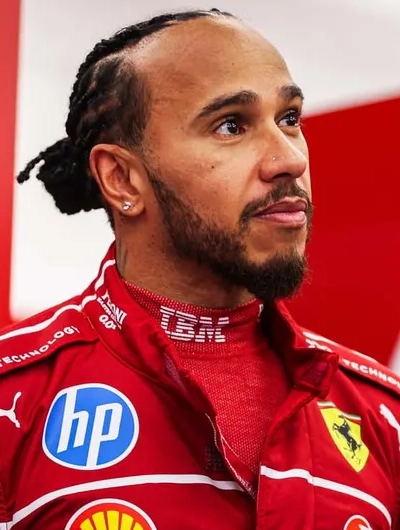
Hamilton’s Ferrari Gambit
Lewis Hamilton’s move to Ferrari after 11 years with Mercedes is the racing story of the decade. His partnership with Charles Leclerc—a driver who is equally fast but prone to tactical missteps—could either reignite Ferrari’s glory or expose its operational flaws. Early-season races will show whether Hamilton can adapt to Ferrari’s front-end-heavy car philosophy, which is a stark contrast to Mercedes’ rear-grip focus.
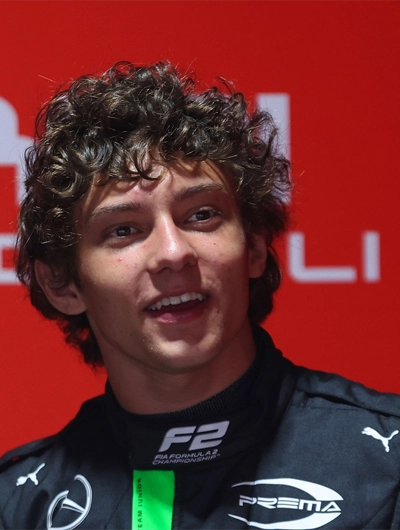
Kimi Antonelli: Mercedes’ Teenage Prodigy
At 17, Kimi Antonelli is the youngest driver since Max Verstappen to join a top team. His dominance in F3 and F2 (12 wins in 2024) suggests that it’s generational talent, but Mercedes’ high-pressure environment will absolutely test his maturity. Key races like Monaco and Singapore, where rookie mistakes are always amplified, will most likely define his season.
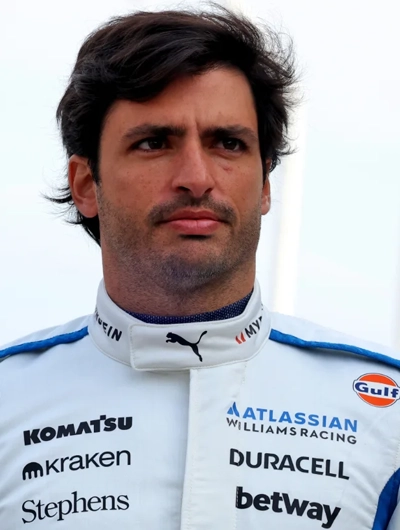
Carlos Sainz’s Redemption Arc
Ousted by Ferrari to make room for Hamilton (ouch), Sainz joined Stake F1 (Audi’s future factory team). His consistency—as evidenced by podium finishes in 2023 and 2024—could make him a dark horse on technical tracks like Suzuka or Hungary, which is where precision always outweighs raw speed.
Rookie Watch: The Next Generation
- Ollie Bearman (Haas): The British teen has been impressive with a points finish in Saudi Arabia 2024 as a stand-in for Sainz. His aggressive overtaking suits tracks like Brazil or Austria.
- Gabriele Mini (Alpine): A master of tire management, Mini’s smooth style could excel in the races with high degradation, like Spain or Abu Dhabi.
Key Races to Watch
Every race plays a part in the championship, but the five Grands Prix are all really pivotal moments! This is where titles are won, reputations are solidified, and betting odds go wild.
Australian Grand Prix (March 16, 2025)
After six years of Bahrain hosting the opener, F1 is back at Melbourne’s Albert Park, a circuit that has street-track tension surrounded by parkland serenity. The track’s flowing layout—which was revamped in 2022 to improve overtaking—features high-speed sectors (Turns 11-12) and narrow chicanes (Turns 3-4). Drivers need to be gutsy and precise.
– Early races show off the teams’ winter progress. Red Bull’s 2024 dominance could continue, but Ferrari and Mercedes’ upgrades could close the gap. Reliability is a definite wildcard.
– Ferrari’s 2024 power unit failures in Bahrain really underscore the risk of making early-season bets.
– Avoid heavy favorites: The first race is always notoriously unpredictable. Instead of picking the heavy favs, you should target qualifying markets or safety car props (60% chance due to tight walls).
– Dark Horse Alert: Oscar Piastri (McLaren) finished P5 here in 2024. The home-track advantage and McLaren’s improved tire management make him a top-6 contender.
Monaco Grand Prix (May 25, 2025)
Monaco’s narrow streets, which are lined with barriers and million-dollar yachts, remain F1’s most prestigious challenge. Overtaking is pretty much impossible, and that makes Saturday’s qualifying session the de facto race. The track’s slow-speed corners (e.g., the Casino Square and Rascasse) demand maximum downforce, and that will work in favor for cars like Ferraris 2024 challenger.
– Pole position wins here 70% of the time. Teams prioritize one-lap pace over race setups.
– Ferrari’s 2024 upgrades at Monaco netted Leclerc his first home win. Hamilton’s adaptability to Ferrari’s high downforce setup will be heavily scrutinized.
– Pole Position Focus: Hamilton (3 Monaco poles) and Leclerc (2 poles) are the prime candidates.
– Lap 1 Carnage: The Sainte-Dévote corner is a crash hotspot. Bet on First-Lap DNF markets or Safety Car in Lap 1 (40% probability).
Belgian Grand Prix (July 27, 2025)
Spa’s 7km route, with its legendary Eau Rouge-Raidillon sequence and unpredictable Ardennes weather, is a fan and driver favorite. The addition of a sprint race amplifies the risk-reward calculus, and teams will have to balance Saturday’s points with Sunday’s endurance.
– Sprint races award points (8 for 1st down to 1 for 8th), incentivizing midfield teams like Alpine or RB to gamble on aggressive setups.
– Rain is a constant threat. In 2024, a sudden downpour during qualifying shuffled the grid, and that handed Williams a shocking front-row start.
– Sprint Race Value: Alex Albon (Williams) absolutely thrives in mixed conditions. A top-3 sprint finish at +800 odds offers a lot of value.
– Weather Hedge: Use apps like Windy.com to track live rain forecasts. If storms are looming, back Max Verstappen (75% wet-weather podium rate).
United States Grand Prix (October 19, 2025)
COTA’s mix of technical corners (the “Esses” in Sector 1) and elevation changes has made it a modern classic. The circuit’s bumpy surface and relentless tire degradation (especially in Sector 3) test drivers’ adaptability and engineers’ setup precision.
– F1’s U.S. expansion all hinges on events like COTA. Teams usually debut aerodynamic upgrades here to capitalize on the media attention.
– Mercedes’ 2024 low-drag setup netted George Russell a podium. Antonelli’s performance here could define his rookie year.
– Tire Management Masters: Lando Norris (McLaren) and Carlos Sainz (Stake F1) excel at preserving tires. Back them for top-6 finishes at +200 or better.
– Don’t Make Sentimental Picks: Logan Sargeant (Williams) always gets hometown support, but his 2024 DNF rate here (3 out of 4 starts) definitely makes him a riskier bet.
Abu Dhabi Grand Prix (December 7, 2025)
Yas Marina’s twilight setting and combo of slow-speed corners (Sector 3) and long straights are the backdrop for a fitting climax. The track’s final sector, with its hotel complex chicane, usually decides the qualifying battles by thousandths of a second.
– Championship deciders are super common here. In 2021, Max Verstappen’s last-lap pass on Hamilton decided the title.
– Teams deploy experimental setups, and that creates volatility. Ferrari’s 2024 “quali mode” upgrade here secured Leclerc pole by 0.003s.
– Live Betting Opportunities: If the title fight is close, watch for team orders (e.g., Sergio Pérez letting Verstappen pass).
– Qualifying Precision: Charles Leclerc’s 2024 pole here makes him a +150 favorite to repeat.
Betting Tips for the 2026 Season
The 2026 Formula 1 season is fast-moving (literally), and betting on the races takes a little strategy, some adaptation, and lots of split-second decisions. If you want to stay in front of the pack, you’ll have to go deeper than lap times and podium finishes. The following are the five pillars of betting on Formula 1 so that you can turn insights into smart and tactical bets!
Understand the Sprint Race Format
Sprint races are condensed battles with an outsized influence. Yes, they award fewer points, but they set the grid for Sunday’s Grand Prix and show fans important clues about car performance. Teams usually use these sessions to test setups or strategies, and that creates great opportunities for observant bettors.
Strategy
- Follow the gamblers: Midfield teams like RB or Alpine could prioritize sprint results over Sunday’s race. If they excel in a sprint, their odds for Sunday could still be undervalued.
- Watch tire behavior: Teams that manage soft tires well in sprints usually carry that advantage over into the main race.
Monitor Driver Adaptations
New driver-team pairings take time to gel—it’s kinda like an arranged marriage. Hamilton’s switch to Ferrari isn’t only about speed—it also means adapting to a car that is built for Leclerc’s aggressive style. Meanwhile, rookies like Kimi Antonelli will face the steepest learning curve: raw talent meets F1’s nonstop demands.
Strategy
- Delay big bets on new pairings: Give Ferrari or Antonelli 5-6 races to settle in before backing them for wins.
- Rely on consistency: Veterans like Max Verstappen or Fernando Alonso are the safer early-season bets while the others are adapting.
Track Performance Trends
Don’t laugh, but all of the tracks have their own distinctive personalities. Red Bull’s aerodynamic prowess dominates high-speed circuits like Spa, and Ferrari’s agile chassis excels in Monaco’s tight corners. Teams usually carry momentum, and a strong result in Spain’s technical sections could signal there will be success in Hungary.
Strategy
- Group races by type: Categorize circuits as power-heavy (Monza, Baku), technical (Hungary, Suzuka), or street (Monaco, Singapore).
- Ride momentum: If McLaren is brilliant at a high-downforce track like Barcelona, back them for similar circuits.
Weather Considerations
Rain doesn’t more than level the playing field—it actually changes it. A sudden downpour at Spa can catapult a backmarker into points, and the scorching heat in Bahrain tests tire management to the limit. Even the subtler shifts, like cooler evenings in Qatar, can tip the balance one way or the other.
Strategy
- Track forecasts closely: Apps like Windy or RadarScope give you real-time updates. If rain is coming, back drivers like Verstappen or Alonso, as they are the masters of mixed conditions.
- In extreme heat, bet on the smoothest operators like Carlos Sainz or Oscar Piastri—both drivers are known for preserving tires over long stints.
Qualifying vs. Race Pace
Some cars are outstanding in single-lap speed but then struggle over long runs. Aston Martin’s 2024 car usually qualified mid-grid but climbed positions on Sundays via strategic tire management. Conversely, Haas regularly overperformed in qualifying but faded during the actual races.
Strategy
- Spot undervalued race-day performers: If Mercedes shows a strong long-run pace in practice but qualifies poorly, their odds for a top-6 finish could offer bettors value.
- Use data tools: Platforms like F1 Tempo will highlight any gaps between qualifying and race pace.
Responsible Betting Practices
Betting should improve your F1 experience, not make it spin out like a Ferrari on a track, so you should practice the following principles:
Bankroll Management: Your Financial Safety Net
- The 5% Rule: Never, ever risk more than 5% of your total bankroll on a single race. For a $1,000 budget, limit your bets to $50 per weekend.
- Split Your Stakes: Allocate 2% to race winners, 1% to podiums, and 2% to props (safety cars, fastest laps).
- Tracking Tools: Apps like Betmentor log bets and highlight the riskiest trends (e.g., overbetting on favorites).
Stay Informed: Knowledge Is Currency
- Follow Insiders: Journalists like Lawrence Barretto (F1.com) and Natalie Pinkham (Sky Sports) leak setup clues during practice sessions.
- Team Radio Intel: During FP2, listen for the engineers who are complaining about “front locking” or “tire graining”—these are the signs of race-day struggles.
Emotional Discipline: Don’t Tilt
- The Hamilton Effect: After an emotional win (e.g., Hamilton’s first Ferrari victory), odds will shorten due to public hype. Wait 24 hours before placing bets.
- Loss Limits: Use apps like Gamban to block betting sites if say, you have three or four consecutive losses.
The Checkered Flag: Your Guide to Winning F1 Bets This Season
The 2026 F1 season is an all-or-nothing saga where human ingenuity and machine precision go full speed ahead. From Hamilton’s Ferrari fairytale to Antonelli’s baptism by fire, every race is just one chapter in a bigger story. And for bettors, success lies in balancing a data-driven analysis with disciplined risk management!
Look below for a recap of our 2026 F1 Season guide:
Season Highlights
- 24 races with 6 sprint events (China, Miami, Belgium, USA, São Paulo, Qatar).
- Lewis Hamilton joins Ferrari, partnering Charles Leclerc in a make-or-break move.
- Rookie debut: 17-year-old Kimi Antonelli replaces Hamilton at Mercedes.
- Carlos Sainz moves to Stake F1 (Audi), becoming a midfield contender.
Key Races
- Australia: Unpredictable opener with reliability risks; target qualifying/safety car bets.
- Monaco: Qualifying is critical (pole position wins 70% of the time).
- Belgium: First sprint race at Spa; weather chaos favors wet-weather specialists.
- USA (COTA): Tire management focus; avoid sentimental bets on local drivers.
- Abu Dhabi: Championship decider; live betting lives and breathes on team orders.
Betting Strategies
- Sprint races give bettors mid-field opportunities (e.g., Alpine, RB).
- Track driver-team chemistry (e.g., Hamilton’s Ferrari adaptation period).
- Prioritize track-specific trends (high-speed vs. street circuits).
- Use weather apps for rain forecasts and back wet-weather experts.
- Exploit qualifying vs. race pace gaps (e.g., Aston Martin’s Sunday climbs).
Responsible Betting
- 5% bankroll rule per race.
- Stay updated via F1 journalists/team radios.
- Don’t make emotional bets (e.g., post-win hype).
Want to rev up your F1 betting game? Bookmark this guide, join forums like r/F1Bets for the latest F1 fan tips, and track your progress with BetTracker Pro. And always bet responsibly—don’t put the pedal to the metal and know when to pump the brakes!
Surveillance in Online Gambling: How Much Privacy Do Players Really Have?
If you’re gambling online and in the thick of the game, you’re probably not thinking much about who (or what) is watching you. Why would you? The wheels are spinning, or you’re in the middle of a heated poker match.
You might already know this, but if you don’t? You should be aware that from the second you log in, your data is being collected. Gambling sites are gathering all of the details about your behavior, game preferences, and even your decision-making patterns. But what exactly are they tracking, why are they tracking it, and how does it impact your privacy?
If you ask this question of online gambling operators, they will emphatically say that monitoring their users is a must for safety. Why? To prevent fraud, underage gambling, and money laundering. But as surveillance tools grow more advanced by the minute, the players are left to chart a complicated course where their personal data drives everything from targeted ads to dynamic odds. That line between protective oversight and invasive scrutiny? It’s blurrier than ever.
That’s why we want to unpack the realities of surveillance in online gambling, and here’s what you’ll take away from our research:
- What data is collected: Past your name and payment details, platforms also track your betting habits, your device info, and subtle behavioral traits.
- How it’s used: Algorithms analyze your actions to personalize promos, adjust odds, and sometimes give you a little push to make riskier bets.
- The privacy trade-off: This is where responsible gaming measures end and potential overreach begins.
We don’t want to discourage you from playing—far from it! We just want you to know who’s watching you 👀!
The Role of Surveillance in Online Gambling
Surveillance in online gambling isn’t only done to catch cheaters—it’s a massive, data-starving operation that keeps the wheels of the industry going round and round. But before you panic,
unplug your router and throw it out of the window, we have to look at why operators swear by it…and what it means for your privacy.
Why Surveillance Is Necessary
First off, we need to get one thing straight: All surveillance isn’t inherently evil. In fact, without it? Online gambling would be like the Wild West—minus the cool factor. The following is why platforms are so invested in watching every move you make (cue “The Police” song):
Okay, so in a world without surveillance, the bots would be swarming poker tables, collusion would run rampant, and stolen credit cards would be funding those jackpot chases. Surveillance tools like AI and transaction monitoring act like digital FBI agents, and they flag any shady behavior (e.g., sudden massive deposits, impossible win streaks) before it gets out of hand.
Random number generators (RNGs) verify that the games aren’t rigged, but who is watching the watchers? There are third-party auditors like eCOGRA who use surveillance tech to certify that slots, roulette, and blackjack are all operating on the up and up. Without this oversight, trust in the industry would fall apart in no time flat.
Gambling laws are tighter than a slot machine’s payout ratio. Operators have to verify ages, block restricted regions, and report suspicious transactions to avoid being fined or having their license revoked. Surveillance keeps them on the right side of regulators—and out of any sort of legal crosshairs.
Problem gambling tools, like self-exclusion or deposit limits all rely on surveillance to work. If a player’s behavior signals addiction (e.g., chasing losses at 4 am), the platform can (and should) intervene. It’s also self-preservation: A lawsuit from a bankrupt player is just terrible PR.
Types of Surveillance Used by Online Gambling Sites
Think surveillance is just cameras and security guards? Wrong! Online operators deploy a whole digital toolkit that would even startle Orwell. Below is how they’re watching the players:

Tracking Software
- Cookies: These are the tiny files that track your logins, game preferences, and session durations. If you’ve ever been curious as to why you’re suddenly bombarded with “Come back!” emails after abandoning a cart, that’s cookies at work.
- IP Tracking: Your IP address reveals your location, which helps platforms to block restricted regions or flag those users who are using a VPN.
- Device Fingerprinting: By analyzing your browser type, screen resolution, and installed fonts, operators create a unique “fingerprint” to suss out the banned users who are trying to sneak their way back in.

Behavioral Analytics
Every single click, bet size, and pause is logged. Algorithms analyze all of these patterns to answer the following questions:
- Do you tilt after losses? (Translation: Will you deposit more to chase wins?)
- Are you a daily player, a weekend warrior, or a midnight marauder?
- This type of data drives all of those personalized bonuses (e.g., “Here’s 50% extra cash—we know you’re due for a deposit!”) and even some odds adjustments.

AI & Machine Learning
AI models predict everything from your lifetime value as a customer to your risk of developing a gambling problem. Real-time monitoring can flag the things below:
- Unusual betting spikes (Is this a lucky streak, or is it money laundering?).
- Collusion (Are two players at a poker table secretly in cahoots?).
- Problem gambling signs (Did you just place 57 bets in 10 minutes?).
KYC (Know Your Customer)
Before you cash out, platforms will demand documents—ID, utility bills, even selfies—to confirm that you are who you say you are. KYC isn’t only for compliance; it’s also tying your digital activity to a real-world identity. Translation: That “anonymous” account? It isn’t as anonymous as you think it is!
What Data Do Online Gambling Sites Collect?
You might assume online gambling sites only care about your money, and that’s a fair assumption. But surprise! They are actually interested in you (not like that). From your birthday to your bedtime browsing habits, operators are compiling a dossier that would make the NSA proud. Next up, we’ll unpack the four main categories of data they’re hoarding and why your digital footprint is their absolute fav currency.
Personal Information
Before you make your first bet, platforms demand the basics: your full name, address, date of birth, and sometimes even a selfie of you holding up your ID. Age verification is non-negotiable (nobody wants a 12-year-old at the blackjack table), but this data also ties your gambling activity to a real-world identity.
Financial Info
Your wallet isn’t just the thing that funds your account and bets—it’s a goldmine of valuable intel.
Operators track these things:
- Payment methods: Credit cards, e-wallets, and crypto addresses.
- Transaction history: Deposit amounts, withdrawal frequencies, and if you’re a “win big, cash out fast” player or a “reinvest until zero” type.
- Withdrawal details: Bank accounts, routing numbers, and how fast you clear out your balance after winning.
They are basically profiling your financial behavior like an FBI profiler would a serial killer.
Behavioral Data
Now, this is where things get interesting (or creepy, depending on how you see it). Platforms monitor the following:
- Betting patterns: Do you double down after losses? Favor slots over sports? Do you bet small but regularly?
- Session duration: Late-night marathons or lunchtime quickies?
- Game preferences: Your go-to roulette strategy or poker table habits.
- Geolocation & IP addresses: To verify that you’re not logging in from a banned region…or from three different countries at once.
This kind of data isn’t just stored—it’s just analyzed so that they can try to predict your next move.
Device and Technical Data
All of your gadgets are snitching on you! And snitches don’t get stitches in the scenarios—gambling sites are collecting:
- Device type: iPhone or Android? Desktop or mobile?
- Operating system & browser: Chrome loyalist or Safari devotee?
- Cookies: Tracks logins, abandoned carts, and how often you ignore the promo pop-ups.
This kind of intel helps to spot the fraudsters (e.g., 72 accounts that all log in from the same device) and personalize your gameplay experience. Have you noticed that a gambling site runs smoother on your phone than on your laptop? Now you know why!
How Is Player Data Used?
Your data isn’t sitting in a spreadsheet gathering digital dust—it’s the universal multitool of the entire gambling world. Operators wield it for everything from keeping regulators happy to keeping you coming back. Next, we look at how your info morphs from bytes to billion-dollar strategies.
Verifying Compliance and Security
“Trust, but verify” is the industry’s motto—the operative word here being “verify.”
- Legal Compliance: Age checks and geolocation tracking verify that you’re not a teenager in Texas or a blacklisted high roller from Belarus. Anti-money laundering (AML) laws mean that platforms scrutinize transactions like overzealous TSA agents. Deposit $10,000 in crypto? You can expect a paper trail that’s longer than a CVS receipt.
- Problem Gambling Detection: Algorithms flag erratic behavior, like sudden 1 am betting sprees, maxing out deposit limits, or chasing losses with reckless abandon. In theory, this triggers interventions like cooling-off periods. In practice? It’s a toss-up whether the system cares more about your well-being or its liability (we like to think that some gambling sites care, but maybe we are naïve).
- Self-Exclusion Enforcement: If you ban yourself from a platform, your data (like facial recognition or device fingerprints) turns into a digital security guard—it blocks any sneaky comeback attempts.
Marketing and Personalization
Your data isn’t just being watched—it’s also being weaponized (not in a bad way, but it can get annoying).
- Personalized Promotions: Lose $500 on slots? Here’s a “We miss you!” bonus. Ignore poker for a week? Enjoy a “Comeback King” offer. Operators will use your habits to build incentives that are super-targeted.
- Tailored Ads: Notice that gambling ads are following you around like a lost puppy? That’s behavioral data doing its work. Platforms (and their partners) track your preferences to serve up ads for games you’ve played—or almost played once.
- User Experience Tweaks: If 75% of mobile users are abandoning blackjack after two hands, developers will simplify the interface. Your frustration isn’t just noted—it’s monetized.
Potential Misuses of Player Data
Not all data usage is as wholesome as a “Responsible Gaming” banner—here’s how some platforms can possibly misuse your info!
- Third-Party Sales: While most platforms claim that they don’t sell your data, vague privacy policies usually allow sharing with “trusted partners.” Translation? That late-night baccarat habit could be fueling targeted ads for loans or rehab centers.
- Data Breaches: Gambling sites are hacker magnets. In 2022, 888 Holdings admitted that a breach exposed millions of its users’ details. Your email? Leaked. Your birthdate? That’s now for sale on the dark web. That woefully wrong bet that you made on the Super Bowl is the least of your worries.
- Algorithmic Exploitation: The line between “personalization” and manipulation is super thin. Platforms could use your data to prod you to make higher-risk bets or hide the withdrawal buttons—all things that subtly tilt the odds in their favor.
Privacy Regulations and Player Rights
Although it appears that online gambling platforms have free rein to mine your data, they don’t. From Brussels to California, lawmakers are (slowly but surely) arming players with the rights to fight back against digital peeping Toms. Want to know how these trucks are keeping operators in check and how you can flex your privacy muscles? Read on to find out!

Legal Regulations Governing Data Privacy
New privacy laws are the trusty new bouncers at the data club party, and the following is where they are and how they work!
- GDPR (Europe): This is the gold standard of privacy laws. Under GDPR, EU players can demand access to all of their data, request deletions, or ask, “Why are you tracking my casino losses?” Fines for violations can hit €20 million or 4% of global revenue—whichever hurts more.
- CCPA (California): This is the GDPR’s cousin across the pond. Californians can opt out of data sales, sue over breaches, and force platforms to cough up details on all collected data. It’s not quite GDPR-level, but it’s a good start.
- Industry-Specific Rules: Regulators like the UK Gambling Commission and Malta Gaming Authority (MGA) require operators to protect player data, limit marketing to vulnerable users, and disclose tracking practices. Failures can mean a loss of licenses—or turning into the poster child for a privacy scandal.
Player Rights and Control Over Their Data
You’re a human being, not a data piñata at a bday party being assaulted by sugar-high kids! Below is how you can swing back to protect some of your data.
- Access, Delete, Restrict: Under GDPR and CCPA, you can request a copy of your data (“Show me everything you’ve got”), demand deletions (“Forget my slots phase”), or limit how it’s used (“No, you cannot share my bets with advertisers”).
- Opt-Out Options: Hate spammy emails? Use the “unsubscribe” link. Annoyed by tracking cookies? Most sites allow you to reject any non-essential cookies (though they will guilt-trip you with pop-ups).
- Transparency Demands: Operators have to clearly explain what data they collect, why they need it, and who they share it with. If their privacy policy reads like a foreign language that you don’t speak? They are breaking the rules.
Rights mean very little if they aren’t being enforced. Many players don’t even know that these options exist—or they just don’t have the patience to nag operators via email. But as privacy laws tighten globally, the power balance is shifting. Slowly, but it’s happening.
How Players Can Protect Their Privacy
You don’t need to be Jason Bourne (when he regains his memory, of course) to safeguard your data in the world of online gambling. If you have a few strategies, you can keep your personal info out of the spotlight while still enjoying the games.
A few small habits can have a really big impact:
– VPNs: Mask your IP address to dodge geolocation tracking and regional restrictions. But a warning: A lot of platforms ban VPNs, so check the fine print first.
– Two-Factor Authentication (2FA): Add a text code or authenticator app to your login. Hackers might guess your password, but they’ll need a miracle to crack this combo.
– Less Is More: Skip the oversharing. Does a casino really need your LinkedIn profile? Nope! Keep your personal details to a minimum.
Not all gambling platforms are playing fair, and that means that you have to choose where you play wisely!
– Licensed Operators Only: Stick to sites regulated by bodies like the UK Gambling Commission or Malta Gaming Authority. No license? No trust.
– SSL Encryption: Look for the Padlock
– Ensure the site URL starts with https://—that “s” means your data is scrambled during transit.
– Secure Payments: Use e-wallets like PayPal or prepaid cards to avoid handing over your bank details. Crypto? Even better for anonymity.
Okay, this is boring, but it’s really important:
– Read the Fine Print: Skim the privacy policies for any red flags like “third-party data sharing” or “behavioral analytics.” If it sounds sketchy, it probably is.
– Opt Out Where Possible: Reject non-essential cookies and unsubscribe from marketing emails. Your inbox (and sanity) will thank you later.
– Demand Deletion: Under GDPR or CCPA, you can email platforms to delete your data. Template subject line: “Erase me. Best, a privacy-conscious gambler.”
Balancing Surveillance and Privacy: Is There a Middle Ground?
In terms of balance, operators are holding all of the cards that are marked “security,” players are trying to hang onto to their “privacy” chips, and the dealer (a.k.a. technology) continues to up the ante. Can these two sides coexist without one folding? Is there a decent middle ground to be found between safety and autonomy? Or does one or the other have to compromise?
Ethical Considerations in Player Surveillance
As we said above, all surveillance isn’t necessarily inherently sinister—it’s about how it’s done.
- Less Is More: Collect only what’s necessary. Do platforms really need your social media habits to verify your age? Absolutely not.
- Anonymize Aggressively: Strip data of personal identifiers post-analysis. Your betting patterns might help improve algorithms, but they don’t need your name to be attached.
- Avoid Creepy Overreach: Tracking mouse movements to detect addiction? Ethical. Using webcams to analyze “poker faces?” That’s a no-go zone.
The best case scenario is to protect players without treating them like they’re lab rats.
Transparency and Trust in the Online Gambling Industry
Trust isn’t earned with generous welcome bonuses and promotions (although those are nice)—it’s earned through honesty and transparency.
- Plain-Speak Privacy Policies: Ditch the legalese. If a 12-year-old can’t grasp what data you’re collecting, try again—rewrite it.
- Third-Party Audits: Let the watchdogs like eCOGRA or iTech Labs certify fair data practices. It’s like a Yelp review but for your ethics.
- Player Control Dashboards: Let users toggle tracking settings. Want behavioral analytics off? Cool. Don’t want those targeted ads? Done.
When players feel respected, loyalty will follow.
The Future of Privacy in Online Gambling
The next decade could redefine the game—for better or worse.
- Decentralized Platforms: Blockchain-based casinos could let you bet anonymously, and that means that there would be no central authority hoarding data.
- AI Ethics: Smarter algorithms might predict problem gambling earlier—or manipulate vulnerable users faster. Regulation will decide which one wins.
- Global Privacy Push: Laws like Brazil’s LGPD and Australia’s Privacy Act are catching up to GDPR. Operators will either adapt or run the risk of becoming extinct.
Let’s end on this note for operators: If players revolt against this kind of invasive tech, the industry will either pivot or perish.
Conclusion: Betting & Big Brother
Player data keeps the gambling ecosystem spinning—for better and for worse. It blocks shady fraudsters, tailors experiences, and funds jackpots. But it also turns your privacy into a bargaining chip, and it’s traded for convenience and security. In addition to gambling, you’re also taking a change when it comes to not knowing where the heck your data ends up after you log off.
Gambling is a world where every click, bet, and sigh is being quietly cataloged. Below is what you need to remember:
- Why they watch: To stop scammers and grifters, keep games fair, and protect the people who might be in over their heads.
- What they take: Your name, birthday, how you bet, where you log in, and the device that you use.
- Your power move: Laws like GDPR and CCPA mean that you can ask, “What do you know about me?” or tell them to, “Delete it. Now.”
Yes, casinos do need some data to keep things secure—but that doesn’t mean that they get carte blanche to rummage through your digital life. It’s akin to hosting a soirée: You want the bouncer to keep troublemakers out, but you don’t want them to be in your bedroom reading your journal. The most important thing? Transparency. If platforms explain why they’re tracking you and let you call the shots, trust will be earned. If not? You’ll play on another platform that gives you more of it.
Don’t just hope for the best or throw your hands up because you feel like it’s pointless—you can do something! Follow the tips below:
- Read the fine print. Skim the privacy policies. And if they’re vague? Ask questions.
- Pick your battles. Use VPNs, strong passwords, and gambling sites that treat your data like a precious thing, not a punching bag.
- Speak up. If a platform feels like it’s sketchy, do NOT play there. Your privacy is worth so much more than any sign-up bonus.
Online gambling shouldn’t mean that you have to sell your soul to the data gods or sacrifice your privacy at the altar of convenience. Just be smart about it, protect your data when you can, and always gamble responsibly!
Frequently Asked Questions
Online gambling and privacy is a tricky subject for sure, but that doesn’t mean that you can’t still enjoy it and not give up all of the data goods! Keep reading for some of the most frequently asked questions we get about this sensitive subject.
What Personal Data Do Online Gambling Sites Collect?
Besides the basics like your name and age, they track betting habits, device info, IP addresses, and how long you linger on a game.
How Do Gambling Platforms Use My Betting History?
To personalize ads, tweak odds, and sometimes nudge you toward riskier bets. It’s also analyzed for fraud detection and addiction monitoring.
Can I Request That a Gambling Site Delete My Data?
Are Online Gambling Platforms Allowed to Track My Location?
Yup. Geolocation tracking makes sure that you’re not in a restricted area. And if you’re using a VPN? They’ll notice—and they might block you.
How Can I Protect My Privacy While Gambling Online?
You should enable 2FA, choose the secure payment methods (e-wallets/crypto), and only play on licensed gambling sites that have clear privacy policies.
2025 TGL Finals Betting Odds: Which Team Will Win It All?
Ok, golf fans, the TGL is NOT your dad’s regular 18 holes. Tomorrow’s Golf League is powered by SoFi, and it’s a new one where PGA TOUR stars go head-to-head in prime time under the lights of an arena. Yes, an arena! There are six teams of superstar duffers, and they are repping cities from across the U.S. The simulator league was founded by golf legends Rory McElroy and Tiger Woods.
But back to the arena. It was custom-built for this, and it’s at Palm Beach State College in Florida. Because it’s indoors, it means there are no rain delays and no marathon rounds—it’s just two hours of edge-of-your-seat action every week! The players are mic’d-up, there’s a lot of new tech, and every shot is live. Like we said, it’s not your dad’s regular Saturday round of golf! For two hours, fans can watch fast-paced, nail-biter matches.
And the inaugural season of TGL is closing in on the finals—the race for the SoFi Cup is tight. New York Golf Club (NYGC) has locked up its spot in the Finals, which changed the betting odds due to their semifinal victory over Los Angeles Golf Club (LAGC). They’ll be up against Atlanta Drive GC, who beat The Bay Golf Club on March 18 with a final score of 9 < 3 to secure their spot in the finals.
TGL’s combo of next-level tech, bite-sized (two hours is a minute compared to PGA round) matches that will keep you watching all of the action, and a roster that’s loaded with golf’s elite has made the league into a bettor’s playground. And with the Finals right around the corner, the real questions come into play: Who’s actually built to win this thing? And where are the hidden gems in those odds? Let’s tee it up!
Overview of the 2025 TGL Finals
The 2025 TGL Finals are almost here, and the stakes are pretty high! Starting on March 24th, the teams will battle it out in a best-of-three showdown at Palm Beach Gardens’ SoFi Center—which is the aforementioned high-tech arena we talked about and where the players play on simulated courses under the stadium lights. There are no meticulously kept sprawling greens or quiet crowds here; no, this is a different type of golf. The first team to lock in two wins takes the title, and there could be a possible tiebreaker on March 26th.
Two hours per match. That’s it! Every drive, chip, and putt happens in quick-fire succession, and the teams play until one secures two victories. If things stay close, March 26th could decide it all. ESPN’s live coverage means that you can watch every moment—no waiting around like regular golf tourneys. Players all have mics for those “hot mic” moments (regular golf would never), and the arena is filled with spectators (you have to buy tickets). It’s golf that has been stripped down, kinda like part Topgolf and part Super Bowl.
After some stiff competition, the playoffs have been narrowed down to three teams, and the final three have earned their spots the hard way:
– New York Golf Club shocked everyone by toppling LA’s star-powered squad. How? With a cold-blooded concentration, they showed when it mattered most.
– The Bay Golf Club got knocked out of final contention by Atlanta Drive GC and secured the last Finals slot.
TGL’s format is actually a bettor’s dream! Quick matches mean faster results, and the team-driven “Triples” setup (which is where three players alternate shots) turns every hole into a showdown. One player’s hot streak or a wobbly partnership can change the odds in a second. The smartest bettors are watching the live markets, player chemistry, and prop bets like “longest drive” or “closest to the pin.” Your best shot? Act early! The odds change much quicker here than in traditional tournaments. And keep a really close watch on the teams that do their best under pressure; nerves matter more than ever in the arena setting.
Confirmed Finalist: New York Golf Club
New York Golf Club has been the dark horse that nobody saw coming. All season, they’ve zigged when others zagged, and now? They’re not just crashing the Finals party—they’re looking to take the whole thing back to the Big Apple. Their semifinal win was far from a fluke; it showed off their grit and precision. The team’s gone from “Wait, who are they?” to “Oh, them” in no time flat
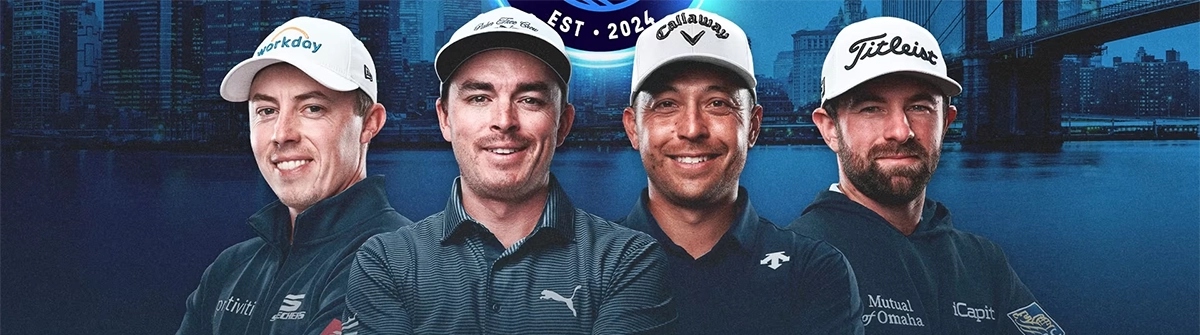
Team Snapshot
The NYGC roster reads like it’s a perfectly balanced meal: there is a mix of experienced pros and some really hungry (and impressive) newcomers. No egos and no drama—just four guys who’ve figured out how to piggyback and amplify each other’s strengths. Here’s who makes up the NY team:
- Matt Fitzpatrick: The silent assassin. No gimmicks, just straight-up results. Give him a close match, and he’ll perform like a superstar surgeon.
- Rickie Fowler: The team’s heartbeat. Loud, passionate, and the kind of leader who’d bust through a wall like the Kool-Aid man if it meant hyping up the squad.
- Xander Schauffele: The human metronome. Pressure? He giggles at it. When the pressure is on, he’s the guy you want lining up the putt.
- Cameron Young: The bazooka. His drives are so insanely long they might as well come with a parachute.
Playoff Performance
That 6-4 takedown of Los Angeles GC? It wasn’t only a win—it was a strong statement. Schauffele turned into a robot in the singles matches, and he was sinking putts like he’d mapped out the greens in his sleep. Fowler and Young? They came out swinging early, bullying LAGC into mistakes with aggressive plays that gave the crowd (and probably their opponents) a little bit of vertigo. And Fitzpatrick? Steady as ever, he was plugging any leaks before they turned into problems. Nobody expected NYGC to outmuscle LA’s star power, but here we are.
Strengths
The secret to NYGC isn’t only their raw talent—it’s how they’ve learned to use it in the following ways:
- Adaptability: They’re like a team of chameleons. Did the recreated environmental wind shift (there’s no actual wind in an arena)? Elevation changes? This team adapts quicker than you can say “mulligan.”
- Clutch DNA: Schauffele, who maybe has ice running through his veins, and Fowler’s fiery leadership have saved them more times than we can count. When the pressure is on, the two of them are on their game.
- Boom Factor: Young’s driver isn’t a regular golf club; that thing is a weapon. On the simulator’s long holes, he gives NYGC a big head start before the others have even teed off.
Weaknesses
But even with their amazing semifinal performance, there are a few areas where NYGC could be vulnerable—after all, no one is invincible:
- Putting Jitters: The simulator greens has given them problems before. Missed five-footers in earlier matches cost them big time, and this area could still give them some trouble.
- Schauffele Dependency: If the stoic star has an off night, the whole team will feel it. Fowler and Young can most definitely carry the weight, but the margin for error will shrink fast.
Current Odds
Before the semifinals, sportsbooks had NYGC at +320, which was basically like saying, “Yah, they’re good, but champions? Nah.” After decimating LAGC? Don’t expect those odds to stay cozy. Bettors are already pouncing, so watch for updated lines. If you’re thinking of backing them, now’s the time…before the bandwagon gets overcrowded.
The Second Finalist: Atlanta Drive G
The last Finals spot is no longer up for grabs—The Bay Golf Club lost to Atlanta Drive GC. The matchup was pretty much as close as it gets; both teams entered at -110 odds.
Semifinal Showdown
Entering the match with evenly matched odds, both teams were expected to deliver a nail-biting contest. However, Atlanta Drive GC dominated the proceedings, showcasing their prowess and determination. The trio of Justin Thomas, Patrick Cantlay, and Billy Horschel played pivotal roles in the victory, each contributing significantly to the team’s success.
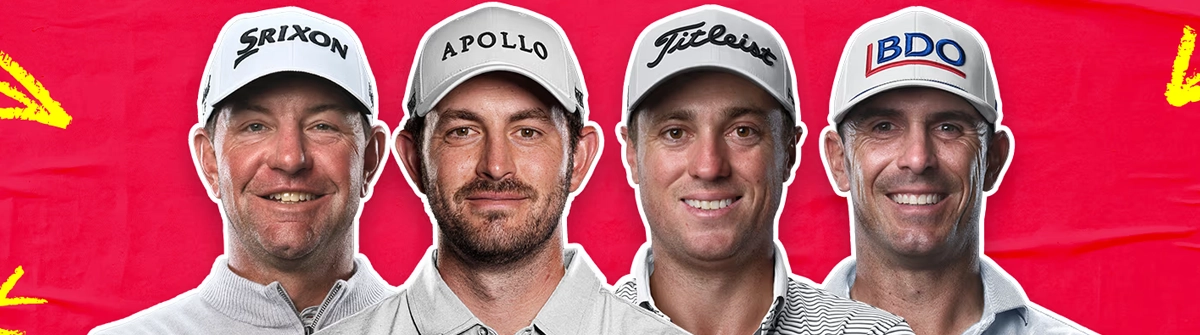
Atlanta Drive GC Profile
Atlanta Drive GC has consistently demonstrated their resilience and skill, which makes them a formidable opponent in the TGL Finals!
Roster: The team looks pretty stacked with a lineup of experienced golf pros:
- Lucas Glover
- Patrick Cantlay
- Justin Thomas
- Billy Horschel
Season Highlights
After a mid-season loss to The Bay Golf Club, Atlanta Drive GC had an impressive rebound and finished the regular season with a 4-1 record. They learned from their setbacks and changed strategies, which were both big components of their success.
Betting Odds
Before the semifinals, Atlanta Drive GC was listed at +260 to win the championship, which cemented their status as strong contenders.
X-Factor
The team’s overall strength lies in their exceptional short-game skills and the singular brilliance of players like Thomas and Cantlay. Their proficiency around the greens and their ability to handle high-pressure situations make them really dangerous in the TGL format!
Prediction for Finals
The Finals will feature a best-of-three series between New York Golf Club (NYGC) and Atlanta Drive GC, and it’ll no doubt be an exciting meeting of styles and tactics.
Updated Odds
Although specific odds for the Finals haven’t been released as of this posting, Atlanta Drive GC’s dominant semifinal performance could put them in the as slight favorites. But NYGC’s momentum from their upset over Los Angeles GC could attract bettors who are looking for more value.
Key Matchups
- Xander Schauffele (NYGC) vs. Justin Thomas (Atlanta): Both players have been instrumental in their teams’ successes, and their head-to-head could be pivotal.
- Rickie Fowler (NYGC) vs. Patrick Cantlay (Atlanta): Fowler’s flair is in stark contrast with Cantlay’s consistency, and that sets the stage for a truly compelling duel.
Best Bets
- Outright Winner: Given Atlanta Drive GC’s recent form and depth, betting on them to clinch the SoFi Cup could be a smart choice.
- Series Length: Considering the competitive nature of both finals teams, wagering on the series going to a decisive third match could offer a lot of value.
Updated 2025 TGL Finals Betting Odds
The 2025 TGL Finals matchup is now locked in, and the betting markets are adjusting. With New York Golf Club and Atlanta Drive GC set to battle it out for the SoFi Cup, sportsbooks have updated their odds, which now reflect the teams’ recent performances and overall chances of winning it all.
Championship Odds
Here’s where things stand at FanDuel Sportsbook after the semifinals:
| Team | Odds to Win the SoFi Cup |
|---|---|
New York Golf Club | +100 |
Atlanta Drive GC | +230 |
NOTE: Odds are current as of March 18, 2025, but could change in the days leading up to the Finals!
Breaking Down the Odds

New York Golf Club (+100): NYGC is coming in hot as the favorite after taking down Los Angeles GC in the semifinals. The balanced roster and recent momentum have oddsmakers feeling confident that they can pull off another big win. With Xander Schauffele leading them, their experience and team chemistry make them a solid pick.

Atlanta Drive GC (+230): Atlanta enters the Finals as an underdog, but they’ve been exceeding expectations all season. Their 9-3 win over The Bay GC in the semis showed they’re more than capable of pulling off another upset. Justin Thomas and Patrick Cantlay bring some serious firepower, and their short-game skillset could be a difference-maker in the Finals.
Game 1 is set for March 24, so you should expect the odds to change as bettors weigh in and line movements show the latest insights. If you’re looking for value, now’s the time to lock in your bet before any huge swings happen!
Line Movement
The underdogs (New York GC) spanking Los Angeles sent some seismic shifts through the odds. Their odds tightened from +320 to +175 overnight, and sportsbooks are getting prepped for another shakeup after Atlanta won the semifinal.
Why does this matter? Bay, which had been a consistent favorite all season, didn’t move forward, so their odds dropped. Even after Atlanta won the semifinals, they still are seen as an underdog (slightly) (+180) but will now bring in the more risk-tolerant bettors.
Get in on NYGC’s odds now if you like their momentum. But don’t overlook Atlanta—they beat the presumptive favorite and clinched the last spot.
Betting Markets
In addition to the outright winner, the following is where the action’s heating up betting-wise:
- Game 1 Winner: Early leans favor whoever faces off against NYGC, but again, the team has proven without a doubt that they thrive when they’re underestimated.
- Total Points Over/Under: Books are setting the line at 22.5 points per match, and with aggressive playstyles, the over has dollar signs written all over it.
Prop Bets
- Longest Drive in Finals: Cameron Young of New York Golf Club is the heavy favorite for the longest drive in the Finals, with odds at -120. However, don’t overlook Atlanta Drive GC’s Justin Thomas, who averages 324.6 yards off the tee and could pose a serious challenge.
- Clutch Putt of the Night: Schauffele’s almost robotic focus definitely makes him a smart pick (+200).
- First to 10 Points: High-risk, high-reward, which is great for live betting.
FYI: TGL’s two-hour format means there is a lot of volatility. Live bets on momentum shifts (e.g., a player heating up mid-match) could be a really valuable wager!
Important Factors to Watch in the Finals
When you’re watching the TGL Finals, don’t forget that it will not be won on raw talent alone—it also comes down to tactics, adaptability, and, of course, being able to execute under pressure. With its high-tech simulator setup, team-based formats, and make-or-break decision-making, there are important factors that could change the outcome!
The way teams handle the virtual course, team dynamics, individual matchups, and strategic moments will all play their parts in deciding who gets to lift the SoFi Cup.
Simulator Edge
We need to make one thing really clear: This isn’t your local Topgolf. The SoFi Center’s tech turns every swing into a science experiment. Sure, every finalist is a pro golfer, but the simulator doesn’t give a hoot about your reputation on the real fairway.
Big hitters like Cameron Young or Ludvig Åberg are able to dominate the long holes—like a driver smashing a ball into a screen that says, “Cool, let’s pretend that went 350 yards.” But once they rotate to the Green Zone (a real-life short-game area), it’s a whole different story. Because now, the oh-so-delicate chips and putts on always-changing greens decide everything. And if your team’s got a nervous putter? Good luck to you!
Some players have adapted quickly to the artificial conditions, and then there are the ones who are having a harder time getting acclimated. The ones who have strong data-driven approaches to their games—players like Patrick Cantlay and Matt Fitzpatrick—will probably have an edge in adjusting to spin, speed, and distance control in a simulator setting.
One night, the greens could mimic Augusta’s slippery slopes, and the next, they’re covered in faux bunkers. Teams with short-game stunners—the guys who can flop-shot a ball onto a dinner plate—will survive this.
Basically, the teams that excel at both long-game power and short-game precision will have the best shot at winning the Finals!
Team Chemistry
Golf is usually a solo sport, but TGL’s Triples format (holes 1-9) forces the teammates to act like, well, teammates. It’s like a three-legged race in a pressure cooker.
Schauffele’s the calm CEO, Fowler’s the hype man, Fitzpatrick’s the quiet fixer, and Young’s the human highlight reel. Together, they’ve turned clutch moments into an art form. When Fowler yells, “Let’s go!” after a putt, you can actually see the whole squad lock-in.
Atlanta Drive GC’s teamwork has been one of their biggest strengths, and it showed in their 9-3 semifinal win over The Bay GC. Their ability to scramble and save par in alternate-shot play has been a key factor, especially with Patrick Cantlay and Justin Thomas excelling in pressure situations. While they may not have the same driving power as NYGC’s Cameron Young, their short-game precision and ability to capitalize on mistakes make them a dangerous opponent in the Finals.
The team that negotiates the alternate-shot format with the fewest mistakes and has a better rhythm will most likely gain an early edge in the Finals!
Singles Showdowns
Once the Triples format ends on Hole 9, the Finals will transition into head-to-head singles matchups from Holes 10-15. There are no teammates to bail you out. It’s just you, the simulator, and a rival who wants to ruin your night.
The following are the possible main matchups:
Two short-game maestros will be going head-to-head. Schauffele’s steady precision will meet Thomas’ aggressive flair, making this a battle of nerves and clutch play. And both excel under pressure, so this matchup could decide the Finals.
Rickie’s the kind of guy who’d sink a putt and then mean mug you after. If he squares off against Patrick Cantlay (aka “The Iceman”), it’ll be fire vs. frost. Cantlay definitely won’t flinch, but it’s fair to say that Fowler’s energy would probably rattle anyone.
If NYGC needs a momentum swing, they’ll unleash Cameron Young. Dude’s drives are so long that they might as well come with a string of exclamation points. But if his putter goes cold? Uh-oh.
The Hammer
TGL’s biggest strategic surprise is called the Hammer, and it’s where a team can double the value of a hole’s points if and when they choose to activate it. In the Finals, you can expect teams to use this rule as aggressively as they possibly can!
Teams will most likely save it for a hole they have a clear advantage on, no matter if it’s a long par-4 for a power player or a short par-3 for a precise ball-striker like Matt Fitzpatrick.
The threat of a Hammer can be as powerful as the move itself. If a team is behind by two points, and then they hear that the other team might use theirs on the next hole? That could force you to act. Do you play it safe? Or do you go all in?
A well-timed Hammer can also put on the psychological pressure. If a team forces their opponent into a mistake, it can be as valuable as just winning the hole outright.
Expert Betting Picks
You ready for some expert betting tips? You got it! And if you weren’t aware, TGL has its very own mobile app that you can download from their website by clicking here. You can also search for it in the App Store or Google Play and grab it there!
The official app has everything—live streaming, scores, play by plays, stats, rosters, match highlights, etc. It’s a perfect companion platform to find all of the details about the TDL Finals. And it looks really cool watching it all play out!
If you use the app, you can make bets as well! You’ll be redirected to the FanDuel sportsbook TGL betting odds page—super convenient!
Because the betting odds are changing after every match that’s played, finding the best value picks for the TGL Finals means that you have to look at the trends, matchups, and any possible advantages before you lay down a wager!
Best Bet
Based on the current betting landscape, New York GC is a really strong value pick for winning the SoFi Cup.
- Odds before the semifinals: +320
- Projected odds after semifinals: Likely around +175 or lower
Why Are They the Best Bet?– Momentum is on their side: NYGC is coming off a statement win over LAGC, and they proved that they can come through in high-pressure matches.
– Schauffele’s form: He has been one of the best performers in TGL, which makes him a super reliable anchor.
– Triples format success: Their chemistry has helped them excel in alternate-shot play, and that gives them a leg up early on in matches.
– If the odds hold steady around +175 to +200, NYGC has a lot of value as a championship pick.
Alternative Bet
For those who are looking to hedge or take a risk on an early-game bet, you might want to think about backing the second finalist to win Game 1.
- Atlanta Drive GC has been really strong under pressure, with clutch putting and match play experience giving them an advantage in sticky situations.
- New York GC has been the more consistent team, but Game 1 introduces a new Finals setting, which could definitely work in Atlanta’s favor.
- Fast starts have been important in TGL matches, and Game 1 will set the tone for the series, meaning that Atlanta could take advantage before NYGC has a chance to fully settle in.
If Atlanta enters as an underdog for Game 1, there’s good value in backing them to strike first.
Prop Bets
TGL’s different format brings with it some really unique betting chances that lean into its rapid-fire and tech-driven style! The following are some of the pops that are getting the attention or sharps:
- Rickie Fowler – Longest Putt Made: Fowler’s knack for draining dramatic putts is outstanding in the simulator environment, where the green speeds are consistent and external factors (like wind or terrain) don’t really exist. His confidence under pressure makes him a favorite, but don’t forget about Matt Fitzpatrick! His technical precision has run roughshod over short-game challenges all season long.
- Cameron Young – Longest Drive: This one is a no-brainer, as Young’s raw power off the tee is only amplified in the simulator, and this is where distance reigns supreme. Young’s launches bombs, period.
- Xander Schauffele – Singles Match Win: Schauffele’s composure in high-pressure moments makes this a great bet. He’s lost only one singles match all season, and his ability to adapt mid-game—no matter if he’s up against a rising star like Åberg or vets like Justin Thomas—makes him a super reliable pick.
- Total Points Over/Under: With aggressive playstyles and the Hammer rule in play, matches tend to be all over the place. Books are setting the line at 22.5 points per match, but teams like NYGC and The Bay GC usually push totals higher with their risk-reward strategies.
The Rationale for Our Expert Bets
The format of TGL totally upends conventional golf analytics, and this is what (and why) we think will matter most:
- Simulator-Specific Skills: Players who excel in quick adjustments (e.g., tweaking ball flight for virtual wind) will outperform those who are reliant on real-world course knowledge. Patrick Cantlay’s analytical approach and Fitzpatrick’s data-driven game will flourish here.
- Team Dynamics Over Individual Stats: NYGC’s success all hinges on how well Schauffele’s calm pairs with Fowler’s energy and Young’s power. A disjointed team, even if it has star players, will crumble under the alternate-shot pressure.
- The Hammer Effect: This rule rewards the teams that are studying their opponents’ tendencies. NYGC usually uses theirs on the holes where Young’s driving distance forces rivals into defensive play.
Smart Betting Strategies
Focus on Live Betting: Momentum changes constantly during TGL’s two-hour setup. If a team starts out slow but has a history of comebacks (like NYGC), odds will spike mid-game, so strike before the Hammer resets the board.
Target Underrated Props
- Most Sand Saves: If the Green Zone has bunkers, Fitzpatrick’s short-game consistency becomes invaluable.
- First to 10 Points: Teams who start out strong make this format a live-betting bonanza.
Fade the Public’s Love for Stars
- Casual bettors always overvalue big names (Fowler’s popularity inflates his odds). Look for the value in the quieter contributors—Fitzpatrick’s “Top Scorer” odds might be softer than they should be.
Watch for Hammer Patterns
Track which holes the teams use their Hammer on. NYGC favors par-5s for Young’s power; The Bay GC might target par-3s for precision. Betting on “Hammer Success Rate” could definitely exploit these trends!
How to Bet on the 2025 TGL Finals
Betting on the TGL Finals adds even more excitement to this historic first championship showdown! Because the odds are always shifting and with different betting markets available, you need to know how and where to bet and the strategies you can use! Trust us, we know of what we speak—it can make a big difference.
Where to Bet
A lot of major sportsbooks are going all-in on the TGL Finals, but we think that the following ones are the best for betting on this brand-new format:

FanDuel: The popular sportsbook is partnered with TGL (the homepage redirects you to FanDuel) and is the best one for live betting and prop markets like “Longest Drive” or “First Team to Use the Hammer.” And they also run regular odds boosts for high-profile matches.

Bet365: This platform has niche props like “Total Hole-outs” and “Player to Win Most Singles Matches.” Their live updates are insanely fast, and that’s super important for TGL’s quick two-hour matches.

Caesars Sportsbook: This platform is great for newcomers or more inexperienced bettors. Their “First Bet Safety Net” (aka up to $1,000 refunded if your first bet loses) goes really well with TGL’s volatility.
FYI: Use the sign-up bonuses like Bet365’s “Bet $5, Get $150” so that you can explore prop bets risk-free!
Tips for Bettors
Since TGL’s format is new, this means that it’s time for some new betting strategies! We’ve found that the following ones work best:
- Monitor Line Movements: Odds will continue to shift now that the Finals matchup is set, and locking in early value is smart, but waiting for potential line movement before Game 1 might reveal even better opportunities. Watch how the betting action influences the numbers in the days leading up to the first match.
- Don’t Overreact to Regular-Season Results: TGL’s structure means that teams can heat up or cool down in a flash. Playoff form is always a better indicator than past regular-season performances.
- Think About Live Betting: With matches happening in prime time and lasting only two hours, live odds give bettors great opportunities—for those who are paying attention!
Responsible Gambling
The most important thing about betting on the TGL Finals? Doing it responsibly! Look below for how to practice responsible gambling and resources to help if you or someone you care about is struggling:
- Set Limits: Decide on a budget before the Finals begin, like “I’ll only spend $50 across all matches.”
- Use Built-In Tools: Apps like FanDuel give you the ability to set deposit limits or take 24-hour breaks.
Get Help If You Need It
There are free and confidential resources available:
- 1-800-GAMBLER: Immediate support for problem gambling.
- National Council on Problem Gambling: (ncpgambling.org): Guides to self-exclusion or counseling.
TGL (and all other sports) is unpredictable—you should always treat gambling as what it’s meant to be, which is entertainment, not a source of income!
Conclusion
The 2025 TGL Finals are definitely different, and we mean that as a compliment. New York Golf Club had already got their spot before Atlanta beat Bay in the semifinals. And with the betting odds changing in real-time, there are so many chances to get in early and capitalize the value with some tactical wagers!
Look below for a quick recap of where the TGL stands as of now:
- New York Golf Club is in the Finals after knocking off Los Angeles GC.
- The Atlanta Drive GC winner will join them in the championship series.
- Betting odds are changing as the final matchup takes shape, and the betting apps are giving bettors a lot of different options like live bets and player props!
You can check this page or go to TGLGolf.com for the latest updated odds and expert analysis. Tell us what your predictions are in the comments, place your bets, and get ready for the first-ever TGL champion to be crowned the king of the SoFi Arena!
The TGL Finals will be big on action, drama, great golf, and (hopefully) big payouts. It doesn’t matter if you’re betting on the outright winner or just watching for fun—it’s a new and exciting format that makes it a must-watch in the golf world!
If Superheroes Gambled: Would Batman or Tony Stark Clean Up Vegas?
What if you saw Batman hunched over a blackjack table, cowl shadows hiding his poker face, and then Tony Stark struts into the casino with a cocky “Daddy needs a new arc reactor” swagger like he just invented blackjack, martini in one hand and a Bitcoin wallet in the other? You–and Las Vegas–wouldn’t know what hit it.
Superheroes gambling in Sin City? That’s either brilliant or a catastrophe in the making, what with all of their combined enemies. But forget about saving the DC or the Marvel universe while you’re reading this —we are gonna talk about who would empty whose wallet. Can Batman’s brooding brilliance outplay Tony’s tech-tweaked arrogance? What if Peter Parker (you know, Spider-Man) showed up to help Stark? And if Wonder Woman came to Batman’s aid, all bets would be off. Nerd out with us about how their powers, personalities, and their many, many, questionable life choices might play on the casino floor.
I’m gonna be honest right from the jump: I’m Team Batman. DC Universe for life, baby! But keep scrolling if you’re Team “Tony Stark Definitely Bought the Casino Just to Lose It.”
Setting the Vegas Stage
Welcome to Casino Crisis on Infinite Earths, where the stakes are higher than Superman’s tax bracket and the house edge is sharper than Wolverine’s claws. In this corner of the multiverse, we’re not just betting with chips—we’re betting with fates. Will Batman’s Knightfall-level prep work crush Tony Stark’s Demon in a Bottle recklessness? Can Spider-Man’s Parker Luck defy the odds like it’s One More Day? And does Wonder Woman even need luck when she’s a dang Amazonian? Pick a side as we unpack Vegas 2026’s tech dystopia, our heroes’ motives, and the ultimate showdown between DC’s broodiest billionaire and Marvel’s most chaotic genius. Someone’s walking away with a vibranium-sized chip stack, but who?

Modern Vegas in 2026
This is not your pop pop’s Las Vegas. In 2026, it’s way less “Sin City” and more “Algorithm City,” like a neon dystopia where Oracle’s Birds of Prey algorithms run poker tables that scan your pulse rate, and VR blackjack pits you against a digitized version of Batman: The Animated Series’ Riddler, who cackles every time you lose. Crypto bets are the new normal, and high-roller suites come with perks like WayneTech’s “Knightfall Package”—soundproof rooms, anti-surveillance tech, and Alfred Pennyworth’s voice reciting Shakespearean insults when you lose.
What are the features of this tech-overloaded playground? The following:
- AI Dealers: Programmed with the emotional range of Justice League: War’s Cyborg. They don’t just deal cards—they also psychoanalyze your betting patterns.
- VR Arenas: Play roulette in a simulation of Apokolips, complete with parademons heckling your bets.
- Crypto Craze: Even Lex Luthor’s offshore accounts can’t hide from the blockchain audits that are happening here.
Why Superheroes Gamble
Superheroes are just like us—they like to have fun when they’re not trying to save the world! But behind every superhero’s Vegas trip, there is a motive that’s tangled up in some comic-book logic:
The Contenders
- Batman: Bruce Wayne isn’t here to unwind. No, he’s laundering Wayne Enterprises’ profits to fund a Tower of Babel-style contingency plan. “If the Flash goes rogue, we’ll need a casino-sized treadmill, Alfred.”
- Tony Stark: Post-Demon in a Bottle, Tony has swapped his whiskey for blackjack. Now, he’s testing his Extremis-upgraded brain against AI oddsmakers. “J.A.R.V.I.S., bet the Malibu house on 17. Double if the dealer’s wearing Hydra merch.”
The Wildcards
- Spider-Man: Peter Parker’s here because The Amazing Spider-Man #248 taught him that luck is just “Parker Probability.” Also, the rent is due (RIP Uncle Ben and almost-RIP Aunt May, who was resurrected after The Snap).
- Wonder Woman: Diana Prince bets on mortal sports to prove her Amazonian superiority. “Your MVP couldn’t outrun a Lasso of Hestia toss, you mere mortal.”
The Bat-Signal is lit up, and the repulsors are charged. Let’s see who will be left standing when the House always wins (yes, even against superheroes).
The Superhero Gambling Showdown
And here we are at the main event: Batman’s brain vs. Tony’s bravado. This isn’t about saving humans from villains; no, this is about who can outsmart, outbluff, and outlast Vegas itself. What are their gambling styles? Their strengths and weaknesses? And for all of you Stark stans, Tony’s ego is not his superpower in this scenario.
1. Batman (Bruce Wayne)

Bruce Wayne doesn’t just play games, you plebes—he engineers them. Whether he’s in his Batsuit or a bespoke tailored suit, he is analyzing every single move before it even happens.
- Persona: The Dark Knight—calculated, observant, master of preparation.
- Game of Choice: Poker (Texas Hold’em). Why? Because Poker rewards patience, observation, and icy self-control—all qualities that Batman hoards like Bat-gadgets.
Vegas Scenario: Cleans up at high-roller tables, uses Bat-tech to spot card counters, and then donates all of his winnings to Gotham’s orphanages. He doesn’t even glance at the slot machines. (“No skill is involved, Alfred.”).
Strengths
- Prep Work: He memorized every player’s tells via hidden cameras. Yes, he hacked the casino’s security feed. Twice.
- Bluff Master: His face is a brick wall. You’d fold a royal flush just to escape the Bat-glare.
- Discipline: Only bets 2% of his stack per hand. Wayne Enterprises’ fortune? More like Wayne Enterprises’ self-restraint.
Weaknesses
- Overcomplicates Luck: Slot machines? Nah. “Alfred, where exactly is the strategy in pressing a button?”
- Scares Off Fun: Casual players will abandon his table. Nothing kills a poker night like a guy who repeatedly growls, “I am vengeance.”
Gambling Tip: Study your opponents, not just the cards. And never let them see you not brood.
2. Tony Stark (Iron Man)

Tony treats Vegas like a lab for all of his worst ideas. He’s the guy who codes an AI named “Veronica” to count cards and then bets his prototype armor on one single roulette spin.
- Persona: Tony Stark. Billionaire. Arrogant. Enough said.
- Game of Choice: Blackjack (With All the Side Bets). Why? Because it’s fast, bougie, and perfect for yelling “Hit me!” like he’s auditioning for a role in Ocean’s 14.
Vegas Scenario: Wins big early on, buys the entire casino bottle service, and then blows it all on red at roulette. Ends the night barefoot in the lobby, arguing with a hologram dealer. “I’ll fund a better casino tomorrow.”
Strengths
- Quick Math: He calculates odds in his head faster than you can say “nanotech suit.”
- Distraction Pro: Flirts with the dealer, buys drinks for the table, and still wins.
- Risk Tolerance: Bets $1M on a hunch. “J.A.R.V.I.S., remind me to sell one of my jets later.”
Weaknesses
- Overconfidence: Thinks “hot streaks” are science. Loses $5M trying to “test the universe.”
- Boredom: Gets distracted, wanders to roulette, bets on “17” because “It’s my favorite reactor model!”
Gambling Tip: Take some big swings, but know when to let the A.I. (or common sense) take the wheel.
3. Wildcard: Spider-Man (Peter Parker)

Peter Parker’s Vegas trip is just as chaotic as his regular life. It would be like a golden retriever puppy at a blackjack table—adorable, clumsy, and weirdly lucky.
- Persona: Cute, surprisingly clumsy, and sweet.
- Game of Choice: Slots. Why? It’s cheap, chaotic, and requires zero skills. Perfect for that iconic Parker Luck™.
Vegas Scenario: Wins just enough to fix his web-shooters, then dips before anyone can ask any questions. He does leave a sticky note that says, “Thanks, Mr. Casino!”
Strengths
- Beginner’s Luck: Hits a $10K jackpot on his first pull. “Wait, is this a prank?”
- Quits While Ahead: Cashes out immediately to pay Aunt May’s rent. He is a responsible, short king.
Weaknesses
- Panic Mode: He drops his wallet while fleeing security. “I SWEAR I’M 21! …Kinda!”
Gambling Tip: Sometimes, luck is a superpower. Just don’t push it.
4. Wildcard: Wonder Woman (Diana Prince)

Diana Prince doesn’t bet, you silly mortals! She conquers. Our warrior queen treats sportsbooks like they are enemy battlements.
- Persona: Gorgeous. Glowing. An actual queen.
- Game of Choice: Sports Betting. Why? Um, she’s been competing since the Trojan War. Mortal games are merely child’s play.
Vegas Scenario: She cleans out the sportsbook, then donates all of her winnings to charity. Then, she casually flips the entire casino over when the dealer implies she “got lucky.”
Strengths
- Instincts: Calls game outcomes like she’s got the Lasso of Truth wrapped around ESPN.
- Fearless: Bets big on the underdogs. “Victory favors the bold, not the odds.”
Weaknesses
- Overconfident: Challenges the House to an arm-wrestling competition when they dare to question her bets (she breaks their arms clean off).
Gambling Tip: Always bet on what you know and don’t ever let the House intimidate you.
The Verdict—Who Cleans Up Vegas?
Okay, fellow geeks, it’s finally time to settle the ultimate nerd debate: Batman’s icy precision vs. Tony’s champagne-fueled antics. But hold up—Spidey’s dumb luck and Diana’s Amazonian grit could have an influence on the outcome!
Head-to-Head
In a battle of wallets and a clash of ideologies, who will win? Batman’s cold logic or Tony’s hotheaded flair? Let’s find out!

Poker Face-Off
In the game where silence always speaks louder than words, Batman’s stoic concentration clashes with Tony’s improv theatrics.
- Batman: Tony’s bluffs are about as subtle as a Thanos snap. Bruce reads his tells like a Batman: Year One comic—he’s slow, methodical, and brutally effective.
- Tony Stark: Tries distracting Bruce with stories about his “MIT days” and “That time I dated a literal Valkyrie.” Batman’s response? “Your heartbeat spiked 17% on the river bet, Stark.”
The winner? Batman. Tony’s ego can’t outlast Bruce’s glacier-level patience.
Bankroll Battle
Money isn’t only paper here—it’s a weapon. And while Batman is investing his, Tony is incinerating it with a flamethrower.
- Batman: Treats money like a Kryptonite stockpile—he hoards it, invests it, and never wastes a penny. Wins $10M, quietly donates $9.9M to Gotham’s schools.
- Tony Stark: He turns $20M into $100M in an hour, then loses it all on a “lucky” roulette spin. Ends the night borrowing cash from Rhodey. “It’s a tax write-off, I swear!”
The winner? Batman again. Slow and steady will always win over Tony’s “hold my reactor” approach.
Wildcard Factor
As Bruce and Tony are dueling it out, the wildcards are on the sidelines sowing a little (or a lot) chaos.
- Spider-Man: Hits a $50K slots jackpot, freaks out, and donates it to a “Save the Pandas” charity. Vegas security finds another sticky note: “From your Friendly Neighborhood Gambler.”
- Wonder Woman: Cashes out $5M from sports betting, then physically fights the casino owner for double or nothing. She wins. Again.
Diana always gets the spotlight, but Spidey’s adorable antics have him trending on every social media platform.
Winner
After tallying all of the chips (and the inflated egos), one hero stands taller than the other…and one leaves barefoot (where are that man’s shoes?).
Batman takes the crown. Why? Because discipline will always beat delusion. Bruce’s prep work, patience, and “I will literally outlive you” hyper-focus makes him Vegas’ silent and gloomy king.
But hang on—Stark ain’t leaving empty-handed. He wins for “Most Fun to Watch.” Tony is the dude who will buy half of the Vegas strip after losing, rename one of his newly purchased casinos “Stark’s Bad Decisions,” and throw an epic rooftop party with a War Machine DJ set.
2026 Twist
In a city that is now run by algorithms and crypto, even superheroes need to have upgrades. And in a crypto-crazy Vegas, Tony’s AI and blockchain hacks should give him an edge…but Batman’s already three steps ahead:
- Tony: Uses “Veronica 2.0” to mine crypto at the blackjack table.
- Batman: Hacks Tony’s AI and reroutes the crypto to Alfred’s retirement fund. Awww!
Final Edge: Batman. Always. Why? Because he’s Batman, that’s why!
Who’d you think would win? You can cast your vote below!
- Batman (Strategy Over Swagger)
- Tony Stark (Chaos Is Currency)
- Spider-Man (Parker Luck Forever)
- Wonder Woman (Amazonian Domination)
Superhero Gambling Lessons for You
You don’t have to have a Batcave or an arc reactor to conquer Vegas—you just need a little superhero wisdom. No matter if you’re a strategic brooder or a wild maverick who only cares about having fun, the following is how you can gamble like Batman, Tony Stark, and the wildcards. No cape is required (but feel free to don one if you want).
Takeaways
What can we all learn from how our beloved superheroes gamble? A lot, actually!
Bruce Wayne doesn’t leave anything to chance—and neither should you.
– Batman: Master the Art of Control
– Prep Like a Detective: Study the game. Know the rules, the odds, and your opponents’ tells. (No hacking required. Maybe.)
– Bluff Like a Pro: Keep your face neutral. Channel your inner “I’m-not-angry-just-disappointed” Bat-glare.
– Quit While You’re Ahead: Batman would never chase a loss. Set a limit and stick to it—even Alfred would approve.
Gambling Mantra: “Gotham wasn’t built in a day… and neither is a winning streak.”
Tony’s genius is 10% strategy, 90% reckless elan. Want to borrow his spark without the meltdown? Do the following:
– Tony Stark: Make Bold Moves (But Not Too Bold)
– Take Smart Risks: Double down when the math favors you, not when your ego says, “I’m invincible!”
– Distract to Dominate: A little charm throws opponents off. Just don’t flirt with the dealer too hard.
– Know When to Walk: Tony’s downfall? He never stops. Cash out before you’re barefoot in the valet line.
Gambling Mantra: “Sometimes you gotta lose a million to make a billion.” (But maybe start with $20.)
Parker Luck isn’t all bad. Sometimes, the universe does just hand you a jackpot!
– Spider-Man: Trust the Unexpected
– Play the Long Shots: Slots, lotteries, or underdog bets—sometimes fortune favors the bold (or the broke).
– Quit While You’re Happy: Won $100? Walk away. Aunt May needs groceries, and you need to sleep at night.
– Laugh at the Mess: Lost it all? Spidey’s been there. Shrug it off and swing back tomorrow.
Gambling Mantra: “With great power comes great responsibility…to not blow your rent money.”
Diana Prince doesn’t need luck, LOL—she makes her own odds.
– Wonder Woman: Bet on Your Strengths
– Stick to What You Know: If you’re a sports fan, bet on games. If you’re a poker pro, run the table.
– Play Fearlessly: Confidence will rattle your opponents. Just don’t challenge the dealer to a fight in the parking lot.
– Walk with Pride: Win or lose, leave with your head high. Amazons don’t pout.
Gambling Mantra: “Victory doesn’t favor luck—it bows to resolve.”
You can level up your gambling skills and style with all of our free resources at GamblingSite.com!
Conclusion: The Caped Crusader Cashes Out
What have we learned? Batman would own Vegas, Tony Stark would lose his shirt and shoes (and maybe his pants) in Vegas, Spider-Man would accidentally bankrupt it while attempting to fix a slot machine, and Wonder Woman would clean up and then mop the floor with anyone who looked at her sideways..
Look below for the final tally:
- Batman: The undisputed king of discipline. He’d turn chips into a Fortune 500 empire while muttering, “I am not gambling, I’m strategizing.”
- Tony Stark: The life of the party…and the reason that the casino has to hire extra security. Wins the “Best Spectacle” award (and a lifetime ban from the casino he just bought).
Wildcards
- Spider-Man: Peter Parker is proof that luck sometimes beats logic…until it doesn’t.
- Wonder Woman: Diana Prince reminds us all that self-assurance is the ultimate superpower.
The next time that you’re in Vegas—or on an online gambling site—ask yourself this: WWBD (What Would Batman Do)? Then proceed as the Batman would!
Want to test your inner superhero? GamblingSite.com has resources that are sharper than Deadpool’s katanas. Gamble responsibly, have fun, and know this: Even Batman loses sometimes. But he probably won’t own up to it. And share your superhero gambling moment in the comments or tell us on X with #SuperheroBets!
Next time it might be the Avengers vs. Justice League at the craps table—who knows? So many superheroes and so little time. Tell us who you’d like to see pitted against each other in the comments below!
The Great Gambling Heist: Could You Ocean’s Eleven a Modern Casino?
Exterior, Night: Las Vegas, 2026.
Interior, Night: A private penthouse overlooking the Strip is rife with tension as six male figures huddle around a glowing digital blueprint of Sin City’s most luxurious casino.
Whiskey glasses are clinking against a backdrop of neon lights, and someone cracks a smirk and says, “We hit the vault during the midnight show—in and out in under six minutes,” the ringleader says calmly as he straightens his cufflinks. His crew nods; one of the men is working his way through a shrimp cocktail with the nonchalance of Rusty Ryan. The stage is set, the stakes are insane, and the plan is so crazy that it just might work.
If the above scene feels like it’s the start of an Ocean’s Eleven movie, it is. Steven Soderbergh’s Ocean’s Eleven (2001) set the gold standard for casino capers. It was a super slick showcase of con artistry, witty dialogue, teamwork, and an audacious $160 million payoff. It was the film that made ripping off a Las Vegas vault look like so much fun.
The movie’s success spawned two sequels (and Ocean’s 8 with an all-female heist crew) and cemented the Ocean’s franchise as the reigning kings and queens of cinematic heists. Two decades later, Danny Ocean’s legacy lives on whenever anyone talks about “pulling a Vegas job.”
But here’s the billion-dollar question: Could a real-life Danny Ocean and co. actually get away with it today? Modern casinos in 2026 are a far cry from the basic analog playgrounds of the Rat Pack era or even the early 2000s. They’re now veritable fortresses of technology with a security arsenal that would make a Bond villain jealous. We’re talking hundreds of HD “eyes in the sky” that are guided by artificial intelligence, facial recognition cameras that scan every single guest, chips tagged with RFID trackers, and vaults sealed behind biometric locks and encryption. The house has smarter defenses than ever—and for a very good reason. Casinos lose millions to fraud and cheating each year, and they have no intention of letting the next slick con artist waltz out with their money.
With all that high-tech vigilance, even Danny Ocean might be nervous. With that being said, is a modern casino heist even remotely possible with today’s advanced security, AI surveillance, and digital protections? Or is it just Hollywood hype and hope? We want to know how possible (if at all) it would be to pull off an Ocean’s Eleven–style scheme in the age of AI and omnipresent cameras!
The Allure of the Casino Heist

The Bellagio in Las Vegas is a gorgeous behemoth that doubles as a fortress of cash—it’s an irresistible target in fiction and reality.
The camera swoops over the neon glow of the Las Vegas Strip and comes to rest on the busy floor of a luxury casino. Chips are being stacked, slot machines are making their usual sounds, and a ragtag crew of charming rogues huddle in the corner, not to gamble, no, but to plot the ultimate score.
There’s something that is undeniably watchable about a casino heist. It combines high stakes, glitz and glamour, and the promise of a life-changing payoff. And it all unfolds under the unblinking eyes of Lady Luck (and a few hundred security cameras). It’s little wonder that Hollywood keeps returning to this premise, from the Rat Pack’s original Ocean’s 11 to the star-studded remake, each spinning fantasies of outsmarting the house and walking away with duffel bags of loot.
Why Casinos?
Casinos have always been irresistible targets for would-be thieves because they’re temples of excess and wealth. Where else can you find millions in cash piled up behind one secure door, just waiting for a clever crook to say “jackpot”? The venues themselves practically dare you to try your luck behind the blackjack table—hence the long history of daring (and desperate) attempts to rob them.
In one infamous Vegas caper in the 1990s, thieves tossed a smoke bomb onto the casino floor as a distraction and snatched $1.1 million from an armored truck at the Stardust Casino. And that same year, a mild-mannered Stardust employee simply walked out the door with a bag stuffed with over half a million dollars in cash and chips, never to be seen again (yes, that actually happened).
Because there is so much money on the line and a built-in dramatic backdrop, casinos naturally invite huge risk-big reward schemes. They’re the glittering towers of greed and opportunity that have tantalized everyone from old-school mobsters to modern moviemakers.
The Ocean’s Eleven Blueprint
If casino heists are the dream, Ocean’s Eleven is the handbook that shows you how to do it in style (at least on screen). The film’s crew, which is led by Ocean, makes knocking over a casino look like child’s play. Why did their plan look so foolproof and feel so satisfying in the movie?
- Reconnaissance & Planning: First, they scope out every inch of the target casinos. Security schedules, vault layouts, guard rotations—no detail is too small. (Remember the team building a replica vault to practice in? Now that’s dedication.) The heist is a once-in-a-lifetime caper, and they spend weeks studying every element.
- Insider Assistance: Danny’s crew has people on the inside—or at least they’re posing as insiders. They plant a suave inside man and impersonate casino staff and VIPs to go behind the doors marked “Employees Only.” Having an “inside guy” (or fooling the real ones) gives them a leg up that real crooks could only dream of.
- High-Tech Hacks: This isn’t a smash-and-grab; it’s a tech lover’s delight. They rig explosives, booby-trap the security system with a stolen EMP device to black out the power, and fake out surveillance cameras with looped footage. Every electronic eye and alarm gets tamed by someone like Basher, the bomb expert, or Livingston, the electronics whiz.
- Misdirection & Showmanship: The Ocean’s team are absolute masters of misdirection. They distract the casino boss with illusion and sleight-of-hand—from staged arguments on the floor to actually faking an entire SWAT team response as a decoy. The bad guys (or good guys, in this case) literally walk out the front door while the owner is looking the other way. It’s a magic show with safes and security guards as the audience.
- A Charismatic Crew: Perhaps most importantly, they all have style. Each member of the crew is ridiculously skilled and oozes charisma—the smooth-talking leader, the pickpocket with elan, the acrobat, the con man, the tech geek. They’re having a ball, which makes us root for them, and their plan comes together like a well-oiled machine.
Watching all of the elements click into place is half of the fun! The team anticipates every twist (and every double-cross), which is why their fictional heist appears to be airtight. It’s an amazing cinematic con: meticulously planned, perfectly executed, and just illegal enough to make us cheer for the bad guys. No wonder we all walked out of that movie thinking, “Could I pull that off?”
Real-World Inspiration
Casino chips look like they’d be easy money, but modern security measures womp-womp them into worthless souvenirs after a heist.
In real life, things don’t usually go as smoothly as in a heist flick. Over the years, there have been a few ambitious people who have attempted to go to Ocean’s Eleven casinos, and the results have been equally dramatic and farcical.
Take the so-called Bellagio bandit in 2010: a man in a jumpsuit and motorcycle helmet brazenly walked into the Bellagio in Las Vegas, pulled a gun, and grabbed $1.5 million in high-value chips off a craps table before speeding away on his bike. For a moment, it looked like he’d pulled off a modern casino heist in true cinematic fashion. But the coveted $25,000 Bellagio chips? Well, they had embedded RFID trackers, and casino security deactivated them, which made them as valuable as poker-night plastic.
The would-be Danny Ocean found his stolen fortune was just plastic disks that no casino would cash. He was eventually nabbed by police in a sting when he tried to sell the now-useless pink chips to an undercover officer.
Then there’s the Crown Casino scam of 2013, which sounds like it was ripped from a screenplay and shows that sometimes the house can be conned, at least for a bit. In Melbourne, Australia, a high-rolling guest teamed up with an insider to hack into the casino’s surveillance cameras.
While the whale (aka a VIP gambler) played at a private high-stakes poker table, his accomplices fed him real-time info on the other players’ hidden cards via a headset. With the security cameras turned into their personal card-spying service, they knew exactly when to hold ’em and when to fold ’em.
Over just eight hands of cards, the tech-assisted cheater racked up $32 million in illegitimate winnings—one of the biggest casino cheats in history. But like most real-world capers, this one unraveled fast. Casino security got suspicious of the winning streak, investigated, and caught on to the scam almost immediately. The player was busted and shown the door, and the casino reportedly recovered the money. In the end, the only lasting damage was to the casino’s pride (and a security manager’s job).
The contrast is clear: in the movies, the crew walks away to bask in the Vegas sunset with bags full of cash. In reality, you’re more likely to end up in the clink or scratching your head as your big score literally vanishes in a puff of high-tech smoke. But the allure of the casino heist still lives on.
Modern Casino Security—Fortresses of the 21st Century
If an Ocean’s Eleven were to take place in 2026, the movie would be about 17 minutes long—and it would end with Danny Ocean getting tackled by casino security before he even made it to the blackjack tables. Casinos aren’t only guarded by burly men in suits; they’re locked down with the latest and greatest high-tech defenses.
Physical Defenses

Walking into a casino vault isn’t as simple as sweet-talking your way past a doorman. The places run biometric locks, armed guards, and reinforced vault doors that wouldn’t blink at a bazooka. Automated cash transport systems move money faster than any getaway driver, and even if you did manage to grab some loot, you’d need an industrial-grade plan to get it past multiple security checkpoints.
Surveillance Tech

The “eye in the sky” is no joke. Thousands of high-resolution cameras don’t only watch players; they study them. AI-driven software monitors everything, from betting patterns to body language, and it flags anything that’s remotely suspicious. If you so much as blink too much at the wrong moment, security will have a team reviewing your footage. And it’s not just cameras—casinos also use AI-powered behavior analysis tools that can detect possible cheats before they make a move. Casinos are already using AI to track player behavior, which makes it pretty much impossible to slip under the radar, no matter how smooth you think you are.
Digital Protections

Remember when the Ocean’s crew looped security footage to make it look like nothing was happening? Yeah, that’s not going to fly anymore. Encrypted networks, blockchain auditing, and anti-hacking firewalls make sure that any attempt to manipulate digital systems is met with instant countermeasures. Slot machines and table games are connected to secure networks designed to detect fraud in real-time.
Human Element

In addition to all of the high-tech security, casinos have undercover operatives and highly trained staff whose whole purpose is to spot cheaters and fraudsters. Some of them are ex-cops. Some are former card sharks. All of them have one mission: to make sure that the house always wins.
Could You Really Pull Off an Ocean’s Eleven Today?
The short answer? Nope. The long answer? Absolutely not. If you even thought about executing Danny Ocean’s plan in 2026, you’d be spotted, identified, and on a government watchlist before you even picked up your first fake ID.
Building Your Heist Crew
If you were going to attempt the impossible, you’d need the best team money can’t buy—because honestly, who is gonna risk 30 years in prison because they think you have “vision.”
The Classic Lineup
- The Mastermind: He is the one who is calling the shots and making the plan airtight. Has to be charming, strategic, and fluent in “casual casino wit.”
- The Tech Wizard: Hacks security systems, disables alarms. Extra points if they can do it from a van with a spotty WiFi connection.
- The Con Artist: Charms their way past security, posing as a high roller. Ideally, someone with a closet full of expensive suits and a “trust me” smile.
- The Muscle: Traditionally the “break down the door” guy. Way less useful now that doors have biometric scans, and you can’t use brute force.
- The Driver: Can escape a high-speed pursuit without having to pull up Google Maps.
Modern Additions
- The Drone Operator – Scans the area, disables external cameras. If they can deliver an Amazon package with a drone, they can probably help with a heist.
- The Social Engineer – Specializes in phishing scams, voice imitation, AI deep fakes, and getting people to spill security details over small talk.
Biggest Challenge? Finding people willing to risk everything when casinos aren’t exactly stuffing vaults with untraceable cash anymore.
The Hypothetical Heist Plan
If a casino heist could somehow work in 2026, here’s how it would (theoretically) go down, and there are tons of reasons why it would also fail miserably.
- Step 1: Recon – Casinos have floor plans tighter than military bases, so you’d need drones, deep web research, or a VIP employee with a gambling problem willing to sell the joint’s secrets.
- Step 2: The Weak Point – The sweet spot is where physical cash meets digital transactions—a high-volume moment like fight night in Vegas, when millions are moving and distractions are all over the place.
- Step 3: The Tech Play – You’d need a custom malware attack to manipulate slot machine payouts or AI-generated fake footage to replace live camera feeds. Both sound cool. Both are almost impossible.
- Step 4: Misdirection – Every great heist needs a distraction—something like a staged emergency evacuation, celebrity meltdown, or “accidental” fire alarm. Casinos hate shutting down, but the chaos could buy you a couple of minutes.
- Step 5: The Grab and Go – Getting into a vault is hard. Getting out? Even harder. If by some chance you managed to make it past security, RFID-tracked chips and facial recognition mean you’d be caught before finishing your celebratory beverage.
Plausibility Check: Unless you have a quantum decryption device, an invisibility cloak, and a teleportation gun, this plan is DOA (dead on arrival).
Why It Probably Won’t Work in 2026
For those who may be still clinging to the idea of a casino heist, the following are why it’s a horrible idea:
Modern casinos are far from the easy prey that you see in heist movies. They’ve enlisted AI as a high-tech guardian that doesn’t just watch – it predicts trouble before it happens. Advanced surveillance algorithms analyze every roll of the dice and every player’s micro-expressions, flagging unusual behavior in real time.
Using machine learning, these systems can recognize when someone’s loitering where they shouldn’t or if a bettor’s pattern defies all logic. The result? Security can intervene before a heist crew even gets to yell “go!” and that’s a far cry from the guards Danny Ocean had to outsmart. In fact, cutting-edge AI and biometric analytics promise “real-time threat detection and predictive insights” for casino security, meaning that the house can sense a hustler’s next move.
The moment our imaginary thieves start acting fishy, the AI overlord of the casino is likely already notifying human security (with footage and suspect profiles) to pay a friendly visit to the casino floor. Good luck pulling off a heist when Big Brother’s electronic eyes can see it coming before you do.
Remember those dramatic scenes in Ocean’s Eleven where duffel bags overflowed with cash? Nowadays, casinos have basically made physical money an endangered species. The classic smash-and-grab is pretty much obsolete when most transactions are digital and every chip is tagged.
Casinos today use RFID-tagged chips and digital credit systems that turn their money into traceable data. If a thief tries to fill their pockets with high-denomination chips, they might as well be pocketing painted rocks—the moment those stolen chips are scanned at a cashout, the system will scream theft. Casino chips now contain embedded RFID tags encoding their value and identity, and casinos can instantly void chips reported stolen.
Security improvements in the last two decades mean that “cashing out at the cashier without the RFID technology flagging the chips would be nearly impossible.” In addition, many casinos encourage or require patrons to use digital wallets or casino-issued cards for betting. Gone are the days of mountains of cash changing hands—winnings are credited electronically to your account.
For a would-be thief, that means there’s nothing to grab from the vault because the “vault” is now a server room under heavy lock and key. And if a hacker tries to digitally siphon credits, exhaustive audit trails and encryption are in their way. You can’t steal what isn’t physically there, and in 2026’s cash-light casinos, that defeats the purpose of a heist.
Let’s suppose, by some miracle, our heist crew breaches the AI and snags some loot. What next? In the old days of casino capers, thieves might hop on a private jet to a non-extradition country and sip cocktails on the beach. Not so in the 21st century. Modern anti-crime laws and surveillance extend way past the casino’s walls, guaranteeing that the long arm of the law will nab you even if you flee to the ends of the earth.
Now, casinos have close partnerships with law enforcement—in major gambling hubs, police officers are often embedded on-site, ready to act the moment something goes down. The instant a heist occurs, you’d trigger not only a local alarm but an international one. And because of anti-money-laundering regulations, any large, suspicious transfer of funds will set off red flags in banking systems all over the world. Financial investigators will tear apart your transactions, tracing every dollar. The authorities won’t just freeze the stolen assets; they’ll dig into all your accounts, crypto wallets, and maybe your safe deposit box for good measure.
And don’t expect a slap on the wrist if caught—you’d be facing charges like grand larceny, fraud, cybercrime violations, and maybe even racketeering, stacking decades of prison time on top of multimillion-dollar fines. Plus, multi-country task forces like Interpol are on the case with high-profile casino thieves; global casinos all share intelligence on cheats and thieves, so your mugshot will be distributed worldwide faster than you can say, “We did it!”
Casinos didn’t earn the motto “the house always wins” by being easy to outfox. Even if a hacker or thief manages to slip past one barrier, they’ll quickly find the next one already in place, like a never-ending series of locked doors in a hallway. It’s a safety net that is made of so many nets; break through one layer and another drops down immediately.
Modern casinos design their security with layers of redundancy so that there’s no single point of failure. For example, if the power goes out (perhaps because your crew thought cutting the lights would help), backup generators kick in within seconds to keep the cameras rolling. If one security camera is disabled, dozens of others pick up the slack from different angles—and they are now smart cameras that alert the control room if they suddenly go blind. Try to jam the signal or hack the system? All video feeds are recorded both onsite and streamed to an offsite secure server, so nothing really truly “disappears.”
Casino floor operations have fail-safes, too: if someone somehow interferes with the software in a slot machine or digital roulette, an independent monitoring system will flag the anomaly and shut it down. It’s a bit like fighting a hydra—cut off one head, and two more surveillance heads spring up. The moment an intruder circumvents one security measure, the breach is detected, and other defenses mobilize.
In practice, this means a thief can never celebrate too early. Maybe they momentarily evade a security guard, but then a silent alarm alerts the police and seals the exit doors. Or a hacker gets into the network briefly, only to hit a dead man’s switch that locks them out and alerts cybersecurity teams. Every critical system in a casino has a backup (and often a backup for the backup).
Could It Be Done Differently?
If a full-frontal casino heist sounds like a chapter in the Mission Impossible franchise, that’s because it is. And yet…could a brilliant crook find a way in? Criminals have certainly tried, but casinos and law enforcement are adapting. Instead of assembling a colorful crew to bust into the vault, the modern heist mastermind is much more likely to be someone behind a keyboard. What are a few alternative angles that a would-be casino robber could consider (again, this is purely hypothetical, and you should NOT do any of these things!)
The Cyber Heist Alternative
Why physically fight with guards and attempt to get into a vault when you can try to break into the casino’s digital piggy bank? Online gambling site fraud and cyber-attacks on casinos are real and have become a game of cat-and-mouse. Hackers will target casino databases, payment systems, and the slot machines’ software logic, looking for a big score without having to set foot on the floor.
In one almost comical real-life caper, attackers didn’t go through the front door—they went through a fish tank. Yes, a luxurious casino’s lobby aquarium had an internet-connected thermostat, which hackers used as an entry point to breach the network. The bad guys exploited a thermometer to access databases of high-roller clients.
Other digital hustles have included distributed denial-of-service (DDoS) attacks to extort casinos (pay up or we knock your online systems offline) and infiltrating online poker games with bots or collusion schemes to siphon money.
Casino cybersecurity teams know they’re in an arms race— every time hackers come up with a new trick, the defenders up the ante with stronger encryption, intrusion detection systems, and white-hat hackers who are probing for any and all vulnerabilities. After a series of high-profile hacks (some even hitting big names in Vegas), casinos bolstered their defenses, implementing advanced firewalls and AI that watches network traffic 24/7 for the slightest anomaly.
So, while a “cyber-Ocean’s Eleven” is theoretically more feasible than a guns-blazing robbery, it’s still supremely difficult. The second a hacker tries to alter one digit in the casino’s ledgers, dozens of alarms (software and human) are ringing.
The Inside Job
If there’s one vulnerability that no amount of tech can fully eliminate, it’s the human element. History has shown that some of the biggest casino swindles were inside jobs—a crooked employee who knows the security blind spots can do what an army of outsiders cannot. That’s why the recurring theme of real casino heists is inside help. There are cases where casino cashiers or security guards just physically walked out with cash.
In the 1990s, a Stardust Casino employee named Bill Brennan filled a bag with $500,000 in cash and chips and strolled out the door on his lunch break—he was never seen again. That kind of low-tech heist is nearly impossible now (Brennan got really lucky in a pre-RFID era), but insider schemes continue in subtle forms.
Some employees have skimmed off thousands by creatively fudging accounting or redeeming unclaimed chips, doing it slowly enough so that they won’t set off alarms. The casinos counter this with strict checks: dealers rotate tables to prevent cozy scams with patrons, multiple employees have to sign off large cash movements, and there are frequent audits.
Many staff areas are surveilled just as much as public areas to catch collusion or theft. But as long as humans run casinos, there’s the potential for a rogue staff member to attempt an Ocean’s Eleven from the inside.
The Social Engineering Angle
Why hack a computer or pick a lock when you can just talk someone into giving you the money? Say “hi” to con artists and social engineers, the grifters who exploit psychology as their primary tool. A well-placed lie can sometimes bypass safeguards that a crowbar or malware never could.
Case in point: an incident in Colorado in 2023 where a casino employee was tricked into giving out $500,000 in cash because she believed she was following a boss’s orders. In this bizarro scheme, international scammers impersonated casino executives on the phone. They spun a tale about an emergency payment that needed to be made, convincing the employee to load bricks of cash into a box and hand it over to a courier she’d never met.
It was basically a “telephone heist,” no guns involved, just a convincingly urgent voice on the other end of the line. The plot was so sneaky that when the truth came out, prosecutors dropped charges against the employee, recognizing she was a victim of a very sophisticated con.
Similar social engineering attacks have been attempted across multiple casinos, exploiting trust and authority to bypass even the strictest protocols. Social engineers could pose as maintenance workers, tech support, or high rollers to manipulate staff. They rely on the fact that casinos, despite all of the tech, are run by people who can slip up under pressure or be deceived.
Casinos are responding by training their employees relentlessly: drills about fake phone scams, strict verification rules for any unusual request, and a healthy dose of skepticism as a job requirement.
Speculation
What if a government, not just a ragtag crew, set its sights on a casino? It sounds far-fetched, but some nation-states have indeed dabbled in casino crime, especially in the cyber realm. The most notorious example is North Korea’s Lazarus Group, an elite state-backed hacking team that has raided banks, crypto exchanges, and yes, even online casinos.
In 2023, the FBI confirmed that North Korean cyber operatives stole about $41 million from Stake.com, a popular online casino and betting platform. It wasn’t a smash-and-grab—it was a sophisticated cyber theft, likely involving months of planning to find a loophole in the site’s code or security procedures.
When a country’s resources are behind a heist, you’re dealing with top-tier talent and possibly “insider” cyber tools (like zero-day exploits) that no regular hacker group would have. Could a hostile nation conceivably drain funds from a brick-and-mortar casino or its parent company?
In theory, yes. A state hacker group could target the casino’s financial transactions, intercept wire transfers, or wreak havoc on its IT systems to trigger a payout. They might also go after the casino’s wealthy clientele, like hacking the casino’s high-roller database to steal identities or blackmail VIPs. And unlike freelance criminals, state actors might do it not just for profit but for strategic reasons (to fund government operations or cause economic disruption).
Major casinos all operate under strict government oversight, which ironically means that if a government itself tried to rob one, it would be going up against international banking scrutiny and possibly other governments defending a main industry. Any huge unexplained outflow of money from a casino’s accounts would be noticed immediately by financial monitors. Plus, casinos have incident response teams and cybersecurity firms on speed dial; the forensics would quickly point back to the source, creating a diplomatic showdown if a nation-state were truly behind it.
So while a state-sponsored casino heist is remotely possible (and terrifying to imagine), it lives more in the realm of speculative fiction. The more likely reality is what we’ve already seen: state-backed hackers attacking online gambling sites or the surrounding financial ecosystem to siphon funds quietly.
Conclusion: From Hollywood to Hard Time; The Verdict
The fantasy of assembling a ragtag crew to pull off the perfect casino heist will live on, but only in the movies will thieves get their happily ever after. Unless you look like George Clooney and a casino insider falls for your charming face and personality, the odds are all against you. And even if you do manage to steal some loot, it’ll either be worthless, or you’ll get caught—probably both.
For every Danny Ocean out there, there’s a casino security team that’s upgrading to the latest tech and training, and they will always be one step ahead. That doesn’t mean that someone couldn’t pull it off; as we said, there are always new angles (cyber heists, insider schemes, con artistry) that change with the times. Human ingenuity could find a way, but the house always wins, not by luck but by design. So, could you Ocean’s Eleven a modern casino? Nah, but it sure is fun to daydream about it, right?
To recap, here is the casino heist fantasy vs. the very real reality:
- Ocean’s Eleven? Slick, stylish, perfectly executed.
- A real casino heist in 2026? It would be a logistical nightmare that would end in an immediate arrest—handcuffs (and maybe leg chains) and all.
A Hollywood-style heist is super fun to watch play out on the big screen, but it’s way different in real life. Casinos have near-impenetrable defenses. But you know what? Fantasizing about being Danny Ocean or one of his crew is totally free! But you definitely shouldn’t bet your freedom on it.
March Madness 2025 Printable Bracket – Free Download & Guide
March is here, and you know what that means: March Madness is about to tip off! Basketball fans everywhere know the excitement of the NCAA Tournament—the buzzer-beaters, the Cinderella stories, and, of course, the beloved tradition of filling out a tournament bracket.
If you’re a die-hard college hoops aficionado or just joining in on the fun at the office pool, there’s something magical about predicting the winners of each game. That’s why we want to get you geared up for the 2025 NCAA tournament with a free March Madness 2025 printable bracket! You can download and print your very own bracket to make your picks follow along! And as a bonus, you also get a guide on how to use it.
Get ready for a rundown of what March Madness is all about, how to watch the games, tips for making your picks, and everything else that you need to enjoy the NCAA tourney!!
Download our March Madness 2025 Printable Bracket
What Is March Madness?
March Madness is the nickname for the NCAA Division I Men’s Basketball Tournament, a high-stakes championship that captivates the nation every spring. It’s a single-elimination tournament featuring 68 teams competing in a bracket format to crown a national champion. Basically, the 68 college teams (32 automatic bids for conference champions and 36 at-large bids) are placed into a giant bracket and face off in seven rounds of do-or-die games. Lose once and you’re out—win and you advance to the next round, all the way to the Final Four and the championship game. The 2025 tournament begins on March 18, 2025, with the “First Four” play-in games, and will finish up with the title game on April 7, 2025.
What makes March Madness really special isn’t just the format—it’s the nationwide fan frenzy it inspires. A huge part of that excitement comes from bracketology, the art (or guessing game!) of predicting the tournament’s outcomes. In the days running up to the tournament, millions of fans fill out their own brackets, all trying to predict which teams will advance in each round. It’s estimated that every year between 60 million and 100 million tournament brackets are filled out by fans hoping to predict the results.
Offices, families, and friends all organize bracket pools, turning the tournament into a friendly competition for bragging rights (and sometimes prizes). And although everyone is fantasizing about picking a perfect bracket, we have to burst your bubble—no one has ever achieved a perfect bracket in modern tournament history. The odds of correctly predicting every one of the 67 games are astronomically low, which is why March Madness is so unpredictable and fun. Upsets happen every year, the favored teams can fall, and your bracket can bust by day two—but that’s all part of the excitement!
Filling out a bracket is basically a challenge to guess the winners of all those games before the tournament starts. It’s a major part of the March Madness experience because it gets everyone—from hardcore fans to casual viewers— invested in every game. Even if your alma mater or fav team isn’t in the tournament, having a bracket gives you a reason to cheer (or cry) for the underdogs and powerhouses.
How to Use Our March Madness 2025 Printable Bracket
Tracking your picks for March Madness is half of the fun, and our printable 2025 NCAA Tournament bracket makes it really easy to do! If you’re competing in an office pool, betting with friends, or want to see if you can be the first person to pick a perfect bracket (God speed), our step-by-step guide will get you set up!
Step-by-Step Guide
- Download the Bracket – Grab your free March Madness 2025 printable bracket here and save it to your device.
- Print It Out – Get a hard copy so you can physically fill in your picks. If you want to be digital, you can use a PDF editor to type in your selections.
- Fill in Your Picks for Each Round – Start with the First Four matchups, then move through the First Round, Second Round, Sweet 16, Elite Eight, Final Four, and the National Championship. Write the teams you predict will advance in each round.
- Follow the Tournament – Keep your bracket handy as the games happen. Cross out the incorrect picks and highlight your winning selections. This makes it way easier to track how well your predictions hold up.
- Compete with Friends & Betting Pools – Compare brackets with friends, family, or co-workers. If you’re in a pool, follow the scoring system and see who’s coming out on top as the madness unfolds.
Our bracket includes all team slots and game rounds, from the First Four to the National Championship on April 7 in San Antonio, TX. So, print yours out, make your picks, and enjoy the tournament!
Where to Watch & Follow the Tournament
One of the best things about March Madness? The games are all broadcast across multiple channels and streaming platforms! Don’t worry; you won’t miss a second of the action. Below is how you can watch and follow the 2025 NCAA tournament:
TV Broadcasts (Cable/Satellite)
All March Madness games will be televised on four major networks: CBS, TBS, TNT, and truTV. These channels share coverage throughout the tournament, especially in the first rounds when games happen simultaneously. CBS and Turner Sports (which operates TBS, TNT, truTV) have long been the broadcast partners for the tournament, so by flipping between these channels, you can catch every matchup. Key games like the Final Four and National Championship often air on CBS (which is free over-the-air in most areas with an antenna).
Official Live Stream (NCAA March Madness Live)
The NCAA has an official streaming service called March Madness Live. The app/website lets you live-stream every tournament game—it’s available on the NCAA’s website and as an app on smartphones, tablets, and smart TV devices. The catch is that you typically need to log in with your TV provider credentials (cable, satellite, or live TV streaming login) for unlimited access. The March Madness Live app is a fan favorite because you can watch any game, switch between close finishes, and get highlight alerts. According to the NCAA, March Madness Live will stream every game of the tournament on the web and supported mobile/TV devices, so it’s one of the best ways to follow the action, especially if you’re not at home.
Streaming Services
If you’ve cut the cable cord, do not panic! There are some streaming TV services that carry the channels that you need. Options like YouTube TV, Hulu + Live TV, DirecTV Stream, Sling TV, or FuboTV have packages that include CBS, TBS, TNT, and truTV. Hulu + Live TV’s base plan includes all four channels, which means that you can stream every game live.
Another budget-friendly approach some fans used in 2024 was combining Paramount+ (for CBS games) with Max (which had live streams of TNT/TBS/truTV via a sports add-on)—but check what’s available in 2025. A lot of services have free trials for new subscribers, which could cover you through a good chunk of the tournament. Just be mindful of subscription costs if you do end up keeping them.
Radio and Live Scores
If you can’t watch live video (like if you’re driving, please be safe and do NOT do this), you can still follow the games via radio or live stats. Westwood One typically provides national radio broadcasts of March Madness games (check local sports radio affiliates or the TuneIn app). And the NCAA’s official website and sports apps like ESPN will have live score updates, play-by-play, and statistics. You can also get real-time score notifications on your phone for close games. And we can’t forget social media—following hashtags like #MarchMadness or your favorite team’s handle on X can keep you in the loop with highlights and reactions in real time.
Tips for Filling Out Your Bracket
Sorry, but we don’t have a foolproof strategy (there isn’t one, otherwise we’d all have perfect brackets), but we do have some tips to consider that can make your bracket competitive and fun!
High-seeded teams (those ranked #1, #2, #3 in each region) are top seeds for a reason—they’re the strongest in the field. It’s common for #1 seeds to win their first-round games (in fact, a #16 seed had never beaten a #1 until a shocking upset in 2018, and it’s happened only twice ever). So, generally, you’re safe advancing #1 and #2 seeds at least a round or two. Usually, at least one #1 seed makes the Final Four each year. If you’re looking to maximize correct picks, lean on the favorites in the early rounds. Historical data backs this up—#12 seeds are dangerous, but #1 seeds win over 99% of their first games, and #2 seeds also have a very high success rate in Round 1. It’s not guaranteed, but playing it safe with elite teams early on is usually the best bet.
One of the most exciting parts of March Madness is predicting upsets—when a lower-seeded “underdog” team beats a higher-seeded favorite. It happens every year! In particular, keep an eye on those #12 vs #5 seed matchups in the first round. Historically, #12 seeds have won roughly 35% of their games against #5 seeds , which means almost every tournament sees a 12-over-5 upset (some years we get multiple). Picking a couple of 12-seeds or 11-seeds to advance can set your bracket apart. And don’t be afraid to pick a big upset or two: maybe a #13 seed surprises a #4, or a #15 seed shocks a #2. Remember in 2022 when tiny Saint Peter’s University, a #15 seed, made an incredible run all the way to the Elite Eight ? Those Cinderella stories are what make March Madness legendary. Don’t go overboard and have every underdog win (that will wreck your bracket’s accuracy), definitely sprinkle in a few upset picks in the early rounds.
If you want to get more analytical about it, look at team statistics and background. Sometimes a team might have a gaudy win-loss record but played an easy schedule, or a lower-seeded team might be under-ranked due to early-season struggles but is peaking at the right time. Look at things like offensive and defensive efficiency, how teams performed against strong opponents, or if they have star players who can take over games. Also consider coaching experience—experienced coaches usually find ways to win in March. And check if any main players are injured or if a team had a strong conference tournament run. All of these little details can inform your gut feeling on tight matchups. You don’t have to be a stats guru, but some research can help you decide those tough 8 vs 9 or 7 vs 10 games that could go either way.
In the week of Selection Sunday and leading up to the tournament, every sports outlet releases their predictions and “bracket picks.” Websites like ESPN, CBS Sports, and others will have their analysts post full bracket predictions or lists of trendy upset picks, and these will give you better insight into the teams to watch! Maybe a popular sleeper pick this year is a #11 seed with a strong defense, or maybe everyone’s bullish on a certain #2 seed to go all the way. But no expert has ever had a perfect bracket, either! Use their advice as guidance, not as gospel. This is YOUR bracket, so make sure your picks reflect your own hunches and knowledge. Part of the fun is making bold calls and seeing if they pan out. You won’t have anyone to blame but yourself (or thank, if you nailed it)!
Have Fun and Embrace the Madness: This is the most important tip of all. March Madness is totally unpredictable, and that’s why we love it. The odds of crafting a flawless bracket are basically zero, so don’t stress out about mistakes. By the round of 32, almost everyone’s bracket will have red ink and strikeouts. Maybe your national champion pick gets knocked out early. Okay, then switch gears and root for the underdog who beat them! The goal of filling out a bracket isn’t just to win a pool or beat your friends; it’s to make it more fun. When you have a bracket, every upset is exciting (unless it destroys your picks, in which case it’s still kind of exciting because, wow, upset!). If your bracket is a total bust, you can even print a fresh one for the Sweet 16 and play along anew for the later rounds because why not? There are no bracket police!
Get Your Free March Madness 2025 Printable Bracket
Are you ready for the madness? We are! We’ve already downloaded, printed, and started to make our March Madness picks. You should get started, too! You don’t want to miss out on the fun, do you?
Of course you don’t. And that’s why you should download the bracket and share it with your friends—the more, the merrier during March Madness!
Download our March Madness 2025 Printable Bracket
Conclusion: Who Will Win It All? Make Your Picks Now!
March Madness 2025 is poised to be an unforgettable ride! It will be, as it always is, a whirlwind of slam dunks, dramatic upsets, and triumphs that will have the whole country talking.
From the first tip-off to the final buzzer of the championship, the tournament brings a truly distinct excitement that always lives up to its “Madness” moniker.
We hope that our guide has you feeling prepped and ready to join in the fun! Remember to download and print your 2025 NCAA bracket if you haven’t done so yet, so you can follow every up and down of the tournament. Filling out a bracket turns you from a mere spectator into a part of the story.
Share your picks and your bold predictions in the comments—who do you have winning it all this year?
The beauty of March Madness is the community it builds; tens of millions of us are experiencing the same highs and lows together, both the celebrations and the agony of an upset ruining our Final Four. But it’s all in good fun! Here’s to the next few weeks of college hoops excitement—may your bracket survive as long as possible, may your underdogs bark loudly, and may you enjoy every moment of the Madness.
You can check out the latest updates, insights, and betting tips throughout the tournament on GamblingSite.com!
Best March Madness Betting Promos for 2026 – Where to Find the Biggest Bonuses
Selection Sunday is March 15, 2026, and the biggest sportsbook promotions of the year are already live. With the First Four tipping off March 17 and the full 68-team bracket playing out through the National Championship on April 6 at Lucas Oil Stadium in Indianapolis, bettors have nearly three weeks of nonstop NCAA Tournament action to put these bonuses to work.
We’ve analyzed every major sportsbook welcome offer available right now and ranked the six best March Madness 2026 betting promos based on total value, ease of use, and how well they’re suited for tournament betting. Whether you’re a first-time bettor looking for a simple bet-and-get deal or an experienced sharp who wants maximum first-bet insurance, this guide breaks down exactly what’s available, how to claim each offer, and how to squeeze the most value out of every bonus dollar.
Best March Madness 2026 Betting Promos at a Glance
Here’s a quick-reference comparison of the top sportsbook promotions available for the 2026 NCAA Tournament. We go into detail on each one further below.
| Sportsbook | Welcome Offer | Best For |
|---|---|---|
BetMGM | Up to $1,500 in bonus bets if first bet loses | High-stakes first-bet protection |
DraftKings | Bet $5, Get $200 in bonus bets + 100% NCAA Tournament Winner Profit Boost | Low-cost entry + futures value |
FanDuel | Up to $300 back in bonus bets each day for 10 days (up to $3,000 total) | Extended tournament coverage |
Caesars | Up to $250 bet match (win or lose) | Guaranteed bet match + rewards |
Fanatics | Up to $100/day in FanCash for 10 days (up to $1,000 total) | Rewards-focused bettors |
bet365 | Bet $5, Get $150 in bonus bets (win or lose) | Guaranteed bonus + live betting |
Top 6 March Madness 2026 Sportsbook Promos (Ranked)
Conference tournaments are wrapping up, the bracket drops Sunday, and every major sportsbook is competing for your first bet. Here’s our detailed breakdown of the six strongest promotions available right now, ranked by overall value for NCAA Tournament betting.
1. BetMGM – Best First-Bet Insurance (Up to $1,500)

The Offer: Place your first bet on any March Madness market. If it loses, BetMGM refunds your entire stake in bonus bets, up to $1,500. If it wins, you keep the full cash payout as normal.
How the Bonus Works: If your qualifying wager loses and was over $50, you’ll receive five bonus bets, each worth 20% of your original stake. Wager $49 or less, and you’ll get a single bonus bet for the full amount. Bonus bets are non-withdrawable, single-use, and expire after seven days.
How to Claim
- Sign up at BetMGM Sportsbook through the app or website.
- Deposit at least $10 into your new account.
- Place your first bet on any NCAA Tournament market — moneyline, spread, over/under, futures, or player props.
- If it wins, collect your winnings. If it loses, your stake comes back as bonus bets within 24 hours.
Why It’s #1 for March Madness
The $1,500 ceiling is the highest first-bet protection of any major sportsbook right now. This is ideal if you want to take a meaningful swing on a tournament future — say, backing Duke or Arizona to win it all — knowing that a loss gives you a full do-over in bonus bets. BetMGM also runs tournament-specific odds boosts and parlay insurance throughout March Madness, giving existing users additional value beyond the welcome offer.
Available in: AZ, CO, DC, IL, IN, IA, KS, KY, LA, MD, MA, MI, NJ, NC, OH, PA, TN, VA, WV, WY
2. DraftKings – Best Low-Cost Entry + Futures Boost

The Offer: Bet $5 on any sport and instantly receive $200 in bonus bets (win or lose), plus a 100% Profit Boost token for a 2026 NCAA Tournament Winner futures bet.
How the Bonus Works: Your $200 arrives as eight separate $25 bonus bets, credited within 72 hours of your qualifying wager settling. They’re single-use, non-withdrawable, and expire in seven days. The NCAA Tournament Winner Profit Boost doubles the profit portion of a futures wager on the national champion.
How to Claim
- Register for a new DraftKings Sportsbook account (no promo code required).
- Deposit at least $5.
- Place a $5+ wager on any sport — it doesn’t have to be college basketball.
- Receive $200 in bonus bets instantly, regardless of the outcome.
- Look for your 100% NCAA Tournament Winner Profit Boost token in the promotions tab.
Why It’s a Top Pick
This is the easiest on-ramp in sports betting right now. A $5 bet unlocking $200 in bonus bets — win or lose — gives you eight separate shots at the board during the tournament’s chaotic opening weekend. The NCAA Tournament Winner Profit Boost is a strong sweetener: if you place a $10 futures bet at +800, the boost doubles your profit from $80 to $160. DraftKings also rolls out tournament-specific promos daily, including parlay boosts and featured game specials, making it one of the most engaging platforms throughout March Madness.
Available in: AZ, CO, CT, DC, IA, IL, IN, KS, KY, LA, MA, MD, MI, MO, NC, NJ, NY, OH, PA, TN, VA, VT, WV, WY
3. FanDuel – Best for Extended Tournament Coverage
The Offer: New users receive one No-Sweat Token each day for 10 consecutive days. Each token provides up to $300 back in bonus bets if your bet loses. That’s up to $3,000 in total protection over 10 days.
How the Bonus Works: After signing up and placing your first real-money wager, you’ll receive a daily No-Sweat Token for 10 days. Apply the token to any bet before placing it. If the bet loses, FanDuel refunds your stake in bonus bets up to $300. If it wins, you collect your winnings normally and the token is considered used. Bonus bets expire seven days after receipt.
How to Claim
- Sign up for FanDuel Sportsbook (no promo code needed).
- Deposit at least $5.
- Opt into the offer under the “Promos” tab in the app.
- Place your first wager — if it loses, you’ll receive up to $300 back in bonus bets.
- Return each day for 10 days to use your daily No-Sweat Token on March Madness games.
Why It’s a Top Pick
While other books front-load their bonus in a single shot, FanDuel’s daily token structure is perfectly designed for March Madness. The tournament spans three weeks, and having a safety net each day means you can take calculated risks on opening-round upsets, Sweet 16 spreads, and Final Four matchups without blowing your entire bonus on Day 1. FanDuel’s app is also widely regarded as the cleanest interface for live betting, which matters when you’re flipping between four simultaneous games on a Thursday afternoon.
Available in: AZ, CO, CT, DC, IA, IL, IN, KS, KY, LA, MA, MD, MI, MO, NC, NJ, NY, OH, PA, TN, VA, VT, WV, WY
4. Caesars Sportsbook – Best Bet Match + Loyalty Rewards
The Offer: Place a qualifying first wager and receive a bet match in bonus bets up to $250, regardless of whether your bet wins or loses. Minimum odds of -500 or longer apply.
How the Bonus Works: After your first bet settles, Caesars credits your account with a bonus bet equal to your stake, up to $250. The bonus bet is single-use, expires in 30 days, and the stake is not included in winnings.
How to Claim
- Register for a Caesars Sportsbook account using the available promo code.
- Deposit at least $10.
- Place a qualifying first bet of at least $1 on any market at odds of -500 or longer.
- Once the bet settles, receive a matching bonus bet up to $250.
Why It’s a Top Pick
The guaranteed bet match structure means you’re getting bonus value regardless of your first bet’s outcome — no sweat over whether you picked the right game. Plus, the 30-day expiration window is the longest on this list, giving you the entire tournament to use it. Caesars also connects to the Caesars Rewards loyalty program, where every bet earns Tier Credits and Reward Credits redeemable for hotel stays, dining, entertainment, and more. If you’re already a Caesars Rewards member, this promo lets you stack sportsbook bonuses with real-world perks.
Available in: AZ, CO, DC, IL, IN, IA, KS, KY, LA, ME, MD, MA, MI, MS, MO, NJ, NV, NY, NC, OH, PA, TN, VA, WV, WY
5. Fanatics Sportsbook – Best for Rewards-Oriented Bettors

The Offer: New users earn up to $100 in FanCash each day for 10 days by placing qualifying wagers of $1+ at minimum -200 odds. That’s up to $1,000 total over the promo period.
How the Bonus Works: Wager at least $1 per day at odds of -200 or longer, and Fanatics credits you with FanCash within 72 hours. FanCash can be used as bonus bets on the sportsbook or redeemed for Fanatics merchandise and gear. The offer runs through June 1, 2026.
How to Claim
- Download the Fanatics Sportsbook app and register a new account.
- Deposit and place a qualifying $1+ bet daily.
- Earn up to $100 in FanCash each day for 10 days.
- Use FanCash as bonus bets or redeem for Fanatics products.
Why It’s a Top Pick
The FanCash rewards system is unique in the industry. Every bet earns you credit that works both as sportsbook currency and merchandise purchasing power. During March Madness, when you’re placing multiple bets per day across dozens of games, that FanCash accumulation adds up quickly. If you already buy team gear from Fanatics, this promo effectively gives you cash back on your betting activity.
Available in: Select states (check Fanatics Sportsbook app for current availability)
6. bet365 – Best Guaranteed Bonus for Cautious Bettors
The Offer: Bet $5 and receive $150 in bonus bets, win or lose.
How the Bonus Works: Place a $5+ wager on any market, and bet365 credits $150 in bonus bets to your account regardless of the outcome. Minimum deposit of $10 is required, and minimum odds of -500 apply. Bonus bets are single-use, non-withdrawable, and expire in seven days.
How to Claim
- Register for a new bet365 account.
- Deposit at least $10.
- Place a $5+ qualifying bet at odds of -500 or longer.
- Receive $150 in bonus bets, win or lose.
Why It’s a Top Pick
No complexity, no conditions beyond a $5 bet — you’re guaranteed $150 in bonus bets. In a tournament famous for upsets and unpredictability, that guaranteed return is appealing. bet365 also offers one of the best live betting experiences in the industry, with real-time odds that update quickly during fast-paced March Madness games. Their in-play markets are deep, covering live spreads, totals, and player props that adjust on nearly every possession.
Available in: AZ, CO, IL, IN, IA, KS, KY, LA, MD, MA, MI, MO, MS, NV, NJ, NY, OH, PA, TN, VA, WV, WY
Understanding March Madness Bonus Types
Not all sportsbook bonuses work the same way, and understanding the mechanics can be the difference between maximizing your value and leaving money on the table. Here’s what you need to know about each bonus structure before you claim.
First-Bet Insurance (Risk-Free / Bet Reset)
This is the most common welcome offer structure in 2026. You place a bet with real money, and if it loses, the sportsbook refunds your stake in bonus bets up to a specified cap. BetMGM’s $1,500 and FanDuel’s daily $300 tokens both use this model. The key detail: you’re not getting cash back — you’re getting bonus bets that must be wagered again. Winnings from those bonus bets are withdrawable, but the bonus stake itself is not returned.
Bet-and-Get (Bet $X, Get $Y in Bonus Bets)
The simplest structure available. Place a qualifying bet of a certain amount, and the sportsbook credits you with bonus bets regardless of whether it wins or loses. DraftKings ($5 → $200) and bet365 ($5 → $150) both operate on this model. These are the most beginner-friendly promos because there’s no strategy around winning or losing — you just need to place the bet.
Bet Match
Caesars uses this structure: you place a qualifying bet, and the sportsbook gives you a matching bonus bet of equal value, up to the promo cap. The match comes regardless of the outcome, giving you a second play at the same stake level.
FanCash / Loyalty Rewards
Fanatics’ FanCash model rewards daily activity rather than a single qualifying bet. The value accrues over time and can be used flexibly across betting and merchandise. This works best for bettors who plan to be active across multiple tournament rounds.
Profit Boosts
A profit boost token increases the payout on a winning bet by a specified percentage. DraftKings’ 100% NCAA Tournament Winner Profit Boost doubles the profit on a futures wager. These tokens don’t reduce risk — they amplify reward on bets that hit. Use them on bets where the added payout meaningfully changes the value proposition.
How to Get Maximum Value from Your March Madness Bonuses
Claiming a promo is step one. Extracting full value is where the real edge lives. Here’s how to make every bonus dollar work harder during the tournament.
Sign Up at Multiple Sportsbooks
This is the single highest-value move you can make. You can (and should) claim welcome offers at several different sportsbooks simultaneously. Stacking the BetMGM, DraftKings, FanDuel, Caesars, Fanatics, and bet365 promos gives you access to well over $5,000 in potential bonus value. Each offer is independent, and there’s no rule against having accounts at multiple books. Just keep a simple spreadsheet tracking which bonuses you’ve claimed, what the expiration dates are, and any remaining wagering requirements.
Use Bonus Bets on Plus-Money Outcomes
Since bonus bet stakes aren’t returned with winnings, the math favors using them on underdogs and longer-odds bets. A $25 bonus bet on a -200 favorite pays just $12.50 in profit. That same $25 on a +300 underdog pays $75. The expected return on bonus bets is maximized at plus-money odds, so save them for upset picks, player props, or same-game parlays where the potential payout justifies the risk.
Time Your First Bets Around the Bracket Release
Selection Sunday is March 15. Futures odds and first-round lines shift dramatically once the bracket is announced and public money pours in. If you have a first-bet insurance promo (like BetMGM’s $1,500), consider placing it on a tournament future or early-round line right after the bracket drops, when you can find value before odds settle. Similarly, DraftKings’ NCAA Tournament Winner Profit Boost is most valuable before the bracket is announced, when longer-odds futures offer bigger payout potential.
Spread Bonus Bets Across Multiple Games
The opening weekend features 32 first-round games in just two days. If you’ve got $200 in bonus bets from DraftKings (eight $25 bets), don’t burn them all on a single game. Spread them across different matchups and bet types — a few spreads, a couple of player props, maybe a same-game parlay. Diversifying gives you more chances to convert bonus bets into withdrawable cash.
Don’t Sleep on Profit Boosts
When sportsbooks offer profit boosts on specific tournament matchups (and they will — daily, throughout March Madness), take them. A 25-50% profit boost on a bet you were already going to make is free money on a win. Check the promotions tab in each app daily during the tournament.
Read the Fine Print Before You Bet
Every bonus has terms that can trip you up if you’re not paying attention. The most important details to check: minimum odds requirements (many promos require -200 or -500 minimum), expiration windows (most bonus bets expire in 7 days), whether you need to opt in before placing the qualifying bet, and any state-specific restrictions. Five minutes reading the terms can save you from wasting an entire promo.
2026 March Madness Tournament Schedule
Plan your bonus usage around the tournament calendar. Here are the key dates:
| Round | Dates | Network |
|---|---|---|
Selection Sunday | Sunday, March 15 (6 p.m. ET) | CBS |
First Four | Tuesday, March 17 – Wednesday, March 18 | TBS/truTV |
First Round (Round of 64) | Thursday, March 19 – Friday, March 20 | CBS/TBS/TNT/truTV |
Second Round (Round of 32) | Saturday, March 21 – Sunday, March 22 | CBS/TBS/TNT/truTV |
Sweet 16 | Thursday, March 26 – Friday, March 27 | CBS/TBS |
Elite Eight | Saturday, March 28 – Sunday, March 29 | CBS/TBS |
Final Four | Saturday, April 4 | TBS – Lucas Oil Stadium, Indianapolis |
National Championship | Monday, April 6 (8:30 p.m. ET) | TBS – Lucas Oil Stadium, Indianapolis |
Early Tournament Favorites
As conference tournaments wrap up and Selection Sunday approaches, the betting market has identified a clear top tier. Duke and Michigan are the co-favorites, both carrying elite records and sitting atop the projected No. 1 seed line. Arizona and Florida round out the likely top seeds, with Florida looking to defend last year’s championship. On the No. 2 seed line, Illinois, UConn, Michigan State, and Houston all project as dangerous contenders capable of deep runs.
The First Four will be played at UD Arena in Dayton, Ohio (just 30 minutes from you here in the Centerville area), and first-and-second-round games are spread across Buffalo, Greenville, Oklahoma City, Portland, Tampa, Philadelphia, San Diego, and St. Louis. Regional action moves to Houston, San Jose, Chicago, and Washington, D.C. before the Final Four in Indianapolis.
March Madness Betting Promos FAQ
What’s the single best March Madness betting promo in 2026?
BetMGM’s $1,500 first-bet insurance offer is the highest-value individual promo available. However, the “best” promo depends on how you bet. If you want low-risk entry, DraftKings’ $5-for-$200 deal is hard to beat. For sustained tournament coverage, FanDuel’s 10-day No-Sweat Token structure offers the most total protection.
Can I claim bonuses at multiple sportsbooks?
Yes, and you should. It’s completely legal to have accounts at multiple sportsbooks, and claiming welcome offers at several books is one of the smartest things a bettor can do. Just keep track of the different terms, expiration dates, and requirements for each.
Do I need promo codes to claim these offers?
It depends on the sportsbook. DraftKings and FanDuel generally don’t require promo codes — the offers activate automatically when you sign up. Caesars and BetMGM sometimes require a code at registration, which will be listed on the sportsbook’s promo page. Always check before completing signup to make sure you haven’t missed a required code.
Can I stack multiple promos on the same bet?
No — sportsbooks don’t allow you to combine promotions on a single wager. However, you can use different promos on different bets within the same game. For example, you could use a free bet on the spread and a profit boost on a player prop in the same matchup.
What happens if my bonus bets expire before I use them?
They’re gone. Most bonus bets expire within seven days, and there’s no way to extend or recover them. Set calendar reminders when you claim a promo so you don’t forget to use your bonus bets before they disappear.
Are March Madness betting promos available in every state?
No. Online sports betting is legal in roughly 30+ states, but each sportsbook operates in a specific set of states. Some states also have restrictions on betting on in-state college teams or limit certain promo types. Always verify that the sportsbook you’re signing up for is licensed in your state before you deposit.
Can I bet on the women’s NCAA Tournament with these promos?
Yes. Welcome bonuses from all the sportsbooks listed above can be used on any available betting market, including the women’s NCAA Tournament. The women’s bracket is also announced March 15, with games running through the championship on April 5 in Phoenix.
Final Takeaway: Don’t Leave Money on the Table
March Madness is the single best window of the year for sportsbook promotions. The combination of massive public interest, wall-to-wall games, and aggressive sportsbook competition creates a rare environment where new bettors can claim thousands of dollars in bonus value across multiple platforms.
The move: sign up at two or three of the sportsbooks above before Selection Sunday, claim your welcome bonuses, and have your bonus bets loaded and ready when the bracket drops. Use first-bet insurance on your boldest tournament predictions, spread bonus bets across opening-round games, and check for daily profit boosts throughout the tournament.
The bracket gets busted. Your bankroll doesn’t have to.
Please gamble responsibly. If you or someone you know has a gambling problem, help is available: call 1-800-GAMBLER.