Meme Betting: The Next Retail Trap?
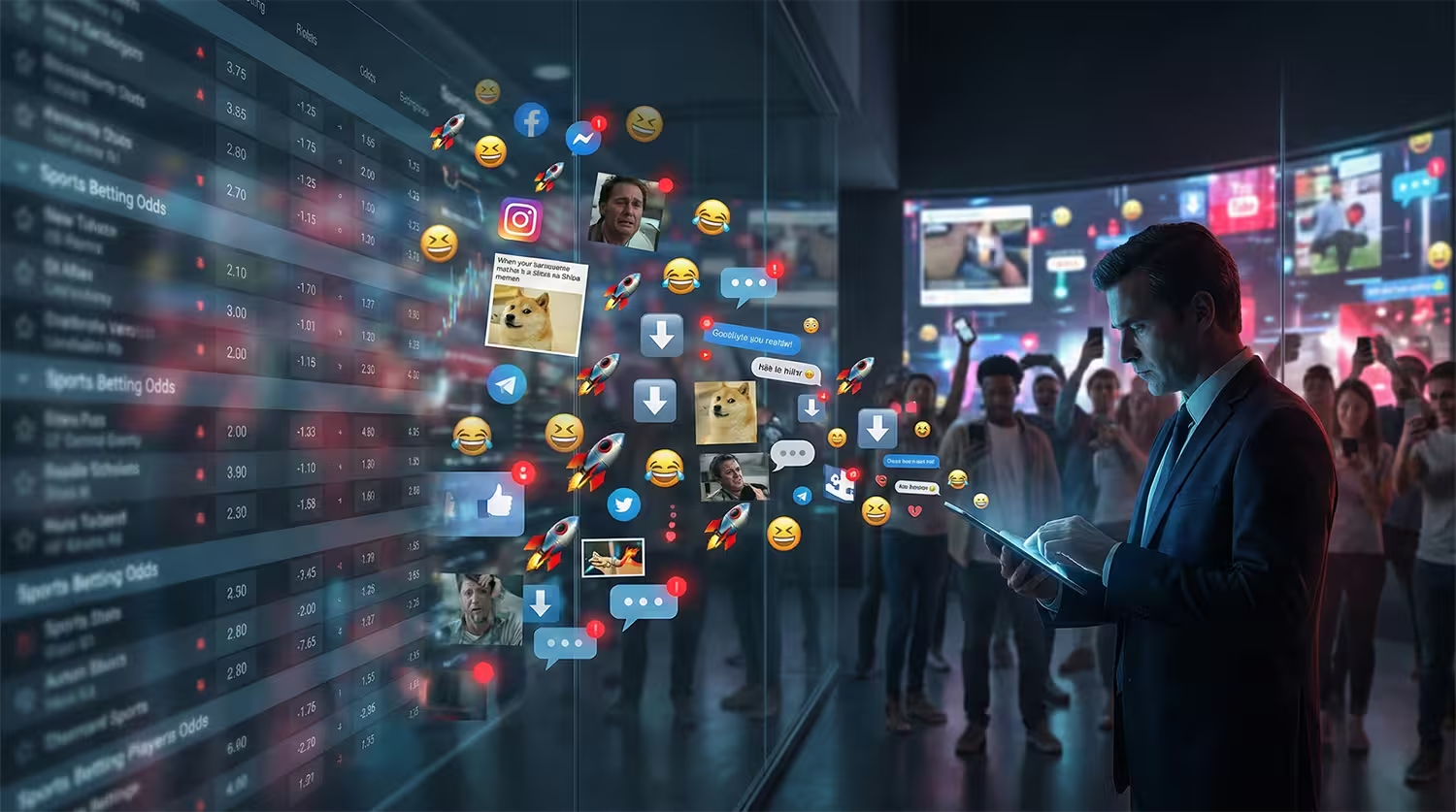
There’s a certain buzz that hits when a bet starts spreading everywhere at once. Your group chat lights up. Your feed fills with screenshots. Everyone seems to have the same take—and somehow, it feels obvious. Safe, even. Like you’d be dumb not to bet it.
That feeling isn’t accidental.
A few years ago, retail traders learned the hard way what happens when hype, humor, and herd behavior collide with real money. Now that same energy has quietly moved into sports betting. Different apps. Different language. Same mechanics. Same ending.
Meme betting isn’t loud or reckless. It doesn’t feel like gambling at all. It feels like participation. Like being in on the joke. Like spotting something “everyone else sees” before it’s too late.
And that’s the trap.
Because the more a bet spreads through memes, narratives, and social proof, the less it has to do with probability—and the more it becomes a product. One designed to be shared, not beaten.
Most bettors don’t lose because they’re reckless.
They lose because they confuse popularity with value.
And meme betting is where that confusion gets monetized best.
What Meme Betting Actually Is (And What It Isn’t)
Meme betting isn’t just silly props, joke lines, or the weird bets that online sportsbooks roll out to fill space on a slow slate. Those have always existed—and most of them are harmless.
Meme betting is different.
At its core, meme betting is narrative-first betting. The wager spreads not because it’s priced well, but because it feels right. The story travels faster than the odds can adjust, and by the time most bettors see it, the number is already working against them.
The key distinction is simple: novelty bets are optional; meme bets are contagious.
Meme bets share a few defining traits:
- The story comes first – The “why” makes sense instantly, without math
- Virality drives volume – The bet spreads through feeds, not models
- Pricing becomes secondary – Odds feel like a formality, not a decision point
- Confidence replaces analysis – If it’s obvious, it must be sharp
- Participation is the reward – Winning matters less than being “right together”
What meme betting is not:
- It’s not value betting
- It’s not market inefficiency
- It’s not a shortcut to being sharp
In fact, meme betting works precisely because it looks like a shortcut. It removes friction, removes doubt, and removes the need to think too hard.
And when thinking disappears, pricing power shifts entirely to the sportsbook. That’s the real definition of meme betting—not the joke, but the structure behind it.
Where Meme Betting Shows Up Right Now

Meme betting doesn’t hide on the fringes of sportsbooks. It shows up exactly where attention is thickest and friction is lowest. These bets aren’t designed to be searched for—they’re designed to find you.
The common thread isn’t the sport or the bet type. It’s how quickly the narrative spreads compared to how slowly the odds adjust.
You’ll see meme betting most often in these places:
- Viral props driven by clips and moments
One highlight, one quote, one celebration—and suddenly there’s a market built around it. - Celebrity- and personality-centered bets
The bet exists because the person exists, not because the numbers support it. - Player overs with “obvious” storylines
Revenge games, breakout hype, must-win spots. Everyone feels confident. Few check the price. - Narrative-heavy futures
Awards, championships, or season-long bets that explode after a single viral swing. - Community-driven betting challenges
Bets that feel social first and financial second. The win is belonging, not ROI.
None of these markets are accidental. They appear where conversation already lives.
Why These Spots Are Perfect for Sportsbooks
These areas are ideal because they attract bettors who aren’t price-sensitive.
- The bettor arrives after the narrative
- The decision is emotional, not analytical
- The odds are treated as confirmation, not information
By the time most people place the bet, the market doesn’t need to be efficient. It just needs to be available.
That’s the quiet brilliance of meme betting. It doesn’t rely on tricking bettors. It relies on timing—letting the story do the work first, then offering the line once everyone’s already convinced.
And when a bet spreads because it’s easy to talk about instead of hard to solve, the sportsbook doesn’t need to win every time. They just need the story to keep moving.
Why Retail Bettors Fall for Meme Bets
This isn’t about bad bettors. It’s about human wiring.
Meme bets don’t succeed because people are reckless. They succeed because they line up perfectly with how people already make decisions—especially when money, identity, and social validation collide.
At the center of meme betting is a powerful illusion: confidence without effort.
You don’t have to research. You don’t have to model outcomes. You don’t even have to think very hard. The bet feels obvious the moment you hear the story—and that’s exactly when defenses drop.
Meme bets tap into a cluster of psychological triggers all at once:
- Social proof – If everyone’s betting it, it must be right
- Narrative certainty – The story feels stronger than the math
- Low perceived risk – “It’s just one bet” thinking
- Entertainment framing – Losses feel like the cost of fun
- Fear of missing out – Not betting feels worse than losing
- Instant validation – Screenshots and group wins feel rewarding
What makes this especially dangerous is that meme bets don’t feel impulsive. They feel rational. Logical. Almost conservative. You’re not chasing longshots—you’re betting what “everyone knows.”
That’s the psychological switch.
Once a bettor believes the outcome is obvious, odds stop being evaluated. They become background noise. And when pricing stops being questioned, the sportsbook gains full control of the transaction.
Meme betting doesn’t exploit ignorance. It exploits agreement.
And agreement, in betting, is rarely where the value lives.
How Sportsbooks Price Meme Bets (This Is the Real Trap)

This is where meme betting stops being funny. Most bettors assume sportsbooks price every market the same way—using models, balancing action, and adjusting until things settle into efficiency. That’s mostly true for traditional markets.
Meme bets don’t play by those rules.
In meme-driven markets, sportsbooks aren’t trying to find the “right” price. They’re trying to find the most profitable one. And those two things are very different.
Meme bets allow sportsbooks to operate with unusually high freedom because the bettors placing them are not price-sensitive. They’re story-sensitive.
Why Meme Bets Carry Hidden “Entertainment Tax”
Meme bets quietly come with a tax most bettors never notice:
- Wider hold percentages than standard markets
- Minimal sharp money to force correction
- One-sided volume that never needs balancing
- Odds inflated by demand, not probability
In normal betting markets, if a line is bad, sharp bettors attack it and force movement. In meme markets, sharps usually stay away entirely. There’s nothing to correct the price—so the book keeps it exactly where it wants.
This is why meme bets often feel “available” longer than they should. The sportsbook isn’t worried about being wrong. It’s comfortable being expensive.
Engagement First, Accuracy Second
Here’s the key shift: Meme bets are priced like content, not competition.
The goal isn’t to attract smart money—it’s to:
- Capture attention
- Encourage sharing
- Maximize volume from casual bettors
- Let the narrative do the selling
That’s why these lines often move after the hype peaks, not before. The book already knows who’s betting and why.
By the time you place a meme bet, the sportsbook isn’t guessing what will happen. It’s already confident about one thing: the price favors them.
That’s the real trap of meme betting—not that the bet loses, but that it was never meant to be fair in the first place.
Meme Bets vs. Real Betting Markets
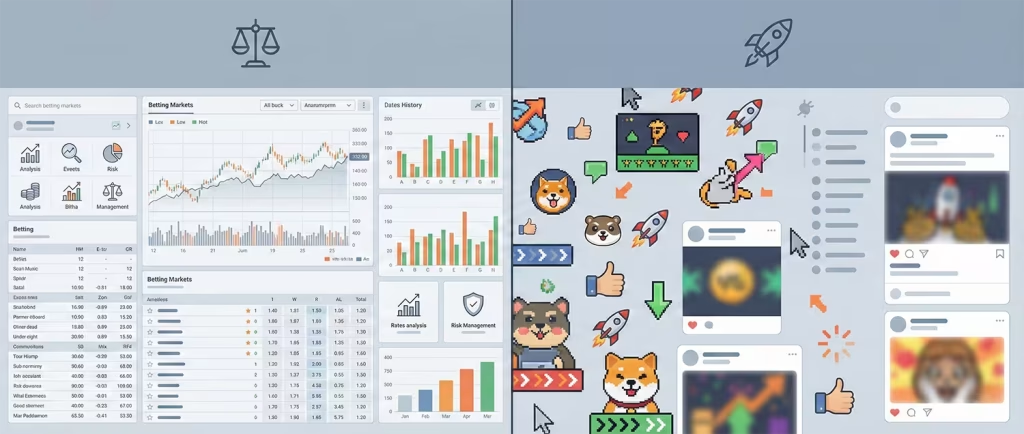
On the surface, meme bets and traditional bets look identical. Same sportsbook. Same app. Same “Place Bet” button.
But underneath, they function as two completely different markets—and treating them the same is where most bettors get hurt. Traditional betting markets exist to solve for price. Meme markets exist to capture attention.
That difference shapes everything.
How Real Betting Markets Work
In real markets, pricing is constantly under pressure.
- Lines open early and move quickly
- Sharp bettors attack weak numbers
- Books adjust to limit exposure
- Margins stay thin because they have to
These markets aren’t friendly—but they’re honest. If you beat the price, you give yourself a chance.
How Meme Betting Markets Actually Operate
Meme markets don’t face those constraints.
- Lines open after narratives are already forming
- Sharp money largely avoids them
- One-sided action is expected, not feared
- Prices stay inflated because there’s no incentive to fix them
The sportsbook isn’t balancing risk—it’s monetizing momentum.
The Critical Difference Bettors Miss
In traditional markets, disagreement creates value. In meme markets, agreement destroys it.
When everyone likes the same side:
- Odds stop reflecting probability
- Movement slows or becomes misleading
- Bettors mistake popularity for sharpness
Meme betting feels easier because it removes uncertainty. Real betting feels harder because it forces you to question assumptions. And in gambling, anything that feels too easy is usually priced accordingly.
If you don’t adjust how you think between these two markets, you’ll keep paying for that comfort—one meme bet at a time.
Can Meme Bets Ever Be Beaten?
Short answer: sometimes—but almost never the way most people try to bet them.
Meme bets don’t become beatable because the narrative is strong. They become beatable only when the market reacts poorly to that narrative. That window is small, brief, and usually closed before most bettors even notice the bet exists.
For the average bettor, meme bets are already overpriced by the time they appear on social feeds.
But in rare cases, opportunity does show up.
When Meme Bets Briefly Offer an Edge
There are a few narrow scenarios where meme-driven markets can misfire:
- Early openers before the narrative spreads
If a market opens quietly and the story hasn’t gone viral yet, pricing can lag reality. - Cross-market disconnects
One book overreacts to hype while others stay grounded, creating temporary arbitrage. - Sentiment overshoots
Public enthusiasm pushes a line past reasonable probability, creating contrarian value. - Delayed adjustments on secondary books
Smaller operators sometimes move slower when social momentum spikes.
None of this is casual. None of it is fun. And none of it lasts long.
Why Most Bettors Never See the Edge
By the time a meme bet feels “obvious,” the price has already done its job.
- The hold is baked in
- The narrative is fully priced
- The sportsbook is comfortable with the risk
Most bettors enter meme markets at peak confidence—not peak value.
That’s why beating meme bets requires discipline most people don’t bring to betting: restraint, timing, and a willingness to bet against the crowd, not with it.
Meme bets can be beaten—but only when you treat them like fragile, temporary mispricings. Not like the main event.
The Bigger Pattern Nobody Wants to Talk About

Meme betting isn’t some weird side quest in sports gambling. It’s part of a much larger shift—and once you see it, it’s hard to unsee.
Across betting, finance, and even investing-adjacent products, the industry is quietly moving away from skill-testing markets and toward emotion-driven participation products. Not because they’re better for users—but because they’re better for margins.
This is the same pattern we’ve already watched play out elsewhere.
You’ve seen it in:
- Meme stocks replacing fundamentals
- Zero-DTE options replacing long-term strategy
- Prediction markets framed as entertainment
- “Gamified” features that reward action over patience
In each case, the product becomes faster, simpler, louder—and less fair. The key shift isn’t what people are betting on. It’s why they’re betting.
From Skill to Spectacle
Traditional betting rewarded:
- Price sensitivity
- Patience
- Disagreement with the crowd
- Long-term thinking
Meme-style betting rewards:
- Speed
- Emotion
- Participation
- Visibility
That’s not an accident. Products that feel fun, communal, and frictionless keep people engaged longer—even if the outcomes are worse.
And the most effective part? None of this feels predatory.
Meme betting doesn’t look like a trap. It looks like a party. A shared joke. A cultural moment you don’t want to miss. Losses get reframed as “the cost of entertainment,” while wins get amplified into proof that the system works. But over time, the math doesn’t change.
When entertainment replaces edge, the house doesn’t need to win every bet. It just needs you to keep playing. And meme betting is very good at making sure you do.
So… Is Meme Betting the Next Retail Trap?
Meme betting doesn’t announce itself as dangerous. It doesn’t feel reckless or impulsive. In fact, it often feels smart—like you’re seeing what everyone else sees and acting accordingly. That’s what makes it effective.
The real risk isn’t losing a single bet. It’s slowly retraining yourself to stop caring about price, probability, and discipline. Meme bets teach bettors to trust narratives instead of numbers, agreement instead of edge, and participation instead of patience.
Sportsbooks don’t need meme bets to hit or miss. They need them to spread. Once a bet becomes a shared story, the odds no longer have to be fair—they just have to be available.
There’s nothing wrong with entertainment. But problems start when entertainment masquerades as opportunity. When a bet feels obvious, frictionless, and universally loved, that’s usually the signal—not to jump in, but to step back.
The sharpest bettors don’t ask, “Do I like this bet?” They ask, “Is this price built for me—or for the book?” If the bet exists because it went viral, it was probably priced that way too.
And in sports betting, comfort is expensive.