
Types of Sports Bets: A Beginner’s Guide to Every Wager
The main types of sports bets are moneylines, point spreads, totals (over/under), parlays, props, and futures — each one a different way to wager on a game’s outcome. Straight bets like the moneyline, spread, and total are the simplest place to start, while parlays, props, and futures add variety, risk, and bigger potential payouts. This guide walks through every common type of sports bet with plain-English examples, then points you to a deeper breakdown for the ones you want to master.
If your only mental picture of sports betting is someone picking a Super Bowl winner, you are seeing a sliver of the menu. Modern sportsbooks let you bet on the margin, the total score, a single player’s stat line, or who lifts a trophy six months from now. Knowing what each bet does — and what it costs you in risk — is the difference between betting with a plan and betting on a hunch.
The Main Types of Sports Bets at a Glance
There are six bet types that cover the vast majority of wagers you will ever place: the moneyline, the point spread, the total, the parlay, the prop, and the future. Everything else is a variation or combination of these. The table below is the fastest way to get oriented — skim it first, then read on for the details and examples.
| Bet Type | What It Is | Quick Example |
|---|---|---|
| Moneyline | Pick the outright winner; margin doesn’t matter | Bills (-200) to beat the Steelers (+170) |
| Point Spread | Bet on the margin of victory | Bills -3.5 (-110) vs. Steelers +3.5 (-110) |
| Total (Over/Under) | Bet on the combined score of both teams | Over 44.5 or Under 44.5 total points |
| Parlay | Combine two or more bets; all must win | Bills ML + Chiefs ML + Over 44.5 |
| Prop | Bet on a player or in-game event, not the result | Player Over 24.5 points scored |
| Future | Bet on an outcome decided weeks or months away | A team to win the 2026 championship |
Straight Bets: Moneyline, Point Spread, and Totals
Straight bets are single wagers on one outcome, and the three you will use most are the moneyline, the point spread, and the total. They are the foundation of sports betting and the right starting point for any beginner, because each one is easy to grasp and pays a predictable price. Master these three and you can walk up to any betting board and understand the core of what is on offer.
Moneyline Bets
A moneyline bet is the simplest wager there is — you pick the outright winner, and the margin of victory does not matter. The favorite carries a minus price and the underdog a plus price: if the Bills are -200 and the Steelers are +170, you risk $200 to win $100 on Buffalo, or risk $100 to win $170 if Pittsburgh pulls the upset. You win less backing the favorite and more backing the dog, which is exactly why judging upset potential is the whole skill here. For the full breakdown of when a moneyline is worth taking, see our moneyline betting guide.
Point Spread Bets
A point spread is a margin oddsmakers set to level the playing field between two mismatched teams. If the Bills are -3.5, they must win by four or more for that bet to cash; the Steelers at +3.5 cover by winning outright or losing by three or fewer. Because the spread evens out the matchup, both sides usually carry a similar price (often -110), which is why spreads are the bread and butter of football and basketball betting. Our point spread guide covers covering, the hook, and how to read line moves.
Totals (Over/Under)
A total, or over/under, asks whether the combined score of both teams will land above or below a number the sportsbook sets — and it does not matter who wins. If the line is 44.5, the over needs 45 or more combined points and the under needs 44 or fewer. You are betting on the pace and scoring of the game itself, which is why totals are a favorite for fans who have a read on a matchup’s tempo but no strong opinion on the winner. Our over/under guide walks through how weather, injuries, and lopsided action move these numbers.
A minus price (like -200) shows what you risk to win $100, so the favorite pays less. A plus price (like +170) shows what a $100 stake wins, so the underdog pays more. Spreads and totals usually sit near -110 on both sides because the sportsbook has already evened out the matchup.
Parlays, Teasers, and Round Robins
A parlay combines two or more bets into a single wager, and every leg must win for the whole ticket to pay. Stringing picks together multiplies the odds, so a three-leg parlay pays far more than the same three bets placed separately — but miss one leg and the entire bet loses. That all-or-nothing math is what makes parlays exciting and dangerous in equal measure, which is why they are best used in moderation rather than as a bankroll’s main course. Our parlay betting guide covers how the payouts stack and where the value disappears.
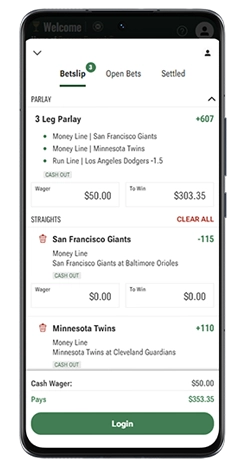
Parlays come in a few flavors worth knowing. A same game parlay (SGP) bundles multiple bets from one game — say a team to win plus a star to clear a points total — and sportsbooks now offer them on nearly every major event. Teasers let you move the point spread or total in your favor across two or more games in exchange for a smaller payout, while round robins break a big group of picks into several smaller parlays so a single miss does not sink everything. Each one trades a little payout for a little more wiggle room.
The more legs you add, the bigger the sportsbook’s cut grows. Same game parlays in particular carry a much steeper hold than a straight bet because the legs are often correlated. They are fun for a small stake, but they are not where disciplined bettors put the bulk of their money. For the math behind why, the Wikipedia entry on the parlay lays it out plainly.
Prop Bets (Proposition Bets)
A prop bet is a wager on something other than the final result — usually an individual player’s performance or a specific in-game event. Instead of picking who wins, you bet on whether a quarterback throws for over 250 yards, how many points a basketball player scores, or which team scores first. Props exploded in popularity alongside player-stat betting, and the NBA and NFL alone offer dozens of them per game.
Props generally fall into a few buckets:
- Player props: Individual stat lines — points, rebounds, assists, passing yards, strikeouts, or shots on goal.
- Team props: Outcomes for a whole side, like first team to score or a team’s total points.
- Game props: Events tied to the contest itself, such as whether there will be a score in the first five minutes.
- Novelty props: The fun stuff — the coin toss, the length of the national anthem, or the Gatorade color (offered around marquee events like the Super Bowl).
Because there are so many to choose from, props are some of the most engaging wagers you can place — and a natural building block for same game parlays. The flip side is that the lines move fast and the sportsbook hold can be high, so they reward research more than they reward gut feel.
Futures Bets
A futures bet is a wager on an outcome that will not be decided for weeks or months, like a champion, an award winner, or a season win total. You lock in a price now and wait for the result to play out, which means your money is tied up for a while but the payouts can be enormous if you call it early. Bet a team to win the title before the season starts and you will get a far better price than you would once they are the clear frontrunner.
Common futures markets include:
- Championship futures: Picking the team to win the league title before or during the season.
- Award futures: Betting on the MVP, the Cy Young, or another individual honor.
- Season win totals: Wagering on whether a team finishes over or under a projected number of wins.
- Division and conference winners: Backing a team to top its group.
A lot can happen over a season — injuries, trades, slumps — so futures are hard to predict and reward patience and good early research. Our futures betting guide covers how to time these bets and when an early price is genuinely worth grabbing.
Live (In-Play) Betting
Live betting, also called in-play betting, lets you place wagers after a game has already started, with the odds updating in real time as the action unfolds. The sportsbook recalculates moneylines, spreads, and totals on the fly — a team that falls behind early suddenly becomes a value underdog, and a low-scoring first half drops the live total. It turns a single game into dozens of betting opportunities instead of one pre-game decision.
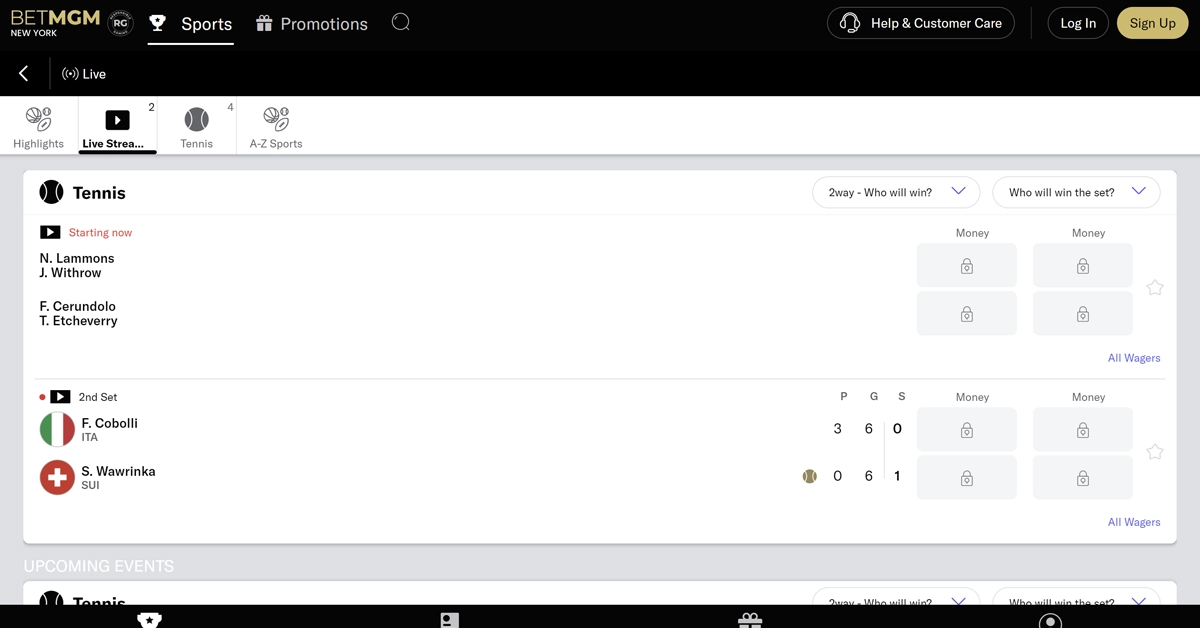
The catch is speed: live odds can change in seconds, so you have to be quick and decisive. Watching the game while you bet is a real advantage here, because you can react to momentum the sportsbook’s model is still catching up to. Most major betting apps now stream select events and refresh their live boards every few moments, a smoother experience than the phone-based version of years past. Our live betting guide covers cash-outs, in-play strategy, and how to handle fast-moving lines.
Other Bet Types You’ll Come Across
Beyond the core six, you will run into a handful of specialized bet types — most of them variations on handicapping or alternative ways to take a position. You do not need to use these as a beginner, but it helps to recognize them when they show up on a betting board or in betting talk.
- Each-way bets: Common in horse racing, this is really two bets in one — a “win” bet and a “place” bet, where the place portion pays a fraction of the odds if your selection finishes in one of the top spots.
- Asian handicap: A soccer-focused handicap that removes the draw as an outcome by giving one team a head start, splitting the action more evenly between favorite and underdog.
- Spread betting: A points-based format (distinct from the point spread) where your winnings scale with how right you are, rewarding the accuracy of your prediction rather than paying a fixed amount.
- Betting exchanges: Platforms where you bet against other people instead of the house, and can “back” an outcome to happen or “lay” it to not happen, with the exchange taking a small commission.
- Specials and novelty bets: Wagers on entertainment and current events — award-show winners, reality-TV outcomes, or hot-dog-eating contests — that some sportsbooks offer around big cultural moments.
How to Choose the Right Type of Bet
The right bet type depends on how much you know about the matchup and how much risk you want to take, so start simple and add complexity as you learn. Straight bets are the smart first move for almost everyone — they are easy to read, carry a low built-in edge, and teach you how lines behave. Save the parlays, props, and futures for when you have a genuine read worth backing.
- Just starting out? Stick to moneylines and totals. They are the easiest to understand and the cheapest place to learn from your mistakes.
- Got a feel for a matchup’s margin? The point spread rewards a sharper read on how a game plays out, not just who wins.
- Want a bigger swing for a small stake? A short parlay or a single prop scratches that itch — just keep the stake small.
- Confident in a long-term call? A future lets you lock in a price early and ride it out across a season.
Whichever you choose, the mechanics of getting the bet down are the same: pick your market, set your stake, and confirm the slip. Start with the simplest bet that fits what you actually know, and add complexity only as your reads get sharper.
Pick one bet type and get good at it before branching out. A bettor who truly understands totals will beat a bettor who dabbles in everything, because depth in one market beats a shallow grasp of six.
Play Safe: Gambling should be fun, not stressful. Set limits, stick to your budget, and never chase losses. If you or someone you know has a gambling problem, call 1-800-MY-RESET or visit ncpgambling.org. For more resources, see our Responsible Gambling page.
Frequently Asked Questions
New to betting and not sure which wager to try first? Here are the questions beginners ask most about the different types of sports bets.
What’s the easiest type of sports bet for a complete beginner?
The moneyline is the easiest type of sports bet to start with because you only have to pick the winner — the margin of victory does not matter. Totals (over/under) are a close second, since you are just betting on whether the combined score lands above or below a set number. Both are simple to read and carry a low built-in edge, which makes them the cheapest way to learn.
What’s the difference between a parlay and a same game parlay?
A traditional parlay combines bets from different games into one ticket, while a same game parlay (SGP) combines multiple bets from a single game. Because the legs of an SGP are often related — a quarterback’s passing yards and his team covering the spread, for example — sportsbooks price them with a steeper margin than a normal parlay. Both pay only if every leg wins.
Which type of sports bet has the best payouts?
Parlays and futures offer the biggest potential payouts because they either stack multiple wins together or lock in long-shot odds far in advance. The trade-off is risk: parlays need every leg to hit, and futures tie up your money for months. Straight bets pay less but win far more consistently, which is why most long-term winners build their bankroll on them.
What exactly is a prop bet, and can I bet on non-sports stuff?
A prop bet (short for proposition bet) is a wager on something other than the final result, such as a player’s stat line, which team scores first, or an in-game event like the coin toss. Around marquee events, some sportsbooks also offer novelty props on non-sports outcomes like award shows or eating contests, where those bets are legal. Availability varies by sportsbook and state.
Should I start with straight bets or jump into parlays?
Start with straight bets — moneylines, spreads, and totals — before you try parlays. Straight bets teach you how lines work and carry a much smaller sportsbook edge, so your money lasts longer while you learn. Parlays are fun for a small stake, but the long odds and bigger built-in margin make them a poor foundation for a beginner’s bankroll.