
College Football Playoff Betting: Are Neutral-Site Games Truly Neutral?
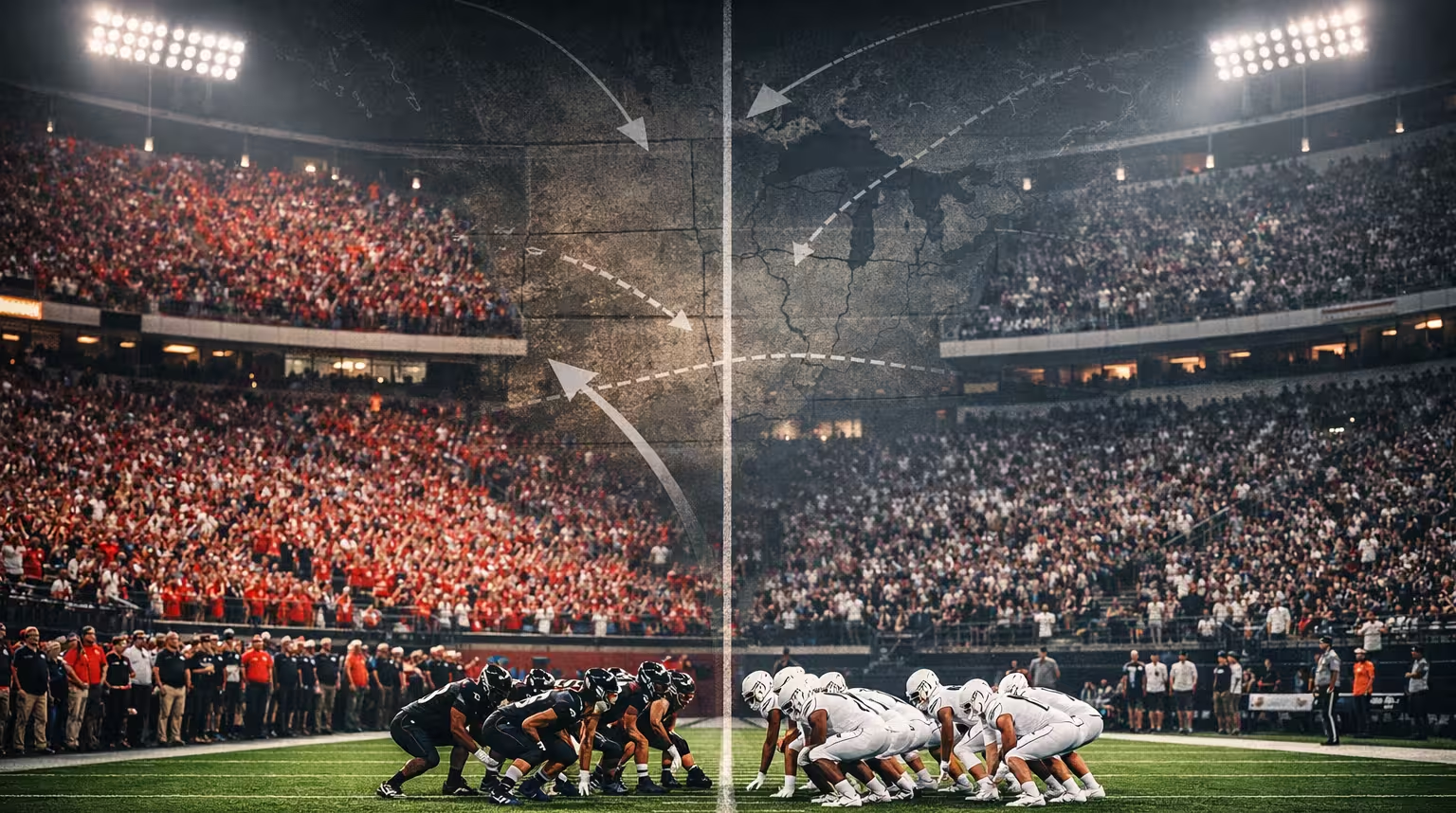
“Neutral site” is one of the most trusted phrases in college football betting. It sounds safe. Fair. Balanced. Like everything that made home-field advantage messy has been wiped away.
And that’s exactly why it fools so many bettors.
Every College Football Playoff game is framed the same way: no true home team, no hostile crowd, no built-in edge. Just two elite programs on equal footing, letting talent decide the outcome. Clean football. Clean betting.
Except that’s not what actually happens.
Watch the games closely and a pattern emerges. One team looks settled immediately. The other burns timeouts, jumps early, struggles to communicate. One sideline feeds off the crowd. The other looks like it’s playing through static. By the time bettors realize something feels off, the market has already adjusted—or the damage is done.
This isn’t about conspiracy or excuses. It’s about geography, travel, crowd makeup, and routine. It’s about how “neutral” works in theory versus how it plays out in real stadiums with real fans and real pressure.
The CFP isn’t neutral in the way most bettors think. And that misunderstanding quietly shapes lines, totals, and first-half markets every single year.
The question isn’t whether these games are neutral.
It’s who they’re neutral for.
What “Neutral Site” Actually Means in College Football
On paper, a neutral-site game is simple: neither team is playing at home.
That definition works in theory. It just doesn’t hold up in the College Football Playoff.
CFP neutral sites aren’t randomly assigned fields meant to eliminate advantage. They’re pre-selected bowl destinations, locked into long-term contracts and geographic rotations. Everyone knows where these games will be played years in advance—and that predictability creates built-in edges before teams are even chosen.
A neutral site in college football usually means:
- A fixed stadium tied to a major bowl game
- A location with heavy regional and alumni influence
- A venue far closer to one campus than the other
- A crowd shaped by travel ease, cost, and tradition
Calling that neutral stretches the definition.
Unlike the NFL, where neutral games are rare and often genuinely balanced, college football’s postseason is rooted in regional identity. Fan bases don’t disperse evenly across the country. They cluster. And when a CFP game lands within driving distance of one program and a flight away from the other, neutrality disappears fast.
For bettors, this matters because sportsbooks still label these games “neutral” in their base power ratings. The adjustment for environment is often modest—sometimes nonexistent—because the market assumes neutrality on its own.
That assumption is where the edge begins.
Neutral-site CFP games aren’t designed to erase advantage. They’re designed for spectacle, tradition, and logistics. If you bet them like true coin-flip environments, you’re already a step behind.
Crowd Composition: The Hidden Home-Field Edge
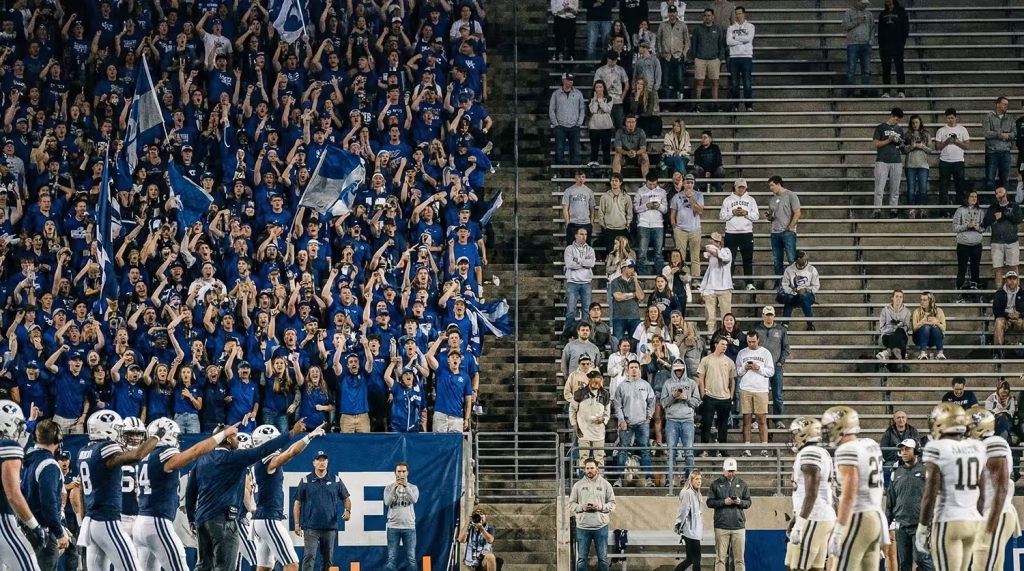
Neutral-site games are supposed to remove the crowd from the equation.
In the College Football Playoff, the crowd is still very much part of it.
The difference is that the advantage doesn’t come from a stadium name or a painted end zone—it comes from who actually shows up. And in CFP games, fan turnout is rarely balanced.
Fan Travel Reality (Why One Side Always Feels Louder)
Not all fan bases travel the same way, and not all schools are equally positioned to do so.
Several factors quietly tilt crowd makeup:
- Distance from campus to the stadium
- Alumni concentration in the region
- Ticket prices relative to fan demographics
- Bowl-travel culture and expectations
- How often a fan base has been there before
When a CFP game is played within driving distance of one program, that team often controls the building. Noise builds naturally. Momentum swings feel amplified. The opposing sideline feels it immediately—even if the scoreboard doesn’t show it yet.
This isn’t theoretical. It’s visible in body language, communication, and execution.
Why Crowd Noise Still Impacts CFP Games
Crowd influence doesn’t disappear just because the site is labeled neutral.
It still shows up in:
- Pre-snap penalties on offense
- False starts in high-leverage downs
- Burned timeouts to regain control
- Delayed adjustments at the line
These issues tend to appear early, before teams settle in. That’s why the betting impact is often front-loaded.
Betting takeaway: When one team clearly owns the crowd, neutral-site games start to resemble soft home environments. First-half spreads, early totals, and live betting after the opening drives are where this edge shows up most consistently.
Crowd composition doesn’t decide every CFP game—but it absolutely shapes how games begin. And in playoff betting, how a game starts often determines where the value was hiding all along.
Geography & Travel Fatigue (The Quiet Advantage)
Travel doesn’t get the same attention as matchups or rankings—but in CFP betting, it quietly shapes performance long before the opening kickoff.
Neutral-site games still require one team to travel farther, adjust more, and disrupt routines to a greater degree. That matters, especially at the playoff level where margins are thin and preparation is tightly structured.
Some of the most overlooked travel factors include:
- Flight length and number of connections
- Time-zone changes that affect body clocks
- Early kickoff times relative to local time
- Climate differences (heat, humidity, field speed)
- Disrupted practice schedules during bowl week
None of these show up on the stat sheet. All of them show up on the field.
Teams dealing with longer travel and time shifts often start slower. Execution lags just enough to create early inefficiencies—missed assignments, poor communication, rushed decisions. Meanwhile, the team that traveled easier looks settled almost immediately.
This is why travel edges tend to surface early, not late. By the second half, adrenaline levels even things out. But the opening quarter? That’s where geography whispers.
Betting takeaway: Travel fatigue isn’t a full-game angle—it’s a timing angle. First-quarter plays, first-half spreads, and live bets after the opening series often capture this edge before the market fully reacts.
In a playoff environment where every possession matters, geography doesn’t need to dominate the game. It only needs to tilt the first few drives—and for bettors, that’s often enough.
Conference Familiarity & Regional Comfort
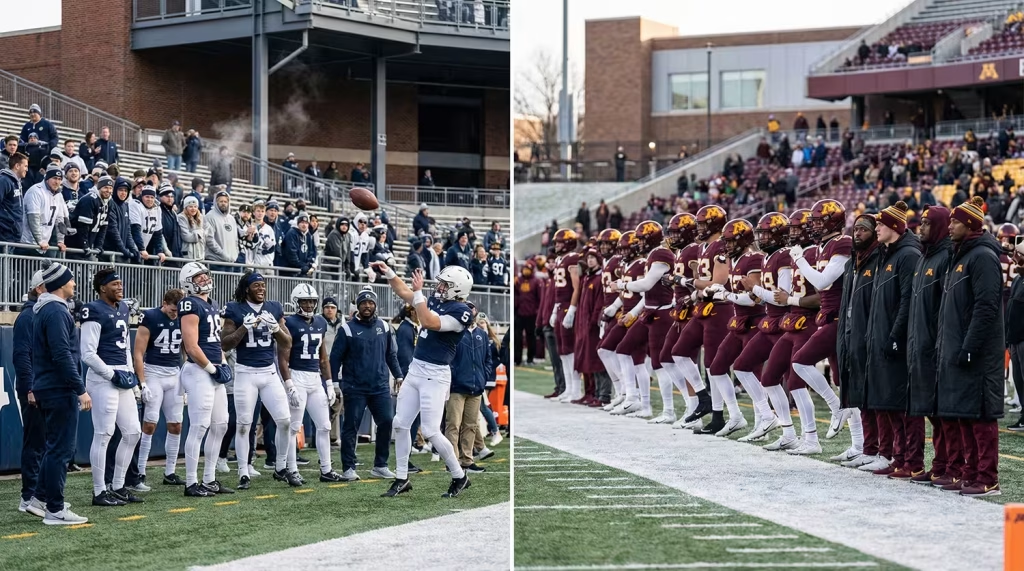
Neutral fields don’t erase habits. They amplify them.
College football is deeply regional—not just in fan bases, but in how teams prepare, travel, and play. When CFP games are staged in certain parts of the country, some conferences walk in feeling familiar. Others feel like guests.
That comfort gap shows up in subtle ways long before the first snap.
Teams playing in regions they know well tend to:
- Handle pregame routines more smoothly
- Adjust faster to field conditions
- Communicate more confidently early
- Play with better situational awareness
SEC teams in the Southeast are the clearest example. Stadium layouts, field speed, humidity, crowd behavior—none of it feels foreign. The environment feels like an extension of their regular season, not a disruption.
For teams from outside the region, the adjustment is real. The game might be neutral on paper, but the surroundings don’t feel neutral at all.
This familiarity can also influence pace and officiating comfort. Crews may not favor one team consciously, but rhythm matters. Teams accustomed to a region’s tempo, noise level, and flow often operate more smoothly in high-pressure moments.
Betting takeaway: Regional comfort doesn’t swing outcomes by itself—but it compounds other edges. When crowd composition, travel ease, and conference familiarity all lean in the same direction, neutral-site pricing becomes vulnerable.
In CFP betting, comfort isn’t soft. It’s structural. And when one team feels like it’s playing in familiar territory, the word “neutral” starts to lose meaning fast.
Are CFP Neutral Games Actually Even? (A Quick Reality Check)
You don’t need a database to see what’s happening in CFP “neutral” games. Just watch the openings.
If these games were truly even environments, you’d expect clean starts on both sides. Fewer early mistakes. A feeling-out process before separation. That’s not what typically happens.
Instead, a familiar pattern shows up again and again:
- One team looks settled from the first drive
- The other burns an early timeout or commits pre-snap penalties
- Crowd shots reveal a clear color imbalance
- Momentum tilts before the betting market can react
These aren’t coincidence-driven moments. They’re environmental responses.
What’s especially telling is when advantages appear. Neutral games that end close often still begin uneven. Early efficiency gaps, not final scores, tell the real story.
Look past the scoreboard and focus on:
- First-quarter play calling confidence
- Offensive tempo and communication
- Defensive alignment discipline
- Early live-line movement
Betting takeaway: Even when CFP games finish tight, they’re rarely neutral early. That’s where most pricing inefficiencies live—and where bettors who understand the environment get paid.
Neutrality isn’t about where the game ends. It’s about how it starts. And in the CFP, starts are rarely balanced.
How Sportsbooks Price Neutral-Site CFP Games

Sportsbooks don’t misprice CFP games by accident. They simplify them on purpose.
Labeling a matchup “neutral site” allows books to anchor the line to power ratings without fully accounting for environment. It keeps pricing clean, familiar, and easy for the public to digest. And most of the time, that’s exactly what bettors want.
When a game is tagged as neutral, sportsbooks typically:
- Remove standard home-field advantage entirely
- Apply only modest adjustments for travel
- Lean heavily on season-long power ratings
- Assume crowd impact will balance out
That framework works because the public buys it. Bettors see two elite teams, no home stadium, and assume the field is level.
But playoff environments aren’t built for balance—they’re built for spectacle. And that creates friction between how games are priced and how they actually feel on the field.
Books also know that aggressively adjusting for crowd or geography invites pushback. If a “neutral” CFP line looks too skewed, casual bettors hesitate. So adjustments stay conservative, even when the environment isn’t.
Betting takeaway: Neutral-site pricing often underweights early-game conditions. That’s why edges show up in first halves, team totals, and live markets—before the book has time to fully react.
Sportsbooks aren’t ignoring these factors. They’re just betting that you will.
Where Bettors Can Actually Find the Edge
If you’re betting CFP neutral-site games like standard point-spread matchups, you’re late to the party. The real value doesn’t live in picking the “better team.” It lives in timing, market structure, and how quickly you react to environment.
Neutral-site edges tend to appear before the scoreboard reflects them.
Markets That Expose Neutral-Site Inefficiencies
The most consistent opportunities show up in:
- First-half spreads when one team owns the crowd or travel edge
- First-quarter bets when tempo and communication matter most
- Team totals for the more comfortable side
- Live betting after the opening drives confirm early control
Early execution gaps—false starts, burned timeouts, sluggish pace—are information. The faster you process it, the more value remains.
Situations Bettors Should Target
Look for setups where:
- One team is playing within driving distance
- The other crossed multiple time zones
- Crowd color and noise clearly lean one direction
- The line treats the game as fully neutral anyway
These situations don’t guarantee a win—but they consistently create better prices.
To take advantage, you also need access to competitive lines and responsive live markets. That’s why using reliable football betting apps/websites matters during the CFP, especially when edges appear early. You can compare platforms and features on our guide to the best football betting sites to make sure you’re positioned to act when the market lags.
Bottom line: The edge isn’t hidden. It’s just early. And most bettors don’t look until it’s already gone.
Common Neutral-Site Betting Mistakes
Most bettors don’t lose on CFP neutral-site games because they picked the wrong team. They lose because they trusted the label.
Neutral-site betting mistakes tend to follow the same pattern every postseason—subtle, repeatable, and costly over time.
Here are the most common ones:
- Treating neutral like the NFL
College football crowds aren’t evenly distributed. Geography matters far more than bettors expect. - Ignoring travel altogether
Time zones, flight length, and routine disruption don’t disappear in the playoffs—they intensify. - Overvaluing seeding and rankings
Rankings reflect résumé, not environment. The market often prices prestige instead of situation. - Assuming talent neutralizes everything
Even elite teams struggle when communication breaks early. - Betting full-game lines when the edge is early
Most neutral-site advantages show up in first halves, not fourth quarters.
The mistake underneath all of these is the same: bettors assume neutrality means absence of influence. In reality, it just changes where the influence comes from.
Betting takeaway: Neutral-site games don’t remove edges—they relocate them. If you’re betting these matchups without accounting for environment, timing, and crowd dynamics, you’re paying full price for incomplete information.
In CFP betting, neutrality isn’t protection. It’s camouflage.
How Sharps Actually Approach CFP Neutral Games

Sharps don’t ask whether a CFP game is neutral. They assume it isn’t.
Instead of treating playoff matchups like talent-versus-talent showdowns, professional bettors approach them as situational puzzles. The question isn’t who’s better—it’s who’s more comfortable right now.
Before kickoff, sharps focus on:
- Travel distance and time-zone shifts
- Crowd makeup and regional bias
- Familiarity with the environment
- Coaching staffs’ bowl-prep tendencies
None of that shows up in the headline line—but it shapes how games open.
During the game, sharps stay flexible. They aren’t married to pregame positions. They’re watching for confirmation:
- Tempo mismatches early
- Communication issues at the line
- Body language and sideline urgency
- How quickly each team settles in
That information feeds live bets, not opinions.
Most importantly, sharps don’t overreact to the “neutral” label. They understand that playoff markets are built for public comfort, not perfect accuracy. When pricing assumes balance and the environment isn’t balanced, they press—early, selectively, and without emotion.
Betting takeaway: Sharps bet situations, not narratives. They don’t need a neutral field to be even—they need the market to think it is.
And in CFP betting, that assumption creates opportunity every year.
Neutral in Name Only
“Neutral site” is one of the most misleading phrases in College Football Playoff betting.
It suggests balance where none actually exists. It implies fairness where geography, crowd makeup, and routine quietly tip the scales. And it gives bettors a false sense of security that the environment has been neutralized.
It hasn’t.
CFP games aren’t played in empty stadiums or unfamiliar voids. They’re played in real places with regional pull, predictable travel patterns, and fan bases that show up unevenly. Those forces don’t decide every outcome—but they consistently shape how games begin, how teams settle, and where early edges appear.
Sportsbooks know this. Sharps exploit it. The public largely ignores it.
The edge isn’t about fading rankings or outsmarting power ratings. It’s about understanding that neutrality is a label, not a condition. When you recognize who traveled easier, who owns the crowd, and who feels comfortable from the opening drive, you stop betting games the way they’re marketed—and start betting them the way they’re actually played.
In the CFP, the field may be neutral. The environment never is. And once you see that, you don’t unsee it.