
Over/Under Bets Explained: How Totals Betting Works (With Examples)
Over/Under bets — often called totals — are one of the most popular wagers in sports betting. They’re also one of the most quietly powerful tools bettors have when used correctly.
At a glance, totals seem almost too simple. You’re not picking a winner. You’re not laying points. You’re just deciding whether the combined score will land over or under a number set by the sportsbook. That simplicity is exactly why many bettors overlook how much strategy is actually involved.
In reality, Over/Under betting is where sportsbooks reveal how they truly expect a game to be played. Pace, efficiency, weather, injuries, coaching tendencies, and even public betting behavior are all baked into the total. For sharp bettors, totals are less about predicting fireworks and more about identifying when the market has misjudged tempo, game script, or scoring efficiency.
That’s why professionals often gravitate toward totals — especially unders — while casual bettors chase overs for entertainment value.
In this guide, we’ll break down exactly how Over/Under bets work, why sportsbooks price them the way they do, and how smart bettors use totals across different sports. We’ll also walk through clear examples, common mistakes, and practical insights you can apply immediately.
By the end, you’ll understand why totals betting is far more than just guessing high or low.
If you’re new to wagering, it helps to understand the fundamentals first — including bet types, odds formats, and basic terminology — which we cover in our Sports Betting Beginner’s guide.
Contents of this Page:
- What Is an Over/Under Bet?
- How Sportsbooks Set the Total
- Why Bettors Love Over/Under Bets
- Types of Over/Under Bets
- Over/Under Examples by Sport
- What Sharps Look For
- Common Over/Under Mistakes
- Are Over/Unders for Beginners?
- Final Thoughts
What Is an Over/Under Bet?
An Over/Under bet — also known as a total — is a wager on whether a specific statistical outcome in a sporting event will finish higher (Over) or lower (Under) than a number set by the sportsbook.
In most cases, that number represents the combined total score of both teams, but Over/Under bets can apply to far more than just final points.
At its core, you’re betting on how a game will be played, not who will win it.
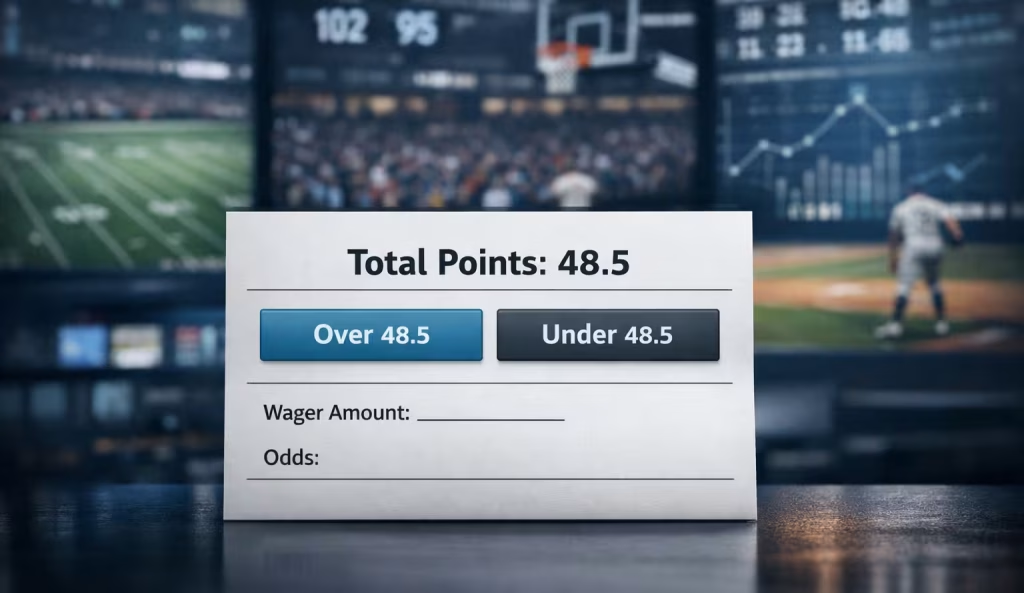
What Over/Under Bets Commonly Apply To
Over/Under markets can be found across nearly every sport and betting format, including:
- Game totals (combined points, goals, or runs)
- Team totals (points scored by one team only)
- Player totals (yards, points, rebounds, shots, etc.)
- First half / first period totals
- Live totals that adjust as the game unfolds
Each of these bets uses the same basic concept: beat the number, not the opponent.
Simple Over/Under Example
Let’s say a sportsbook lists the following line:
- Lakers vs. Suns – Total: 224.5
You now have two choices:
- Over 224.5 → Wins if 225 or more total points are scored
- Under 224.5 → Wins if 224 or fewer total points are scored
The .5 (half-point) is intentional. It removes the possibility of a tie (called a “push”) and forces a clear win or loss.
Why Over/Under Bets Are Different from Other Wagers
Unlike spreads or moneylines, Over/Under bets are:
- Unaffected by which team wins
- Influenced more by pace and efficiency than talent alone
- Often less volatile than sides in certain sports
That’s why many experienced bettors prefer totals — they reward preparation and game understanding rather than rooting interest.
In the next sections, we’ll break down how sportsbooks create these totals, what moves them, and how bettors use them strategically.
How Sportsbooks Set the Total
Sportsbooks don’t pull Over/Under numbers out of thin air. Totals are the result of detailed modeling, historical data, and — just as importantly — how they expect bettors to react.
The opening total is created by oddsmakers using predictive models that estimate not just how many points could be scored, but how the game is likely to flow. From there, the betting market takes over. As money comes in, the total moves until the sportsbook is comfortable with both risk and exposure.
The key thing to understand: the total is not meant to predict the final score perfectly — it’s meant to balance action.
Totals are priced just like any other market, which means understanding how odds work — including implied probability and juice — helps explain why some totals offer better value than others
Core Factors Used to Set a Total
When sportsbooks post an opening total, they typically account for:
- Pace of play
Faster tempo equals more possessions and more scoring opportunities. - Offensive & defensive efficiency
How often teams convert opportunities into points matters more than raw scoring averages. - Matchup dynamics
Style clashes (fast vs. slow, run-heavy vs. pass-heavy) can dramatically affect totals. - Injuries and lineup changes
A missing quarterback, point guard, or starting pitcher can swing a total quickly. - Venue and weather conditions
Outdoor sports are especially sensitive to wind, rain, temperature, and altitude. - Scheduling and rest
Back-to-backs, travel fatigue, and short rest often suppress scoring. - Historical and situational data
Past meetings, coaching tendencies, and game context all feed into the number.
📌 What the Total Really Represents
The posted total isn’t a prediction — it’s a negotiation.
Sportsbooks are setting a number that invites action on both sides. If bettors overwhelmingly choose one side, the line will move — not because the original total was “wrong,” but because risk needs to be managed.
This is why totals can change even when no new information becomes public.
Why Totals Move After They’re Posted
Once the opening number goes live, market behavior matters just as much as data.
Totals may move because:
- Sharp bettors identify early value
- Public money floods one side (usually Overs)
- Late injury or weather news breaks
- Sportsbooks adjust to limit liability
Understanding why a total moved is often more important than the move itself.
Smart bettors don’t blindly chase line movement — they ask:
“Did the information change, or did the market overreact?”
That question alone separates disciplined totals bettors from casual action-seekers.
Why Bettors Love Over/Under Bets
Over/Under bets appeal to a wide range of bettors — from casual fans placing their first wager to professionals managing six-figure bankrolls. The reason is simple: totals strip the bet down to the flow of the game, removing many of the variables that complicate sides and moneylines.
You’re not betting on which team is “better.” You’re betting on how the game actually plays out.
That shift in focus is why totals are often viewed as one of the cleanest ways to attack a betting market.
Key Advantages of Over/Under Betting
There are several reasons totals remain one of the most bet markets across all major sports:
- No need to pick a winner
The final score margin doesn’t matter — only the total production does. - Reduced emotional bias
Bettors aren’t tied to a favorite team or star player winning the game. - Game script matters more than late luck
Garbage-time points still count, but blowouts don’t ruin totals the way they can spreads. - Clear, binary outcomes
You beat the number or you don’t — no complicated calculations. - Strong value in niche markets
First halves, team totals, and live totals often move slower than full-game sides.
Why Sharps Gravitate Toward Totals
Professional bettors tend to favor Over/Under markets because they’re easier to model and exploit over time.
Sharps look for:
- Pace mismatches (fast vs. slow teams)
- Efficiency gaps hidden by average scores
- Public bias toward Overs, especially in prime-time games
- Situational edges like fatigue, weather, or coaching tendencies
Unders, in particular, often carry value because recreational bettors prefer cheering for points rather than defensive stops.
Totals vs. Point Spreads: A Key Difference
Point spreads are heavily influenced by:
- Team popularity
- Star power
- Public perception
Totals, on the other hand, are driven more by:
- Tempo
- Possessions
- Shot quality
- Play-calling philosophy
That makes them less emotional — and often more predictable — for disciplined bettors.
Over/Under Bets in Live Betting
Totals also shine in live betting environments.
Experienced bettors use live totals to:
- React to early pace changes
- Fade unsustainable hot shooting
- Capitalize on slow starts that don’t reflect true tempo
Because sportsbooks must constantly adjust, live totals frequently lag behind what’s actually happening on the field or court.
Who Should Consider Over/Under Bets?
Over/Under bets are ideal for:
- New bettors learning market behavior
- Bettors who enjoy analytical breakdowns
- Players who prefer consistent, repeatable strategies
They reward patience, research, and discipline — not gut feelings or fandom.
Types of Over/Under Bets
Over/Under bets aren’t limited to one simple market. Sportsbooks offer totals across games, teams, players, and even specific segments of a game. Each type serves a different purpose — and understanding the differences helps bettors find cleaner edges.
Below are the most common Over/Under bet types you’ll encounter.
1. Game Totals (Full Game Over/Under)
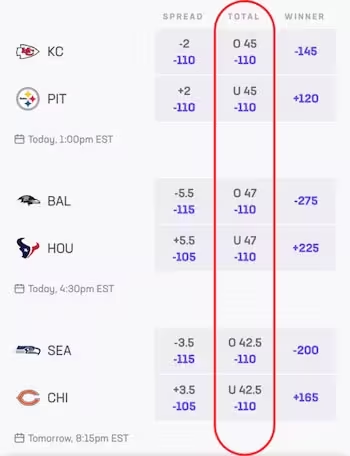
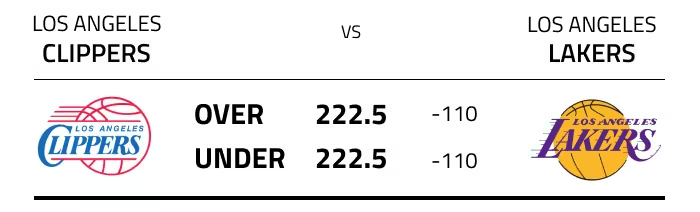
Game totals are the most popular and widely available Over/Under bets. You’re wagering on the combined total score of both teams by the end of the game.
Example
- Cowboys vs. Eagles – Total: 47.5
- Over 47.5 → 48+ total points
- Under 47.5 → 47 or fewer total points
Game totals usually include overtime, unless stated otherwise.
Best for:
- Beginners
- Bettors focusing on pace, scoring trends, and matchup flow
2. Team Totals
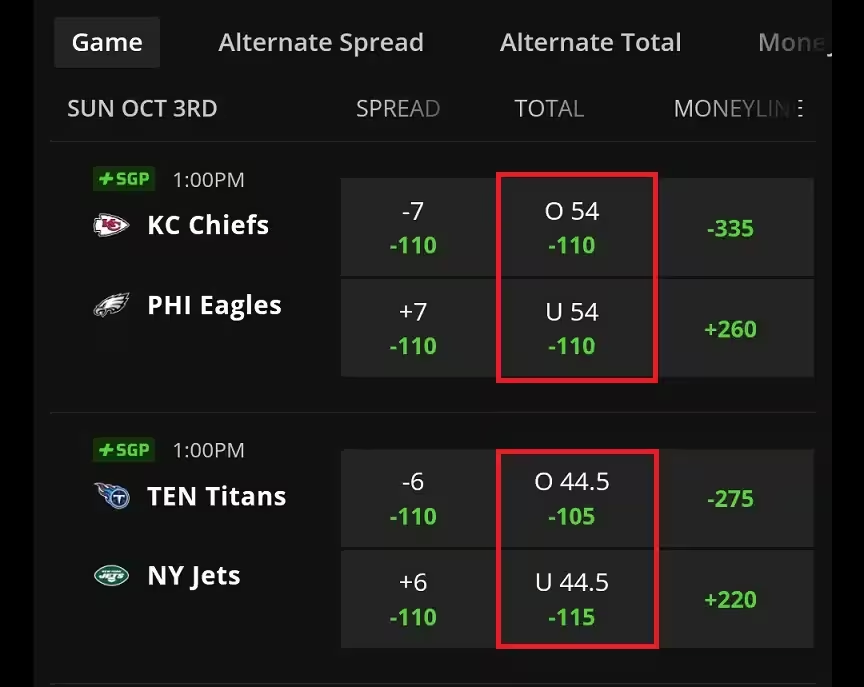
Team totals isolate scoring to one team only. The opposing team’s performance doesn’t matter.
Example
- Chiefs Team Total – Over 27.5
- You win if the Chiefs score 28+ points, regardless of the final outcome.
Team totals are useful when:
- You trust one offense but not the matchup overall
- A game spread feels sharp, but scoring expectations don’t
Best for:
- Targeting mismatches
- Fading weak defenses
3. Player Totals (Player Props)
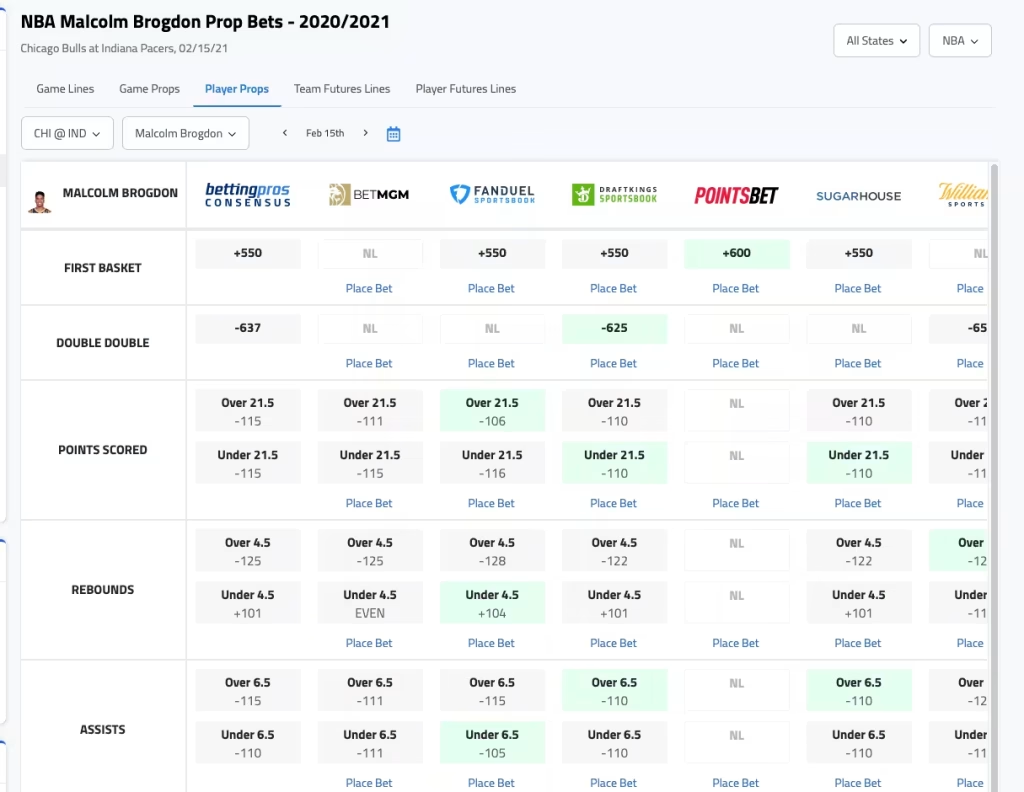
Player Over/Under bets focus on individual performance instead of team results.
Common player totals include:
- Passing yards (NFL)
- Points or rebounds (NBA)
- Shots on goal (NHL)
- Hits or strikeouts (MLB)
Example
- Josh Allen Passing Yards – Over 262.5
These bets depend heavily on:
- Usage
- Game script
- Coaching tendencies
Best for:
- Stat-focused bettors
- Matchup-driven analysis
4. First Half / Period Totals
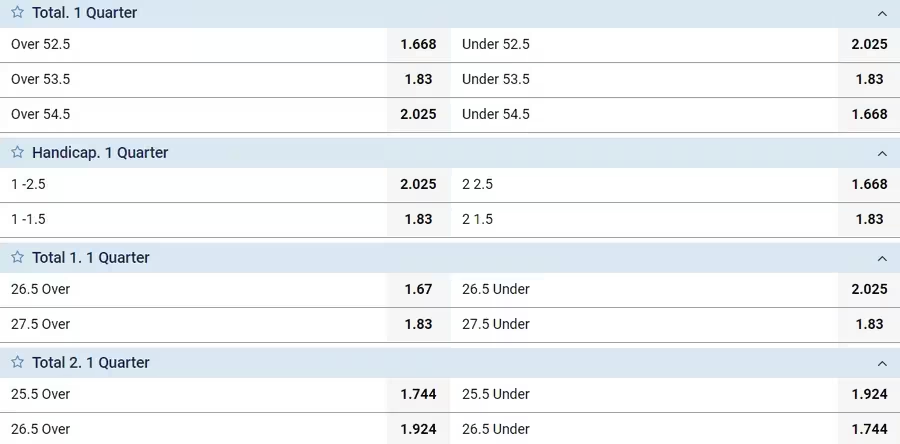
These totals apply to a specific portion of the game, such as:
- First half (NFL, NBA)
- First quarter
- Individual periods (NHL)
Example
- First Half Total – Under 23.5
These markets often move slower and can offer value when:
- Teams start conservatively
- Pace changes after halftime adjustments
Best for:
- Bettors who specialize in early-game trends
- Fading second-half volatility
5. Live Over/Under Bets
Live totals update in real time as the game progresses. Every score, possession, and timeout influences the number.
Live Over/Under bets allow bettors to:
- React to unexpected tempo
- Fade early hot or cold shooting
- Capitalize on mispriced momentum
Example
- Pregame Total: 220.5
- Live Total after slow 1st quarter: 214.5
Best for:
- Experienced bettors
- Those watching the game closely
Which Type of Over/Under Bet Is Best?
There’s no single “best” type — it depends on how you analyze games.
- Prefer macro trends? → Game totals
- Trust one offense? → Team totals
- Love stats and matchups? → Player totals
- Watch games live? → Live totals
Many sharp bettors mix multiple Over/Under markets to target value wherever the sportsbook is slow to adjust.
Over/Under Betting Examples by Sport
Over/Under betting looks similar across sportsbooks, but each sport behaves very differently. Pace, scoring structure, substitutions, and even rule quirks all shape how totals should be evaluated.
Below are detailed, real-world examples for the most popular betting sports.
🏈 NFL Over/Under Betting Example
Example:
- Bills vs. Dolphins – Total: 48.5
At first glance, 48.5 looks high — but here’s how bettors break it down:
Key factors:
- Both teams play at a fast offensive pace
- Strong passing attacks increase explosive plays
- Indoor or warm-weather conditions remove weather risk
- Defensive injuries raise efficiency expectations
How to think about it:
- You don’t need a shootout every quarter
- A 27–24 or 31–20 type game clears the number
Why NFL totals matter: NFL scoring comes in chunks (TDs, field goals), so game script is crucial. A team trailing early often speeds up play, increasing Over potential late.
🏀 NBA Over/Under Betting Example
Example:
- Heat vs. Knicks – Total: 211.5
NBA totals are heavily driven by pace and shot quality, not just star power.
Key factors:
- Both teams rank near the bottom in pace
- Half-court offenses dominate possessions
- Strong perimeter defense limits transition scoring
How to think about it:
- More possessions = more scoring chances
- Fewer possessions = lower margin for error
Even with elite scorers on the floor, a slow game can stay Under.
Why NBA totals are popular: NBA games provide large sample sizes (many possessions), making totals more predictable than spreads for disciplined bettors.
⚾ MLB Over/Under Betting Example
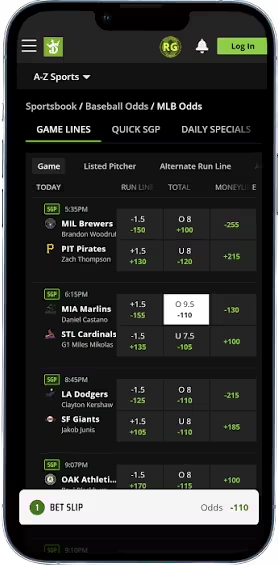
Example:
- Yankees vs. Red Sox – Total: 9
MLB totals are unique because one player (the pitcher) can dominate the entire outcome.
Key factors:
- Starting pitcher quality
- Bullpen depth
- Wind direction and temperature
- Ballpark dimensions
How to think about it:
- Wind blowing out can add 1–2 expected runs
- Bullpens often decide late Overs or Unders
- Cold weather suppresses carry on fly balls
Why MLB totals are sharp-friendly: Weather and pitching data are often mispriced early, creating strong opportunities before lines move.
🏒 NHL Over/Under Betting Example
Example:
- Bruins vs. Islanders – Total: 5.5
NHL totals look small, but each goal carries massive weight.
Key factors:
- Goaltender quality and fatigue
- Defensive systems (zone vs. aggressive forecheck)
- Back-to-back scheduling
- Power-play efficiency
How to think about it:
- A 3–2 game stays Under
- An empty-net goal can flip an Over instantly
Why NHL totals are tricky: Late empty-net situations and power plays add volatility, making timing and price especially important.
🏀 NCAA Basketball Over/Under Betting Example
Example:
- Virginia vs. Wisconsin – Total: 124.5
College basketball totals are often lower due to:
- Slower tempo
- Longer possessions
- Less consistent shooting
Key factors:
- Coaching philosophy (pace control)
- Experience level of guards
- Turnover rates
- Foul tendencies late
Why totals matter here: Certain programs consistently create low-possession games, making Unders a long-term strategy for many bettors.
Key Takeaway: Each Sport Has Its Own Total Logic
Over/Under betting isn’t one-size-fits-all.
- NFL → Game script and efficiency
- NBA → Pace and possessions
- MLB → Pitching and weather
- NHL → Goaltending and special teams
- NCAA → Coaching style and tempo
The more you understand how scoring is generated, the better you’ll read totals — and the less you’ll rely on gut feeling.
Over vs. Under: What Sharps Look For
Sharp bettors don’t approach Overs and Unders emotionally. They aren’t asking whether a game will be exciting or high scoring. Instead, they’re focused on whether the total accurately reflects how the game is likely to be played.
The edge comes from identifying small inefficiencies in pace, efficiency, and market behavior — then acting before or after the market corrects itself.
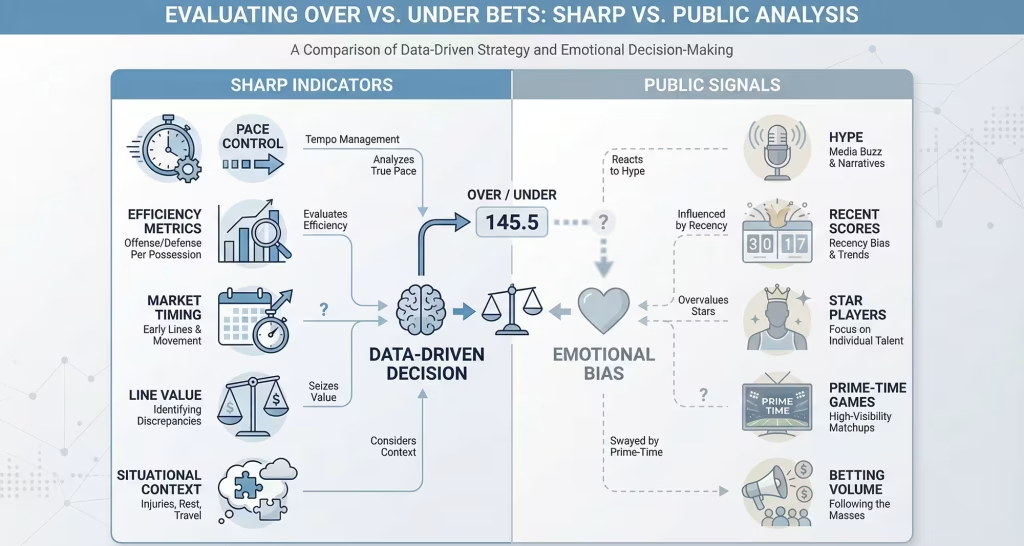
How Sharps Evaluate Overs
Sharps look for Over opportunities when they believe scoring potential is being undervalued, not inflated.
Common signals include:
- Pace mismatches that force extra possessions
- Offensive efficiency advantages not fully reflected in averages
- Game scripts that encourage aggressive play-calling
- Defenses due for regression after unsustainably strong performances
- Controlled environments (indoors, no weather risk)
Sharps prefer Overs early in the week, before public money pushes totals higher.
How Sharps Evaluate Unders
Unders are where many professionals find their most consistent value, largely because casual bettors prefer rooting for points.
Sharps look for:
- Slow tempo and possession control
- Teams that shorten games when leading
- Red-zone or situational defensive strength
- Fatigue spots from travel or short rest
- Totals inflated by public demand, especially in prime-time games
Unders often become more attractive later in the betting cycle, after Overs are overplayed.
Why Market Timing Matters
Sharps understand that the number itself matters as much as the handicap.
A total can be:
- A good Over at one price
- A bad Over just a few points later
Professionals pay close attention to:
- Opening numbers
- Key thresholds
- Line movement driven by public vs. sharp money
They don’t chase movement blindly — they act when the price aligns with their expectation.
The Sharp Totals Mindset
The biggest difference between sharp and casual bettors isn’t knowledge — it’s discipline.
Sharps:
- Think in probabilities, not predictions
- Avoid betting simply to have action
- Treat totals as repeatable, long-term opportunities
Over/Under betting isn’t about guessing high or low. It’s about understanding when the market is wrong — and by how much.
Next up, we’ll break down the most common Over/Under betting mistakes and how bettors can avoid giving back their edge.
Common Over/Under Betting Mistakes
Over/Under bets look simple on the surface, which is exactly why many bettors lose money on them. Most mistakes aren’t about bad luck — they’re about flawed assumptions.
Below are the most common traps bettors fall into when wagering on totals.
Mistake #1: Betting Based on Narrative Instead of Pace
One of the biggest mistakes is assuming:
- “These teams score a lot” → Over
- “These teams play defense” → Under
Scoring averages alone don’t tell the full story. Tempo, possessions, and efficiency matter far more than raw points per game.
A fast team playing a slow opponent often results in fewer possessions than expected — not more.
Mistake #2: Ignoring Market Inflation
Public bettors overwhelmingly prefer Overs. As a result:
- Popular games
- Prime-time matchups
- Star-heavy teams
often see totals pushed higher than true value.
Betting an Over simply because it feels “safe” usually means you’re paying a premium.
Mistake #3: Not Understanding What’s Included in the Bet
Many bettors don’t realize that:
- Most full-game totals include overtime
- Some first-half or period totals do not
- Certain player props exclude overtime altogether
Failing to check the rules can turn a winning handicap into a losing bet.
Mistake #4: Chasing Line Movement Blindly
Seeing a total move doesn’t automatically mean it’s a good bet.
Common mistakes include:
- Betting because “sharps are on it” without knowing why
- Entering after the best number is already gone
- Confusing public steam with sharp money
The number matters — often more than the side.
Mistake #5: Betting Too Many Totals Without a Plan
Totals reward discipline. Betting Overs and Unders on every game:
- Increases variance
- Encourages emotional decisions
- Leads to bankroll leaks over time
Selective betting beats constant action.
Many of these mistakes can be avoided by setting clear limits and betting consistently — principles we break down in our Bankroll Management Guide.
Are Over/Under Bets Good for Beginners?
Yes — when approached correctly.
Over/Under bets are often one of the best starting points for new bettors because they’re intuitive and easy to understand. You’re betting on a number, not learning complex spread math or moneyline pricing.
That said, simplicity doesn’t mean they’re risk-free.
Why Totals Work Well for New Bettors
Over/Under bets are beginner-friendly because:
- You don’t need to pick a winner
- Scoring logic is straightforward
- Every point, goal, or run counts the same
- The bet stays “alive” for the entire game
They also help new bettors learn how markets move without the emotional pull of rooting for a team.
What Beginners Should Focus On
To use totals effectively, beginners should prioritize:
- Pace and possession counts
- Injuries that affect tempo, not just scoring
- Weather and venue conditions
- Avoiding public hype games early on
Starting with full-game totals before moving into team totals, player props, or live markets is usually the smartest path.
Over/Under bets aren’t about guessing high or low. They’re about understanding how a game is likely to unfold.
If you treat totals as a learning tool — not just a wager — they can build strong habits that carry over into every other betting market.
Final Thoughts: Why Over/Under Bets Deserve Your Attention
Over/Under betting isn’t about guessing whether a game will be exciting. It’s about understanding how sports actually unfold — possession by possession, drive by drive, shift by shift.
The best bettors don’t chase highlights or root for chaos. They study pace, efficiency, context, and market behavior. They know that a slow game with elite defenses can still go Over, and a matchup full of star scorers can quietly fall Under. That awareness is what separates disciplined bettors from everyone else.
Totals also force you to think differently. You’re not locked into one team. You’re reading the entire game — the tempo, the adjustments, the moments where sportsbooks misjudge how things will play out. That skill carries over into spreads, props, and live betting.
If you’re new, Over/Under bets offer a clean entry point into sports betting strategy. If you’re experienced, they remain one of the most reliable markets to exploit over time — especially when public bias creates inflated numbers.
In short, totals reward preparation, patience, and perspective. Master those, and Over/Under betting stops feeling like a coin flip — and starts becoming a long-term edge.