Why 99% of Casino Streamers Are Paid Actors – And How to Spot the Real Ones
If you think your favorite casino streamer is sitting there risking thousands of dollars of their own money every night… think again. The truth is far more staged, far more profitable, and far more manipulative than most viewers ever realize. And once you see it, you can’t unsee it.
Casino streaming has exploded across Twitch, Kick, and YouTube over the past few years. The formula is simple: big personalities, huge stakes, nonstop bonus buys, and reactions so dramatic you almost feel the adrenaline through the screen. It’s entertainment gold — and the casinos know it.
Because behind almost every “lucky streak” you see is a deal you don’t.
Most streamers aren’t gamblers. They’re hired talent. Paid actors. Walking billboards wrapped in hype, playing with money that isn’t theirs, losing funds they never owned, and showcasing wins they’re not allowed to withdraw. Their job is to make the dream look real — because the more real it feels to you, the more likely you are to chase it.
But here’s the part nobody tells you: once you understand how the system works, the entire show looks different.
And today, we’re tearing the curtain down — piece by piece.
The Streaming Boom: How Online Casinos Hijacked the Trend
It didn’t take long for online casinos to realize something powerful: people weren’t just watching games anymore — they were watching players. The rise of Twitch and Kick turned everyday gamers into celebrities, and the gambling industry saw an opportunity too big to ignore.
Casino streaming didn’t grow naturally alongside gaming. It was engineered. The entire category flipped almost overnight as casinos poured money into influencers, bought up airtime, and created a new wave of “gambling entertainers” who operated more like brand ambassadors than players.
Why Casino Streaming Took Off So Fast
Online casinos quickly discovered that streaming checked every marketing box:
- It creates parasocial trust: viewers feel like they “know” the streamer.
- It shows endless action: bonus buys, huge multipliers, high-stakes spins.
- It converts instantly: streamers drop links, codes, and promos mid-hype.
- It scales globally: one streamer can drive traffic from dozens of countries.
- It’s addictive to watch: dopamine is contagious, even through a screen.
What started as gamers sharing their hobbies turned into casinos buying influence — and shaping the entire ecosystem around conversions, not authenticity.
The transformation was fast, calculated, and profitable. And it set the stage for the illusion that still dominates the streaming world today.
Why Casinos Love Streamers
Once casinos realized how effective streaming was at driving deposits, the industry shifted from traditional advertising to influencer-driven acquisition. And not just casually — aggressively. A top-performing streamer today is more valuable to an online casino than almost any paid ad campaign. Why? Because streamers don’t just promote… they pull people in emotionally.
The Psychology Casinos Exploit
Casino streamers create a perfect storm of marketing triggers:
- FOMO: Viewers see massive wins and fear “missing the run.”
- Social proof: If thousands watch someone win, it must be possible.
- Authority bias: Streamers appear knowledgeable even when they aren’t.
- Relatability: The chat interaction feels personal — even though it’s not.
This is the exact psychology casinos rely on. Streamers make gambling feel accessible, fun, and oddly safe — even though none of that is true.
The Financial Pipeline Behind Every Stream
When a streamer goes live, a casino sees a direct revenue funnel. A single session can bring in:
- Hundreds of new signups
- Dozens of fresh depositors
- Repeat players chasing the streamer’s “luck”
- Long-term revenue from rev-share deals
And unlike traditional ads, this model is self-perpetuating. The more the streamer “wins,” the more viewers believe they can win too — and the more likely they are to click the affiliate link.
Why Casinos Prefer Actors Over Real Gamblers
Casinos aren’t looking for authenticity; they’re looking for control. Paid actors follow the script:
- Keep the energy high.
- Never look upset about losing.
- Show big wins frequently.
- Push the latest bonus buy.
- Drop the deposit link at the perfect moment.
A real gambler reacts to real losses. A fake one performs like a TV host.
And for casinos, that difference is worth millions.
The Big Lie: Why 99% of Casino Streamers Aren’t Playing With Their Own Money
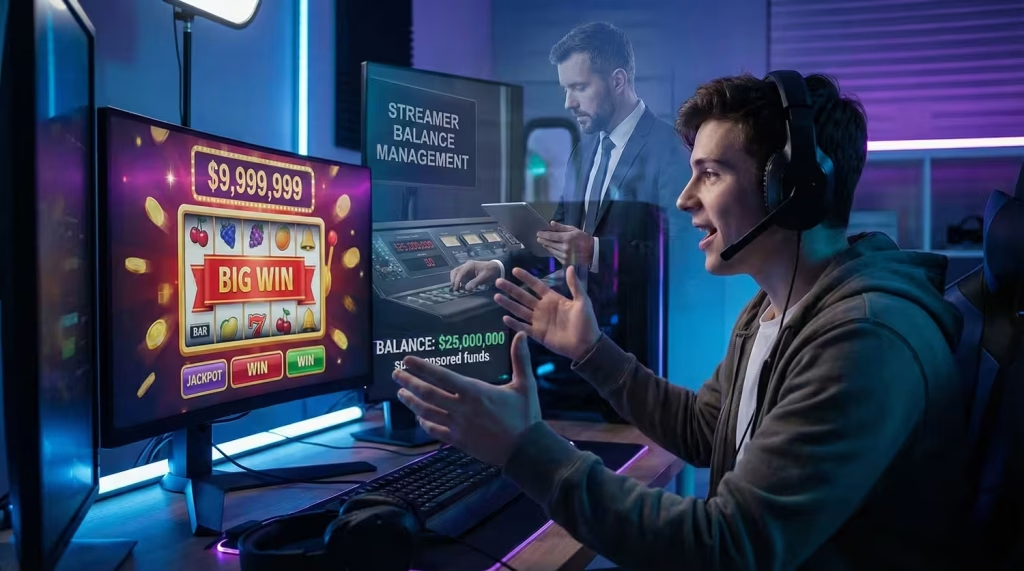
Here’s the truth that flips the entire casino streaming world on its head: almost none of the people you watch spinning $100, $200, or $500 a pop are gambling with their own money. Not a dime. The entire performance is bankrolled, pre-funded, and strategically controlled by the casino long before a stream ever goes live.
Most viewers don’t realize this because the production is designed to hide it. The streamer sits in front of a flashy balance, hypes up the stakes, promises “one more bonus buy,” and celebrates wild wins as if the money is real. But what you’re watching isn’t gambling — it’s sponsored content disguised as reckless entertainment.
How the “Provided Balance” Scam Actually Works
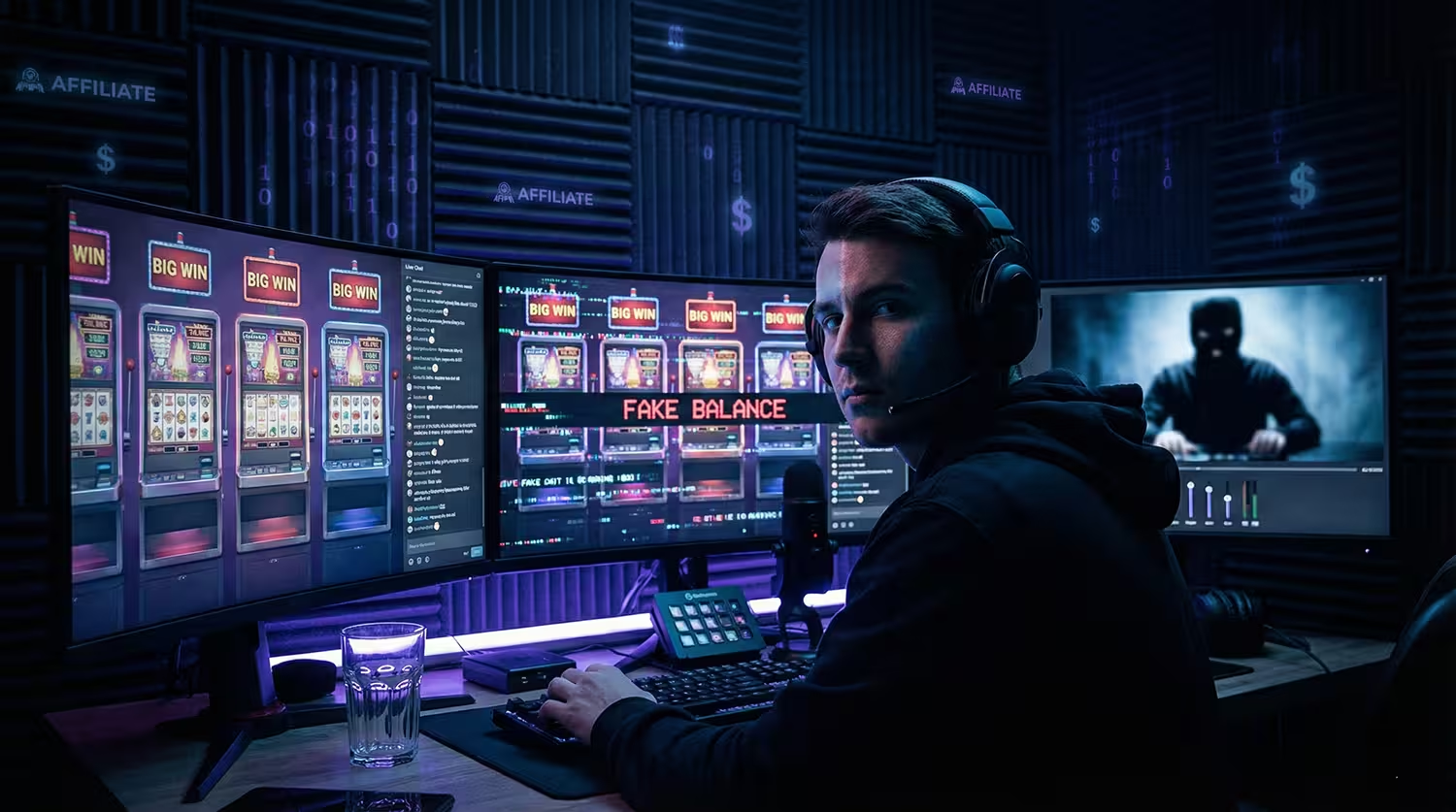
Casinos give streamers a large fake or insured balance — anywhere from $10,000 to $500,000+ — along with strict rules around how it can be used. Typically:
- The streamer can’t lose their own money — losses don’t count against them.
- They usually can’t withdraw winnings — big hits stay in the ecosystem.
- The balance is replenished whenever needed — even mid-stream.
- The casino controls the stakes — pushing higher bets for bigger reactions.
- The streamer is paid to make gambling look fun, easy, and profitable.
When you remove the financial risk, everything changes. Suddenly those “crazy” $3,000 bonus buys or $100 spins aren’t courage — they’re marketing.
Streamers Aren’t Gamblers — They’re Performers
Casinos want a personality, not a strategist. They want someone who can:
- Sell excitement
- Pretend to sweat high stakes
- Generate emotional reactions
- Keep viewers believing winning is normal
And if losses don’t hurt, the streamer can stay upbeat no matter how bad the run is. You never see tilt, frustration, panic, or regret — the emotions every real gambler eventually faces — because the streamer never experiences real consequences.
Why This Creates a Dangerous Illusion
When you watch someone “risk” $50,000 on stream without blinking, it rewires your perception of gambling. You assume:
- Winning is frequent
- Big losses bounce back
- The bankroll is bottomless
- Stakes don’t matter
- Anyone can get lucky
This illusion pulls thousands of viewers into depositing money they can lose — often chasing a fantasy built on someone else’s safety net.
It’s not gambling. It’s advertising dressed like gambling.
And 99% of viewers have no idea.
The Affiliate Angle: The Real Engine Behind the Fake Streams
If the fake balance is the bait, affiliate deals are the hook — and this is where the real money is made. Casinos don’t bankroll streamers out of generosity. They do it because every viewer who signs up through that streamer is worth hundreds, sometimes thousands, over their lifetime. Streaming isn’t just entertainment; it’s a finely tuned customer acquisition system with staggering profit margins.
Most viewers think streamers make their money from tips, subscriptions, or ad revenue. But those streams are pocket change compared to what happens behind the scenes.
How Streamers Actually Make Money (It’s Not from Winning)
Casinos structure streamer deals to incentivize one thing: getting viewers to deposit and lose money. These deals usually take one of three forms:
- Rev-share: Streamer earns 20–45% of every player’s lifetime losses.
- CPA (Cost Per Acquisition): Streamer earns $100–$500 per depositing player.
- Hybrid deals: A mix of salary, CPA, and rev-share.
This system turns every viewer into a potential long-term revenue stream.
The streamer doesn’t care if you win. The casino doesn’t want you to win. And the contract ensures that both parties profit when you lose.
Why Casinos Love This Model
Affiliate-driven streaming is a dream scenario for gambling operators because:
- It’s cheap marketing compared to traditional ads.
- It’s psychologically powerful — trust > advertising.
- It’s scalable — one streamer can reach millions.
- It’s data-driven — casinos track every signup, every loss, every dollar.
Behind closed doors, some streamers earn more from one night’s signups than they would from a month of YouTube ad revenue.
The Dark Incentives Nobody Talks About
This is where things get ethically ugly. When a streamer is paid based on viewer losses, it creates a direct conflict of interest:
- They WANT you to deposit.
- They WANT you to bet bigger.
- They WANT you to lose.
Because your loss is their income.
They aren’t cheering for your luck — they’re cheering for the algorithm tracking your deposits.
Kick, Twitch, and YouTube: Who Enables It and Who Doesn’t
After Twitch cracked down on unregulated gambling in 2022, many casino streamers fled to Kick, a platform funded by casino stakeholders who have zero interest in limiting gambling content.
Kick doesn’t just allow casino streaming — it thrives on it.
YouTube sits somewhere in the middle, enforcing rules inconsistently but still hosting plenty of casino content. The lack of uniform regulation across platforms makes it almost impossible for viewers to understand what’s legitimate and what’s not.
Bottom Line: The Affiliate System Keeps the Illusion Alive
Fake balances make streams exciting. Affiliate deals make them profitable.
And together, they turn gambling streams into one of the most aggressive and deceptive marketing engines on the internet.
How Fake Streams Actually Work
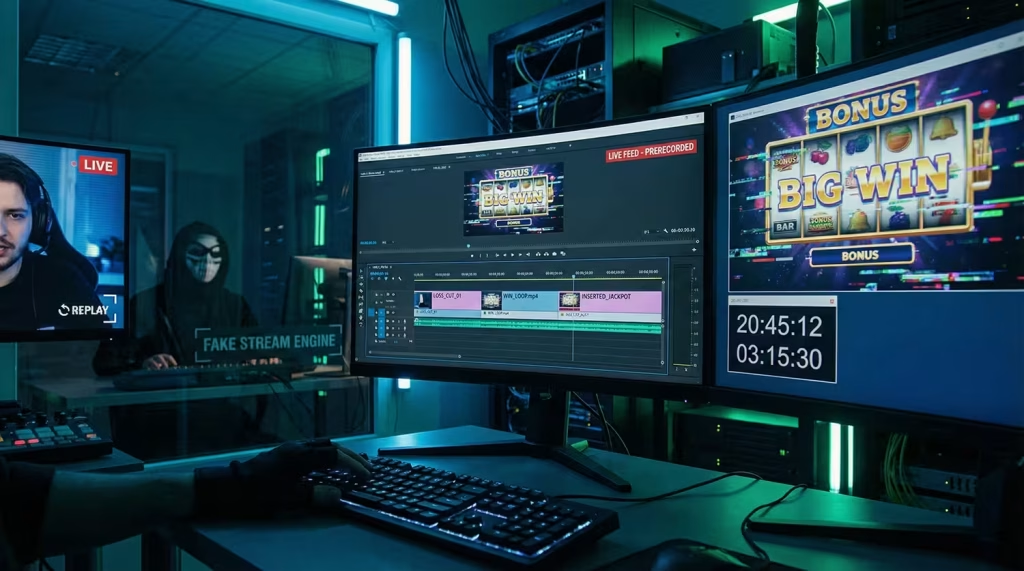
Most viewers think a casino stream is just a person, a camera, and a slot. But behind the scenes, these streams run on carefully engineered manipulation designed to make winning look easy, losing look harmless, and gambling look like a lifestyle instead of a financial risk.
Once you understand how the machinery works, the entire show feels different — almost scripted. Because it is.
1. Fake Balances and “Not Real Withdrawals”
The biggest lie in casino streaming is the illusion of financial risk. In reality:
- The streamer is not gambling their own money.
- The casino loads their account with tens or hundreds of thousands.
- The streamer cannot withdraw the money they “win.”
- Losses do not matter because the balance is replenished off-stream.
That $50,000 bonus buy you saw last night? It cost the streamer nothing. And that $200,000 jackpot? It didn’t go into their pocket — it stayed in the ecosystem as marketing ammunition.
2. Bonus Buy Abuse: Making the Impossible Look Normal
Real gamblers don’t buy 100 bonus buys a session. They don’t hammer $5,000 spins. They don’t chain-buy like they have a bottomless bankroll.
Streamers do — because they’re not risking real money.
Bonus buys exist to generate volatility. When a streamer rapid-fires them, you see:
- constant features
- elevated excitement
- frequent big hits
- reduced downtime
It’s designed to turn gambling into a highlight reel instead of the slow, mathematically predictable loss it actually is.
3. Pre-Recorded Wins and Highlight Loops
Some streamers don’t just show fake money — they show fake moments. Common tactics include:
- playing pre-recorded “lucky runs” as if they’re live
- staging massive wins from earlier sessions
- cutting out huge losing streaks so viewers never see the reality
If a streamer’s “luck” seems statistically impossible… it probably is.
4. The Mid-Stream Balance Refill Trick
Streamers often pretend to “deposit again” to keep the action going:
“Alright boys, we’re reloading. I’m not stopping until we hit something HUGE!”
Except it’s not a reload. It’s the casino refreshing the balance behind the scenes.
Casinos WANT streams to go long.
Long streams mean more viewers.
More viewers mean more deposits.
And that is the only number that matters.
5. Strategic Stakes to Maximize Suspense
Casinos direct streamers to ramp stakes up or down depending on:
- viewer count
- engagement in chat
- time of session
- upcoming promotions
- affiliate conversions
The stakes aren’t random — they’re optimized for virality.
6. “Acting Tilted,” Not Actually Tilted
Real gamblers get angry, stressed, frustrated, or defeated when they lose thousands.
Streamers don’t — because losing doesn’t hurt.
The tilt is acted.
The emotions are exaggerated.
The frustration is performative.
It’s all designed to normalize blowing through massive balances as “part of the grind.”
The Result: A Fully Engineered Illusion
When you stack all of these tactics together, viewers see:
- only the win-heavy parts of gambling
- stakes far above what real people can afford
- losses treated as entertainment, not consequences
- artificial luck that looks statistically impossible
- content optimized for hype, not truth
The entire ecosystem is a highlight reel built to lure players into depositing money they can lose — while the streamer loses nothing at all.
How to Spot the 1% of Streamers Who Are Actually Legit
Here’s the inconvenient truth: real casino streamers — the ones who actually deposit their own money, play with real stakes, and feel real losses — are almost extinct. Casinos don’t want them. Platforms don’t boost them. And viewers don’t reward them, because real gambling is messy, slow, and full of losing streaks no one wants to watch.
But they do exist.
They’re just buried underneath the noise of the actors.
If you know what to look for, you can spot the difference almost instantly.
The Red Flags: Signs You’re Watching a Paid Actor
Most fake streamers slip up without realizing it. Here are the biggest giveaways:
- No proof of deposits or withdrawals — they never show a bank statement, e-wallet screenshot, or crypto transaction.
- Unrealistically high stakes — $50–$500 spins for hours on end with no emotional response.
- Endless balance reloads — always magically refunded mid-stream.
- Bonus buys every two minutes — normal players can’t sustain this.
- Affiliate links everywhere — especially pinned chats and spammy promos.
- Suspiciously consistent “luck” — multipliers, bonus triggers, and max wins far too frequent.
- No tilt, no stress, no realism — because losing means nothing to them.
If even two or three of these show up, you’re not watching a gambler… you’re watching a marketing funnel.
The Green Flags: The Rare Traits of a Genuine Streamer
Real players behave differently. Their streams feel raw, unpredictable, and human — because real money is on the line. Authentic streamers:
- Show real deposits and withdrawals with timestamps or transaction IDs.
- Play stakes that fit their lifestyle, not fantasy-level bets.
- Experience real tilt — the frustration, the hesitation, the nerves.
- Limit bonus buys because they’re expensive, high-variance, and brutal on a real bankroll.
- Talk openly about RTP, volatility, and bankroll management instead of pretending everything’s pure luck.
- Take breaks or end streams when losing, because losing hurts.
- Withdraw winnings, which fake streamers rarely do.
If a streamer shows genuine pain when they lose and genuine relief when they win — that’s a good sign. Real money creates real emotion.
Real Streamers Talk About the Things Fake Streamers Avoid
Legit streamers educate instead of manipulate. They openly discuss:
- why the house always has the edge
- how volatility crushes real bankrolls
- why long-term gambling leads to losses
- the difference between entertainment gambling and survival gambling
- responsible play and realistic budgets
Fake streamers avoid these topics like the plague — because honesty doesn’t convert deposits.
Authenticity Comes With a Cost
Casinos don’t want streamers who lose their own money. They want streamers who make you lose yours.
That’s why real streamers:
- rarely get sponsorships
- grow slower
- earn less in affiliates
- don’t get VIP deals or boosted bonuses
- often quit streaming because bankroll variance destroys them
But they’re the only ones showing what online gambling actually looks like: long downswings, unpredictable volatility, and the rare thrill of hitting a real, personal win.
How to Quickly Evaluate Any Streamer
Here’s a simple 5-second test:
Ask yourself: “Does this look like something a normal person with a real job could afford?”
If the answer is no — it’s not real. It’s a casino production with a human face.
The Bottom Line
The 1% of authentic streamers don’t try to sell you anything. They don’t bait you with magic wins. They don’t perform like reality TV contestants.
They gamble. They lose. They win. They react like a real human because they are one.
And that’s exactly why casinos don’t promote them — and why you should pay attention when you find one.
The Legal Gray Zone No One Talks About
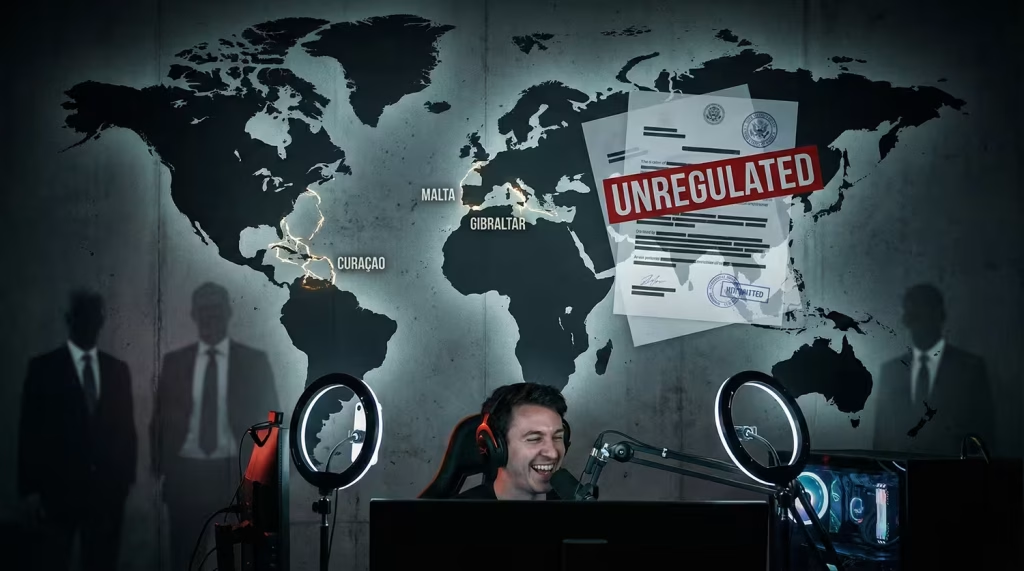
Casino streaming sits in one of the murkiest, most unregulated corners of the internet. It feels polished, professional, and legitimate on the surface — but legally, the ground beneath it is quicksand. Viewers assume there must be rules, disclosures, oversight, something keeping streamers honest.
There isn’t.
What you see on Twitch, Kick, or YouTube isn’t governed by the same advertising standards you’d expect from any other high-risk industry. It operates in a vacuum where offshore casinos, unlicensed operators, paid actors, and confused regulators all collide.
And the result is a global marketing engine with almost no accountability.
Unlicensed Casinos Pushing Into the U.S.
Here’s the part most streamers will never admit: A huge portion of casino streams promote sites that are not licensed to operate in the United States.
These offshore casinos:
- avoid U.S. regulations
- offer no consumer protection
- operate without proper identity or safety checks
- can legally refuse to pay out players
- target American audiences anyway
When a streamer plays on one of these sites, they’re essentially funneling viewers into an unregulated gambling pit dressed up as entertainment.
Fake Balances = Misleading Advertising
In any other industry, showing a fake scenario and calling it real would violate FTC rules. But casino streaming falls between regulatory cracks:
- Streamers don’t disclose the money isn’t theirs.
- Casinos don’t disclose the terms of the sponsorship.
- Viewers don’t know they’re watching an ad disguised as real play.
If a beauty influencer used sponsored products without disclosure, it would be a problem. If a financial influencer used fake investment returns to promote a platform, the SEC would get involved.
But if a casino streamer fakes $100,000 wins to push signups? Crickets.
No Transparency, No Safety Net
This is the heart of the issue: gambling is a high-risk activity, but casino streaming has…
- no mandatory disclaimers
- no minimum age verification
- no requirement to show real funds
- no requirement to disclose sponsorships
- no penalties for deception
- no oversight on who streamers target
And unlike sportsbooks or regulated casino operators, offshore sites don’t have responsible gaming departments or compliance teams breathing down their necks.
Kick vs. Twitch vs. YouTube: A Regulatory Mess
Each platform handles gambling content differently:
- Twitch banned certain unregulated casinos in 2022, but enforcement is inconsistent.
- Kick is partially funded by a gambling company — it has zero incentive to regulate anything.
- YouTube allows gambling content with vague rules that shift constantly.
There is no unified policy. No industry standard. No clear line between legal and illegal behavior.
It’s chaos — and the casinos thrive in chaos.
Why Regulators Haven’t Stepped In (Yet)
Regulators have been slow for three reasons:
- The industry moves faster than the law.
By the time rules update, streamers are already on a new platform. - Offshore casinos operate outside U.S. jurisdiction.
They’re untouchable unless the government blocks access — which is rare. - Streamers claim they’re “entertaining,” not advertising.
And platforms accept that excuse because gambling content drives traffic.
But make no mistake: regulators are watching. Several governments are already investigating paid gambling promotion on social media — and history tells us industries built on deception eventually get regulated hard.
The Danger for Viewers
While casinos and streamers operate in this legal gray zone, the person with the most at risk is the viewer.
No legal protections. No recourse when things go wrong. No accountability on the streamer’s side.
If you lose money because you trusted a fake streamer, regulators can’t help you. If the casino refuses a payout, you’re on your own. If the streamer misled you with fake balances, there’s no system to report it.
And that’s exactly why this ecosystem has grown so fast — it is profitable because it is unregulated.
Why Viewers Keep Falling for It
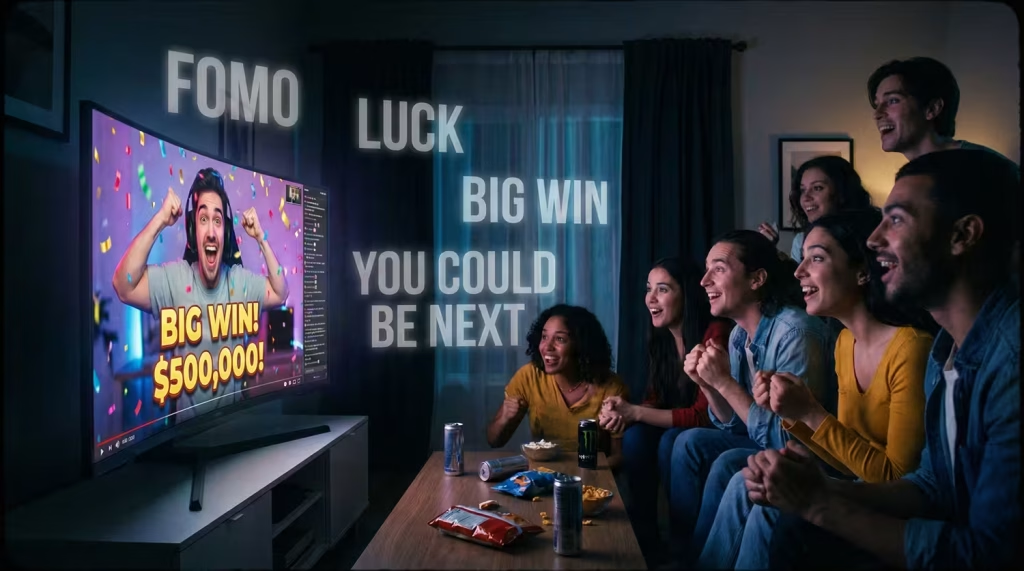
If casino streaming is so obviously staged, why do millions of viewers still believe it’s real? Why do people deposit money after watching someone “win” $50,000 on stream? Why does the illusion work so well — even on people who should know better?
Because casino streaming isn’t built on logic. It’s built on psychology.
The entire ecosystem is engineered to tap into the same cognitive biases that make gambling addictive in the first place. Streamers don’t need to lie outright; they just need to present the right atmosphere — wins, hype, charisma, impossible luck — and your brain fills in the rest.
Entertainment Beats Reality Every Time
Most viewers aren’t watching casino streams the way you watch investigative content or financial advice. They’re watching for:
- dopamine
- adrenaline
- escapism
- background noise
- the thrill of “what if”
Casino streams function like reality TV with higher stakes. You’re not questioning the realism of the drama — you’re just enjoying the ride.
Real gambling is slow and volatile. Fake gambling is nonstop highlight reels. Guess which one people prefer?
The Social Proof Effect: “If He Wins, I Can Too”
This is one of the most powerful psychological traps in gambling.
When you watch someone else:
- hit a max win
- trigger bonuses back-to-back
- “run up” a balance
- cash out (or pretend to)
…it creates a subconscious belief that the same thing could happen to you.
Humans imitate. Humans aspire. Humans anchor on visible success.
And casino streamers weaponize that instinct — often without saying a word.
Parasocial Relationships Make It Worse
Viewers don’t just watch streamers. They connect with them.
They laugh with them. They chat with them. They cheer for them. They trust them.
Parasocial relationships turn entertainers into “friends,” and advice from a “friend” feels more trustworthy. So when a streamer says something like:
- “Try this slot — it’s been HOT lately!”
- “Use my link — it supports the stream!”
- “This site has been paying crazy today!”
…it hits differently. You’re not hearing a marketing message. You’re hearing a recommendation from someone you like.
The Algorithm Promotes the Most Deceptive Content
Platforms don’t care about ethics.
They care about engagement.
Which streams get the most clicks?
- the ones with massive wins
- the ones with insane stakes
- the ones with constant action
- the ones with shock reactions
Real gambling doesn’t create that kind of content. Fake gambling does. So the algorithm boosts the fakes and buries the real ones — reinforcing the illusion.
People Want to Believe the Dream
This is the deepest layer. Casino streaming taps into the same fantasy that fuels lottery sales, sports betting, day trading addiction, and get-rich-quick schemes.
People don’t watch because they think it’s rigged. They watch because they don’t want it to be.
The idea that anyone — even someone you relate to — can hit life-changing money in seconds is intoxicating. It overrides skepticism. It overrides math. It overrides reality.
And that dream is exactly what casinos pay streamers to sell.
How Real Gamblers Should Approach Casino Streams
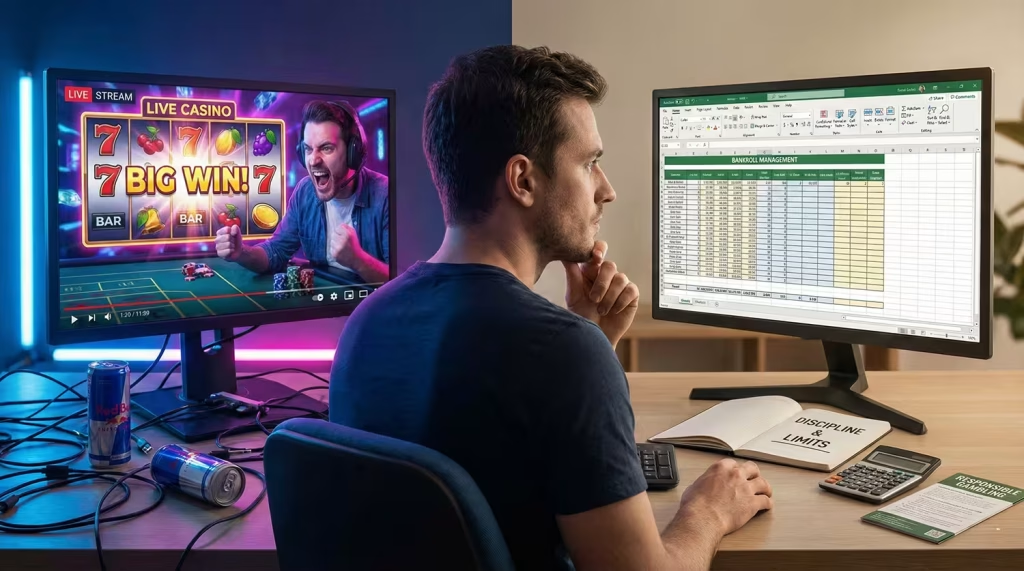
If you love watching casino streams, there’s nothing wrong with that. They’re entertaining. They’re fast-paced. They scratch the same itch as sports highlights, reality TV, or poker streams.
The problem isn’t the entertainment — it’s mistaking entertainment for education.
Once you understand that most streamers aren’t gambling, they’re performing, you have to approach these streams the same way a real bettor approaches every part of the gambling world: with caution, awareness, and a clear line between fantasy and reality.
Treat Casino Streams Like WWE, Not Wall Street
This is the mindset shift that changes everything.
Casino streams look real. They feel real. The reactions feel authentic. The stakes look intense.
But remember: it’s scripted risk. It’s controlled loss. It’s curated excitement.
Streamers aren’t showing you what gambling is — they’re showing you what gets clicks.
Once you view streams as entertainment, not a blueprint, you instantly protect yourself from the illusion that you can replicate their results.
If You Want to Learn, Watch Streamers Who Tell the Truth
There are legitimate streamers — they’re just harder to find because they’re not backed by casinos and they don’t chase hype.
Real gamblers (the rare 1%) actually teach viewers something valuable:
- RTP and volatility breakdowns
- Why certain slots drain bankrolls faster
- The difference between good and terrible bonus buys
- How betting units and limits prevent blowups
- How long-term variance destroys big bankrolls
- The reality of cold streaks
These streamers don’t sugarcoat. They don’t pretend. They treat the game with the seriousness it deserves.
And ironically, they’re far more valuable to new players than any entertaining fake streamer with a $100,000 balance.
Redefine Your Expectations: Gambling Is Not a Growth Strategy
Real gamblers know something most viewers don’t want to admit:
If you gamble long enough, you will lose money. Period.
Even with optimal strategy, bankroll discipline, or game knowledge, online casino gambling always tilts in the house’s favor. Real streamers acknowledge this openly — fake streamers avoid saying it entirely.
If a streamer acts like winning is easy or consistent, that’s your cue to step back.
Your Personal Safety Checklist
When you find yourself getting pulled into the hype, use this quick checklist to reset:
- Would I make this bet if no one else was watching?
- Does this streamer show real deposits and withdrawals?
- Is this streamer playing stakes I could actually afford?
- Have I tracked my recent deposits and losses honestly?
- Am I chasing the streamer’s “luck” instead of playing responsibly?
If any answer feels uncomfortable, walk away. You’re being influenced — not entertained.
You Don’t Have to Quit Streams — Just Reframe Them
Casino streams become far more enjoyable once you stop believing the fantasy.
Watch for the reactions. Watch for the production. Watch for the entertainment value.
Just don’t watch for strategy.
Real gamblers don’t learn from fake streams. They learn from math, bankroll management, and honest gameplay — the stuff paid actors never talk about.
Conclusion: The Truth Behind the Curtain
Casino streaming feels real because it’s designed to feel real. The hype, the stakes, the reactions, the nonstop bonus buys — it all creates a world where winning looks effortless and losing looks harmless. But once you understand what’s happening behind the scenes, the illusion collapses fast.
Most streamers aren’t gamblers; they’re performers. They’re paid actors using casino-funded balances, controlled stakes, and scripted reactions to make gambling look exciting instead of dangerous. Their job isn’t to win — it’s to convince you that you can.
But the moment you peel back the curtain, the game changes. You stop comparing yourself to their fake bankrolls. You stop chasing their streaks. You stop assuming their results are possible for you.
And that’s the entire point of understanding the system: once the spell breaks, you regain control.
There are real streamers out there. They lose, they stress, they pause, they cash out — because the money is theirs. They’re the 1% who show the truth. But you’ll never mistake them for the actors once you know the signs.
So enjoy the streams, have fun with the entertainment, but keep your guard up. Because the moment you start believing the fantasy is the moment you become the product.