
Why Small-Field DFS Contests Are Beating Large GPPs

If you’re not first, you’re last. Those are the famous and totally rational words of the iconic Ricky Bobby from Talladega Nights. The fact that I’m quoting Will Ferrell should probably tell you those might not be words to live by, though.
There’s no denying that nailing a “bink” or a “takedown” in daily fantasy sports is the dream. Everyone wants to win the NFL Milly Maker or finish first in some crazy tournament that nets them life-changing money.
The problem? It’s really hard to do. It’s also simply mathematically not very realistic. And the best daily fantasy sports (DFS) players have taken notice. You can still chase those extreme highs, but preventing the extreme lows and soaking up more sustainable wins has become a much more attractive endeavor – even if it works against the public norm.
With that, let’s dig deeper into why small-field DFS contests are winning the day, and why massive GPPs are increasingly left for the fish to fight over.
The DFS Myth That Refuses to Die
One of the biggest problems with daily fantasy sports is expectation and deliverability. New players, especially, can get drawn in by the obsession over huge wins.
In today’s social media-driven age, big wins and massive five-figure payouts are placed directly in front of you. Seasoned players still chasing that big win can get jealous and wonder when their time will come. New players will assume if they work hard enough and long enough, they’ll get that epic takedown, too.
Except it’s never a given, and the reality is that you really just see the high point. The crazy first-place finish and the big cash prize? That’s for everyone to see via screenshots on social media or in Discord communities.

Here are the two problems with this mentality:
- Struggles aren’t broadcast
- Sharp play vs. ROI
First, the road DFS players take to get to that elusive big score is often a long and winding one. If you put in enough time, research, and money, maybe – just maybe – your next big swing can net you a glorious win that you can share with the masses.
Truth be told, that could obviously happen. That reality is what makes DFS so great. But you only see the success, and unfortunately, you usually need to experience the brutal lows to fully understand them.
In addition, this chase for first place in a massive tournament – one where it’s your lineup against sometimes hundreds of thousands – skews how we look at lineup building from a strategic perspective.
To win in any tournament, you need to have a good lineup. You also need some leverage via low-owned or “contrarian” options. That combination won’t always lead to winning results, and nailing the perfect formula is different for each contest. The sheer idea of it can also be counterintuitive when trying to win.
Example: You need low-owned players that also go off and get you a lot of points. But to get those players, you’re rolling the dice on players who are usually overlooked by the field for a reason.
In other words, the very strategy that sharp players deploy could be precisely why your lineups are not contending – or worse, not even cashing.
Your plight to chase that big win is compounded by the very strategy required to land it; risky plays can lead to big swings in your favor, but more often than not they just lead you to a losing lineup a lot faster.
The Structural Problem with Large GPPs
Winning a big GPP (guaranteed prize pool) is extremely difficult. The number of lineups and different combinations you’re up against are massive. And even if you do piece together a lineup that’s close to contending, you still might run into trouble.
Here are two things that make big GPPs so difficult to master:
- Payout curve
- Lineup duplication
The first big issue is that most of the big GPP tournaments are insanely top-heavy as far as the payout is concerned. That’s how they can afford to issue crazy $100,000 or even $1,000,000 prizes to the first-place winner; less than the top 1% get the big money.
When looking at the low percentages and high lineup volume, you’re not just contending with the field – you’re literally working against every single lineup in the contest. This creates extra emphasis for both creating unique lineups that can separate from the pack and “maxing” a contest by hitting the entry limit.
Even those things aren’t always going to save you. If everyone can play 150 lineups, then all you’re doing is leveling the playing field against the other players that are max entering. You might feel like you’re gaining an edge, but in reality, you’re probably doing the bare minimum.
It gives you the maximum opportunities to try to give your unique grouping of lineups the best chance possible, but it, at the same time, guarantees nothing.
The other issue is lineup duping, which is certainly more prevalent from an exact definition perspective when dealing with Showdown slates, tiny two or three-game slates, or sports with finite player pools such as NASCAR and MMA.
In showdown contests and sports like NASCAR and MMA, true dupes (exact same lineups) are common and sometimes simply not very avoidable. In big GPPs for bigger sports like the NFL, MLB, and NBA, the “lineup duping” issue lies more within your build structure.
Most of the best plays for a given slate are ones that everyone knows about, and a good chunk of the field will simply “eat the chalk” and play them. That’s definitely something you’ll usually want to do, situation depending, but the more chalk you eat, the less unique your lineups will be.
This creates an obvious issue: for massive GPPs, you have to intentionally stray from some of the best plays on the slate just to ensure your lineup construction isn’t one that is being used in a majority of lineups across the entire contest.
Needless to say, the chase for perfection can still fall short. Even when a lineup is basically perfect, it may still fail to take down first place due to volume of lineups, payout curve, lineup duplication, or general variance not working in your favor.
Why Small-Field DFS Contests Change the Math
If you can ditch the dream of cashing in insane money (or embrace the reality of it not being very realistic) you can clean up in smaller DFS contests.
At least math suggests your odds are better. After all, when you’re looking at smaller GPPs or single-entry tournaments, you are inherently improving your odds due to a number of key factors:
- Flatter payouts that reward top 20% finishes
- Fewer entries/lineups to compete with
- Less of a need for high variance plays
- Skill carries more weight in your lineup’s result
Volume is everything. The more entries or lineups in a contest, the harder it is to get to the top of the pile, and the less money available to you if you can’t make it high enough.
By playing smaller contests, you cut down the upside of your winnings, but you increase the probability of actually scoring a takedown. Here’s a quick visual to compare a smaller contest to a massive contest at a DFS site like DraftKings:
| Contest Type | Entry Fee | Total Entries | Entry Limit | 1st Place Prize |
|---|---|---|---|---|
Milly Maker | $25 | 129,400 | 150 | $1,000,000 |
Small GPP | $3 | 5,945 | 5 | $1,500 |
Small SE | $5 | 5,945 | 1 | $2,500 |
These are just three examples, but they are very different contests. The first is the NFL Milly Maker, which pays out an insane $1 million to first place, but unless you finish among the top 12,907 lineups, you won’t even win $50.
For a fraction of the cost, you could opt to play a smaller contest of just under 6,000 entries with a five-lineup entry limit. This gives you five cracks at lineup variety, and you can still get a nice $1,500 score. Even if you fail to win first, everyone inside the top-13 wins at least $100, while you only need to finish inside the top-25 (not the top 12,000) to bring back $50.
It gets even better in a similar sized single entry. You pay $2 more for a chance at an even bigger first-place prize, and you’re going up against 5,945 individual people, rather than a lot of sharp players who are shoving out their five best lineups.
You can take this even further by upping the buy-in to a $27 SE where first place is $1,000 for a 431-person tournament. In this case, you are risking even more than you would in the Milly Maker contest, but instead of needing to beat out over 129,000 to win $1,000, you simply need to beat out 430.
Nothing is guaranteed, no matter which contest you enter, but the difference in competition and difficulty to get big wins is striking.
The fewer people and lineups you’re competing with, the better your odds are of actually winning a tournament. And even if you don’t get first place, you get a boost as far as cashing or doubling or tripling your entry fee.
Ownership Works For You in Small Field Tournaments

With so many DFS players fixated on upside, you can focus on your research and strategy while the ownership factor is less of a burden.
Don’t get me wrong, you can’t just blindly fire up pure chalk lineups where every player you roster is 50% owned. At some point, you do need to assume some risk, fade some chalk, and target lower-owned options that offer a comparable ceiling.
But those risks are just coming at a much lower volume, and they also look different. Instead of big swing-for-the-fences punts or plays that don’t really align with your strategy, your contrarian picks can be much more calculated, and you can also eat more of the chalk without over-thinking it.
Simply put, smaller DFS contests make the process about building the best lineup and making the best decisions; not creating the most unique lineup that has the ceiling to beat out thousands of entries.
This allows you to put greater emphasis on identifying “good chalk” versus “bad chalk”. You also can clearly identify and attack ownership gaps without taking on extreme leverage angles, and you can start your process with optimal builds more often.
At the end of the day, you still want to avoid duplication, and you want to maximize your ceiling. But with smaller DFS contests, you’re not going out of your way to risk sacrificing your lineup’s stability to do it.
Key strategy: Start with the notion of “playing the best lineup possible” and then make 1-3 minor tweaks to get you away from the same lineup structure half the field is starting with.
Just how much you deviate from that starting path depends on the contest size and how unique you feel your lineup needs to be. But your job is made easier knowing you don’t have to take unnecessary risks.
Lineup Construction Gets Simpler (And Sharper)
The beauty of playing in smaller DFS contests is that everything gets simplified. Instead of worrying so much about ownership, you start by simply answering the age-old question: What is the best lineup I can create?
In case you’re not used to finding a way to answer that question, make sure you’re incorporating the following into your process:
- Vegas odds
- Matchup stats
- Player roles + injury impact
- Lineup optimizer
- Player projections
- Player ownership
If you have a good lineup tool, most of this is actually baked into the projections. But doing some legwork on your own can help you uncover edges that the lineup optimizer might gloss over.
Either way, playing smaller contests allows you to focus on this type of stuff solely, and not worrying over fringe plays that otherwise shouldn’t be rostered normally.
Another thing to consider is the lack of necessity of stacking in most sports. The smaller the contest, the less important correlation and stacking become. This isn’t to say you should eradicate it entirely, but you can focus more on the top individual plays, and work in correlation as you see fit for leverage purposes.
Remember, you’re no longer building lineups with a 99th percentile outcome in mind. Instead, median projections regain value, chalky plays are good chalk if they are inherently good plays, and stacking/correlation can be a factor, but not a prerequisite to building winning lineups.
Bankroll Volatility: The Silent Killer
Another huge advantage of playing smaller contests? Your bankroll doesn’t consistently take a massive hit. This obviously can get even worse if you’re trying to max a lot of expensive GPPs, or, depending on what level of player you are, even entering the Milly Maker a handful of times.
With smaller contests, you can scale back the risk-taking both from a lineup creation perspective, but also from a budget point of view.
Consider the following:
- GPP winning is more volatile and streaky
- Large field contests promote longer losing streaks
- Lower variance can equate to less losing
- Strict unit spending can extend bankroll longevity
Some of this stuff goes without saying. If you play only big GPPs, you’ll see right away that scoring takedowns simply isn’t very easy. For most, it’s virtually impossible. You’ll carve through most of your bankroll pretty quickly, and before long you’ll be back to the deposit page.
The goal of every DFS player should always be to never deposit again.
You can be as strict or as lenient with that mantra as you’d like, but if you abide by that ideology, you’re going to hold yourself accountable. Doing this involves entering the right contests, tracking your wins and losses, and sticking to a strict budget.
Not doing this can lead you to wild swings, emotional play, a lot of re-depositing, and potentially even a final destination of problem gambling.
Having a Plan in DFS
Instead, go into your DFS play with a plan to protect yourself both emotionally and strategically:
- Start with a strict bankroll limit
- Set a strict “unit” limit
- Set strict daily volume limits
- Stick to strict contest types
You probably are already knee-deep in your DFS playing career, but you can always adapt on the fly. Whether you presently have $200 in your DFS account or you’re about to deposit, go in with a plan; decide how much cash you feel comfortable starting with and just accept that you very well may never see that money again.
However, in that same breath, make sure it’s a good number to give yourself some wiggle room, as well as a number you’re comfortable losing in the form of entertainment. Don’t change that number, either, unless you adapt as your bankroll grows.
Within that number, or using it as a guide, you can set a unit limit for exactly how much money you’re willing to play with (or risk) per contest and per day.
Here’s an example of what a bankroll budget plan could look like for a new DFS player:
| Starting Bankroll | Contest Type | Contest Entry Max | Contest Volume Max |
|---|---|---|---|
$250 | SE/Cash Only | $5 | 4 |
This is just an example, and you can scale up or back how you see fit. But especially for a new player that needs to learn the game, you can start with $250 and commit to $5 single entry contests with a max of four contests ($20) risked per day.
Following this would give you a decent leash of almost two weeks if you played $20 worth of contests and lost it all every single day. If you played the minimum of $5, your starting bankroll would last you over a month, even if you lost your solo SE contest every single day.
Again, you can be more aggressive with the entry max or the number of contests you’ll allow yourself to play per day. You could make that bankroll stretch even further by simply committing to only playing $1 single entry contests and capping it at one per slate.
The point isn’t the number, but to map out a plan so you don’t play emotionally or stray from a structure that puts an emphasis on consistent and sustainable profit, rather than chasing big wins that aren’t as probable.
And always put into practice responsible gambling!
Who Small Field DFS Contests Are Actually For
Not sure if playing smaller DFS contests are for you? Think again.
Even if your top priority is getting big wins, you should consider the low probability of scoring a huge takedown. Alternatively, you should also realize the boost you give yourself to get more wins (albeit smaller) by competing against fewer lineups and turning back to strong lineup-building practices.
Here’s how to know if small DFS contests are for you:
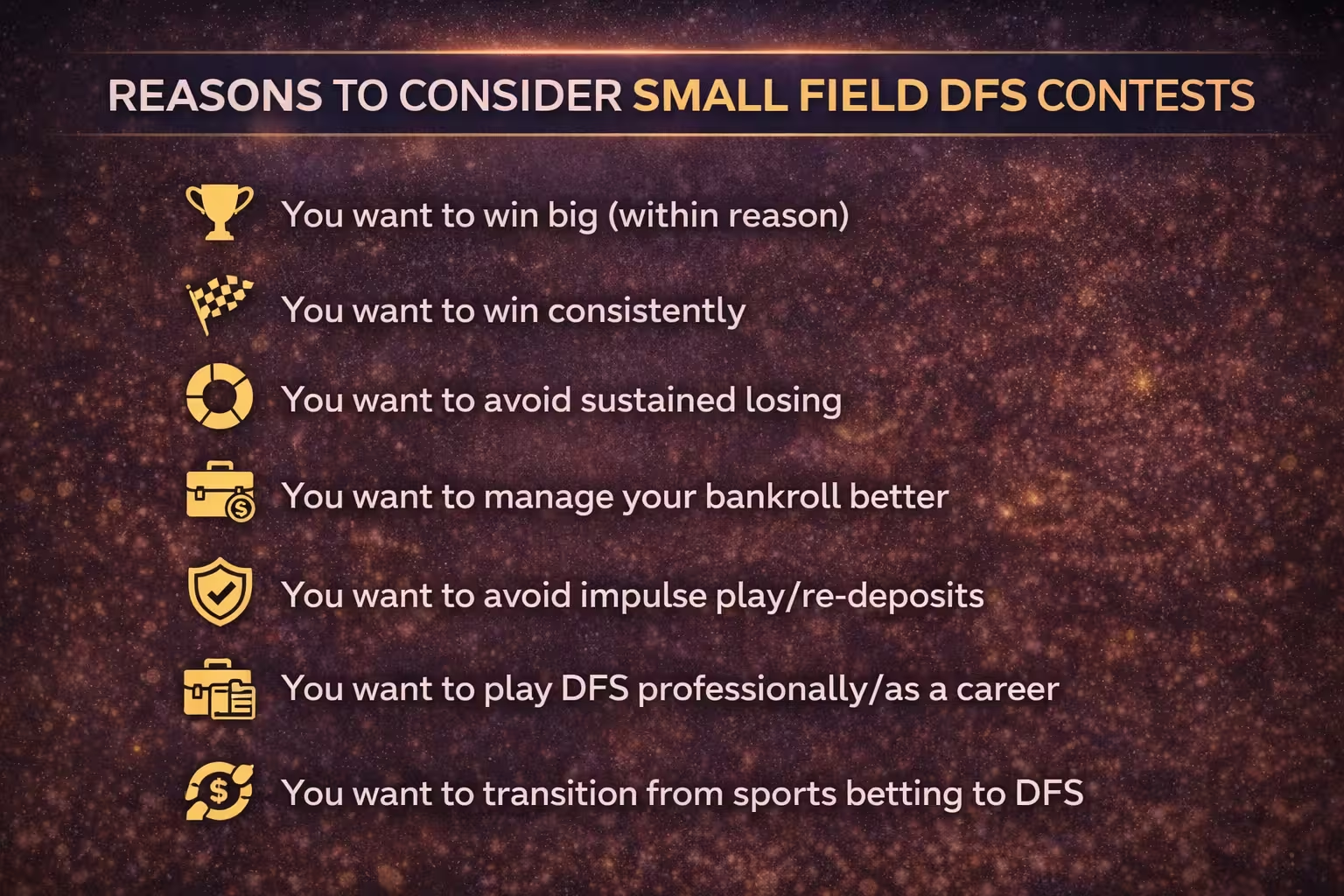
If any or most of the above are boxes you find yourself checking, it might be a good idea to consider ditching the huge takedown dream.
The best part is you can still cash in via smaller DFS contests. Your odds of doing so are boosted by default, while you can stack big wins of hundreds, if not thousands, of dollars.
How much you win and how consistently will still require sound strategy, the right plays, and a little bit of luck. But straying from the high dollar and ultra-competitive contests is the first step.
How Sharp Players are Reallocating Their Entries
Life is all about balance. It’s the same when it comes to sports betting, and it definitely is the same for daily fantasy sports as well.
You can still have a piece of cake or eat a burger. Just eat some veggies and fruit and work out a bit. You can throw a huge parlay at the wall. Just stick to straight bets the rest of the time.
And you can still play the Milly Maker or other big contests. Just balance it out with a structured approach, whether that be small field DFS contests or cash games.
The top players in DFS are already doing this and have been for years. Here’s what they do:
- Migrate most of their action to small fields and cash games (60-80%)
- Target GPPs selectively for upside, but pick their spots
- Approach contest selection as a skill, not a necessity
- Look at DFS lineups as individual investments, not volume deployment
The point? You can shoot for the moon, just make sure you’re not using all (or even most) of your rockets to get there.
Keep things balanced, controlled, accounted for, and structured. If you can do that, you will improve your odds of winning sustainably.
Large Field vs. Small Field – What’s the Better Path in DFS?
The important thing to take away is that massive GPPs aren’t really for you. They actually exist to take advantage of you.
Think about it; the Milly Maker contest is 149,000 entries at $25. That’s $3,750 for one person to max it, and you can still fail to cash even a single lineup. For the entire contest, that’s $3,725,000, with the DFS site likely taking a 10-15% rake (up to $558,750).
Needless to say, simply by the masses participating, DFS sites are raking in the cash. You still get your shot at the ultimate reward, but the math ultimately isn’t math-ing.
Small DFS contests restrict your spending, allow you to build better lineups, and allow you to face less competition. They inherently put a greater emphasis on skill and research, rather than impulse, randomness, and volume.
Someone is going to win those big contests. But it takes an awful lot of luck, some craziness, and an insane amount of lineups, even for the chance to get there.
Ultimately, you can still play both. But for sustained winning, more frequent shots at big wins, and a stop to brutal losing streaks, smaller DFS contests are without a doubt the better path.