The Real Reasons Players Prefer Certain Casino Platforms

Most players say they choose an online casino because of the bonus.
That answer sounds logical. It’s also usually wrong.
If bonuses were the real reason, players would constantly jump from platform to platform chasing the biggest headline offer. Instead, most players settle into one or two casinos and rarely leave—sometimes for years—even when better bonuses are clearly available elsewhere.
So what’s really going on?
The truth is, casino loyalty isn’t driven by math. It’s driven by emotion, memory, and risk avoidance. Players remember how a casino made them feel the first time they withdrew. They remember whether the site felt smooth or stressful, simple or confusing. And they remember whether they ever had to worry about getting paid.
These factors rarely show up on comparison tables, but they quietly dictate where players deposit again and again.
In this article, we’re pulling back the curtain on the real reasons players prefer certain casino platforms—and why once a casino earns trust, speed, and comfort, bonuses stop mattering nearly as much as the industry wants you to believe.
If you’ve ever wondered why some casinos keep winning loyal players while others fade fast, this is where the answers actually live.
Trust Is the Foundation (Even If Players Don’t Say It Out Loud)
Trust is the invisible currency of online gambling.
Players rarely describe their decision-making in terms of trust, but it governs nearly every action they take. Before a player ever thinks about game selection, bonuses, or loyalty rewards, they’re asking one unspoken question:
“Is this casino going to treat me fairly when it matters?”
That question becomes especially loud the moment real money is on the line.
Online casinos operate in an environment where players assume risk by default. There’s no physical building. No pit boss. No cage window. Everything hinges on belief—and casinos either reinforce that belief or quietly erode it.
Trust doesn’t come from flashy marketing. It comes from consistency over time.
Signals players subconsciously associate with “safe” casinos include:
- Recognizable brand names they’ve heard before
- Years of uninterrupted operation
- Clearly written, easy-to-find terms and conditions
- Established licensing from respected regulators
- Payment processors they already trust
- A track record of honoring withdrawals without friction
Once trust is established, behavior changes. Players deposit more confidently. They wager without second-guessing. And most importantly, they stop shopping around.
On the flip side, casinos that feel unpredictable—even if they’re technically legitimate—create mental friction. Players hesitate. They play smaller. They eventually leave.
In online gambling, trust isn’t built through promises. It’s built through repetition—and the casinos that understand this are the ones players quietly stick with long after the bonus hype fades.
Withdrawal Speed Changes Everything

Players can forgive almost anything—except slow payouts.
Winning feels exciting in the moment, but the withdrawal process is where belief turns into trust. It’s the point where a casino either proves it’s legitimate or introduces doubt that never fully goes away.
Fast withdrawals don’t just move money quicker. They remove anxiety.
The first successful payout is a psychological milestone for players. It tells them the system works, the casino plays fair, and their money isn’t trapped behind hidden conditions. Once that barrier is broken, everything feels easier—future deposits included.
Slow withdrawals do the opposite. Even when a casino eventually pays, delays plant a seed of suspicion. Players start watching balances more closely, reading terms more carefully, and playing with hesitation instead of confidence.
Why withdrawal speed matters more than players realize:
- It confirms that winnings are actually accessible
- It reduces fear of account reviews or payment blocks
- It creates emotional relief after a win
- It builds momentum toward repeat play
- It becomes the story players tell others—good or bad
This is why casinos that prioritize same-day or near-instant payouts consistently earn stronger loyalty than platforms offering bigger bonuses but slower cash-outs.
In the long run, speed doesn’t just pay players faster—it keeps them playing.
User Experience Quietly Decides Winners
Most players never talk about user experience—but it influences almost every decision they make.
A casino platform either feels smooth or it doesn’t. And when it doesn’t, players rarely stop to diagnose the problem. They just feel friction, frustration, or fatigue—and eventually drift elsewhere.
User experience isn’t about being flashy. It’s about removing mental effort.
When players log in, they want to find their games quickly, understand their balance instantly, and move money without confusion. Every extra click, delay, or unclear label introduces doubt. Over time, that doubt compounds.
The best casino platforms disappear in the background. Players aren’t thinking about the interface—they’re focused on the game.
Common UX issues that quietly drive players away:
- Overcrowded lobbies packed with promotions
- Slow-loading games, especially on mobile
- Confusing bonus progress or wagering displays
- Cashier pages that feel cluttered or inconsistent
- Logins that fail, time out, or require constant re-verification
Mobile experience is especially critical. Many players now gamble primarily on their phones, and platforms that aren’t fully optimized lose players before a single bet is placed.
Good UX builds confidence without saying a word. It tells players the casino is professional, reliable, and worth their time.
Bad UX does the opposite—and no bonus is large enough to fix that feeling once it sets in.
In a competitive market, the casinos that win aren’t always the loudest. They’re the ones that make playing feel effortless.
Game Selection Beats Game Count Every Time
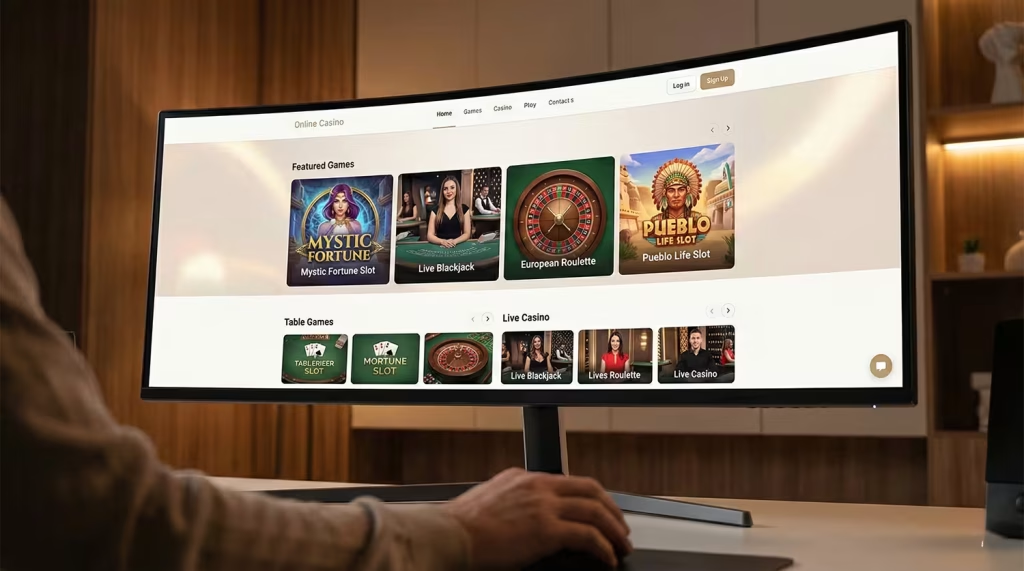
“Thousands of games” sounds impressive—until players realize most of them don’t matter.
In practice, players don’t explore endlessly. They gravitate toward what they already know, what they trust, and what’s treated them well in the past. A massive game library only helps if the right games are easy to find.
Familiarity drives confidence. Confidence loyalty.
Most players develop a short list of go-to games within their first few sessions. Those choices shape where they continue to play. If a casino doesn’t offer those favorites—or buries them under endless filler—it loses relevance fast.
Rather than counting games, experienced players evaluate quality and access.
What actually keeps players coming back:
- Recognizable slot franchises they already enjoy
- Trusted providers with consistent performance
- Live dealer tables that feel professional and fair
- Game volatility and RTP profiles they understand
- Smooth performance without lag or crashes
Live casino offerings are especially influential. A strong live blackjack or roulette experience can outweigh hundreds of forgettable slots, particularly for players who value realism and trust.
The most successful platforms don’t overwhelm players with choice. They guide them. They surface popular titles, highlight trusted providers, and make favorites easy to return to.
In the end, loyalty isn’t built on variety alone. It’s built on access to games players already trust—and the confidence that those games will behave exactly as expected every time they spin or deal.
Bonuses Matter—But Only When They’re Simple
Bonuses still get attention—but they no longer earn blind trust.
Most players have been burned at least once by a bonus that looked generous on the surface and punishing underneath. Over time, that experience reshapes behavior. Players stop chasing the biggest offers and start looking for bonuses that feel fair.
The shift is subtle, but it’s real. Clarity now beats size.
Why Players Are Skeptical of Big Bonuses
Large welcome bonuses often come with complex wagering requirements, restrictive game contributions, and withdrawal caps that don’t become obvious until it’s too late. When players feel tricked, the damage is immediate—and usually permanent.
A complicated bonus doesn’t just disappoint. It creates doubt about the casino itself.
Players would rather receive a smaller incentive they understand than a massive offer they don’t trust.
Bonus features players consistently respond to:
- Low or reasonable wagering requirements
- Clear, easy-to-track progress indicators
- Straightforward max cash-out terms
- Minimal restrictions on eligible games
- Consistent reload or loyalty bonuses
The best bonuses feel like a reward for playing—not a puzzle to solve.
Casinos that prioritize simplicity signal confidence. They’re saying, “We don’t need tricks to keep you here.” And for players who value trust, that message is far more powerful than any headline number.
In today’s market, the smartest casinos don’t shout their bonuses. They explain them—and that’s exactly why players listen.
Payment Methods Signal Legitimacy

Before players trust a casino with their time, they trust it with their money.
The moment a player opens the cashier page, they’re making a judgment call. Not consciously—but instinctively. The payment methods on display either reduce anxiety or amplify it.
Familiar options feel safe. Unknown or limited options raise questions.
Players associate established payment providers with accountability. If PayPal, Skrill, or a major bank transfer option is available, players assume there’s oversight involved. That assumption alone lowers perceived risk.
Cryptocurrency has also shifted from “sketchy” to strategic. For many players, Bitcoin and Ethereum signal speed, privacy, and modern infrastructure—especially when withdrawals are processed quickly and transparently.
What matters most isn’t the sheer number of payment options, but how recognizable and well-integrated they feel.
Payment features that quietly increase confidence:
- Well-known e-wallets and processors
- Clear deposit and withdrawal limits
- Transparent processing times
- Consistent availability across deposits and withdrawals
- No hidden fees revealed at cash-out
A clean, straightforward cashier tells players the casino is organized, prepared, and financially stable.
When payment systems feel professional, players assume everything else behind the scenes is too. And once that assumption takes hold, depositing becomes less of a decision—and more of a habit.
In online casinos, legitimacy isn’t claimed. It’s inferred.
Customer Support Is the Safety Net Players Hope They Never Use
Most players don’t judge customer support by how often they use it.
They judge it by whether it feels available when things go wrong.
In online gambling, support represents accountability. It’s the human backstop in a digital environment where money, bonuses, and withdrawals can all trigger stress. Even if a player never contacts support, knowing it exists—and looks competent—changes how safe a casino feels.
Live chat availability is especially important. It signals immediacy. Players don’t want to wait days for an email reply when real money is involved. They want reassurance, clarity, and resolution in real time.
Tone matters too. Players can instantly tell when support is scripted versus genuinely helpful. Polite but robotic responses undermine confidence. Clear, direct answers build it.
Support warning signs players notice quickly:
- No live chat option
- Email-only support with vague response times
- Repetitive, copy-paste replies
- Difficulty escalating real issues
- Limited or outdated help documentation
Good support rarely draws attention to itself. It resolves issues quietly and efficiently, reinforcing the idea that the casino is competent and fair.
Bad support does the opposite—it turns small problems into lasting distrust.
In the end, customer support isn’t about fixing issues. It’s about preventing fear. And casinos that understand this earn loyalty long before a player ever types a message.
Social Proof Quietly Shapes Player Behavior

Players like to believe they make independent decisions.
In reality, they’re constantly absorbing signals from other players—sometimes without realizing it. Social proof doesn’t need to be loud or persuasive to work. It just needs to exist.
A single bad story can outweigh a dozen marketing claims. One credible recommendation can tip a decision that was already leaning in a certain direction.
Where Players Look for Validation (Even If They Don’t Admit It)
Players don’t blindly trust reviews, but they scan for patterns. They look for consistency in feedback—especially around payouts, support, and fairness.
Common sources players quietly consult:
- Casino review and comparison sites (check out our reviews here)
- Gambling forums and discussion boards
- Reddit threads and comment sections
- YouTube and Twitch streamers
- Social media clips and casual mentions
What matters most is authenticity. Polished endorsements feel like ads. Messy, real-world commentary feels believable—even when it’s imperfect.
Social proof also reinforces trust after signup. When players see others having normal, uneventful experiences—playing, withdrawing, and continuing to play—it reduces anxiety. Silence is often more reassuring than hype.
Casinos can’t fully control social proof, and that’s precisely why it works.
In a space built on uncertainty, players anchor themselves to what others have already experienced. And once a casino earns that quiet validation, it becomes much harder for players to walk away.
Consistency Beats Innovation
New features get attention. Consistency keeps players.
In theory, innovation sounds exciting—new game mechanics, experimental bonuses, flashy interfaces. In practice, most players value predictability far more than novelty, especially when real money is involved.
Consistency reduces cognitive load. Players know where to click, how long withdrawals take, and what rules apply. There are no surprises—and in online gambling, that’s a feature, not a flaw.
Casinos that constantly change layouts, terms, or systems introduce uncertainty. Even small changes can make players hesitate. When familiarity disappears, confidence follows.
What players really want is reliability.
They want a platform that behaves the same way today as it did yesterday. They want games that load properly, bonuses that track correctly, and payouts that arrive on schedule—every time.
The most successful casinos evolve slowly and intentionally. They improve performance behind the scenes while preserving the experience players already trust.
Innovation has its place, but it only works when it doesn’t disrupt expectations. In the long run, casinos don’t win by being the most exciting. They win by being the most dependable.
Why Players Rarely Switch Once They’re Comfortable

Once a casino earns a player’s trust, something powerful happens: resistance to change sets in.
At that point, the decision to stay isn’t about finding the best option—it’s about avoiding unnecessary risk. Even if another casino looks better on paper, switching introduces uncertainty. And most players would rather stick with a familiar platform than gamble on a new one.
Comfort creates momentum.
Players know where everything is. Their payment methods are saved. They understand the rules, the pacing, and what to expect when it’s time to withdraw. That familiarity reduces mental effort—and mental effort is something players actively avoid.
The Psychological Friction of Switching Casinos
Switching casinos isn’t just a technical step. It’s an emotional one. Players fear unknown terms, delayed payouts, or unexpected verification requests.
Common reasons players stay put:
- “This casino has always paid me”
- “I don’t want to relearn a new platform”
- “My account is already set up”
- “I know what to expect here”
- “I don’t want to risk withdrawal issues elsewhere”
Over time, loyalty becomes passive. Players don’t actively choose the casino again—they simply never choose to leave.
This is why casinos that deliver smooth early experiences dominate long-term. Once comfort sets in, bonuses lose leverage, competitors fade into noise, and switching feels unnecessary.
In online gambling, retention isn’t earned through persuasion. It’s earned through familiarity—and once that familiarity is in place, it’s incredibly difficult to disrupt.
Conclusion: Casino Loyalty Is Emotional, Not Logical
Players don’t choose casinos the way spreadsheets suggest they should. On the surface, it looks like a numbers game—bigger bonuses, more games, flashier features. But in practice, loyalty is built on something far less visible and far more powerful: trust.
Players stay where they feel safe. Where withdrawals are fast. Where the platform feels familiar instead of frustrating. Where they don’t have to wonder what happens when it’s time to cash out.
Once a casino proves it can handle money responsibly, everything else becomes secondary. Bonuses stop being leverage. Innovation becomes optional. Competitors fade into background noise. That’s why the same platforms keep winning the same players year after year.
For players, the lesson is simple: pay attention to how a casino behaves, not how it markets itself. Early experiences—especially withdrawals—tell you everything you need to know.
For casinos, the formula is even clearer. Remove fear first. Add incentives second.
In online casino gambling, confidence is the real currency. And the casinos that earn it don’t need to shout—they’re already winning.