
Top 10 Prediction Markets to Watch in 2026
Prediction markets are no longer a fringe curiosity for political junkies or crypto diehards. They’re quietly becoming one of the most accurate—and controversial—ways to forecast the future. And in 2026, they’re sitting at a crossroads.
At a glance, prediction markets look simple: people buy and sell contracts based on what they think will happen. But under the surface, they’re doing something far more powerful. They aggregate belief, information, incentives, and timing into a single price—often beating polls, pundits, and even expert models.
That’s why regulators are nervous. It’s why sportsbooks are paying attention. And it’s why traders, bettors, and analysts are starting to treat prediction markets less like a novelty and more like a signal.
But here’s the catch: not all prediction markets are worth your time. Some are liquid and sharp. Others are thin, confusing, or restricted. A few are shaping the future of event trading. Most won’t survive the next regulatory or market cycle.
This guide breaks down the 10 prediction markets that actually matter heading into 2026—where the smart money is watching, what’s changing fast, and how to tell signal from noise before everyone else catches on.
How We Ranked These Prediction Markets
Prediction markets live or die on structure, not hype. A clever contract on a bad platform is still a bad market. That’s why this list isn’t ranked by brand recognition alone—or by how exciting the markets look at first glance.
Instead, we evaluated each platform the same way an experienced trader or bettor would: by asking whether it actually delivers usable signal, fair pricing, and a realistic way to participate without unnecessary friction.
Here’s what mattered most in our rankings:
- Liquidity & market depth – Can you get in and out without moving the price? Tight spreads and consistent volume matter far more than flashy market ideas.
- Market quality & clarity – Are contracts clearly worded? Are outcomes unambiguous? Vague resolution rules are one of the fastest ways to lose money.
- Settlement & dispute process – The best platforms obsess over how markets settle—what sources are used, how edge cases are handled, and what happens if reality doesn’t fit neatly into a yes/no box.
- Regulatory access & reliability – A great market doesn’t help if you can’t legally trade it where you live, or if it can disappear overnight due to enforcement pressure.
- User experience & friction – This includes onboarding, KYC, wallet setup (if applicable), order placement, mobile usability, and withdrawal speed.
- Innovation & forward momentum – We favored platforms that are expanding market types, improving tooling, or positioning themselves for broader adoption in 2026—not ones standing still.
In short, this ranking reflects where informed users can realistically trade, learn, and extract signal today—while still keeping an eye on what’s coming next.
Top 10 Prediction Markets to Watch in 2026
2026 is shaping up as a breakout year for prediction markets. Some platforms are becoming more mainstream and regulated, others are innovating with new market types or decentralized infrastructure, and a few are quietly building deep liquidity in niche categories. Whether you’re a seasoned trader, a bettor, or just curious about where crowd forecasts intersect with real-world outcomes, these are the markets worth your attention.
Below each entry you’ll find clear, bite-sized insights and concrete reasons why it matters — plus suggestions for visuals that boost reader understanding and retention.
1) Kalshi — Regulated U.S. Event Contracts
A U.S.-regulated prediction market turning real-world events into tradeable contracts. Kalshi is where prediction markets are colliding head-on with regulators—and going mainstream.
Why It’s a Must-Watch
- U.S. CFTC-regulated contract exchange
- Expanding beyond politics into economic and weather outcomes
- Growing interest from mainstream traders
Key Features
- ✔ Regulated and compliant
- ✔ Fiat rails (no crypto wallets needed)
- ✔ Clear settlement rules
What to Watch in 2026
- Sports-adjacent markets (if regulatory pressure eases)
- Liquidity growth on headline events
- State jurisdiction shifts
Best For
- Traders who want a regulated, transparent experience
2) Polymarket — Crypto-Native Prediction Trading
The most recognizable crypto-native prediction market, known for deep liquidity and headline-driven events. Polymarket often reflects real-time sentiment faster than polls or news.
Why It’s a Must-Watch
- One of the largest names in prediction markets
- Broad range of events from politics to culture
- Deep liquidity on major outcomes
Key Features
- ✔ Global access (where allowed)
- ✔ Live market feed with dynamic pricing
- ✔ Strong community participation
What to Watch in 2026
- Regulatory responses in key jurisdictions
- Liquidity on new categories (AI milestones, geopolitics)
- UX improvements to onboard non-crypto users
Best For
- Users comfortable with crypto wallets and DeFi
3) PredictIt — Political Market Mainstay
A long-running favorite for political forecasting with strict position limits. PredictIt remains a go-to platform during major U.S. election cycles.
Why It’s a Must-Watch
- High recognizability in political circles
- Simple, approachable UI
- Consistent during election cycles
Key Features
- ✔ Focus on U.S. political outcomes
- ✔ Low position limits (keeps markets accessible)
- ✔ Relatively stable rules
What to Watch in 2026
- Post-election volume trends
- Extensions into policy or governance questions
- Integration with analysis tools
Best For
- Political betting and forecast enthusiasts
4) Robinhood / LedgerX — Prediction Contracts in Brokerages
Traditional finance dipping into prediction-style contracts. If brokerages scale event trading, this could be the biggest distribution shift in the space.
Why It’s a Must-Watch
- Traditional brokerages experimenting with event contracts
- Opens prediction markets to millions of users
- Signals broader financial acceptance
Key Features
- ✔ Familiar UX for mainstream investors
- ✔ Potentially big distribution
- ✔ Tied to existing trading accounts
What to Watch in 2026
- Expansion of contract types
- Integration with mobile alerts
- Liquidity strategies
Best For
- Traders who prefer regulated brokerage environments
5) Manifold Markets — Play Money, High Signal
A play-money forecasting platform that still produces surprisingly sharp signals. Manifold is often where trends appear before they hit real-money markets.
Why It’s a Must-Watch
- Play-money markets that often predict real outcomes
- Excellent front line for trend discovery
- Huge variety of niche topics
Key Features
- ✔ Fun, low-risk learning
- ✔ Viral market creation
- ✔ Strong community
What to Watch in 2026
- Trends that later show up on real-money markets
- User growth in specific categories
- API integrations with analytics
Best For
- Beginners and trend scouts
6) Insight Prediction — Underrated & Growing
An underrated platform covering a wide range of real-world events. Insight Prediction is one to watch if liquidity continues to improve.
Why It’s a Must-Watch
- Covers politics, sports, and global events
- Less crowded than bigger exchanges
- Opportunity to find early liquidity
Key Features
- ✔ Wide event selection
- ✔ Clean UI
- ✔ Accessible outcomes
What to Watch in 2026
- Liquidity depth increases
- Partnership announcements
- Market expansion by category
Best For
- Exploratory traders seeking variety
7) Hypermind — Forecasting for Serious Analysts
A forecasting-focused market emphasizing accuracy over trading hype. Hypermind attracts analysts who care more about being right than being flashy.
Why It’s a Must-Watch
- Focuses on numeric forecasting rather than simple binary
- Attracts expert forecasters
- Signal quality is often high
Key Features
- ✔ Precision forecasting
- ✔ Multiple scenario markets
- ✔ Expert participation
What to Watch in 2026
- Application of forecasting models to real trading
- Academic and industry attention
- API output for professional tools
Best For
- Analysts and data-driven forecasters
8) Omen (Gnosis Ecosystem) — Decentralized, Flexible Markets
A decentralized prediction market built on Gnosis’ conditional tokens framework. Omen offers maximum flexibility—for users comfortable with DeFi friction.
Why It’s a Must-Watch
- Permissionless market creation onchain
- Rich variety of contract types
- Deep DeFi integration
Key Features
- ✔ Decentralized architecture
- ✔ Open to anyone to create markets
- ✔ Conditional tokens model
What to Watch in 2026
- UX innovations that lower UX friction
- Liquidity mining / incentive programs
- Cross-chain expansion
Best For
- DeFi enthusiasts and builders
9) Zeitgeist — Polkadot Prediction Protocol
An experimental prediction market ecosystem built on Polkadot. Zeitgeist is pushing new ideas in liquidity design and governance.
Why It’s a Must-Watch
- Built on Polkadot’s modular chain stack
- Experimental governance and market mechanics
- Strong Web3 roadmap
Key Features
- ✔ Advanced liquidity features
- ✔ Chain-native design
- ✔ Emerging governance tools
What to Watch in 2026
- Adoption curves
- Governance innovations
- Liquidity incentives
Best For
- Advanced users exploring next-gen markets
10) Augur — Legacy Protocol with Reboot Potential
One of the earliest decentralized prediction markets. Augur remains a legacy protocol to watch if reboot efforts successfully fix UX and liquidity issues.
Why It’s a Must-Watch
- One of the first decentralized prediction platforms
- Still referenced and forked across DeFi
- Community watching for UX and oracle improvements
Key Features
- ✔ Decentralized settlement
- ✔ Secure oracle mechanisms
- ✔ Protocol longevity
What to Watch in 2026
- UX improvements
- Oracle accuracy upgrades
- Renewed liquidity campaigns
Best For
- Long-term DeFi participants
How to Evaluate Any Prediction Market Like a Pro
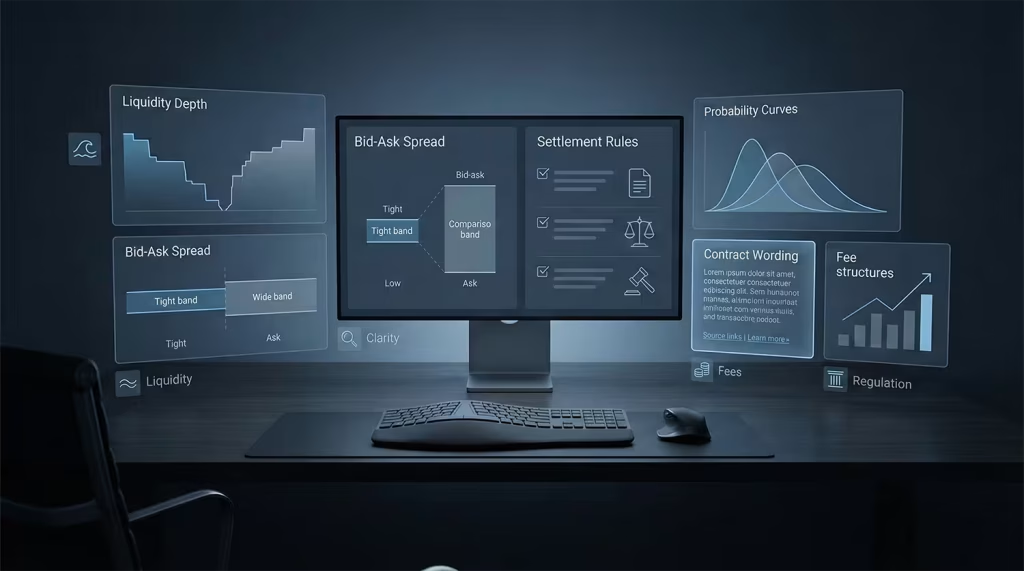
Prediction markets reward people who evaluate market quality, not just outcomes. Two platforms can offer the same event, but the experience—and your results—can be wildly different depending on liquidity, wording, and settlement rules.
Before placing a single trade, sharp users run through a simple mental checklist.
1) Liquidity: Can You Enter and Exit?
Liquidity is the single most important factor in any prediction market.
A contract might look profitable, but if the order book is thin, you’ll pay for it through wide spreads or slippage.
What strong liquidity looks like:
- Tight bid-ask spreads (often just 1–2¢ on active markets)
- Consistent volume across price levels
- Ability to close a position without moving the market
Red flags:
- Huge gaps between buy and sell prices
- Volume concentrated in only one outcome
- Price jumps caused by small orders
Rule of thumb: If you can’t exit cleanly, you don’t really have a trade.
2) Contract Clarity: Does the Question Leave Room for Confusion?
Ambiguous contracts are where prediction markets quietly take money from new users.
Sharp platforms obsess over precise wording and edge cases.
Before trading, check:
- Exact phrasing of the question
- Timeframe and cutoff dates
- What source determines the outcome
- How partial or unexpected outcomes are handled
Common traps:
- Vague political phrasing (“wins,” “leads,” “controls”)
- Undefined data sources
- No guidance on postponements or cancellations
3) Settlement Rules: How Does This Actually Resolve?
Settlement is where theory meets reality—and where bad platforms fall apart.
The best markets clearly define who decides, how, and when.
Look for platforms that:
- Name official resolution sources upfront
- Publish timelines for settlement
- Explain dispute and appeal processes
Avoid markets where:
- Resolution depends on informal consensus
- Rules change mid-market
- Edge cases aren’t addressed
4) Fees & Friction: What’s the Real Cost of Trading?
Prediction markets often look cheap—until you factor in friction.
Evaluate the full cost:
- Trading fees or spreads
- Withdrawal fees
- KYC delays
- Wallet or gas fees (for crypto platforms)
Even small costs matter if you’re trading frequently or at scale.
5) Regulatory & Access Risk: Will This Market Still Exist Tomorrow?
A profitable market doesn’t help if it disappears overnight.
Ask yourself:
- Is this platform regulated, restricted, or operating in a gray area?
- Are users in your location allowed to trade?
- Has the platform faced enforcement action before?
Markets with regulatory clarity tend to:
- Offer better fiat on-ramps
- Provide clearer settlement rules
- Last longer through market cycles
6) Signal vs Noise: Is This Market Actually Informative?
Not every prediction market produces good signal.
Some reflect real information. Others reflect hype, ideology, or low-effort speculation.
Signs of high-quality signal:
- Prices adjust quickly to new information
- Liquidity grows around major updates
- Diverse participation (not just one crowd)
Signs of noise:
- Price stagnation despite news
- One-sided order flow
- Meme-driven volatility
Pro Takeaway
Great prediction market users don’t ask, “What do I think will happen?” They ask, “Is this a good market to trade?”
If you evaluate liquidity, clarity, settlement, friction, and signal quality first, you’ll avoid most of the traps that catch new traders—and you’ll start seeing prediction markets for what they really are: structured information systems with prices attached.
2026 Trends That Will Shape Prediction Markets

Prediction markets don’t evolve in isolation. They move alongside regulation, technology, and cultural acceptance. In 2026, a few forces are converging that will likely determine which platforms thrive, which stagnate, and which disappear altogether.
Regulation Will Remain the Main Battleground
The biggest story isn’t growth—it’s who gets to offer these markets, and where.
Regulators are still deciding whether prediction markets are:
- financial instruments,
- a form of gambling,
- or something entirely new that doesn’t fit existing frameworks.
What this means in practice:
- State vs federal tensions will continue, especially around event contracts
- Some platforms will pause or limit markets preemptively
- Regulated exchanges may gain trust, but move slower
Sports-Style Event Contracts Will Push Boundaries
Sports-adjacent markets are the fastest way prediction markets attract new users—and the fastest way they attract scrutiny.
These contracts feel familiar to bettors, but operate very differently under the hood.
Why this matters in 2026:
- Sports outcomes drive volume and attention
- The line between “forecasting” and “betting” gets blurry
- How regulators respond here will shape the entire industry
Weather & Climate Markets Will Gain Serious Attention
What once felt academic is becoming practical.
Weather, climate, and environmental outcomes are increasingly tradable—especially for hedging and forecasting purposes.
Expect growth in markets tied to:
- Extreme weather events
- Seasonal temperature ranges
- Climate policy milestones
- Energy and utility impacts
These markets attract non-speculative participants, which often improves signal quality.
Ethics, Information, and Insider Concerns Will Intensify
As prediction markets become more accurate—and more influential—the ethical questions get louder.
Key debates gaining traction:
- Who is allowed to trade on sensitive information?
- When does forecasting become influence?
- Should some markets exist at all?
Platforms will increasingly need clear guardrails to maintain legitimacy.
Traditional Finance Will Continue Moving In
Perhaps the most important long-term trend: prediction markets are being noticed by people with distribution.
When brokerages and exchanges experiment with event-style contracts, it signals validation—and pressure.
Why this matters:
- Mainstream UX expectations rise
- Liquidity could scale rapidly
- Smaller platforms may struggle to compete
2026 won’t be defined by whether prediction markets grow—but by how they mature. Platforms that balance clarity, compliance, and innovation will survive. The rest will be squeezed out by regulation, friction, or irrelevance.
Final Take: Where Prediction Markets Go From Here
Prediction markets are no longer just a novelty or a niche experiment. Heading into 2026, they’re evolving into real information markets—places where price often reflects reality faster than headlines, polls, or expert opinion.
But this space is still uneven. Some platforms are building deep liquidity, clear settlement rules, and legitimate pathways for mainstream users. Others are chasing hype without solving the fundamentals. Knowing the difference matters.
The smart approach isn’t to chase every new market—it’s to understand how these platforms work, why certain markets produce better signal, and where regulatory and structural risks still exist. That’s what separates casual speculation from informed participation.
If you’re new, start with clarity and accessibility. If you’re experienced, focus on liquidity and market quality. And if you’re watching from the sidelines, pay attention anyway—because prediction markets are quietly influencing how people think about politics, sports, weather, and even global events.
By the time prediction markets fully hit the mainstream, the edge will already be gone. The best position, as always, is early—but informed.
Who Will Win the Oscars Best Picture? Updated Odds & Market Breakdown
The 2026 Golden Globes are in the rearview mirror, which means it is officially Oscars season. Now that we have some hardware being handed out at several awards and the rumor mill has run wild, we can start taking a serious look at the latest Academy Awards odds.
The red carpet doesn’t roll out for the 2026 Oscars until March 15th, so we still have time to research and formulate some winning wagers.
Several Oscars betting markets stand out, but the big one forever remains Best Picture. BetMGM has Best Picture odds available to the public, with one clear favorite pulling in ahead of the rest. But based on what went down at the Golden Globes and other awards shows, is there a better option for entertainment bettors?
Let’s scan the latest Best Picture betting odds, discuss the top favorite, and identify some viable pivots. I’ll even tough on some longshot bets, some Oscars betting tips, and wrap things up with a final Best Picture prediction.
Current Best Picture Odds (2026)
| Best Picture Nominee | Odds to Win Best Picture |
|---|---|
One Battle After Another | -300 |
Sinners | +333 |
Hamnet | +1000 |
Marty Supreme | +2500 |
Sentimental Value | +5000 |
Bugonia | +6600 |
Frankenstein | +6600 |
The Secret Agent | +8000 |
Train Dreams | +8000 |
F1 | +10000 |
One Battle After Another comes in as the clear betting favorite to win Best Picture at the 2026 Academy Awards. The Leonardo DiCaprio vehicle is a riveting cat-and-mouse shakedown that starts in arguably contrived fashion, but sets up exceptional characters and takes you on a tense ride that keeps you strapped into your seat until the very end.
While it makes sense as the Best Picture favorite, there could be some wiggle room for an upset. It isn’t priced at -1000 or anything insane, after all, while it does have some weakness to its armor.
That puts top contender Sinners in play, especially when you consider that the Michael B. Jordan thriller earned an Oscars record 16 nominations.
‘SINNERS’ has broken history as the MOST-NOMINATED FILM OF ALL TIME at the Oscars with 16 nominations
See the full nominees list: https://t.co/IuSVQZPi7d pic.twitter.com/qUzPM49IQ0
— DiscussingFilm (@DiscussingFilm) January 22, 2026
Strength in numbers is certainly a thing, but none of that necessarily guarantees a Best Picture win.
Still, the Academy has spoken. They loved Sinners and if they enjoyed it enough to give it the most nominations for this year – nay, the most nominations of any movie of all-time – then you better believe it’s a threat.
In terms of Best Picture odds, nobody else comes close. This is probably One Battle After Another’s race to lose, and if it doesn’t win, Sinners is almost definitely the one to watch.
That said, at first glance, Hamnet and Marty Supreme do stand out as value bets that just might have legs. To get a better feel of the race to win the Best Picture award, let’s first dive into One Battle After Another’s case as a -300 favorite.
Why One Battle After Another is the Favorite
This was an exceptional movie from a tonal perspective, while the direction was fantastic and the acting was near-perfect. The only knock on this film was that the backstory was fairly unrealistic, while there are a few loose ends in the movie.
That said, we get a genre-blending action drama that takes you on a wild ride, while tugging at emotional strings and touching on relevant political commentary. It’s not your usual Best Picture contender, but that is also partially what makes it so good.
If you want to build a case for this movie, we need more than just numbers. Here is how it’s done at some key film festivals and other award shows:
- Critics’ Choice Award – Winner, Best Picture
- Chicago Film Critics Association Awards – Winner, Best Picture
- Dallas-Fort Worth Film Critics Association Awards – Winner, Best Picture
- Gotham Awards – Winner, Best Feature
- Los Angeles Film Critics Association Awards – Winner, Best Picture
- National Board of Review, USA – Winner, Best Film
- New York Film Critics Circle Awards – Winner, Best Film
- Golden Globes – Winner, Best Motion Picture (Musical or Comedy)
There’s more to add to the list, but these are the biggest ones. One Battle After Another has been a regular contender for top movie, and it has knocked it out of the park against elite competition routinely over the past year.
All roads lead to this movie being the rightful favorite to win at the 2026 Oscars, and the odds back that up.
It’s not just the regular critics at award shows, either. RottenTomatoes.com features consensus ratings, with the critics producing a 94% score and regular viewers generating an 85% rating.
Critics and moviegoers alike loved this movie, and it is pulling into the Oscars with positive online feedback and reasonable momentum after winning again at the Golden Globes.
Why It Might Not Win
If you’re looking for some key takeaways as far as going against the grain, keep in mind that a -300 price doesn’t mean a win is a lock. This is the obvious frontrunner, but we have seen Oscars upsets before, and more are sure to come.
More specifically, the fact that Sinners garnered 16 nominations and comes in with the second-best odds to win Best Picture is somewhat alarming. If there’s a red flag for this bet, that’s it.
The other thing is, this movie doesn’t fit the mold of your usual Oscar-winning movie. The occasional oddball does get the nod, but there’s no denying that not everyone agrees that One Battle After Another checks the usual boxes of a Best Picture winner.
Top Best Picture Contenders for 2026

- Sinners (+330)
- Hamnet (+1000)
- Marty Supreme (+2500)
If you’re looking for a realistic Best Picture upset this year, it almost definitely is coming from these three movies, with Sinners pulling in as the very best bet.
Here’s a quick-hitting breakdown for why each of these Best Picture nominees has a shot, and why they probably will fall short:
Sinners
Sinners has a firm public backing thanks to its commercial success, high ratings at movie critic sites, and the record 16 Oscar nominations it received.
Why It Can Win
- 16 nominations and huge
- Huge following + support
- Critical + commercial success
Why It Won’t
- No marquee wins at other award shows
- The horror genre doesn’t fare well at the Oscars
Hamnet
Hamnet is a distant third, but it also pulled in a stellar 11 Oscar nods and is directed by an Academy Award-winning director in Chloe Zhao. In terms of pedigree and production, it’s certainly a viable value bet.
Why It Can Win
- Guided by Oscar winning director
- Has 11 Oscar nominations
- Won best dramatic movie at the Golden Globes
Why It Won’t
- Lacking noteworthy buzz like top contenders
- Lacking many marquee wins in this category
Marty Supreme
Lastly, Marty Supreme is a compelling underdog story and is a loose biopic, which are two things the academy eats up. On top of that, it was well-received by critics and stars Oscar posterboy Timothee Chalamet, while the film has also received numerous nominations.
Why It Can Win
- Features an Oscar-winning lead actor
- Biopic-centric content aligns with Oscar winners
- Smaller nomination count than contenders
Why It Won’t
- Lacking marquee wins at other award shows
- Smaller nomination count than contenders
Each of these Best Picture contenders has a mild case to dethrone One Battle After Another as the top favorite. However, they also all have glaring weaknesses by comparison.
If you’re hunting for a contender worth betting on, Sinners is the only true standout. Historically, movies that led the way with the most total nominations have a very good chance to win Best Picture, and the buzz surrounding this movie is deafening.
Oscar’s Longshots with Serious Legs
- Bugonia (+6600)
- Frankenstein (+6600)
If you want Best Picture longshots that actually have a (slim) chance of winning, I’d start with Bugonia or Frankenstein. Both of these movies were helmed by brilliant directors, featuring massive star power that delivered exceptional acting performances, and were also beautifully shot.
On top of that, they were both critically and commercially well-received. They both have the framework needed to make a strong push, but their Best Picture odds leave a lot to be desired, making them poor bets to actually win.
But Oscars upsets do happen, and sometimes (albeit very rarely) a movie can come out of nowhere to shock the world. Here’s a quick case for both of these movies winning Best Picture this year:
Bugonia
For starters, Bugonia is quite the trip. You should be expecting that if you’re familiar with rising academy darling Yorgos Lanthimos, who probably should have won an Oscar for best director by now.
If you’re unfamiliar, buckle up, as Lanthimos is the king of tension-building. There are certainly points in Bugonia that are unrealistic or even corny, but the vast majority of it plays like a ticking time bomb toward impending doom – but not the kind you hope passes in a hurry.
This high-concept tale of two men seemingly trying to save the world from alien control is equal parts twisted and deeply emotional. Lanthimos succeeds in telling a powerful story here while engaging the audience in an epic dialogue duel between Emma Stone and Jesse Plemons.
The odds are long, but the story is captivating, well-directed, and perfectly acted.
Frankenstein
The situation is similar for Guillermo del Toro’s Frankenstein, which naturally fits like a glove into the Best Picture category. Del Toro himself broke the “horror can’t win” when The Shape of Water got him some Oscars hardware, and some would say he offers a more compelling narrative in this film.
Oscar Isaac and Jacob Elordi combine their efforts to carry a methodical and nuanced spin on the classic tale, one that is both brooding with darkness, but also secure in emotional depth.
The main knock on Frankenstein was that it lacked punch and was a bit slower-moving than some would have preferred. However, it is arguably the best rendition of the story in a live-action film to date, and there’s nothing bad to say about the acting performances, direction, or storytelling.
The bummer? If you weren’t floored by del Toro’s big heave, then you might come away thinking he dropped the ball. I’d disagree, but there is a very strong argument that it didn’t deliver in the face of some legit competition.
Ultimately, neither of these movies are great bets at this point. The 10 Best Picture nominees are locked in, and they have middle-of-the-road odds, at best.
Frankenstein definitely aligns more with what the academy looks for in an Oscar winner, but sometimes it takes something wacky to win the Oscars voters over. Bugonia was subjectively the more engaging and engrossing film (and the one I personally enjoyed more), but it admittedly doesn’t fit the type of movie that generally claims this award.
Looking back at the odds of Best Picture winners in the past, we haven’t seen a plus-money movie win since Parasite (+173) back in 2020. That’s only five years, of course, while Green Book (+210) was a surprise winner the year prior, and Moonlight (+430) blew everyone away back in 2017.
If you want something crazy like Bugonia or Frankenstein – assuming their prices stay where they are – you’ve got another thing coming. While worthy of consideration in my book (and certainly deserving Oscars nominees), their odds are a virtual death sentence.
Key Note: You can bet on slight underdogs like Sinners, but a Best Picture winner has never been beyond +1000. In fact, the biggest recorded underdog is still Braveheart (+600) from 1996.
A Best Picture upset could be in play, but it won’t be coming from Bugonia or Frankenstein, even though they are films you absolutely should watch.
How the Best Picture Odds Got Here: Dissecting Awards Season Market Movement
The path to winning Best Picture is always an interesting one. The process typically starts early in the summer, when Best Picture betting odds drop with sometimes 100 different candidates.
The early Best Picture favorite often doesn’t stand the test of time, but typically, your winner is at least somewhere within the movies with the top 20 odds. Naturally, betting on the Best Picture winner well ahead of time is preferred, but it’s tough to know which movies will generate the most buzz, and which ones will actually snag hardware at the big award shows.
In fact, this year’s Best Picture favorite was not among the top 10 movies in terms of odds initially. That has everything to do with it not officially being released to theaters until August, but it went on to gain major steam and eventually dominate from there.
Before that happened, however, films like Sentimental Value, Jay Kelly, Rental Family, Wicked For Good, and others cracked the top 10. Sentimental Value is still technically in play, but those other movies didn’t even get officially nominated.
Here’s what you need to keep in mind:
- Consider pouncing on early odds (lightly)
- Wait until after August for the second wave of bets
- Consider the final bet after the December 31st cut-off
- Note the award show’s success and online buzz
If you want maximum value, betting on who will win Best Picture when the odds first drop is suggested. The information is lean, and voters aren’t dead set on anything yet, though, so betting lightly is the way to go.
There is a second wave of films that tend to drop in July and August, which gives you a rough checkpoint to reassess the state of the race to win Best Picture. Some of the previous top contenders will stay strong, but you’ll notice others slowly begin to drop off.
Pay attention to smaller movie award shows and film festivals, and they can deliver nuggets of information, buzz, and actual winners that could contribute to your betting strategy.
Tip: Joker was never a big favorite to win until it started heating up after a win at the Venice Film Festival in 2019. It won the Golden Lion, however, and never looked back.
Huge and unexpected moments like that can flip the Best Picture race on its side. We saw something similar when One Battle After Another hit theaters in August, as it killed the hopes of several contenders and gave Sinners its first real, legitimate threat.
Naturally, tracking these big events are vital to your Best Picture betting success. Here are the big ones to note as the film award season heats up:
- Critics Choice Awards
- Screen Actors Guild Awards
- Golden Globes
- Producers Guild of America Awards
All of these can tip the hand of voters to a degree, but none of them have as high an alignment as the Producers Guild of America Awards.
Why? Because the voters are made up of like-minded producers who tend to align with what the academy likes. For the most part, the movie they back is the one that wins at the Oscars as well.
Don’t believe me? Their pick went on to win Best Picture in each of the last five years, and those picks have failed to align just 10 times since 1989.
There’s still time to process everything and finalize your bets, though, as the 2026 Producers Guild of America Awards don’t go down until February 28th.
Smart Best Picture Betting Angles

Now that you know who the top favorite to win Best Picture is, along with some viable contenders, here’s a quick checklist of Best Picture betting tips to keep in mind:
- Note the PGA Award Winner – While not a foolproof strategy, these picks almost always align. The only issue? You have to wait very deep into the process, and it can hurt your chances of securing premium odds.
- Place a Bet Early – Due to buzz and award show wins piecing together a fairly clear picture, it’s good to place eat Best Picture bets. Bet in waves, with your first bet when the original pricing drops, and then consider two more informed bets later in the year.
- Track Nomination Breadth – Movies that pull a lot of nominations carry more weight, are seen more, and get more buzz. The more traction a film is gaining, the better its chances of striking gold at the Oscars.
- Strong Narrative – A huge aspect to the voting process is narrative. Is there an iconic actor or director attached to a successful project? Perhaps the Academy can kill two birds with one stone by picking a worthy winner that also pays respect to a veteran talent.
- Follow Buzz & News – Social media is rife with speculation and rumors, but online buzz can build out new narratives, prop up contenders, and give you clues as to which underdogs may have a fighting chance.
When placing early bets on who will win Best Picture, I’d juggle wagers that either make too much sense to ignore versus films you’re passionate about that return incredible value.
It’s much easier to get behind a movie you personally loved, especially if you also believe it has the legs to go the distance. The bigger the shot early on, the easier it is to hedge that original bet, too.
At the same time, particularly as the process advances month after month, do your best to remove personal bias as you work your way into a fresh bet. Try to establish legit contenders compared to weak challengers, and keep in mind what the Academy tends to prefer in Best Picture candidates.
Who Will Win Best Picture at the 2026 Oscars?
One Battle After Another (-300)
If I am not removing any personal bias, One Battle After Another is the easy pick. It was an extremely tense movie with superb acting and solid storytelling. It has also gained an insane amount of momentum over the last few months.
When looking at the movie itself, the director, the acting, and the content, it does check most of the boxes of an Oscar winner. It also is not that far behind Sinners with 13 nominations.
Even if I remove my own perception of the movie, it enters as the clear favorite according to prediction markets, it has positive momentum, and it has cleaned up on the awards circuit.
The only real challenge is Sinners. It’s a worthy foe, as it could stage the upset based off of cinematic aesthetics, storytelling, direction, and cultural impact. There is absolutely a world where it wins, and nobody should be mad about it.
But the best movie between these two is One Battle After Another. And despite there probably being a sizable gap, you’re getting it at a bit of a discount at its current -300 odds.
Why Small-Field DFS Contests Are Beating Large GPPs
If you’re not first, you’re last. Those are the famous and totally rational words of the iconic Ricky Bobby from Talladega Nights. The fact that I’m quoting Will Ferrell should probably tell you those might not be words to live by, though.
There’s no denying that nailing a “bink” or a “takedown” in daily fantasy sports is the dream. Everyone wants to win the NFL Milly Maker or finish first in some crazy tournament that nets them life-changing money.
The problem? It’s really hard to do. It’s also simply mathematically not very realistic. And the best daily fantasy sports (DFS) players have taken notice. You can still chase those extreme highs, but preventing the extreme lows and soaking up more sustainable wins has become a much more attractive endeavor – even if it works against the public norm.
With that, let’s dig deeper into why small-field DFS contests are winning the day, and why massive GPPs are increasingly left for the fish to fight over.
The DFS Myth That Refuses to Die
One of the biggest problems with daily fantasy sports is expectation and deliverability. New players, especially, can get drawn in by the obsession over huge wins.
In today’s social media-driven age, big wins and massive five-figure payouts are placed directly in front of you. Seasoned players still chasing that big win can get jealous and wonder when their time will come. New players will assume if they work hard enough and long enough, they’ll get that epic takedown, too.
Except it’s never a given, and the reality is that you really just see the high point. The crazy first-place finish and the big cash prize? That’s for everyone to see via screenshots on social media or in Discord communities.
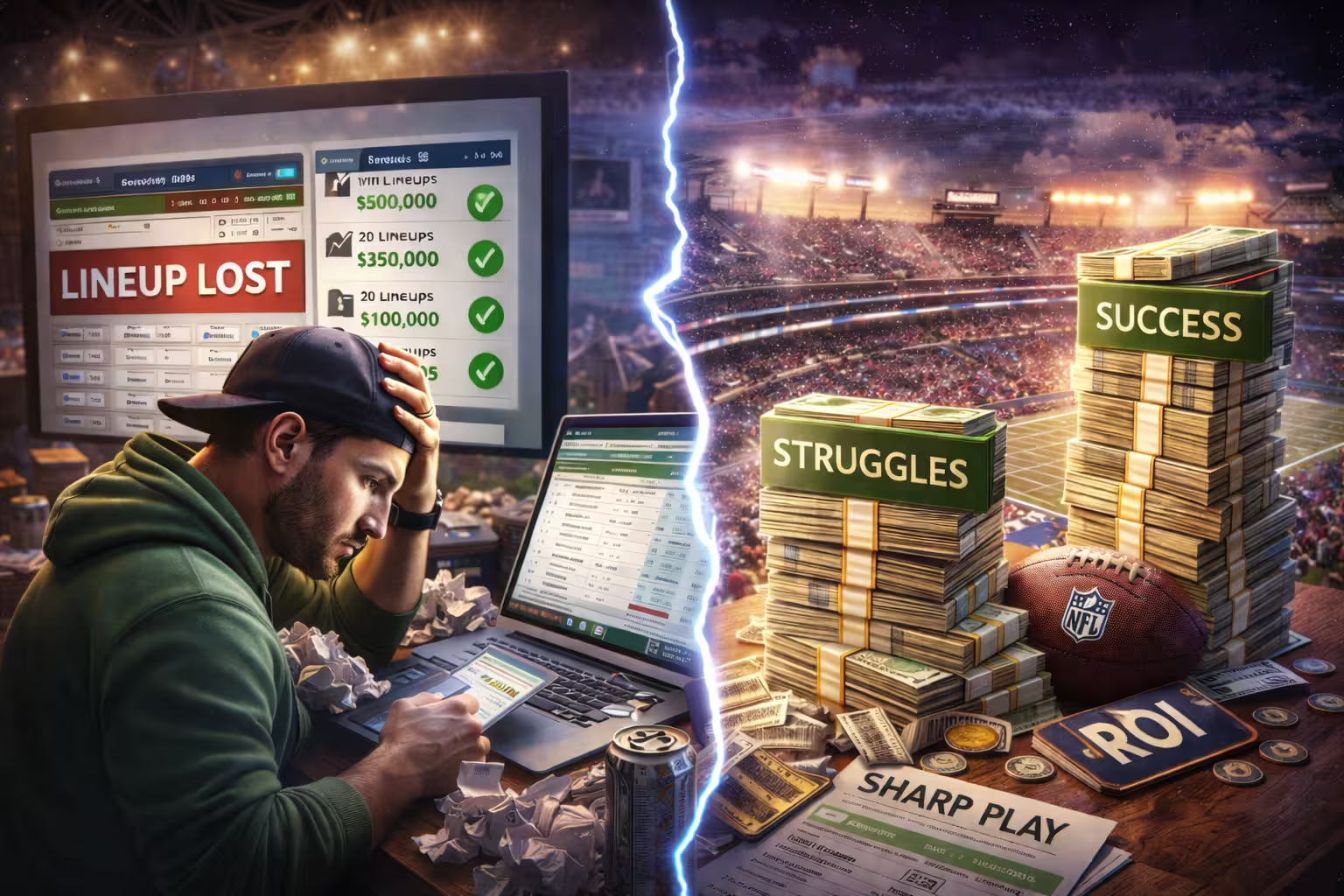
Here are the two problems with this mentality:
- Struggles aren’t broadcast
- Sharp play vs. ROI
First, the road DFS players take to get to that elusive big score is often a long and winding one. If you put in enough time, research, and money, maybe – just maybe – your next big swing can net you a glorious win that you can share with the masses.
Truth be told, that could obviously happen. That reality is what makes DFS so great. But you only see the success, and unfortunately, you usually need to experience the brutal lows to fully understand them.
In addition, this chase for first place in a massive tournament – one where it’s your lineup against sometimes hundreds of thousands – skews how we look at lineup building from a strategic perspective.
To win in any tournament, you need to have a good lineup. You also need some leverage via low-owned or “contrarian” options. That combination won’t always lead to winning results, and nailing the perfect formula is different for each contest. The sheer idea of it can also be counterintuitive when trying to win.
Example: You need low-owned players that also go off and get you a lot of points. But to get those players, you’re rolling the dice on players who are usually overlooked by the field for a reason.
In other words, the very strategy that sharp players deploy could be precisely why your lineups are not contending – or worse, not even cashing.
Your plight to chase that big win is compounded by the very strategy required to land it; risky plays can lead to big swings in your favor, but more often than not they just lead you to a losing lineup a lot faster.
The Structural Problem with Large GPPs
Winning a big GPP (guaranteed prize pool) is extremely difficult. The number of lineups and different combinations you’re up against are massive. And even if you do piece together a lineup that’s close to contending, you still might run into trouble.
Here are two things that make big GPPs so difficult to master:
- Payout curve
- Lineup duplication
The first big issue is that most of the big GPP tournaments are insanely top-heavy as far as the payout is concerned. That’s how they can afford to issue crazy $100,000 or even $1,000,000 prizes to the first-place winner; less than the top 1% get the big money.
When looking at the low percentages and high lineup volume, you’re not just contending with the field – you’re literally working against every single lineup in the contest. This creates extra emphasis for both creating unique lineups that can separate from the pack and “maxing” a contest by hitting the entry limit.
Even those things aren’t always going to save you. If everyone can play 150 lineups, then all you’re doing is leveling the playing field against the other players that are max entering. You might feel like you’re gaining an edge, but in reality, you’re probably doing the bare minimum.
It gives you the maximum opportunities to try to give your unique grouping of lineups the best chance possible, but it, at the same time, guarantees nothing.
The other issue is lineup duping, which is certainly more prevalent from an exact definition perspective when dealing with Showdown slates, tiny two or three-game slates, or sports with finite player pools such as NASCAR and MMA.
In showdown contests and sports like NASCAR and MMA, true dupes (exact same lineups) are common and sometimes simply not very avoidable. In big GPPs for bigger sports like the NFL, MLB, and NBA, the “lineup duping” issue lies more within your build structure.
Most of the best plays for a given slate are ones that everyone knows about, and a good chunk of the field will simply “eat the chalk” and play them. That’s definitely something you’ll usually want to do, situation depending, but the more chalk you eat, the less unique your lineups will be.
This creates an obvious issue: for massive GPPs, you have to intentionally stray from some of the best plays on the slate just to ensure your lineup construction isn’t one that is being used in a majority of lineups across the entire contest.
Needless to say, the chase for perfection can still fall short. Even when a lineup is basically perfect, it may still fail to take down first place due to volume of lineups, payout curve, lineup duplication, or general variance not working in your favor.
Why Small-Field DFS Contests Change the Math
If you can ditch the dream of cashing in insane money (or embrace the reality of it not being very realistic) you can clean up in smaller DFS contests.
At least math suggests your odds are better. After all, when you’re looking at smaller GPPs or single-entry tournaments, you are inherently improving your odds due to a number of key factors:
- Flatter payouts that reward top 20% finishes
- Fewer entries/lineups to compete with
- Less of a need for high variance plays
- Skill carries more weight in your lineup’s result
Volume is everything. The more entries or lineups in a contest, the harder it is to get to the top of the pile, and the less money available to you if you can’t make it high enough.
By playing smaller contests, you cut down the upside of your winnings, but you increase the probability of actually scoring a takedown. Here’s a quick visual to compare a smaller contest to a massive contest at a DFS site like DraftKings:
| Contest Type | Entry Fee | Total Entries | Entry Limit | 1st Place Prize |
|---|---|---|---|---|
Milly Maker | $25 | 129,400 | 150 | $1,000,000 |
Small GPP | $3 | 5,945 | 5 | $1,500 |
Small SE | $5 | 5,945 | 1 | $2,500 |
These are just three examples, but they are very different contests. The first is the NFL Milly Maker, which pays out an insane $1 million to first place, but unless you finish among the top 12,907 lineups, you won’t even win $50.
For a fraction of the cost, you could opt to play a smaller contest of just under 6,000 entries with a five-lineup entry limit. This gives you five cracks at lineup variety, and you can still get a nice $1,500 score. Even if you fail to win first, everyone inside the top-13 wins at least $100, while you only need to finish inside the top-25 (not the top 12,000) to bring back $50.
It gets even better in a similar sized single entry. You pay $2 more for a chance at an even bigger first-place prize, and you’re going up against 5,945 individual people, rather than a lot of sharp players who are shoving out their five best lineups.
You can take this even further by upping the buy-in to a $27 SE where first place is $1,000 for a 431-person tournament. In this case, you are risking even more than you would in the Milly Maker contest, but instead of needing to beat out over 129,000 to win $1,000, you simply need to beat out 430.
Nothing is guaranteed, no matter which contest you enter, but the difference in competition and difficulty to get big wins is striking.
The fewer people and lineups you’re competing with, the better your odds are of actually winning a tournament. And even if you don’t get first place, you get a boost as far as cashing or doubling or tripling your entry fee.
Ownership Works For You in Small Field Tournaments
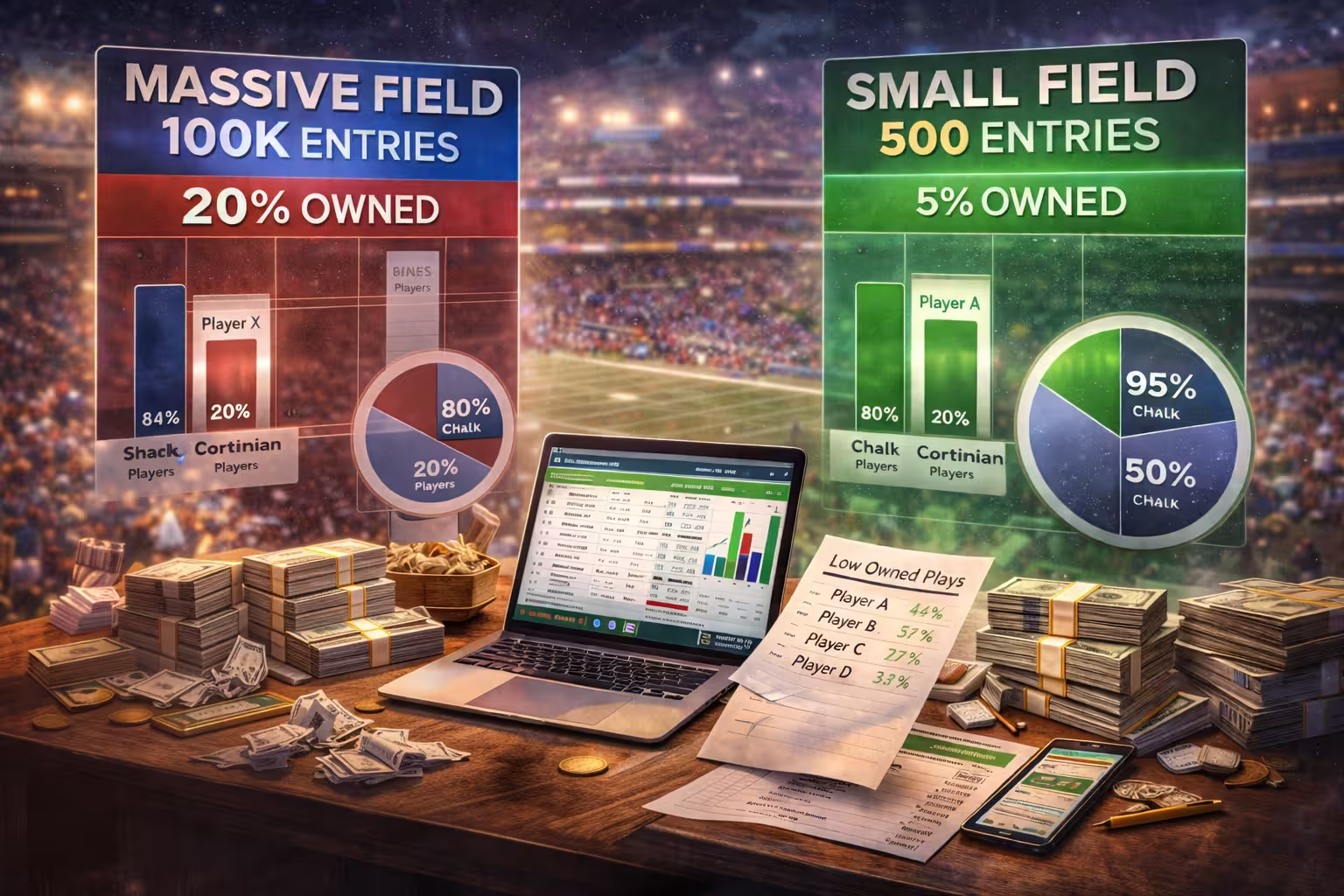
With so many DFS players fixated on upside, you can focus on your research and strategy while the ownership factor is less of a burden.
Don’t get me wrong, you can’t just blindly fire up pure chalk lineups where every player you roster is 50% owned. At some point, you do need to assume some risk, fade some chalk, and target lower-owned options that offer a comparable ceiling.
But those risks are just coming at a much lower volume, and they also look different. Instead of big swing-for-the-fences punts or plays that don’t really align with your strategy, your contrarian picks can be much more calculated, and you can also eat more of the chalk without over-thinking it.
Simply put, smaller DFS contests make the process about building the best lineup and making the best decisions; not creating the most unique lineup that has the ceiling to beat out thousands of entries.
This allows you to put greater emphasis on identifying “good chalk” versus “bad chalk”. You also can clearly identify and attack ownership gaps without taking on extreme leverage angles, and you can start your process with optimal builds more often.
At the end of the day, you still want to avoid duplication, and you want to maximize your ceiling. But with smaller DFS contests, you’re not going out of your way to risk sacrificing your lineup’s stability to do it.
Key strategy: Start with the notion of “playing the best lineup possible” and then make 1-3 minor tweaks to get you away from the same lineup structure half the field is starting with.
Just how much you deviate from that starting path depends on the contest size and how unique you feel your lineup needs to be. But your job is made easier knowing you don’t have to take unnecessary risks.
Lineup Construction Gets Simpler (And Sharper)
The beauty of playing in smaller DFS contests is that everything gets simplified. Instead of worrying so much about ownership, you start by simply answering the age-old question: What is the best lineup I can create?
In case you’re not used to finding a way to answer that question, make sure you’re incorporating the following into your process:
- Vegas odds
- Matchup stats
- Player roles + injury impact
- Lineup optimizer
- Player projections
- Player ownership
If you have a good lineup tool, most of this is actually baked into the projections. But doing some legwork on your own can help you uncover edges that the lineup optimizer might gloss over.
Either way, playing smaller contests allows you to focus on this type of stuff solely, and not worrying over fringe plays that otherwise shouldn’t be rostered normally.
Another thing to consider is the lack of necessity of stacking in most sports. The smaller the contest, the less important correlation and stacking become. This isn’t to say you should eradicate it entirely, but you can focus more on the top individual plays, and work in correlation as you see fit for leverage purposes.
Remember, you’re no longer building lineups with a 99th percentile outcome in mind. Instead, median projections regain value, chalky plays are good chalk if they are inherently good plays, and stacking/correlation can be a factor, but not a prerequisite to building winning lineups.
Bankroll Volatility: The Silent Killer
Another huge advantage of playing smaller contests? Your bankroll doesn’t consistently take a massive hit. This obviously can get even worse if you’re trying to max a lot of expensive GPPs, or, depending on what level of player you are, even entering the Milly Maker a handful of times.
With smaller contests, you can scale back the risk-taking both from a lineup creation perspective, but also from a budget point of view.
Consider the following:
- GPP winning is more volatile and streaky
- Large field contests promote longer losing streaks
- Lower variance can equate to less losing
- Strict unit spending can extend bankroll longevity
Some of this stuff goes without saying. If you play only big GPPs, you’ll see right away that scoring takedowns simply isn’t very easy. For most, it’s virtually impossible. You’ll carve through most of your bankroll pretty quickly, and before long you’ll be back to the deposit page.
The goal of every DFS player should always be to never deposit again.
You can be as strict or as lenient with that mantra as you’d like, but if you abide by that ideology, you’re going to hold yourself accountable. Doing this involves entering the right contests, tracking your wins and losses, and sticking to a strict budget.
Not doing this can lead you to wild swings, emotional play, a lot of re-depositing, and potentially even a final destination of problem gambling.
Having a Plan in DFS
Instead, go into your DFS play with a plan to protect yourself both emotionally and strategically:
- Start with a strict bankroll limit
- Set a strict “unit” limit
- Set strict daily volume limits
- Stick to strict contest types
You probably are already knee-deep in your DFS playing career, but you can always adapt on the fly. Whether you presently have $200 in your DFS account or you’re about to deposit, go in with a plan; decide how much cash you feel comfortable starting with and just accept that you very well may never see that money again.
However, in that same breath, make sure it’s a good number to give yourself some wiggle room, as well as a number you’re comfortable losing in the form of entertainment. Don’t change that number, either, unless you adapt as your bankroll grows.
Within that number, or using it as a guide, you can set a unit limit for exactly how much money you’re willing to play with (or risk) per contest and per day.
Here’s an example of what a bankroll budget plan could look like for a new DFS player:
| Starting Bankroll | Contest Type | Contest Entry Max | Contest Volume Max |
|---|---|---|---|
$250 | SE/Cash Only | $5 | 4 |
This is just an example, and you can scale up or back how you see fit. But especially for a new player that needs to learn the game, you can start with $250 and commit to $5 single entry contests with a max of four contests ($20) risked per day.
Following this would give you a decent leash of almost two weeks if you played $20 worth of contests and lost it all every single day. If you played the minimum of $5, your starting bankroll would last you over a month, even if you lost your solo SE contest every single day.
Again, you can be more aggressive with the entry max or the number of contests you’ll allow yourself to play per day. You could make that bankroll stretch even further by simply committing to only playing $1 single entry contests and capping it at one per slate.
The point isn’t the number, but to map out a plan so you don’t play emotionally or stray from a structure that puts an emphasis on consistent and sustainable profit, rather than chasing big wins that aren’t as probable.
And always put into practice responsible gambling!
Who Small Field DFS Contests Are Actually For
Not sure if playing smaller DFS contests are for you? Think again.
Even if your top priority is getting big wins, you should consider the low probability of scoring a huge takedown. Alternatively, you should also realize the boost you give yourself to get more wins (albeit smaller) by competing against fewer lineups and turning back to strong lineup-building practices.
Here’s how to know if small DFS contests are for you:
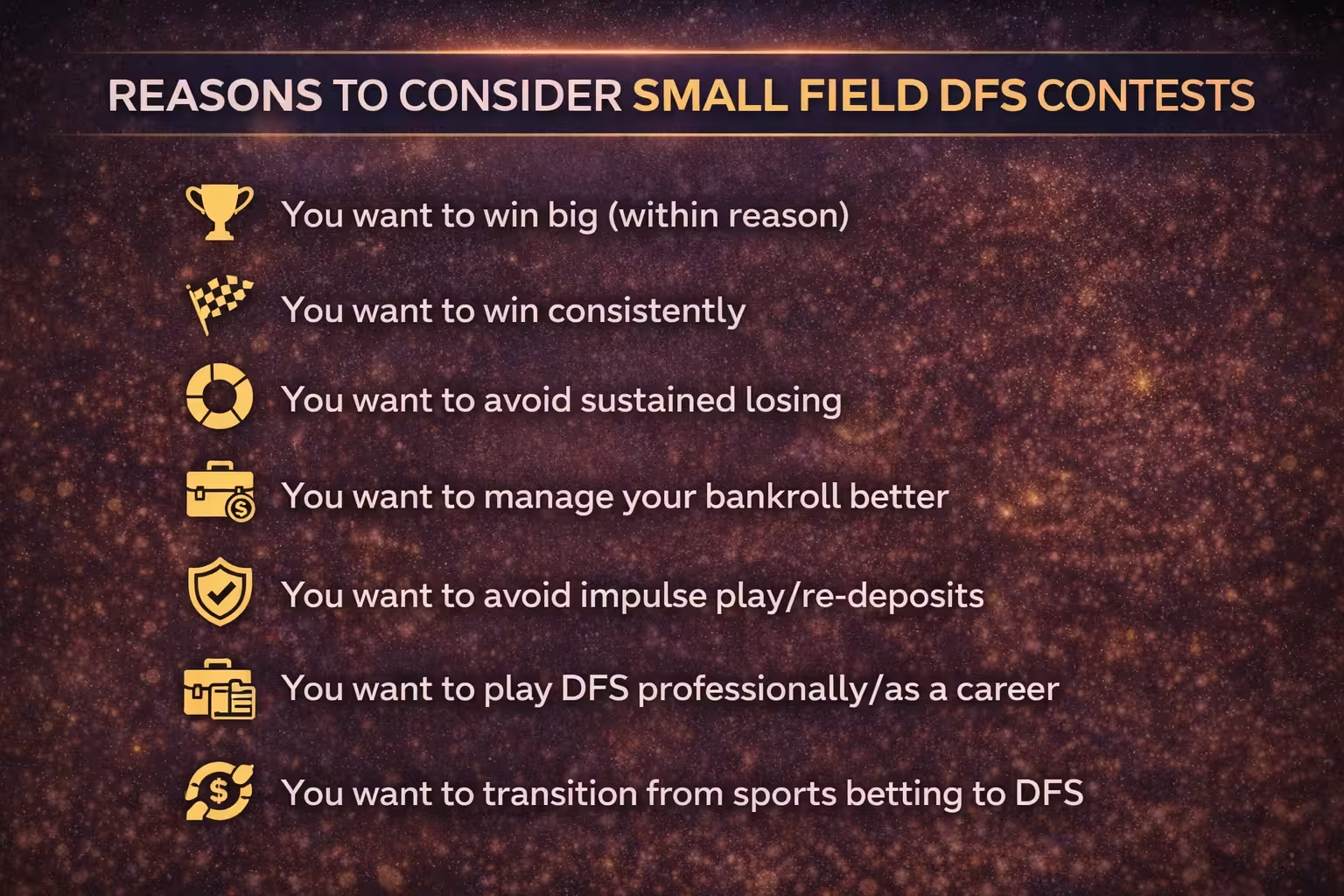
If any or most of the above are boxes you find yourself checking, it might be a good idea to consider ditching the huge takedown dream.
The best part is you can still cash in via smaller DFS contests. Your odds of doing so are boosted by default, while you can stack big wins of hundreds, if not thousands, of dollars.
How much you win and how consistently will still require sound strategy, the right plays, and a little bit of luck. But straying from the high dollar and ultra-competitive contests is the first step.
How Sharp Players are Reallocating Their Entries
Life is all about balance. It’s the same when it comes to sports betting, and it definitely is the same for daily fantasy sports as well.
You can still have a piece of cake or eat a burger. Just eat some veggies and fruit and work out a bit. You can throw a huge parlay at the wall. Just stick to straight bets the rest of the time.
And you can still play the Milly Maker or other big contests. Just balance it out with a structured approach, whether that be small field DFS contests or cash games.
The top players in DFS are already doing this and have been for years. Here’s what they do:
- Migrate most of their action to small fields and cash games (60-80%)
- Target GPPs selectively for upside, but pick their spots
- Approach contest selection as a skill, not a necessity
- Look at DFS lineups as individual investments, not volume deployment
The point? You can shoot for the moon, just make sure you’re not using all (or even most) of your rockets to get there.
Keep things balanced, controlled, accounted for, and structured. If you can do that, you will improve your odds of winning sustainably.
Large Field vs. Small Field – What’s the Better Path in DFS?
The important thing to take away is that massive GPPs aren’t really for you. They actually exist to take advantage of you.
Think about it; the Milly Maker contest is 149,000 entries at $25. That’s $3,750 for one person to max it, and you can still fail to cash even a single lineup. For the entire contest, that’s $3,725,000, with the DFS site likely taking a 10-15% rake (up to $558,750).
Needless to say, simply by the masses participating, DFS sites are raking in the cash. You still get your shot at the ultimate reward, but the math ultimately isn’t math-ing.
Small DFS contests restrict your spending, allow you to build better lineups, and allow you to face less competition. They inherently put a greater emphasis on skill and research, rather than impulse, randomness, and volume.
Someone is going to win those big contests. But it takes an awful lot of luck, some craziness, and an insane amount of lineups, even for the chance to get there.
Ultimately, you can still play both. But for sustained winning, more frequent shots at big wins, and a stop to brutal losing streaks, smaller DFS contests are without a doubt the better path.
Live Betting Is Broken: Why In-Game Odds Get Worse as Data Gets Faster
Is live betting the greatest lie ever told to sports bettors? It certainly feels that way at times. Live sports betting was sold as an overall upgrade for gamblers; faster data equated to superior odds, while you’d be getting more chances (and more ways) to beat the book.
Unfortunately, the reality has been a bit different than expected. Odds update in real time, but they often move faster than bettors can react. And when there is an area you can exploit, bets are often frozen until the time to strike has passed.
The second a bet becomes crystal clear, the bet evaporates – or worse, the odds update and the price worsens to the point of lost value.
The brutal truth? Live betting is doing exactly what it was intended to. It’s enticing gamblers to bet more, to risk money spontaneously, to target moving bets that they otherwise would have scoffed at, and to do it in rapid-fire mode.
Live betting was created for the consumer – or at least that’s what we’ve been told. While it can still be exploited in doses, it’s a clever tool online sportsbooks have created to squeeze even more cash out of your pockets – and they’ve made you believe it’s a bonus feature for you to enjoy.
What Live Betting Was Supposed to Fix
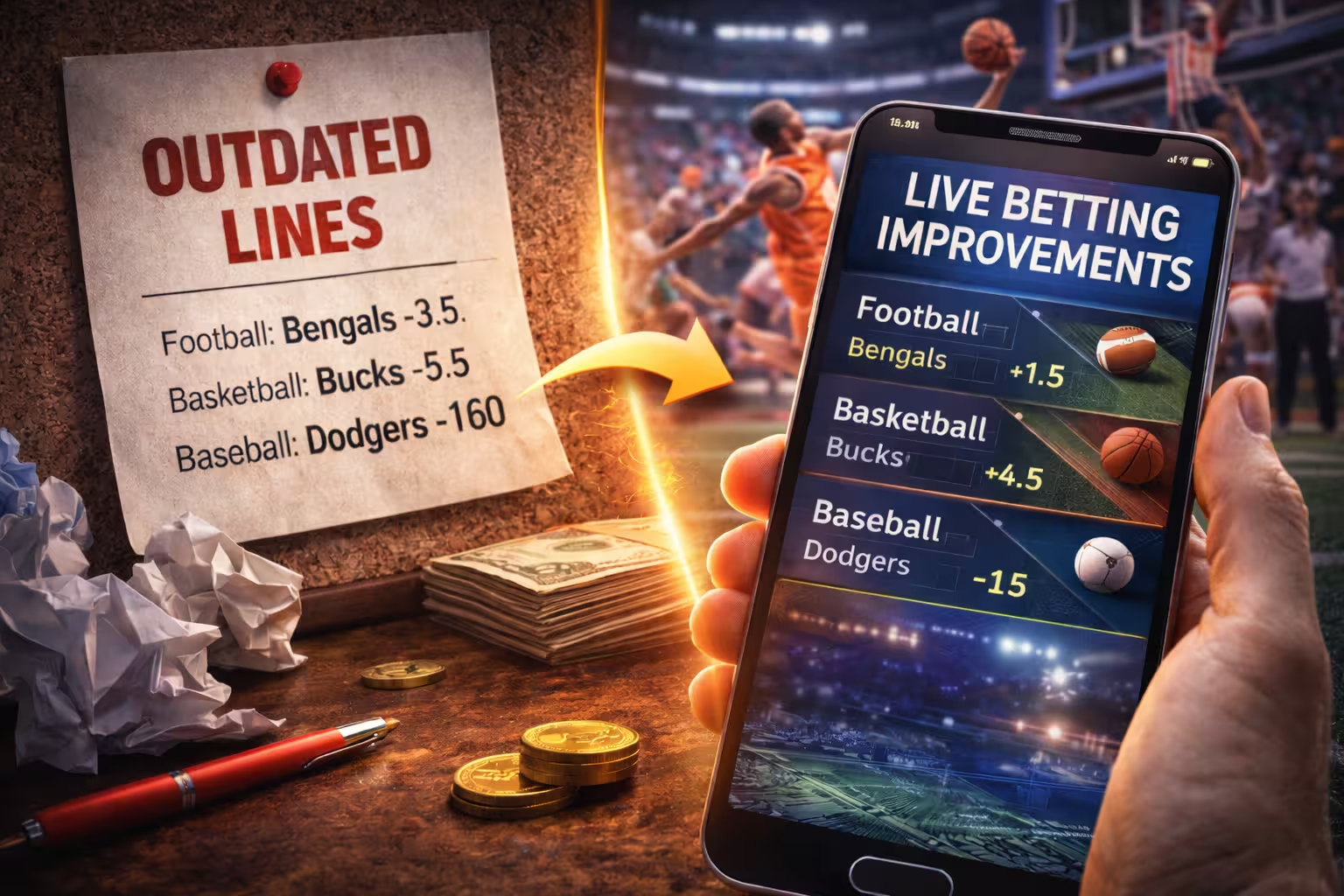
The whole point of live betting apps was two-fold: to give bettors the ability to place bets in real time after an event has already started, and to replace stagnant, outdated lines with updated, current pricing.
The Original Promise
- More information + fairer pricing
- Bettors gain flexibility and reactability
That extra data was meant to spoon-feed bettors information they can use to their advantage and to also correct pricing issues. Instead of static lines that were impacted solely by public wagering and oddsmakers, the game itself and player performance could be used to give a more accurate representation of what you were betting on.
Along with that, gamblers gained flexibility and the ability to freely react to player injuries, breakout performances, momentum shifts, weather impact, and natural game flow.
Example: You bet on the Patriots to win before Drake Maye got injured. Your original bet might be cooked, but now you can bet live on his backup or pivot to hedge against the Patriots.
Why Bettors Bought It
The idea sounded good enough, and even now that we know of the pitfalls, most bettors will admit it’s still alluring. Here’s why:
- It feels skill-based
- Perceived element of control
- It seems more predictive
Before a game starts, what transpires is literally anyone’s guess. That’s the beauty of sports. A team can be favored by 25 points and still lose. But that isn’t something even the sharpest of bettors will always see coming.
Live betting negates that risk of “not knowing”. It makes the game feel like it’s more about skill, that you’re in control, and that with the added help of real-time game flow, you can better predict – and better wager – on what is coming next.
Why Sportsbooks Sold It
Love them or hate them for it, but online sportsbooks are all about the bottom line. Betting sites aren’t sketchy for simply doing what they exist for: to make money.
Sportsbooks don’t mind bettors winning from time to time, but the house has to win in the end. And adding live betting as a feature does appease the masses in a lot of ways, but it also helps the sportsbooks maintain their overall edge.
Here’s how they got it:
- More bets placed
- Less research applied
- Less time to think
- More overall engagement
- Higher emotional impact
Live betting was a hidden goldmine for sportsbooks. If you weren’t already placing bets at a high volume, being able to bet on games in real time could inflate your betting load.
You’d also get less time and fewer resources to effectively research your wagers, while you’re also suddenly far more likely to do knee-jerk bets, try to recoup losses, or bet emotionally.
Why did sportsbooks want to incorporate live betting? The real questions are why wouldn’t they, and how didn’t they think of it sooner?
Faster Data Helps Models (Not Bettors)
There can still be a human element to the process in which sportsbooks set and update odds. But unlike most sports bettors, they also have a complicated system in place that relies more on models.
These models work off of automated feeds that constantly adjust pricing, with a major emphasis on math, analytics, and probability. A lack of human judgment takes opinion and emotion out of these decisions, while bettors are often doing just the opposite.
Why Bettors Are Always Late
Sportsbooks are always going to be one step ahead simply due to being the one to set the price. When relying on algorithms to make their calls, they know they hold the edge every step of the way – and they’re forcing your hand.
Here’s the main problem for sports bettors:
- Odds update too quickly
- Human vs. Machine
- General latency
Sportsbooks are processing information and setting or updating prices instantly, whereas humans are reacting to what is happening. That tiny sliver of a difference in time and execution gives books all the edge they need, while humans are going to also incorporate emotion, flawed logic, and bias in situations where models simply will not.
There’s also the issue of network latency and the time it takes to finalize a bet. Various factors, such as WiFi connection, timing of bet placement, and devices being used, can disrupt or alter how you’re betting.
Ever find the ideal live bet to target, but you can’t get to it in time? Or you’re building a live parlay, but the odds reset before you can click submit? These seemingly mild issues can interrupt your process, giving you an extra obstacle that sportsbooks don’t have to worry about.
Live Odds Are Defensive by Design
The sportsbooks always have the edge, and that’s even more so the case when you start betting live on sports. Here’s a breakdown to help illustrate how and why:
| Category | Pre-Game Odds | Live Odds |
|---|---|---|
Main Goal | Predict fair prices | Protect the book |
Core Function | Market discovery | Risk management |
Model Focus | Accuracy | Speed |
Line Movement | Gradual | Instant |
Limits | Higher | Lower |
Market Availability | Rarely limited | Frequent pauses/closings |
Put simply, pre-game odds are built to predict. Sportsbooks act like bona fide forecasters as odds open early, the books react to public betting, and the pricing adjusts over a period of time.
The overall goal is balance, accuracy, and sustained profit. Relying on a large collection of data and public influence, sportsbooks or their models can make informed decisions that give them a clear edge.
For live betting, sportsbooks change things up. It’s no longer about predicting, but more about defending. Pricing updates in seconds, not minutes or hours, setting up a situation where bettors are forced into quicker decisions.
Live models are no longer targeting precision. They simply contain risk, control overall exposure, and emphasize speed. Bets are created to incentivize wagering that is difficult to actually project accurately, while the book can also pause or pull bets the second they are no longer advantageous.
Live betting looks like an active, open market with unlimited possibilities. In reality, it is a reactive model that goats bettors into poorly informed betting and restricts them the second a bet might actually be in their favor.
The Hidden Cost: Exploding Juice
Another bummer that goes with live betting is the enhanced juice. The sportsbooks naturally are going to make you pay the price to bet live, as they’re giving you an added “feature.” You won’t balk at poor prices, either, because you’re happy to get the free “reward” of extra action even after a game starts.
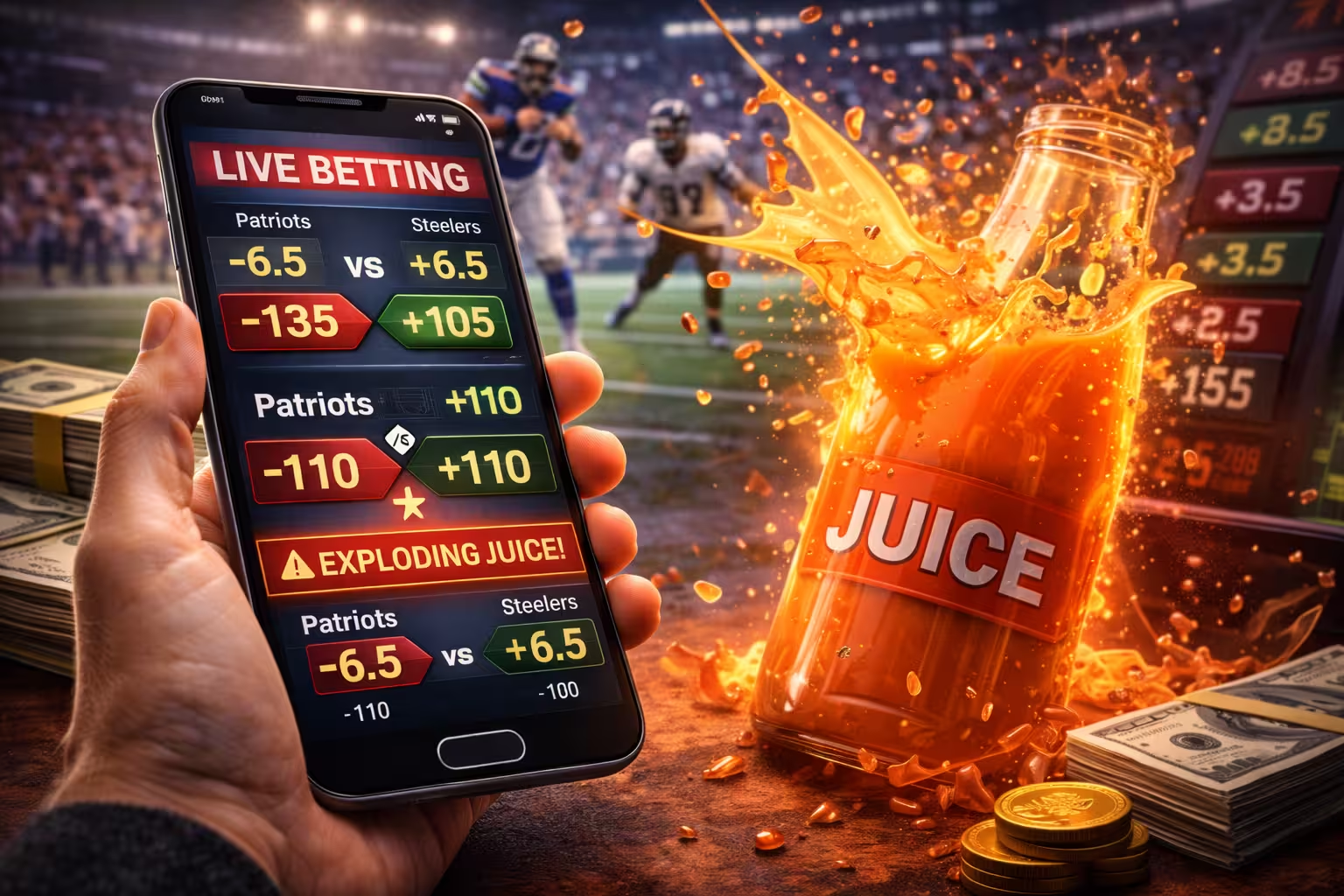
There’s a pretty good reason for the downgrade in odds, too:
- Volatility: Outcomes can be tough to predict on the fly, and so can pricing. Books boost their prices to make up for massive shocks to the system.
- Tighter Windows: Books are working on the same timeline as you. Their inability to have time to set proper pricing means a downgrade in guaranteed margins.
- Less Competition: Since live betting is all about timing, books know you’re not shopping lines like you normally would. They can price bets however they want, since time is of the essence.
This leads to you paying more per wager in any given situation. You’re not even usually aware of it – nor do you really care – and the reality is you can always opt to just bypass these inflated odds. But the books know you won’t, as live betting still means added opportunity to obtain value, hedge, overcome losses, or add to profit.
But if we are paying attention, we’d notice wider spreads, heavier vig on game totals, and bets that contradict game flow or appear trappy.
In the end, live betting is all about volume. You get loads of new chances to gain the upper hand on the sportsbooks. However, that volume can be poorly priced, and that volume often has you buying more into poor numbers (and wagers).
Simply put: more bets don’t always mean more value.
Suspensions Create a Fake Sense of Control
One of the biggest scams with live betting is suspended betting markets. It isn’t a true “scam,” but the sportsbooks can completely manipulate what we bet on and when, and they can even change how we perceive this underrated betrayal.
When Markets Freeze:
- Big plays
- Turnovers
- Scoring opportunities
- Start of possession
These are all understandable areas for the market to freeze, to be clear. But the second you have your finger on the pulse of a game, you need to prepare to lose out on value.
Games can fluctuate in maddening fashion, and when teams turn the ball over, make a big play, get into scoring position, or start a new possession, just be prepared to miss out on the bets you covet.
What Bettors See:
- Odds refreshing
- Bets are locked
On one hand, you’re witnessing the book being on top of the pricing. Getting updated odds is a good thing, after all. On the other hand, the wagers you want to target are paused or taken away completely, eliminating precious value, should it have existed in the first place.
The second part can be extremely manipulative, as books freezing a bet creates the false sense of security of that being a market you now need to attack. The sportsbooks aren’t just freezing bets so you can’t take advantage, they’re freezing bets to incentivize hopping on them once they’re back or unpaused.
While this is happening – and you’re waiting to place an ill-informed bet – the sportsbooks are calibrating risk, resetting their models, checking exposure, and setting you up for more failure.
The unfortunate takeaway? Paused bets are a major advantage to the book, and can equate to a massive trap for bettors waiting to pounce.
Live Betting Replaces Skill with Reaction
When betting traditionally, you have all the time in the world to make an informed bet. You have your own personal research, you get pricing from competitors, you get public betting information, and you can factor any number of variables into how you bet.
Live betting eliminates almost all of that, taking any skill or advanced edge you had and replacing it with a mental reflex. Here’s a quick breakdown of what is actually happening:
| Bettor Experience | Why it Feels Like Skill | What’s Really Happening |
|---|---|---|
Instant results after betting | Quick feedback feels like you have control | Outcomes arrive before decisions can be assessed |
Endless betting opportunities | Engagement feels like a strategy | Volume and availability replace selectivity |
Seeing patterns during games | Pattern recognition mimics expertise | Self-fulfilling noise mistaken for actual value signals |
Lines move in real time | Reacting & betting feels sharp and strategic | Most pricing already accounts for all variables |
Volume betting | Strategy adjustment + extra value discovered | Emotional betting, hedging bets, and covering losses |
Winning streak | Wins validate process, boosting confidence | Over-confidence develops, leading to bolder bets & more volume |
This can send you down the dangerous path of chasing losses or even being over-confident with your betting. Both can be bad, and are already threats to your betting experience even with standard wagering.
Live betting simply compounds all of these instances and magnifies these feelings, and can influence your bet volume and failure on the fly.
When Live Betting Can Work
There are definitely pitfalls with live betting, but the books don’t win all of their bets in any situation, and that’s certainly true with betting live on sports.
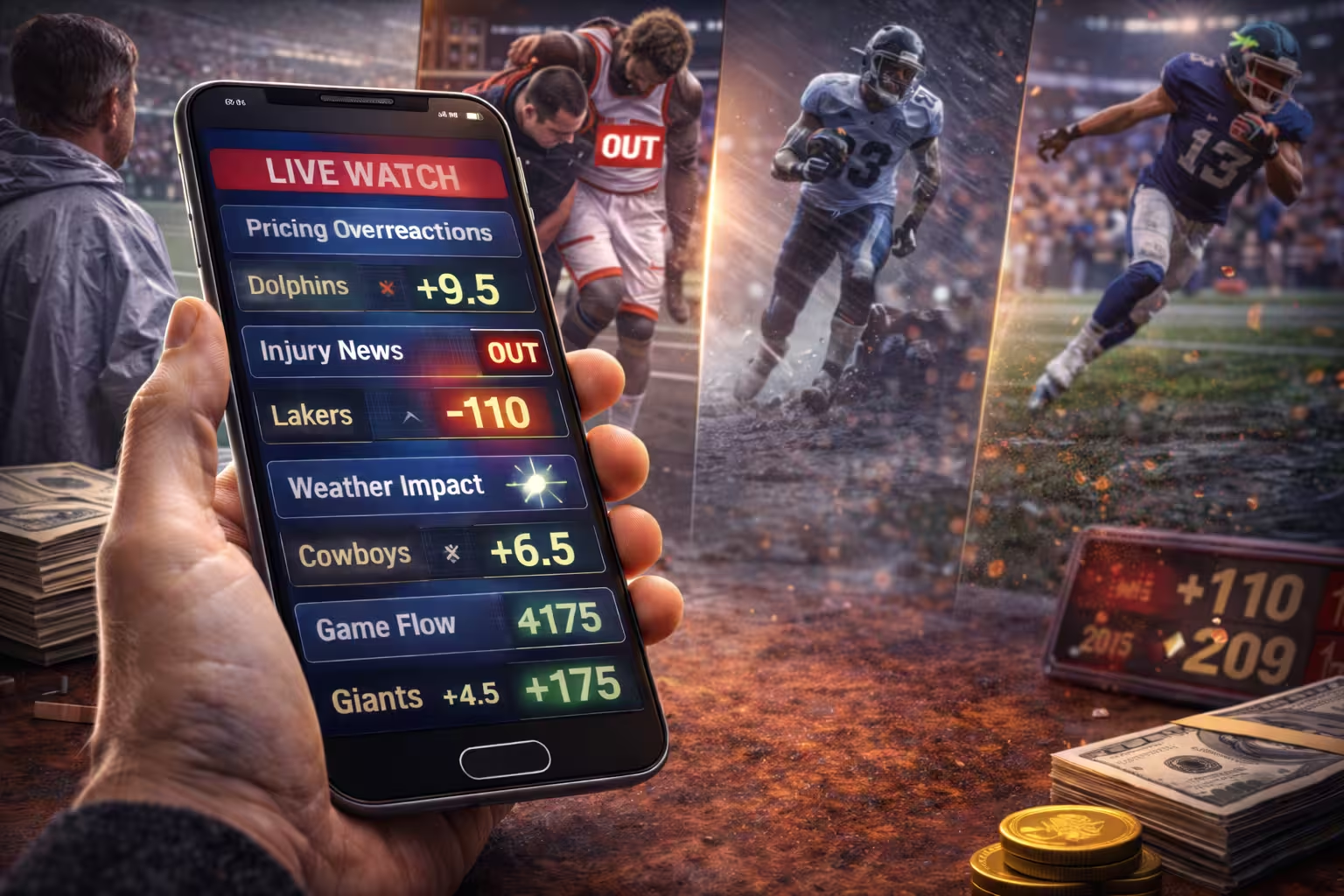
Here are a few areas where you can obtain a real edge:
- Pricing overreactions
- Injury news
- Weather impact
- Game flow
The books are very good with their pricing, but sometimes they can overreact. They can do it with actual pricing, as well as specific wagers offered. Spotting it and pouncing on it at the right time can give you an edge.
Injury news will eventually impact betting models, but it doesn’t always happen immediately, it isn’t always fully accurate, and it won’t always account for all variables.
Example: An NFL team loses their starting quarterback. The updated odds will likely have that team being the underdog in their game. However, the spread may be over-inflated or that team’s players may have soft receiving yardage prop bets. In a game where they are now expected to trail, it’s likely they will throw the ball more than usual, obtaining a clear path to Overs.
There’s also the impact of the weather. Sportsbooks usually have this baked into pricing before a game, but accounting for in-game issues like rain, snow, wind, and delays caused by lightning isn’t always a given.
Game flow is also a huge factor in how bets and odds are updated live. Books are typically very good about this – and will simply pause bets if they don’t have an edge – but you can also often see game flow sliding a certain way well before a game gets out of hand.
Prop tip: The second an NFL team takes a two-score lead, consider the opposing team’s spread pricing and value. In addition, consider targeting the losing team’s passing game props, as they will be trailing and may have to pass more the rest of the game.
In general, it pays to have some type of plan in place. Treating live betting like a job and reserving time to research as much as possible (or consider all factors beforehand) – rather than firing off bets on a whim from your phone – can give you an edge before the script is flipped.
Reacting to potential game flow adjustments, in-game injury, or weather changes can also give you an edge that the books may not be able to account for – at least not instantly.
If you want to have an edge when doing live betting, you need to have a plan. What that exact plan looks like is up to you, but it has to include more than targeting random bets that the sportsbook pitches as advantageous opportunities when they’re really nothing more than traps.
How Smart Bettors Use Live Markets
There are certainly a lot of negatives when it comes to live betting, but there are still ways you can make money off of it. Sharp bettors know when to pick their spots, what to look for, and that being selective in general is the foundation of a winning sports betting strategy.
The core of live betting – at least for the books – is built on impulsive wagering. You’re supposed to bet on anything and everything, chase losses, and take bets that are either not backed by data and research, or are bets you flat out wouldn’t normally go after.
To prevent that, consider what sharps would do:
- Use live betting as a pre-game bet confirmation
- Leverage line movement only when it impacts your edge
- Avoid betting after highlight plays
- Avoid chasing momentum
- Avoid emotional betting
- Target 2nd half lines
- Target derivative pre-game bets
- Wait for truly advantageous markets
It isn’t always going to align, but the more you can marry your pre-game research with live bets, the better off you’ll be. You can also exploit line movement, whether it moves closer to your pre-game expectations or drastically further away.
In addition, it’s important to eliminate emotional or spontaneous betting. Most professional or sharp bettors do this already, but it’s admittedly hard to keep a clean betting profile if you are on a mobile device and want to react to what appear to be exploitable prices.
Ideally, you’re not overreacting to any one play, you’re not blindly chasing momentum swings, and you’re avoiding emotional betting altogether.
You can still target live bets, but one good suggestion is to take some time to research 2nd half markets. This gives you more time and data to work with, but you’re still able to take advantage of new pricing.
On top of that, you can exploit derivatives before the game, or just sit back and wait for truly advantageous bets to emerge. Perhaps that’s just playing it cool until a bet pops up that you can’t ignore, or maybe it just means starting your betting process early for the next day’s slate.
Why Live Betting Will Only Get Worse
As bad as this portrait of live betting is, it actually might only get worse over time. The big issue is nobody seems to realize the current state of live betting, or even scarier, is the fact that nobody seems to really care.
Here’s why things may start getting out of control:
- No incentive: Sportsbooks have no reason to improve pricing or tilt live betting in your favor. The margins and volume are high, the turnover is instantaneous, and they don’t have to try hard to increase action. As long as people keep betting, they’ll continue to get an insane edge on a built-in “feature”.
- Technology: The evolution of technology can’t stop, won’t stop, baby. When you start thinking about how models have gotten to the point where they are now – plus the long-term incorporation of AI – it’s only going to get harder to beat the books. Faster and more accurate models = more volume and more losing for casual bettors.
Has live betting already arrived at its long-term destination of being seen as entertainment over strategy? If that isn’t the case yet, we are undoubtedly trending in that direction. Once there, people will gladly trade volume and entertainment for losing a few extra bucks. If they simply get the illusion of a chance at a big win, they’ll keep on betting.
That doesn’t sound terrible, but that volume adds up in a hurry. And if bettors can’t identify what’s going on and find a way to adapt, the books have no reason to slow things down.
Live Betting Isn’t Broken; It’s Working Exactly as Intended
The important thing to remember is that live betting isn’t (or at least doesn’t have to be) a bad thing. Like anything within the sports betting world, however, it exists to feed sportsbooks an edge and ultimately, more profit.
Sportsbooks are not here to lose money, so if they are pushing out live bets, their models are telling them that overall, they’re going to win most of them. They are also catering to casual and/or lazy bettors that either treat sports betting as entertainment or won’t put in the effort to turn it into anything more than that.
In short, live betting is not broken. This is exactly what it always sought out to do; to offer gobs of volume, to incentivize poor betting, and to take advantage of bettor impulse.
How do you combat that? Be selective. Do your research. And slow down.
Live betting only really works for the books if we get sucked into the volume and fake value. The books are going to keep winning, and the edge over the masses isn’t going anywhere. But you – the individual – can curb your losses by being more disciplined.
None of this is to say live betting is bad or that you shouldn’t bet live on sports. But this should relay a clear message: live betting isn’t actually for you. It’s for the sportsbooks. Use it when you can flip the script and can target real value. Leave all the clutter for the fish.
2026 NFL Draft Odds: 1st Overall Pick Favorite, Best Bets, and Predictions
With the NFL season winding down, all eyes will be on the 2026 NFL Draft soon enough. The top of the NFL Draft usually generates the most chatter, and right now, the Las Vegas Raiders are on the clock with Indiana Hoosiers star quarterback Fernando Mendoza looking like the obvious choice.
Mendoza comes in with staggering odds to be the first overall pick of the 2026 NFL Draft, but there are some questions as to whether he’s worth that price or if there are some viable pivots the Raiders should consider.
There isn’t much money to be made by betting on Mendoza to be the top pick in the draft, either, as DraftKings has his price set at a mind-boggling -8000. So, what are bettors to do? Should they find a way to bet on Mendoza, target a different pick, or avoid the wager entirely?
Let’s go over the latest NFL Draft odds for the #1 pick and highlight the top bets while coming to a final prediction.
Latest 2026 NFL Draft 1st Overall Pick Odds
| Player | Odds |
|---|---|
Fernando Mendoza | -8000 |
Trinidad Chambliss | +3000 |
Rueben Bain Jr. | +6000 |
Arvell Reese | +6000 |
Ty Simpson | +9000 |
Jordyn Tyson | +10000 |
Carson Beck | +10000 |
Keldric Faulk | +12000 |
David Bailey | +12000 |
Cashius Howell | +12000 |
Carnell Tate | +12000 |
Caleb Downs | +12000 |
These are the current odds for the #1 pick in the 2026 NFL Draft at DraftKings. Odds are subject to change based on player health, team transactions, and other variables, but the one thing that seems written in pen is Mendoza as the top favorite.
Mendoza’s #1 pick odds are obscene. However, he won the Heisman Trophy and led the Indiana Hoosiers to the college football title game, so he stands out as the clear pick. In addition, the Las Vegas Raiders own the #1 pick in the 2026 NFL Draft, and per usual, they are in need of an upgrade under center.
It’s likely that we can stop the conversation here. On one hand, you’re not betting anything on Mendoza at this absurd -8000 price tag. On the other hand, nothing is for sure until the pick is in.
By default, every other option stands out as a pretty alluring value. If the Raiders aren’t high on Mendoza, find a quarterback via a different path, or trade out of the top spot, it’s not crazy to imagine someone else being picked first this year.
To assess the best bets to be drafted first overall, let’s break this market down a bit further.
Why Is Fernando Mendoza the Favorite to Go #1 Overall?
The first step is accepting our fate here. With -8000 odds to be the first pick in the 2026 NFL Draft, it’d take some special circumstances to derail this train. Fernando Mendoza is almost definitely hearing his name called before anyone else on draft night.
Why? I also illustrated that he won the Heisman and led his team to the CFB championship game, but apart from that, he fills a clear need for a struggling Raiders franchise and is a rock-solid prospect.
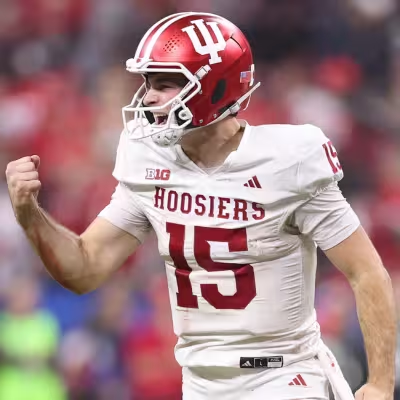
Mendoza checks some pretty vital boxes:
- Fills an important need
- Is a proven winner
- Is a strong leader
- Has high character
- Highly accurate & efficient
- Has strong processing ability
- Improving pocket presence
- Elite decision-making
That’s a lot of check marks, but ones you’d expect to get out of someone favored to go first overall in the NFL Draft. This would give Las Vegas the most well-rounded quarterback they’ve had in decades, as Mendoza lacks flash and high-level athletic traits, but otherwise passes the eye test for every other major attribute that goes into stellar quarterback play.
With Tom Brady being part of the Las Vegas ownership group that is making this tough call, it seems even more likely that a leader and winner like Mendoza would be precisely what a dormant offense needs to take their game to the next level.
Why Mendoza May Not Be the Right Pick
There’s the other side to this conversation, of course, and why we’re talking about a betting market that seemingly is already decided.
Mendoza fills a need and is a quality prospect, but he does not dazzle like someone going first overall “should”. If the Raiders want a winner and strong leader, he’s a no-brainer. But if they want someone who can wreck games, sell tickets, and be a total mismatch for defenses, they may pause before making the call.
Here’s why Fernando Mendoza going first in the 2026 NFL Draft wouldn’t be a given:
- Less than elite athletic traits
- Other viable candidates
- Raiders are far from contending
- One-year wonder?
Mendoza does all of the little things right, but he is an uninspiring prospect when it comes to arm strength and mobility. He’s “fine” in both regards – and everyone knows big arms and flashy runners don’t always translate – but he lacks game-changing ability beyond his edge between the ears.
In addition, if the Raiders aren’t in love with Mendoza, it isn’t out of the question that they could be high on another passer or a different position altogether.
Las Vegas is also at the bottom of the league for a reason. They don’t have a long-term head coach in place, and they lack talent on both sides of the ball. They could be drafting a quarterback into a situation that is impossible to succeed in.
Lastly, Mendoza really only has played at this level for one season. His numbers at Indiana are amazing and he clearly knows how to win, but he was relatively average at California before transferring to play with the Hoosiers.
What if the Raiders are investing in a middling prospect with a grossly inflated draft profile? Needless to say, these red flags could individually be problematic, or the combination of them all could spell disaster.
What do the Las Vegas Raiders Need Most?
Before deciding whether or not Fernando Mendoza will go first overall, you should consider what the Raiders are lacking. There’s no denying they don’t have a long-term solution at the quarterback position, but could there be another position they prefer targeting at #1 overall?
Las Vegas is a team that won just three games last year, so they definitely have more holes than just quarterback. Based off of their 2025 campaign and who they stand to lose this off-season, here’s a look at the biggest needs:
- Quarterback
- Offensive line
- Pass rush
Quarterback is the biggest need for the Raiders. Typically, that’s the case anytime you win three games and “earn” the top pick in the draft. Geno Smith is still under contract, but he’s someone the Raiders should look to move on from.
The question here isn’t need, but fit and timing. Is Mendoza the guy the Raiders fully believe in, or are they just drafting him due to need and the fact that they own the 1st overall pick?
The other issue is that this team isn’t just a quarterback away from competing. They ranked dead last in pass protection last year, so the offensive line needs an overhaul.
You need to beef up the trenches on both sides of the ball to win, and star pass rusher Maxx Crosby is a candidate to try to find a way out of town. If that is the case – and perhaps even if he stays – the Raiders eventually need to address a suspect pass rush that had just a 6.6% sack rate (19th).
Top Contenders to Go 1st in the 2026 NFL Draft
- Quarterbacks: Fernando Mendoza & Trinidad Chambliss
- Edge: Arvell Reese & David Bailey
- O-line: Francis Mauigoa
If Las Vegas stays at #1, these are the most likely options they will be picking from. Mendoza is the consensus top pick, and that argument is made less intense with Oregon Ducks quarterback Dante Moore opting to return to school for next year.
Mendoza has the leg up in terms of odds, but also mental makeup, pure passing ability, and stability. Chambliss did dominate in his first season as the Ole Miss Rebels starting quarterback, putting up 30 total touchdowns while leading one of the nation’s best offenses deep into the College Football Playoff tournament.
Chambliss is a little more exciting in terms of rushing ability and upside. He doesn’t have the steady hand that Mendoza does, but if the Raiders opt for ceiling, they could shock the world and pivot to the Ole Miss product.
A likelier scenario – if the Raiders actually passed on Mendoza – is they choose to rebuild their offensive line. That’d get them ready for when they truly felt prepared to invest heavily into a franchise passer, and right now, the most logical option is stud Miami offensive tackle Francis Mauigoa.
The third option is Las Vegas re-tooling their pass rush. Maybe they hang onto Crosby, but either way, this draft has several edge rushers that could team up with him or simply replace him. The likes of Arvell Reese and David Bailey grade out as the best bets if Las Vegas went this route.
Ultimately, the two most likely contenders not named Mendoza appear to be Chambliss and Mauigoa, but with +3000 and +15000 odds, respectively, they are longshot bets at best.
Could the Raiders Trade Down from the #1 Pick?
This is the most likely scenario that would lead to the Raiders not selecting Fernando Mendoza first overall. Las Vegas would be making a mistake to simply select a different player when considering value, so they probably need to just take Mendoza or trade the pick.
The following teams are legit trade candidates:
- New York Jets
- Arizona Cardinals
- Cleveland Browns
- Miami Dolphins
- Pittsburgh Steelers
When you don’t have a signal caller, you do what has to be done to get one. In this case, we’re considering the hypothetical situation where Las Vegas isn’t smitten by Mendoza and dangles him in trade talks.
Las Vegas has a lot of holes, but they could consider a big package that would set them up for success down the road. Additionally, tanking for Arch Manning or another prospect next year or the year after isn’t out of the question.
New York is probably the most compelling team here, as they lack a foundational piece under center and have two first-round picks to work with this year.
Arizona, Cleveland, Miami, and Pittsburgh are all quarterback-needy teams that have first-round picks they can offer in potential trade packages if Las Vegas is serious about trading down.
Best Bets for the #1 Pick in the 2026 NFL Draft
- Fernando Mendoza -8000
- Trinidad Chambliss +3000
- Francis Mauigoa +15000
If you’re betting on who will go first in the 2026 NFL Draft, every part of this conversation has to start with Mendoza. He’s unlikely to be passed over by anyone else, and I doubt the Raiders end up moving this pick.
That said, if Mendoza is not going to be the pick, the two options that make the most sense are either a pivot to a more dynamic passer in Chambliss, or o-line help via Mauigoa.
If I had to bet against Mendoza, picking the Raiders to shock everyone with Chambliss would be the way to go.
Ultimately, though, your best 2026 NFL Draft picks are probably coming elsewhere via different props.
Final 2026 NFL Draft Prediction for the #1 Pick
Fernando Mendoza does not have a huge arm or freakish athletic traits, but he’s without a doubt the most complete quarterback in this draft class.
The Hoosiers’ star checks every single box you look for in a signal caller, profiling like a Tom Brady or Joe Burrow-esque prospect. That can be scary for a team picking at 1st overall, as this is a huge investment for a player who lacks flash. There will be understandable questions as to whether or not this type of player will successfully transition to the NFL, or if their skill-set can actually elevate a weak roster.
The answer to that might be no – at least at first – but drafting Mendoza is still the right call. He is a cerebral player who makes the right decisions, leads his team by example, and executes at a high level. Las Vegas hasn’t had anyone that can do that consistently for their passing game in years, so this is a risk they simply need to take.
That should result in a quality pick for them, but it doesn’t equate to elite betting value for you. You can’t hop on Mendoza at -8000, and even adding him to an NFL Draft parlay won’t make much sense.
If nothing else, however, this should cut off any risky interest in betting on the #1 pick in the 2026 NFL Draft, and you can start focusing your efforts on who will go 2nd overall this year, among other NFL Draft prop bets.
2026 Next NFL Head Coach Odds: Top Betting Favorites, Picks, and Predictions
The first domino in the 2026 NFL head coaching carousel has apparently fallen. The New York Giants are expected to finalize a deal to make former Baltimore Ravens shot-caller John Harbaugh their next head coach.
From there, madness may ensue.
Counting the Giants, there were eight open NFL head coach positions in all, with the Green Bay Packers and Matt LaFleur currently trying to figure out what their collective future holds.
All of the drama and intrigue plays into a compelling market, and it’s one that you can potentially profit from. DraftKings has a series of bets surrounding the NFL’s next coach odds, with some interesting favorites and some possible value bets to exploit.
If you’re interested in taking advantage of these betting markets, I’ll walk you through the next NFL head coach odds for the key vacancies, while also offering my top picks and predictions.
What Are NFL Coach Odds?
Just to avoid any confusion, this is a betting market where you predict (and bet on) who specific NFL teams will hire to be their next head coach. These types of wagers can be presented in one of two ways; odds for where a coach will sign next, or odds for which coaches a specific team is likely to sign.
Keep in mind that this is an extremely fluid and reactive betting market. Why? Because nobody outside of the team or coach circles really knows what will happen, and once the first big domino falls, odds start changing rapidly.
The Harbaugh news, for instance, immediately removed Harbaugh from consideration to be hired by any other NFL team. Most sportsbooks reacted by pulling him from their market pricing, or by pausing or taking down those bets entirely.
When betting on the next head coach for any NFL team, consider the following:
- Coaching connections
- Coaching fit
- Team strengths & weaknesses
- Previous stops
- Recent NFL hires
Coaching connections can be huge for this betting market, so pay attention to coaching trees and any kind of previous relationship a coach may have with a member of a given team’s front office.
In addition, a coach’s fit and what they bring to the table, as well as key strengths or weaknesses a team has or needs to address can be very important in making a successful prediction.
Where that head coach has worked can also play into their odds. If they used to work for a franchise (but likely not as the head coach), they may have a leg up.
Lastly, keep an eye on every big transaction – most notably head coaching hires. Ie, with the Harbaugh hire, every coach that was in position to strike for the Giants’ job is now going to see an odds shift for every other available head coaching gig.
Current NFL Coach Odds by Team
DraftKings has a few NFL head coach betting markets we can take advantage of. There are more open slots, but I’ll go over the NFL head coaching vacancies you can bet on, their latest odds, and who I think is the best bet to get the job.
Pittsburgh Steelers Head Coach Odds
| Head Coach Candidate | NFL Head Coach Odds |
|---|---|
Chris Shula | +150 |
Brian Flores | +350 |
Robert Saleh | +700 |
Jesse Minter | +800 |
Vance Joseph | +850 |
Nate Scheelhaase | +1000 |
Mike McDaniel | +1000 |
Klink Kubiak | +1000 |
Kevin Stefanski | +1000 |
Chris Shula leads the way with the best odds to be the next head coach of the Pittsburgh Steelers. The Steelers are notorious for being extremely selective and loyal with their head coaches, while Mike Tomlin stepped down very recently.
Naturally, the Steelers may take a bit longer than some other teams to decide on their next head coach. Considering their history of defensive-minded coaches, they could go either way. They could continue with that tradition, or, based on their lack of offensive success over the past decade, they could opt for a younger coach with a bright offensive mind.
That is where Shula comes in. The offensive coordinator for the Los Angeles Rams, Shula, is just 39 and has experience running a high-level offense. Whether he’s cut out to lead a team is open for debate, but coming from the Sean McVay tree is another thing most NFL teams looking for a coach will find appealing.
Brian Flores is in the mix here, too, but I think Saleh has a better chance of becoming the next Steelers head coach. Flores has a lot of baggage, whether it be negative feedback from his time at the helm of the Miami Dolphins or his lawsuit against the NFL.
Saleh may be the better option, as he doesn’t come with that sort of negativity, while he also flashed the ability to lead a team into the gray while with the dysfunctional New York Jets.
If the Steelers prefer to stay the course with a hard-nosed leader that relies on toughness, defense, and leadership, then Saleh makes a lot of sense. And unlike his opportunity with the Jets, Saleh would be walking into a situation where the organization is cohesive and puts full support behind their new hires.
Should the Steelers opt for an offensive guru, stealing Stefanski from the rival Cleveland Browns has to be considered. He’s still pretty young at 43, he’s a proven offensive mastermind, and he has plenty of experience after coaching the Browns for the past six seasons.
Stefanski did remarkably well considering the state of the franchise, twice leading them to 11-win seasons and playoff appearances. He had two other seasons with seven or more wins despite constantly having to deal with the fallout of the botched Deshaun Watson signing.
Shula is the favorite, but he’s arguably the OC who is in the highest demand. That means he can probably pick his spot after the top retreads find a landing spot. Or he may do what Ben Johnson did two years ago and go through the interview process, but wait for a better situation.
Stefanski and Saleh would see this as a marked upgrade. Saleh is very much in play, but I am leaning toward Stefanski. The Steelers have seen the positive work he’s done up close, so they know he will be an effective leader and is a pivot away from their usual defensive-minded approach.
Las Vegas Raiders Next Coach Odds
| Head Coach Candidate | NFL Head Coach Odds |
|---|---|
Brian Flores | +150 |
Klint Kubiak | +350 |
Robert Saleh | +550 |
Davis Webb | +700 |
Kliff Kingsbury | +800 |
Kevin Stefanski | +1000 |
Vance Joseph | +1000 |
Brian Flores leads the way with the best odds to coach the Raiders next, but with the team moving on from Pete Carroll after one year, they are likely to make a better foundational move.
Flores would get their defense right, but their biggest issue is on the offensive side of the ball.
Bringing in a quarterback whisper and successful offensive mind like Seattle Seahawks OC Klint Kubiak is probably the way to go.
Tom Brady and the Las Vegas ownership team needs a long-term move that coincides with the current state of the team. Their status is that they own the top pick in the draft, they’re going to need to develop a young quarterback, and they have the worst offense in football.
Kubiak is only 38 and clearly untested, but he’s probably the exact type of coach they need.
Unless the Raiders opt for a CEO-type or defensive-minded coach, the next best bet has to be Mike McDaniel. The 42-year old got bounced by the Miami Dolphins, but he largely pieced together creative and explosive offenses and kept Miami competitive.
The Dolphins made the playoffs twice under his guidance and never won fewer than seven games in any of his four years in South Beach. The Raiders brass should take note of his underrated leadership and ability to keep his team in contention even when dealing with injuries and an inconsistent defense.
The Raiders have tried retreads. They have tried icons. And they have tried defensive-minded coaches. None of it has worked, and in 2025, they had a truly abysmal offense.
Las Vegas enters the 2026 NFL Draft with the top pick, and they need a total reset with an eye on the future. Hiring an older coach or someone who specializes in defense isn’t the way to go, which makes someone like Kubiak really stand out.
Mike McDaniel might be too smart to take this job. It is an uphill climb, and he’d be better served finding a comfy OC gig to boost his stock. Kubiak could opt to go full Ben Johnson here, but ultimately, I think he and Shula will make the jump and try to carve out their own legend in the NFL.
Miami Dolphins Next Coach Odds
| Head Coach Candidate | NFL Head Coach Odds |
|---|---|
Jeff Hafley | +175 |
Chris Shula | +400 |
Kevin Stefanski | +800 |
Anthony Campanile | +900 |
Patrick Graham | +1000 |
Mike McCarthy | +1000 |
Klint Kubiak | +1000 |
Kliff Kingsbury | +1000 |
Green Bay Packers DC Jeff Hafley was one of the top contenders to be the next head coach of the Giants, but that dream has died. He’s now the tentative favorite to be hired by Miami, although nothing concrete connects him to this job.
Miami could go either way with their hire. They tried the young OC approach, and it had its moments, but they could be deterred from doing that again in 2026.
Predicting Miami’s next head coach isn’t easy, as they definitely will not be in on the Brian Flores sweepstakes, and Mike McDaniel may have ruined them for the “bright offensive coordinator” approach.
That certainly doesn’t rule out Chris Shula, as the Dolphins could take a second crack at the Sean McVay coaching tree and see if they can avoid a poison apple this time around.
The other option is the favored Hafley, who has head coaching experience from his time at Boston College, and beefed up a struggling Green Bay Packers defense over the past two seasons.
If Miami passes on flashiness and just wants substance that can grow with them, Hafley is a logical fit.
Miami has been trying to win with newbies, so one option is to change course and go grab a retread with legit experience. Jason Garrett or Jon Gruden are also in the mix with this strategy, but the most accomplished coach left on the market has to be Mike McCarthy.
He’s not the sexiest hire, and he’s now in his 60’s, but many seem to forget he led the Dallas Cowboys to three 12-win seasons during his four years in Texas. McCarthy can run a vanilla offense at times, but he knows how to move the ball, and he knows how to lead.
Ultimately, I think this is the spot Chris Shula wants to land in. Miami’s front office has been a trainwreck for a while now, but they clearly want an offensive team, and they will probably need someone to help either save Tua Tagovailoa or bridge the gap between him and their next starting quarterback.
Shula or Klint Kubiak figure to be the two most likely options in that scenario, while Shula being from the McVay family could give him a leg up.
Odds for Next Baltimore Ravens’ Head Coach
| Head Coach Candidate | NFL Head Coach Odds |
|---|---|
Klint Kubiak | +400 |
Jesse Minter | +200 |
Brian Flores | +550 |
Kevin Stefanski | +600 |
Robert Saleh | +650 |
Mike McDaniel | +850 |
Chris Shula | +1000 |
Davis Webb | +1000 |
Matt LaFleur | +1200 |
The Ravens moved on from longtime head coach John Harbaugh and will need to replace him with someone who can lead a team built to win now. Baltimore has a talented defense and a loaded offense in place, but something has been missing.
Do the Ravens bring someone in that has similar experience to Harbaugh, but a different voice or specialty? Or do they opt for a young OC or DC to grow with? That option is presently in the lead, with Jesse Minter and Klint Kubiak holding the best Ravens head coach odds.
Judging by the press conference from Ravens owner Steve Bisciotti, Baltimore is definitely eager to start fresh, and they probably want a totally different direction than what they’ve had.
Baltimore should be careful not to get too crazy, though, as Lamar Jackson gives them a leg up on a lot of would-be rebuilding franchises. The coach who comes into town needs to have a plan for how to maximize Jackson and this offense, as well as a strategy for boosting a defense that was inconsistent in 2025.
Minter fixes the defensive side of things, as he led a nasty Chargers defense and would be a very natural John Harbaugh replacement. He’s only 42 and has an elite ceiling as a head coach, but he may not appease Baltimore’s offensive needs, short of landing the right OC.
This one is a total wild card. Matt LaFleur is still under contract with the Green Bay Packers, but he is priced at +1200 and is pretty interesting. He’s quite the pivot away from Harbaugh, who was more of a leader and locker room guy than a true X’s and O’s coach.
LaFleur is very possibly staying in Green Bay, but with the team negotiating a long-term deal as I write this, it’s not crazy to think a firing or even a trade could come down the pipeline.
If LaFleur becomes available, I think the Ravens will jump at him. LaFleur’s system gets receivers open, and the sky is the limit as far as what he could do with an explosive rusher like Jackson.
I like Minter to get the job. With Harbaugh’s staff departing, the defense gets a full reset, and the team gets a fiery new leader with upside to be tapped into.
Based on Baltimore’s owner’s comments, I think he wants someone who can lead the team, but will ultimately fall in line. Bringing in an established head coach may not be the proper fit, while younger offensive coaches may not offer enough balance for this job.
Minter will need to corral a strong offensive coordinator to align with what Lamar Jackson does well, but there’s a good chance whatever he does will be an upgrade over what Baltimore had in town recently.
Best Bets & Value Angles
- Safest Betting Favorite: Jesse Minter to Ravens (+200)
- Best Value Bet: Kevin Stefanski to the Steelers (+1000)
- Top Longshot: Jon Gruden to Dolphins (+6000)
There’s nothing truly safe about the next NFL coach betting markets. Even the most obvious favorites can get passed over, pick a different team, or bow out of the race altogether.
Chris Shula and Klint Kubiak are frontrunners for just about every NFL head coaching vacancy, but each respective team is looking for something different. Whatever the case, based on circumstance and team need, Minter to Baltimore feels like the safest bet.
If you’re looking for pure value, Stefanski to the Steelers really stands out. Pittsburgh is a true wild card as they look to replace Tomlin. They could replace from within, they could hire a retread, they could opt for a young offensive mind, or they could stick with someone similar to Tomlin.
Ultimately, Stefanski is an elite value on the open market. He has proven experience, he was well received in the locker room, he will boost a weak offense, and he’s a good fit for a team that needs to draft and develop someone under center.
There are some interesting favorites and some clear value, but the longshot bets are what could be the most fun. That brings me to Jon Gruden heading to South Beach at +6000 odds. I don’t think it actually happens, but Gruden has been tossing his hat into the ring ever since the Raiders handed him his pink slip.
If someone will have him, Gruden will take just about any job. Miami is an ideal landing spot for a veteran offensive-minded coach, especially since you could argue the Dolphins are not that far from contending.
When Do NFL Coach Odds Change the Most?
Before betting on who NFL teams will hire for their sideline gigs, be sure to do your due diligence and research each vacancy, and also be aware of when and why odds can shift.
Here are a few things to keep in mind for why NFL head coach odds change:
- Team losing streaks
- Bye week rumors
- Late-season collapses
- Teams eliminated from the playoffs
- Older coaches at the end of their contracts
- Locker room negativity
- Social media buzz
A lot of the current NFL head coach betting markets were born out of rumors. But what sparks the whispering behind closed doors? Teams that start falling apart during the season, slow starts, bye week buzz, late-season free falls, and of course, playoff exits.
In addition, we can always start projecting the departure of older head coaches, while negative feedback from players or buzzworthy social media posts and media clips can contribute to rumors actually developing some legs.
None of this guarantees a move will be made – and it certainly doesn’t tell us who the new hire will be – but combining it all together can help you digest odds before, during, and after they’ve changed.
Where to Bet on Next NFL Coach Odds
There are a lot of great NFL betting sites online that offer next NFL coach odds, but the best ones offer several markets, are safe to bet at, and have competitive pricing.
As long as you’re using trustworthy football sportsbooks, which are among the best options out there, the big difference-maker is going to be pricing.
If one site has Chris Shula to Miami at +150 and another has him going there at +200, the call is made pretty easy for you.
Betting on NFL Coach Odds in 2026
There you have it; my top NFL head coaching picks for 2026. My favorite pick of the lot is Stefanski to the Steelers, as he offers the best combination of logic and value out of all the NFL head coach bets.
If there is one coach I am wary of backing at virtually any job, it has to be Brian Flores. He is an elite defensive coordinator and deserves another opportunity to run the show somewhere, but he carries a lot of negative baggage. He may be a case where he gets a lot of interviews, but ultimately gets passed over by younger options or more offensive-minded coaches.
Some vacant jobs do not have odds up at the moment, but DraftKings still gives you a few markets to hit before news drops.
Be sure to pay attention to any reports or rumors online, try to connect the dots as far as coach connection and fit, and above all else, make sure you choose a reputable sportsbook that offers fair pricing.
Meme Betting: The Next Retail Trap?
There’s a certain buzz that hits when a bet starts spreading everywhere at once. Your group chat lights up. Your feed fills with screenshots. Everyone seems to have the same take—and somehow, it feels obvious. Safe, even. Like you’d be dumb not to bet it.
That feeling isn’t accidental.
A few years ago, retail traders learned the hard way what happens when hype, humor, and herd behavior collide with real money. Now that same energy has quietly moved into sports betting. Different apps. Different language. Same mechanics. Same ending.
Meme betting isn’t loud or reckless. It doesn’t feel like gambling at all. It feels like participation. Like being in on the joke. Like spotting something “everyone else sees” before it’s too late.
And that’s the trap.
Because the more a bet spreads through memes, narratives, and social proof, the less it has to do with probability—and the more it becomes a product. One designed to be shared, not beaten.
Most bettors don’t lose because they’re reckless.
They lose because they confuse popularity with value.
And meme betting is where that confusion gets monetized best.
What Meme Betting Actually Is (And What It Isn’t)
Meme betting isn’t just silly props, joke lines, or the weird bets that online sportsbooks roll out to fill space on a slow slate. Those have always existed—and most of them are harmless.
Meme betting is different.
At its core, meme betting is narrative-first betting. The wager spreads not because it’s priced well, but because it feels right. The story travels faster than the odds can adjust, and by the time most bettors see it, the number is already working against them.
The key distinction is simple: novelty bets are optional; meme bets are contagious.
Meme bets share a few defining traits:
- The story comes first – The “why” makes sense instantly, without math
- Virality drives volume – The bet spreads through feeds, not models
- Pricing becomes secondary – Odds feel like a formality, not a decision point
- Confidence replaces analysis – If it’s obvious, it must be sharp
- Participation is the reward – Winning matters less than being “right together”
What meme betting is not:
- It’s not value betting
- It’s not market inefficiency
- It’s not a shortcut to being sharp
In fact, meme betting works precisely because it looks like a shortcut. It removes friction, removes doubt, and removes the need to think too hard.
And when thinking disappears, pricing power shifts entirely to the sportsbook. That’s the real definition of meme betting—not the joke, but the structure behind it.
Where Meme Betting Shows Up Right Now

Meme betting doesn’t hide on the fringes of sportsbooks. It shows up exactly where attention is thickest and friction is lowest. These bets aren’t designed to be searched for—they’re designed to find you.
The common thread isn’t the sport or the bet type. It’s how quickly the narrative spreads compared to how slowly the odds adjust.
You’ll see meme betting most often in these places:
- Viral props driven by clips and moments
One highlight, one quote, one celebration—and suddenly there’s a market built around it. - Celebrity- and personality-centered bets
The bet exists because the person exists, not because the numbers support it. - Player overs with “obvious” storylines
Revenge games, breakout hype, must-win spots. Everyone feels confident. Few check the price. - Narrative-heavy futures
Awards, championships, or season-long bets that explode after a single viral swing. - Community-driven betting challenges
Bets that feel social first and financial second. The win is belonging, not ROI.
None of these markets are accidental. They appear where conversation already lives.
Why These Spots Are Perfect for Sportsbooks
These areas are ideal because they attract bettors who aren’t price-sensitive.
- The bettor arrives after the narrative
- The decision is emotional, not analytical
- The odds are treated as confirmation, not information
By the time most people place the bet, the market doesn’t need to be efficient. It just needs to be available.
That’s the quiet brilliance of meme betting. It doesn’t rely on tricking bettors. It relies on timing—letting the story do the work first, then offering the line once everyone’s already convinced.
And when a bet spreads because it’s easy to talk about instead of hard to solve, the sportsbook doesn’t need to win every time. They just need the story to keep moving.
Why Retail Bettors Fall for Meme Bets
This isn’t about bad bettors. It’s about human wiring.
Meme bets don’t succeed because people are reckless. They succeed because they line up perfectly with how people already make decisions—especially when money, identity, and social validation collide.
At the center of meme betting is a powerful illusion: confidence without effort.
You don’t have to research. You don’t have to model outcomes. You don’t even have to think very hard. The bet feels obvious the moment you hear the story—and that’s exactly when defenses drop.
Meme bets tap into a cluster of psychological triggers all at once:
- Social proof – If everyone’s betting it, it must be right
- Narrative certainty – The story feels stronger than the math
- Low perceived risk – “It’s just one bet” thinking
- Entertainment framing – Losses feel like the cost of fun
- Fear of missing out – Not betting feels worse than losing
- Instant validation – Screenshots and group wins feel rewarding
What makes this especially dangerous is that meme bets don’t feel impulsive. They feel rational. Logical. Almost conservative. You’re not chasing longshots—you’re betting what “everyone knows.”
That’s the psychological switch.
Once a bettor believes the outcome is obvious, odds stop being evaluated. They become background noise. And when pricing stops being questioned, the sportsbook gains full control of the transaction.
Meme betting doesn’t exploit ignorance. It exploits agreement.
And agreement, in betting, is rarely where the value lives.
How Sportsbooks Price Meme Bets (This Is the Real Trap)

This is where meme betting stops being funny. Most bettors assume sportsbooks price every market the same way—using models, balancing action, and adjusting until things settle into efficiency. That’s mostly true for traditional markets.
Meme bets don’t play by those rules.
In meme-driven markets, sportsbooks aren’t trying to find the “right” price. They’re trying to find the most profitable one. And those two things are very different.
Meme bets allow sportsbooks to operate with unusually high freedom because the bettors placing them are not price-sensitive. They’re story-sensitive.
Why Meme Bets Carry Hidden “Entertainment Tax”
Meme bets quietly come with a tax most bettors never notice:
- Wider hold percentages than standard markets
- Minimal sharp money to force correction
- One-sided volume that never needs balancing
- Odds inflated by demand, not probability
In normal betting markets, if a line is bad, sharp bettors attack it and force movement. In meme markets, sharps usually stay away entirely. There’s nothing to correct the price—so the book keeps it exactly where it wants.
This is why meme bets often feel “available” longer than they should. The sportsbook isn’t worried about being wrong. It’s comfortable being expensive.
Engagement First, Accuracy Second
Here’s the key shift: Meme bets are priced like content, not competition.
The goal isn’t to attract smart money—it’s to:
- Capture attention
- Encourage sharing
- Maximize volume from casual bettors
- Let the narrative do the selling
That’s why these lines often move after the hype peaks, not before. The book already knows who’s betting and why.
By the time you place a meme bet, the sportsbook isn’t guessing what will happen. It’s already confident about one thing: the price favors them.
That’s the real trap of meme betting—not that the bet loses, but that it was never meant to be fair in the first place.
Meme Bets vs. Real Betting Markets
On the surface, meme bets and traditional bets look identical. Same sportsbook. Same app. Same “Place Bet” button.
But underneath, they function as two completely different markets—and treating them the same is where most bettors get hurt. Traditional betting markets exist to solve for price. Meme markets exist to capture attention.
That difference shapes everything.
How Real Betting Markets Work
In real markets, pricing is constantly under pressure.
- Lines open early and move quickly
- Sharp bettors attack weak numbers
- Books adjust to limit exposure
- Margins stay thin because they have to
These markets aren’t friendly—but they’re honest. If you beat the price, you give yourself a chance.
How Meme Betting Markets Actually Operate
Meme markets don’t face those constraints.
- Lines open after narratives are already forming
- Sharp money largely avoids them
- One-sided action is expected, not feared
- Prices stay inflated because there’s no incentive to fix them
The sportsbook isn’t balancing risk—it’s monetizing momentum.
The Critical Difference Bettors Miss
In traditional markets, disagreement creates value. In meme markets, agreement destroys it.
When everyone likes the same side:
- Odds stop reflecting probability
- Movement slows or becomes misleading
- Bettors mistake popularity for sharpness
Meme betting feels easier because it removes uncertainty. Real betting feels harder because it forces you to question assumptions. And in gambling, anything that feels too easy is usually priced accordingly.
If you don’t adjust how you think between these two markets, you’ll keep paying for that comfort—one meme bet at a time.
Can Meme Bets Ever Be Beaten?
Short answer: sometimes—but almost never the way most people try to bet them.
Meme bets don’t become beatable because the narrative is strong. They become beatable only when the market reacts poorly to that narrative. That window is small, brief, and usually closed before most bettors even notice the bet exists.
For the average bettor, meme bets are already overpriced by the time they appear on social feeds.
But in rare cases, opportunity does show up.
When Meme Bets Briefly Offer an Edge
There are a few narrow scenarios where meme-driven markets can misfire:
- Early openers before the narrative spreads
If a market opens quietly and the story hasn’t gone viral yet, pricing can lag reality. - Cross-market disconnects
One book overreacts to hype while others stay grounded, creating temporary arbitrage. - Sentiment overshoots
Public enthusiasm pushes a line past reasonable probability, creating contrarian value. - Delayed adjustments on secondary books
Smaller operators sometimes move slower when social momentum spikes.
None of this is casual. None of it is fun. And none of it lasts long.
Why Most Bettors Never See the Edge
By the time a meme bet feels “obvious,” the price has already done its job.
- The hold is baked in
- The narrative is fully priced
- The sportsbook is comfortable with the risk
Most bettors enter meme markets at peak confidence—not peak value.
That’s why beating meme bets requires discipline most people don’t bring to betting: restraint, timing, and a willingness to bet against the crowd, not with it.
Meme bets can be beaten—but only when you treat them like fragile, temporary mispricings. Not like the main event.
The Bigger Pattern Nobody Wants to Talk About

Meme betting isn’t some weird side quest in sports gambling. It’s part of a much larger shift—and once you see it, it’s hard to unsee.
Across betting, finance, and even investing-adjacent products, the industry is quietly moving away from skill-testing markets and toward emotion-driven participation products. Not because they’re better for users—but because they’re better for margins.
This is the same pattern we’ve already watched play out elsewhere.
You’ve seen it in:
- Meme stocks replacing fundamentals
- Zero-DTE options replacing long-term strategy
- Prediction markets framed as entertainment
- “Gamified” features that reward action over patience
In each case, the product becomes faster, simpler, louder—and less fair. The key shift isn’t what people are betting on. It’s why they’re betting.
From Skill to Spectacle
Traditional betting rewarded:
- Price sensitivity
- Patience
- Disagreement with the crowd
- Long-term thinking
Meme-style betting rewards:
- Speed
- Emotion
- Participation
- Visibility
That’s not an accident. Products that feel fun, communal, and frictionless keep people engaged longer—even if the outcomes are worse.
And the most effective part? None of this feels predatory.
Meme betting doesn’t look like a trap. It looks like a party. A shared joke. A cultural moment you don’t want to miss. Losses get reframed as “the cost of entertainment,” while wins get amplified into proof that the system works. But over time, the math doesn’t change.
When entertainment replaces edge, the house doesn’t need to win every bet. It just needs you to keep playing. And meme betting is very good at making sure you do.
So… Is Meme Betting the Next Retail Trap?
Meme betting doesn’t announce itself as dangerous. It doesn’t feel reckless or impulsive. In fact, it often feels smart—like you’re seeing what everyone else sees and acting accordingly. That’s what makes it effective.
The real risk isn’t losing a single bet. It’s slowly retraining yourself to stop caring about price, probability, and discipline. Meme bets teach bettors to trust narratives instead of numbers, agreement instead of edge, and participation instead of patience.
Sportsbooks don’t need meme bets to hit or miss. They need them to spread. Once a bet becomes a shared story, the odds no longer have to be fair—they just have to be available.
There’s nothing wrong with entertainment. But problems start when entertainment masquerades as opportunity. When a bet feels obvious, frictionless, and universally loved, that’s usually the signal—not to jump in, but to step back.
The sharpest bettors don’t ask, “Do I like this bet?” They ask, “Is this price built for me—or for the book?” If the bet exists because it went viral, it was probably priced that way too.
And in sports betting, comfort is expensive.
Underrated NFL Wild Card Props: The Bets Books Don’t Adjust Fast Enough
NFL Wild Card Weekend is here, and like it’s been in the past, it is an epic event. The NFL introduced the Super Wild Card Weekend when they added a 7th seed to the mix, and it’s been chaos for sports bettors and sportsbooks alike ever since.
If you play your (wild) cards right, you can exploit some potential blind spots that the books can’t account for. Like usual, sportsbooks are more worried about the high volume betting markets – key games, spreads, moneylines, totals, etc – and even when there is extra focus on NFL Wild Card prop bets, there is value that slips through the cracks.
Of course, as is the case with anything advantageous or exploitable in the NFL betting realm, these props don’t stay targetable for long. You need to strike while the iron is hot, and know what to look for so you can keep time (and profit) on your side.
Why Sportsbooks Struggle to Adjust Prop Lines Fast Enough
The biggest asset for bettors when it comes to props is that these types of bets can go somewhat ignored in the grand scheme of things. Here’s a closer look at what that means for you:
Volume Dictates Attention
Sportsbooks rely on models and algorithms to set pricing, but there is still a human element that goes into this process. And they can’t always issue the perfect price for lower-hanging fruit that sharp bettors will spot in a hurry.
Consider the Following:
- Books focus on “big bets” like spreads, totals, moneylines, and star player props
- Niche player props see slower pricing adjustment due to lower volume
Simply put, you can bet on all the games and target huge names like Drake Maye or Josh Allen, but the books know exactly how to price them. Nothing is an exact science, and you can still win by betting on these markets, but over time, the edge lies with the sportsbook.
Where you gain an advantage is targeting lesser-known players, players that benefit from someone being hurt, or lines that are going overlooked. Instances where there is not much attention on a bet, or there isn’t a large sample size to utilize data to make a well-informed price for; these are props bettors can exploit.
Impact of Small Sample Size
As noted, the small sample size is huge, and it applies to players themselves and the specific matchups you’ll see in a Wild Card game. Naturally, a lot of the teams facing off either have not played yet this year or don’t have a lot of matchup history to work off of.
In addition, this is a whole new ball game. The regular season is a thing of the past. Teams with poor defenses can raise their level of play, players returning to health can boost certain aspects of a roster, and a favorable matchup can give an underdog a leg up.
Sportsbooks can craft reliable odds as the season wears on, relying on data that is easier to trust as more games are accrued. But this is the first set of games for an entirely new season of pro football.
Keep in mind:
- Teams face off and may not be familiar with each other
- Injured players return to the lineup
- Rust can be a factor if top seeds rested the week before
- Player usage can rise or fall in a new setting
- Playoff football can be inherently unpredictable due to heightened stakes
Those situations – and an overall small sample size – can trickle down to the pricing for player props, and give bettors the inside track to easy profit.
Public Narratives Can Cover for Mispricing
When the sportsbooks zig, sometimes you need to zag. The media inflates value in general in virtually everything we encounter. Just look at commercials on TV or advertisements based on your search history.
Don’t think for a second that the media’s coverage and the overall public interest doesn’t impact what bets sportsbooks offer or even how they price them at times. The counter to that, though, is at least partially blocking out that noise and digging deeper to find overlooked value.
It isn’t always easy, it isn’t always obvious, and to be frank, it isn’t always there. Sometimes it’s just that one great prop bet, and you’ll need to fight the urge to tack it onto a parlay that is destined to lose.
But the books can’t cover every inch of the NFL Wild Card Round. Which means you need to find the areas they’re overlooking and hammer them with confidence.
The Most Underrated NFL Wild Card Prop Bets
It’s one thing to tell you to go hunt down the Wild Card props the books are overlooking. It’s another thing to flat out show you them.
The props themselves will change every time out, but the categories are going to remain the same.

1- Secondary Receiver Reception Props
Wondering if you should bet on a stud like Puka Nacua to go over his reception count against a shutdown cover man like Patrick Surtain II?
It’s a classic “damned if you do, damned if you don’t” scenario, as Nacua is so good he can crush any matchup, while Surtain II is a shutdown cornerback that can make the best of WRs cower in fear.
The books would love for you to make that call. What you should do instead, however, is target the guys behind Nacua. That puts Davante Adams on alert for a breakout game, or maybe the Rams target their running backs or tight ends more than usual.
The lower you can go, the lower the bar is to earn a bet that cashes. And you don’t have to battle yourself internally about how to bet a high reception prop with a popular player.
2- Running Back Receiving Yards & Receptions
A similar situation you’ll find yourself looking in when contemplating NFL Wild Card prop bets? How to bet on the ground games. Most of the popular running back props deal with over/unders for their rushing yards or anytime touchdown props. But those can be traps.
For one, the matchups get way tougher on the ground. Running lanes shrink, opposing defenses are nastier, and the workload isn’t promised. You can flip the script and target running back receiving yards and catches with the following in mind:
- Tough matchups leading to running game by extension
- Checkdown likelihood
- Pass protection snaps
- Expected game flow
If Saquon Barkley is facing an elite defense that stops the run at a top-10 rate, you can choose to pick a side for this over/under, or just pivot to his receiving production. If his team can’t run effectively – or if you think he’ll be trailing – the likelihood of him racking up catches and/or making an impact as a receiver out of the backfield only grows.
In addition, you can make more formulated bets regarding running backs when you consider pass protection performance and how likely they are to accrue checkdowns based off of their matchup.
Why is this advantageous? Because books tend to underprice receiving roles for running backs due to their lack of stability. Running backs get rushing attempts and typically score as rushers, so with that being the more predictable way for them to rack up stats, that’s how betting sites will approach them.
Naturally, that leads bettors into a trap. With the book setting higher lines for what feels like a more predictable setting, you’re actively pulled away from a market where you can actually be a lot sharper.
3- Quarterback Rushing Attempts (Not Yards)
You can certainly target quarterbacks for rushing yards, but rushing attempts are a lot more compelling since they’re a little more predictable than rushing yards are.
Defenses can vary as far as their ability to limit quarterback rushing yardage, but most defenses are still going to rush the passer. If a team has a good pass rush, it can inflate rush attempts, but perhaps not necessarily actual rushing yardage.
You can also back your way into a win here, as weather impact and game flow can boost your chances of hitting on attempts alone, and not necessarily yards. There’s also the added caveat of a winning quarterback kneeling down and adding extra rushing attempts without ever technically running at all.
4- Longest Reception Props
One last NFL Wild Card prop that offers considerable edge is targeting the longest reception and the longest rush props. Both are viable, but I prefer the longest catch just because player usage and production are easier to predict.
Example: Alec Pierce averages over 22 yards per reception. This means his reception count is often low and/or unpredictable, and due to his volatile catch count, his total receiving yardage is also tough to gauge consistently. But when he does catch a pass, we know it’ll be deep down the field.
As is the case with all NFL props, nothing is guaranteed, and a lot can still depend on what the exact line is that we get with a player like Pierce. Ie, the books could call our bluff, so to speak, and set his longest catch at an obscene 40 yards. That’s pretty high, but given his insane yards per catch average, it’s also not impossible.
Of course, something closer to 20 or 25 yards is probably where the line is set. Given the average and the player’s typical usage, betting the Over stands out as the preferred pick.
The other problem for sportsbooks is that this type of prop requires just one play to deliver, and it’s not quite as high variance as something like a touchdown or an interception. We know Alec Pierce will get some opportunities, and we know where those targets are going (roughly) when he gets them.
You simply need one of them to hit. One busted coverage, a broken tackle, or a deep shot over the head of the defense can get it done, whereas most props require continued production throughout a game.
Situational Angles That Can (And Can’t) Be Exploited
It never feels good to get duped, but in a very real way, surface-level criteria you may be using to impact your betting process is actually being considered by the books last.
That isn’t to say these things are meaningless, but they appear to matter more to the casual bettor than they do to sharps or betting sites’ models.
Here are a few things that can drastically change how you bet (but maybe shouldn’t):
- Weather impact: Wind can suppress passing production or impact kicking.
- Injury news: Backups see expanded roles and increased opportunity.
- Target matchups: Exposing man vs. zone, cornerback, and linebacker coverage weaknesses, and other analytics
The difficult part is that this goes both ways. The weather can impact games. Injury news does open up bigger roles for backups. And isolated matchups on the field can be crucial to either side’s success.
But none of it is guaranteed. Wind and element impact is often overblown, backups step into roles they simply aren’t equipped to handle, and those isolated matchups can end up being a case of the bettor being too granular with their research.
While you can still take advantage of these situations, it’s important to know that the books either have already accounted for most of it, or don’t view it as a game-changer. These things can also cause a knee-jerk reaction with your bets.
Example: Kyren Williams is randomly ruled out. That HAS to mean Blake Corum is a LOCK to hit his Overs.
Sadly, that can simply be a trap. That isn’t the books imposing their will on you, though. It’s just bettors falling victim to bad variance and overreacting to real-world circumstances.
Key Note: Nothing is guaranteed when betting on NFL Wild Card props (or any bets), so while we can try to find an edge, we should always temper our expectations and also choose bets that have more than one foundational leg to stand on.
Timing the Bet: When These Props Are Softest
As is the case with most wagers, the process of targeting NFL Wild Card prop bets is best done as early as possible. The second a prop drops is the best time to place your bet. Ideally, you’ve put in some time and research before you see the lines, or you’re ready to react in a hurry.
Your best windows for bet placement include:
- When bets are first posted
- Immediately following injury news
- Prior to public reaction
It’s hard to predict the future, but in a very real way, with some props, that is exactly what you’re going to want to try to do.
Read the tea leaves when it comes to what a game’s odds will be and how that will trickle down to player props. Consider the matchups for games before prop prices are made known. And monitor player statuses and backup value/production so you know if a situation is giving way to an exploitable bet or it’s simply fool’s gold.
How Sharps Actually Approach These Prop Bets
It’s one thing to start thinking like a sharp bettor. At some point, you need to place bets in a sharp fashion, too. Joining the two ideas isn’t always a seamless process, but you can gradually improve if you consider the following:
- Place fewer bets: Be selective and put a greater emphasis on value over volume.
- Shop lines: Hunt for the best odds possible. Use a variety of online sportsbooks and largely target props where you’re coming out ahead.
- Focus on role stability & usage: Players with volatile roles or low usage are generally poor bets, unless the prop involves a singular outcome.
- Consider positive matchups: Bet on players who face soft matchups, whether overall or individually.
- Factor in team odds: Keep team odds in mind and consider how it relates to player pricing.
None of this will for sure lead you to winning NFL player props, but each one is useful and can play a helping hand in a sharper process that eventually equates to sustainable gains.
As noted, you can also work the other way when it comes to NFL Wild Card props, and that means straying from the most well-known players and popular markets.
Avoiding popular players and props will give you an edge on markets that bookmakers aren’t spending as much time and attention on. In addition, refraining from high variance props and/or parlays will also cut down the likelihood of your bets missing the mark.
Where the Real Edges Lies with NFL Wild Card Prop Betting
Ultimately, your edge isn’t going to come from predicting what happens on NFL Wild Card Weekend; it’ll come from identifying and targeting mispriced props and overlooked markets.
A huge betting event like Super Wild Card Weekend drives up public interest, creates serious noise around big names, and generates chaos for sportsbooks. Targeting all of the popular bets where the books have an edge is playing right into their hands. Your job is to refrain from the props that betting sites want you to target, and find value in the ones they “don’t care about”.
In the end, it’s all about betting smarter, not betting how you want. The more you can remove personal bias, emotion, and spontaneity, the more accurate your bets will be and the more profitable you’ll become over time.
You can apply that right now at the best sports betting sites, whether it’s for Super Wild Card Weekend or any props in any other market.
How to Arbitrage Bet and Not Get Caught
Tired of getting limited or even banned at sportsbooks while other sports bettors cash in on “risk-free” wagers and profit endlessly? It’s all about executing arbitrage betting correctly, and doing so in a manner that doesn’t fire off red flags from the betting sites you’re operating at.
Arbitrage betting is one of the simplest and easiest sports betting strategies you can use, but you need to make sure you do it the right way. At its core, arbitrage betting is just playing both sides of a market at betting odds that hand you guaranteed profit, no matter the outcome.
But how does that work, and how do you avoid getting caught? This guide will fully detail everything you need to know about arbitrage betting, including useful tools and helpful tips. Just be sure to bet responsibly and be mindful of any legal restrictions before deploying this method.
What Is Arbitrage Betting?
Before we dive into how you arbitrage bet without getting caught, you should probably know what it is.
Put simply, arbitrage betting is a strategy where you place bets on all possible outcomes of a wager, using different sportsbooks to guarantee a profit no matter what the end result of the bet is.
This strategy is actually foolproof when done correctly, as it exploits the difference in odds between two sportsbooks, creating a truly “risk-free” win on your wager.
Here’s an example:
Since both teams are priced at plus money, you can bet $100 on each team at each sportsbook, and you will be guaranteed to profit. If Team A wins, you’d get $10, while Team B would bring back $15. Either way, you come away with more than you bet.
Sounds complicated? Check out our free arbitrage betting calculator to see how it works before you place real bets.
Types of Arbs
It’s really as simple as that from a broad lens, but there are also different types of arbs (aka, the various ways to implement arbitrage betting).
Here’s a look at the types of arbs you can do:
- Pre-Match Arbs – Any arbitrage betting opportunities that can be found prior to the start of a game.
- Live Betting Arbs – Arbitrage betting opportunities that are found after a game starts and during the contest.
- Bonus + Arbs – This involves the utilization of sportsbook bonuses to create guaranteed profit (risk free bets, deposit matches, etc).
- Middles vs. Arbs (Differences) – This isn’t exactly arbing (and it actually is not risk-free), but you can place “middle” bets that allow you to target higher upside, but with greater risk.
Why Sportsbooks Hate Arbitrage Betting (And Actively Block It)
At first glance, one may not fully understand why sportsbooks would care about arb betting. After all, they aren’t necessarily always the bookmaker that is technically guaranteed to lose on any given arb wager, while individually the losses are usually mild.
But sportsbooks do hate arbitrage betting, and here’s why: it removes the bookie’s built-in edge and ability to profit on a loss.
In addition, arbitrage bettors are not the “ideal” customer. Sportsbooks typically want lazy bettors who are largely recreational, won’t win consistently, and will lose money over a long history of placing bets.
Arbitrage betting can also impact betting markets. If a bunch of gamblers are placing arbs, the sportsbooks can sometimes react to the action by changing odds, but may be doing so erroneously.
Here’s a quick checklist of reasons why sportsbooks aren’t a fan of this strategy:
- Guarantees Profit for Bettors
- Exploits Mistakes from the Sportsbook
- Doesn’t Fit the “Ideal” Betting Customer
- Can Distort Market Pricing
- Creates Unbalanced Liability
- Costs Sportsbooks Money Over Time
That’s a pretty long list for anyone, but especially for bookmakers trying to turn a profit. Needless to say, they have good reason to be less than enthused when they find out this strategy is being used on their site.
Due to the negative impact of arbitrage betting on sports betting sites, they’ll usually be on the lookout for warning signs. This can both serve as a reminder of what sportsbooks will be looking for and how you can protect yourself if you’re using arbitrage betting as a strategy.
- Fast line movements followed by fast user bets
- Using sister sites to bet on both sides of a game
- Sharp odds selection patterns
- Regular withdrawals without long-term action
None of this by itself means much, but if sportsbooks start monitoring an account with the red flags listed above, they can start detecting patterns. The last thing you want is a bookmaker keeping tabs on your account activity, especially if you’re doing something that is a faux pas.
How Sportsbooks Can Actually Detect Arbing
As noted, online sportsbooks actually can find out if you’re using arbitrage betting as a strategy. It isn’t always easy, and you may need to be enjoying a certain level of success to get on their radar, but they have a few tricks up their sleeve to sniff out arb bettors.
Here’s how they do it:
Betting Patterns & Velocity
The best way to trick online sportsbooks when it comes to arbing is to be unpredictable. Constantly hitting mispriced betting lines or conducting your betting in the same manner (repeatedly placing bets seconds before lines update) can be dead giveaways to sportsbooks.
Account Behavior Monitoring
You can’t see what a sportsbook sees, so sometimes it’s easy to forget that they literally can track everything you do on their site.
That includes when you log in, when you place a bet, and when you log out. Every move you make at online sportsbooks can be tracked, and it’s like you’re leaving a little trail of betting behaviors for them to use to compile a profile of sorts.
Accounts that follow the same exact process habitually or always avoid bonuses, promos, prop bets, and parlays can signal red flags for betting sites.
Cross-Sportsbook Data Sharing
Unless you know who owns a sportsbook, it’s tough to know who they’re affiliated with. Given how interconnected online betting actually can be, you may think you’re being sneaky at one sportsbook, but fail to realize it’s also owned by another you bet at.
Needless to say, if you’re sending signals of odd account behavior at one sportsbook and doing the exact same thing (or something similar) at a site under the same ownership, you’re making it easy for them to detect your arbitrage approach.
For sites that are connected, things like IP addresses, devices used, and time stamps can be used to map out a pattern to expose what you’re doing.
Software Flags
A lot of online betting sites also rely on special software that has algorithms that can do most of the detection for them. Humans can miss patterns, but quality software won’t.
This software can catch betting patterns, odd timing for bet placement, types of bets being placed, VPN triggers, and automated tool detection.
In other words, if you’re not careful – and even if you are using tools – online sportsbooks take plenty of measures to track arbitrage bettors if they’re sloppy.
Speaking of sloppiness, you should consider the above while marrying it with some popular reasons sportsbooks will flag, limit, or even ban you for being associated with arbitrage betting behavior.
Common Reasons for Being Banned by Sportsbooks
With all of the above considered, here’s a quick list of reasons you can get limited or banned for arb betting at online sportsbooks:
- Consistently beating the closing line
- Exploiting mispriced lines routinely
- Saturation of Arbitrage or hedging wagers
- Predictable betting behavior
- Simple process repeated with the account
- Similar account usage under the ownership umbrella
- VPN irregularities
- Obvious tool-assisted wagering
- Abuse of bonuses or promotions
- Lack of losing streaks
- Avoiding high variance wagers
- Prior flagging
Some of these individually can mean nothing. Maybe you have never done arbitrage betting in your life, but sending these types of signals can raise eyebrows and put your account under a microscope.
Whether you plan to do any arb betting or not, keep the above in mind so you can avoid account limitations or being banned altogether.
How to Arbitrage Bet Without Getting Caught
Arbitrage betting is not inherently illegal in most areas, but if you do it you’ll be running the risk of having your account limited or even banned. That’s if you get caught, of course.
If you are interested in taking advantage of this sports betting strategy, consider these two approaches:
Behavior Strategies
The short answer here is you need to come off as a normal bettor. You can arb how you see fit with an eye on long-term profit, but mix in standard types of bets that most gamblers would do to throw off the scent.
In other words, be willing to cut into your overall profit ever so mildly so it doesn’t look like you are blatantly arbing.
Here are the best ways to do that:
- Mix in regular betting styles
- Execute a “normal” bankroll strategy
- Target prop bets and high variance parlays
- Target “human” bet sizes and bet types
- Switch up bet timing and odds targeting
- Take on some -EV wagers
In other words, do what regular human bettors would do. Bet on some props that are volatile, target some bets that are poorly priced or -EV bets, delay your reaction (timing) to updated odds or advantageous pricing, and make sure your bet selection and placement is versatile.
Be sure to also execute these behavior strategies across multiple sites. Even if you do this at one sportsbook but fail to do it at the others, you still could get flagged.
Technical Tips
Now that you have the behavioral side of arb betting down, not comes the technical stuff like sportsbook usage, VPN use, and standard practices that can help you remain undetected.
Start with this list to protect yourself when arb betting:
- Use a Rolodex of sportsbooks
- Avoid frequent withdrawals
- Avoid shared Wi-Fi
- Use VPNs appropriately
The technical side relates to any tools, sites, accounts, apps, devices, or systems you’d use in your arbitrage betting process.
Using as many sportsbooks as possible is a good place to start. The more you use, the harder it is to connect them all. In that same breath, avoid frequent withdrawals and stay away from shared Wi-Fi.
In addition, if you use a VPN, make sure you don’t over-abuse it and make sure all of your devices align with the VPNs you’re using.
A Disguised Arbitrage Bet: Step-by-Step Example
If you want to start arbing, you probably need a visual of how to do it. Below is a detailed example of how to conduct arbitrage betting, using a real-world scenario with an explanation on how to place each side without sending any warning signs to the sportsbooks you’re using.
Step #1
- What You Do: Identify line discrepancies between two sportsbooks
- Why it Works: The differing odds create guaranteed profit when both sides are covered
- How it Avoids Detection: Line shopping is normal human behavior
Step #2
- What You Do: Choose a popular betting market
- Why it Works: High-volume markets attract less scrutiny
- How it Avoids Detection: Betting sites expect price shopping on popular markets
Step #3
- What You Do: Place initial bet slightly early
- Why it Works: Locks in the price before the odds shift
- How it Avoids Detection: Single-sided wagers look like normal betting
Step #4
- What You Do: Wait several minutes before placing 2nd bet on 2nd sportsbook
- Why it Works: Helps avoid obvious timestamp betting patterns
- How it Avoids Detection: Immediate successive backs at separate books can be a red flag
Step #5
- What You Do: Alter stake size so bets are not fully identical
- Why it Works: Still guarantees profit but avoids exact hedge ratios
- How it Avoids Detection: 100% matched stakes can be detected over time
Step #6
- What You Do: Place the second bet at the second book on the opposing side
- Why it Works: This completes your arb
- How it Avoids Detection: Looks like a solo bet, separate from the first bet
Step #7
- What You Do: Mix in a small non-arb bet, ideally on a high-variance prop or parlay
- Why it Works: Mirrors regular gambling behavior
- How it Avoids Detection: Reduces the chances of arb betting detection
Step #8
- What You Do: Embrace slight variance instead of demanding perfect arbing
- Why it Works: Maintains long-term arbing status and sustained profit
- How it Avoids Detection: A truly sharp bettor doesn’t always chase (only) perfect odds
Tools That Help You Find Arbs (But Won’t Protect You)
You can tackle the task of arbitrage betting on your own, or you can try to streamline it a bit with some arb betting tools that can simplify or even speed up the process.
Here are just a few arbitrage betting tools, what they’re good for, and their main flaw:
| Arb Betting Tool | Main Use | Key Strength | Key Weakness |
|---|---|---|---|
OddsJam | Real-time arbitrage scanning | Broad book coverage and elite UI | Flags obvious arbs |
BetBurger | Live arbitrage opportunities | Live betting arbs | High detection risk on mirrored bets |
RebelBetting | Value betting | Less obvious than regular arbs | Can still produce betting patterns over time |
BreakingBet | Sharp vs. soft sportsbook analysis | Early value and pricing detection | Not all edges are true arbs |
OddsPortal | Manual odds comparison | Free | No automation |
The big takeaway: arb betting tools can identify pricing discrepancies and locate value, saving you time (and money), while the tools themselves are simply an extension of your research and not detectable by online sportsbooks.
The downside, of course, is that most of these tools cost extra money, and they do have weaknesses. In addition, using these tools can arguably perfect your arbitrage betting strategy too much – to the point where it makes it even easier for you to get caught.
What’s Better – Manual Arbitrage Betting vs. Arb Betting with Tools
| Use Tools | Bet Manually | |
|---|---|---|
Best For | High volume & speed | Selective & more nuanced |
Upside | Find arbs quickly | Promotes normal behavior |
Downside | Obvious betting patterns | Slower & less profitable |
Risk Level | High | Low |
If you look at the quick breakdown above, the answer feels obvious. Using arbing tools can give you a serious head start, allowing you to locate more arbitrage betting opportunities, increasing your edge, and giving you insane volume.
The problem? Finding every advantageous bet and targeting them all creates betting patterns that will likely expose you over time.
The best route may be to use one tool to help speed things up, but keep your volume low and incorporate normal betting behaviors and timing gaps to disrupt any patterns.
Arbing is all about sustainable profit and longevity. Cutting corners, speeding up the process, and maximizing return in the short-term actually goes directly against the entire point of this betting strategy.
Arb Betting Risks: Betting Limits, Voided Bets, and Bans
You’re now aware of how to conduct arbitrage betting and what sets off alarms for online sportsbooks. But what happens when you do get caught? Does the sportsbook ban you immediately, do they void bets, do they simply strap strict limits on your betting? Do they tell your mom?
In short – yes to all of that (save for the last one, probably). It just depends on what triggered the detection, how bad it looked, and how that individual book wants to respond.
Sharp bettors get limited at sportsbooks all the time, so you don’t need to be arbing for a book to identify you as a thorn in their side. Whether it’s due to them suspecting you of arbitrage betting or them simply thinking you’re a bit too sharp of a bettor, betting sites can limit you in a variety of ways.
- Drop stake limits significantly
- Restrict certain betting markets
- Temporarily locks you out of your account
- Restrict new deposits
These are the most common limits you’ll see. Sportsbooks don’t always automatically know exactly what you’re doing, but if they sense that you are routinely getting the upper hand or something seems off, they will drop your wager limits or close you out of specific markets entirely.
This is often the first measure, as it can interrupt your strategy and serve as a gentle warning. If you’re a sharp bettor, it can be permanent, but you can always reach out to the sportsbook and try to get these betting limits lifted.
This is on par with getting banned, as nobody wants to see winning wagers coming their way; only for the sportsbook to drop an emphatic “nah”.
Depending on the severity of your step out of bounds, sportsbooks reserve the right to freeze, suspend, or even flat-out deny payouts. This usually stems from some type of foul play detection on their end, whether it be unusual betting patterns, larger-than-usual deposits or withdrawals, or obvious multi-account alignment.
The payout freeze doesn’t always mean you don’t get your money. It’s typically at first just a pause button so the sportsbook can review the situation and make an educated decision based on all of the evidence at its disposal.
Most voided bets take place due to glaring pricing errors, injuries to athletes in sports betting events, late line corrections, or site technical difficulties.
They also can take place if the sportsbook suspects unusual betting behavior, whether it be arbing or something else entirely.
Sometimes the two can align. If you benefit from delayed pricing updates or a site technical issue – but the sportsbook sees the problem and corrects it – all bets under this umbrella can be wiped away if the book so desires.
Where it can get messy is if only one sportsbook voids a bet. If your other bet stays live on the second site and it’s the losing side, then you simply lose. Not ideal!
The best advice for getting flagged is simple: don’t overreact. You don’t want to give sportsbooks an extra reason to further discipline you, nor give yourself away.
Follow this checklist if you get flagged:
- Don’t argue with customer service
- Maintain consistent betting behavior
- Continue normal play
It should go without saying that you don’t mention arbitrage betting in cases such as these, but you should also refrain from calling out customer service or pointing fingers at the sportsbook.
Instead, try to stay calm and maintain your regular betting behavior, while being cognizant of how and why you were flagged.
Is there something in your process that is too perfect or blatantly obvious? Consider bet volume, wagering speed, wagering timing, variance implementation, and overall account use while trying to gauge what is sending negative signals to the books you’re wagering at.
Step one to rebuilding trust with online sportsbooks is to accept the fact that sometimes there is no repairing that relationship. Betting limits may never go away, while bans rarely get lifted.
Assuming you’re not banned and simply flagged or limited, though, here are a few things to do:
- Take your time
- Target popular markets
- Bet on high variance wagers
- Avoid withdrawals
Time may be the best medicine for these types of situations, while you should mix in normal bets and target the types of bets a sportsbook “expects” a normal bettor to go after.
If you embrace some high-variance betting and even some losing over time, the book may eventually loosen betting limits.
Of course, you can always opt to find new sports betting sites and start over. If you go that route, just make sure you re-hash your arb betting process and fine-tune it to avoid getting detected again in the future.
Safe Alternatives to Arbitrage Betting
Arb betting is a guaranteed strategy to profit, but it obviously isn’t for everyone. Not only can you get caught and penalized by the sportsbooks you’re betting at, but it requires a significant time commitment and a whole lot of patience.
If you want something a bit different that maybe doesn’t toe the line quite as much, consider the following arbitrage betting alternatives:
Value Betting
This betting strategy simply targets +EV bets, focusing on lines that are subjectively mispriced relative to their true odds. That is for you to decide, technically, but if you can identify +EV bets correctly – and consistently – it is a much clearer and cleaner path to profitable betting.
The main reason it lacks risk for negative attention is you can just use one sportsbook. The downside, of course, is you aren’t guaranteed profit on every wager you do, and if you’re too good at it, you can still get limited or even banned altogether.
Matched Betting
This arb betting alternative takes advantage of sportsbook promotions to lock in borderline risk-free outcomes.
This can range from literal risk-free bets to various bonuses and promotions. The catch? You can still get tripped up by strict bonus and promo terms, while you’re also a bit reliant on actual promo and bonus availability.
Pro Tip: Avoid using this strategy at sites with high deposit or high rollover requirements.
Middles
This is a strategy similar to arbitrage betting, as middling involves still taking both sides of a bet at different numbers. However, you’re actually trying to land somewhere in the middle and due to this being of higher variance, it’s less detectable than arbing. Unfortunately, it’s also of greater risk to the bettor, and doesn’t guarantee profit.
Live Hedging
Live betting itself doesn’t have to include hedging, but live hedging allows you to go against any pre-match bets you’ve already submitted.
This is very similar to arbing, as you have your original bet, and can go against that same bet with adjusted odds after the event has started.
The risk here is you don’t know what the pricing will be after the event begins. In addition, timing is a key factor, as live bets can be pulled or delayed without any warning.
How to Profit from Arbitrage Betting Without Getting Flagged
If you’re wondering if arbitrage betting works, the answer is a resounding yes. It absolutely does work if implemented correctly, and profit is guaranteed, assuming you are disciplined, avoid silly mistakes, and don’t get caught.
The biggest mistake to avoid is detection. Arbing isn’t illegal in most areas, but sportsbooks aren’t in the “losing money” business, so if they catch wind of someone out-smarting them, they’ll flag, limit, and even ban your account.
Naturally, successful arb betting isn’t just about identifying opportunities to attack; it’s about doing so consistently and regularly while maintaining human betting behaviors.
Whether you choose arbitrage betting as your strategy or not, it’s important to remember that using reputable online sportsbooks and comparing odds across betting sites are two things you should always do, no matter what.
Ultimately, arbing doesn’t have to be an all-or-nothing approach. You can treat it more as a tool if you prefer, and sprinkle it amongst a diverse portfolio of betting strategies, while maintaining responsible betting practices.
Why Casino Innovation Often Makes Games Worse
Casinos talk about innovation the same way tech companies do—like it’s automatically good. Faster games. Flashier graphics. More features. More ways to “engage.”
And on the surface, it all looks like progress.
But if you’ve been playing long enough, you may have noticed something strange: the games feel busier, louder, and quicker—yet somehow less enjoyable. Sessions end faster. Bankrolls disappear sooner. Wins feel smaller, even when they’re frequent. And the excitement fades quicker than it used to.
That’s not an accident.
Most casino innovation isn’t built to make games better for players. It’s built to make games more efficient for casinos—more spins per hour, more bets per session, more predictable losses over time. The fun is still there, but it’s been carefully engineered to move you along faster, with fewer pauses to think, stop, or reassess.
This article isn’t anti-technology. Casinos need to evolve.
But not all innovation is created for your benefit—and some of it quietly works against you in ways most players never spot until it’s too late.
Let’s break down how that happens—and how to recognize it before the next “upgrade” costs you more than you expect.
What Casinos Mean by “Innovation” (vs. What Players Expect)
When casinos roll out something new, the messaging is almost always the same. Smarter gameplay. More excitement. Better experience.
Players hear that and naturally assume innovation means the game is improving for them. Inside a casino, though, innovation has a very different definition.
Casinos don’t start with the question, “How do we make this more fun?” They start with, “How do we make this more efficient?”
Efficiency, in casino terms, means:
- More bets per hour
- More predictable outcomes
- Better control over volatility
- Higher average hold across all players
Those goals don’t require worse games—but they often produce them.
Here’s the core disconnect:
What players expect innovation to deliver
- Better odds or fairer math
- More strategic choice
- Greater transparency
- A sense of control over outcomes
What casinos actually optimize for
- Faster decision cycles
- Reduced downtime between bets
- Behavioral nudges that keep players clicking
- Consistent revenue regardless of player skill
This gap is why new games often feel exciting at first, then quietly exhausting over time.
The innovation wasn’t designed to help you win more—or even enjoy the game longer. It was designed to keep the system running smoothly, with fewer pauses, fewer questions, and fewer chances for players to slow down and reassess.
Once you understand that, modern casino design starts to make a lot more sense—and a lot less appealing.
Faster Isn’t Better: The Speed Trap

Speed is one of the most celebrated forms of casino “innovation.” Faster spins. Faster hands. Faster re-bets. Fewer pauses between decisions.
On the surface, it feels like a win for players. No waiting. No downtime. Just action. But speed is one of the most effective tools casinos have for increasing losses without changing the odds at all.
Every bet you place carries a built-in house edge. When games move faster, that edge doesn’t get bigger—but it gets applied more often. You’re exposed to it again and again, with less time to think, adjust, or stop.
Casinos benefit from speed because it:
- Increases the number of bets per hour
- Raises theoretical loss without raising bet size
- Reduces moments where players reconsider or cash out
- Compresses bankroll swings into shorter sessions
Players, on the other hand, experience speed very differently:
- Sessions end sooner than expected
- Decision quality drops as fatigue sets in
- Losses feel “sudden” rather than gradual
- Wins feel less meaningful because they vanish quickly
The real danger of speed isn’t that it feels risky—it’s that it doesn’t. Everything moves so smoothly that players mistake momentum for control.
In reality, speed doesn’t make games better. It just makes the math work faster against you.
When “More Features” Quietly Make Games Worse
Modern casino games love features. The more moving parts, the better—at least according to the marketing. You’ll see layered bonus rounds, cascading symbols, progress meters, mystery prizes, side missions, and pop-up mini-games stacked on top of the base game. It feels rich. Dynamic. Like you’re getting more for your money.
But features don’t come free.
Every added mechanic has to be funded somewhere, and it’s almost never the casino paying for it. Value is usually taken from the core game and redistributed into rare, flashy events that look exciting but happen far less often than players expect.
That’s why feature-heavy games often share the same hidden downsides:
- Lower base payouts to offset bonus potential
- More value locked behind extremely rare triggers
- Increased volatility that’s poorly explained (or not explained at all)
- Harder-to-track odds that feel intuitive but aren’t
Features also change how players behave. Instead of evaluating the actual math, players start chasing moments—waiting for the next unlock, the next multiplier, the next animation that might make the session feel worthwhile.
Casinos understand this psychology perfectly. Complexity keeps players engaged, even when the underlying value has quietly eroded.
The result? Games that look more advanced, feel more interactive, and promise more excitement—while delivering less clarity, less control, and often, less enjoyment over time.
More features don’t make a game better. They just make it harder to see what you’re really playing.
Side Bets: Innovation’s Favorite Trojan Horse
If casinos had a favorite type of innovation, it would be the side bet.
Side bets are presented as harmless extras—small wagers layered on top of a main game, promising big payouts and “just a little more action.” They’re framed as optional, exciting, and low-commitment. That framing is exactly why they work so well.
Behind the scenes, side bets are some of the most profitable bets in the entire casino. They don’t change the main game, so players don’t feel like they’re taking on more risk. But mathematically, side bets almost always carry a much higher house edge than the core wager.
Casinos love side bets because they:
- Are optional, avoiding player resistance
- Add revenue without altering base game odds
- Appeal to emotion rather than strategy
- Generate massive profit relative to bet size
From the player’s perspective, side bets tend to share a few warning signs:
- Eye-catching payouts with vague probabilities
- High volatility masked as “fun”
- Marketing language that emphasizes excitement over math
The most dangerous thing about side bets isn’t that they’re bad—it’s that they don’t feel bad. They feel like a bonus. A chance. A free shot at something big.
In reality, they’re a carefully engineered add-on designed to siphon extra value from players who think they’re just enhancing the experience.
That’s why side bets remain one of casino innovation’s most effective—and expensive—Trojan horses.
UI Tricks That Nudge You to Lose More
Some of the most impactful casino innovations have nothing to do with the games themselves. They’re baked into the interface—the buttons you click, the colors you see, and the way outcomes are presented.
This is where the idea of choice architecture comes into play. Choice architecture refers to how decisions are shaped by the way options are presented—not by removing choice, but by quietly steering behavior. In casinos, this shows up in small, intentional design decisions: which buttons are largest, which actions are default, which outcomes are celebrated, and which are visually minimized.
Nothing is technically hidden, but some paths are made frictionless while others require effort. Over time, players don’t feel forced—they feel guided. And that guidance almost always nudges toward continued play rather than thoughtful stopping.
Modern casino UI is not neutral. It’s designed.
Every layout choice is tested to influence behavior in subtle ways that most players never consciously notice, but almost always respond to.
Common design nudges include:
- Oversized, brightly colored Rebet or Spin buttons
- Smaller, muted Cash Out or Exit options
- Default bet sizes that slowly increase over time
- Win animations that feel dramatic—even for tiny payouts
These choices push players toward momentum. The easier it is to continue playing, the less likely players are to pause and reassess.
One of the most effective tricks is disguising losses. Many games celebrate outcomes where you technically win something—but still lose money overall. Flashing lights, upbeat sounds, and congratulatory messages turn negative results into emotional “wins,” keeping players engaged far longer than they otherwise would be.
Casinos often label this as user experience optimization. In practice, it’s behavioral engineering.
Over time, these interfaces create a sense of blur. Sessions feel shorter. Bets feel automatic. Stopping feels awkward or interruptive. The game didn’t get more aggressive. The interface just made it harder to notice what was happening.
That’s why modern casino play often feels exhausting rather than exciting—and why understanding the design is just as important as understanding the odds.
Removing Skill—On Purpose
One of the quietest trends in casino innovation is also one of the most revealing: skill is being designed out of games on purpose.
That might sound counterintuitive. After all, casinos still talk about “player choice,” “interactive gameplay,” and “engagement.” But look closer and you’ll notice that most modern games are structured to feel skill-based without allowing skill to meaningfully affect outcomes.
Why? Because skill introduces uncertainty—for the casino.
From a business perspective, skilled players are harder to model, harder to predict, and harder to monetize consistently. So innovation increasingly moves toward systems that minimize decision impact while preserving the illusion of control.
You see this in:
- Automated betting options and default strategies
- Simplified choices that don’t materially change expected value
- RNG-heavy mechanics disguised as “decision points”
- Features that reward timing or participation, not judgment
The result is a strange middle ground. Players feel involved, but their decisions rarely move the needle in a meaningful way. Strategy becomes cosmetic. Outcomes become smoother, more predictable, and safer for the house.
This isn’t about eliminating thinking players—it’s about reducing their influence.
And over time, that’s why experienced players often feel pushed away from newer games. The challenge isn’t higher. It’s thinner. The game isn’t harder to beat—it’s harder to engage with honestly.
When Innovation Actually Helps Players (Yes, It Happens)
Not all casino innovation works against players. The problem is that player-friendly innovation doesn’t get the same spotlight.
When innovation genuinely helps players, it usually does one thing: it gives them clarity or control. And those features tend to spread slowly because they don’t directly increase revenue.
Examples of innovation that actually benefits players include:
- Clear RTP and volatility disclosures
- Session tracking, loss limits, and cooling-off tools
- Transparent payout structures without hidden mechanics
- Slower game formats that encourage deliberate play
These changes don’t make casinos less profitable overnight—but they do change how players interact with games. They reduce impulse. They encourage awareness. And they help players make informed decisions instead of emotional ones.
That’s why these features are often optional, buried in settings, or quietly implemented without marketing hype. They’re protective, not promotional.
The key distinction is simple:
- Good innovation empowers the player
- Bad innovation accelerates the system
Once you learn to spot which is which, casino innovation stops feeling mysterious. It becomes readable. And that awareness alone can dramatically change how—and how long—you play.
How Smart Players Should Evaluate “New” Games

You don’t need to avoid new casino games. You just need to stop taking them at face value. Smart players don’t ask whether a game looks exciting. They ask whether the innovation actually changes the math—or just disguises it.
Before spending real money on any new game, experienced players mentally run through a short filter:
- Is the game faster than older versions of the same format?
- Are there optional bets or features with unclear odds?
- Do wins happen often but feel small and temporary?
- Is volatility explained clearly—or buried under buzzwords and animations?
Then come the red flags that rarely lie:
- Heavy emphasis on visuals instead of information
- Multiple bonus paths without transparent probabilities
- Features that trigger frequently but pay very little
- Design that encourages automatic re-betting
Smart players understand something casual players don’t: novelty is not value.
A new game can be fun, but fun doesn’t mean fair—and fair doesn’t mean profitable. The goal isn’t to avoid innovation altogether. It’s to recognize when innovation exists to keep you playing longer, faster, and with less awareness.
Once you adopt that mindset, “new” stops being persuasive. It becomes something to evaluate—not chase.
Why This Trend Isn’t Going Away
If anything, casino innovation is accelerating—and not in the direction most players hope.
Casinos today aren’t competing on odds or generosity. They’re competing for attention. Shorter sessions. More distractions. More players cycling through more games, more quickly.
That pressure pushes innovation toward:
- Speed over depth
- Simplicity over strategy
- Psychology over transparency
Slower, skill-driven games don’t fit that model. They encourage pauses. Questions. Comparisons. And those things interrupt momentum.
As margins tighten and competition increases, casinos will continue optimizing games to feel smoother, faster, and easier—while quietly removing friction that once gave players time to think. The result isn’t worse games in an obvious way. It’s games that feel more polished, more engaging, and more draining over time.
Players who understand this won’t necessarily win more. But they’ll last longer. They’ll make fewer emotional decisions. And they’ll avoid the traps that modern innovation is designed to normalize.
In today’s casino landscape, awareness isn’t just helpful—it’s the closest thing players have to an edge.
Innovation Isn’t the Enemy—Blind Acceptance Is
Casino innovation isn’t going to slow down. If anything, it’s accelerating—becoming sleeker, faster, and harder to question. And that’s exactly why players need to think more critically, not less.
New games aren’t automatically better. More features don’t mean more value. And smoother design doesn’t mean fairer outcomes. Most modern innovation is about efficiency—moving players through decisions quickly, quietly, and emotionally, with fewer pauses to reflect or stop.
That doesn’t mean you shouldn’t enjoy new games. It means you shouldn’t trust them just because they’re new.
The smartest players today aren’t chasing the flashiest releases or the most complex mechanics. They’re slowing down. They’re asking where the value actually lives. They’re paying attention to speed, transparency, and how much control they truly have over outcomes.
In a casino world built on momentum, the most powerful move is interruption—pausing long enough to understand what the game is designed to do.
Because in modern gambling, the edge isn’t finding the newest game. It’s recognizing when innovation is quietly working against you—and choosing not to play along.