
How Starting Pitchers Move MLB Betting Lines
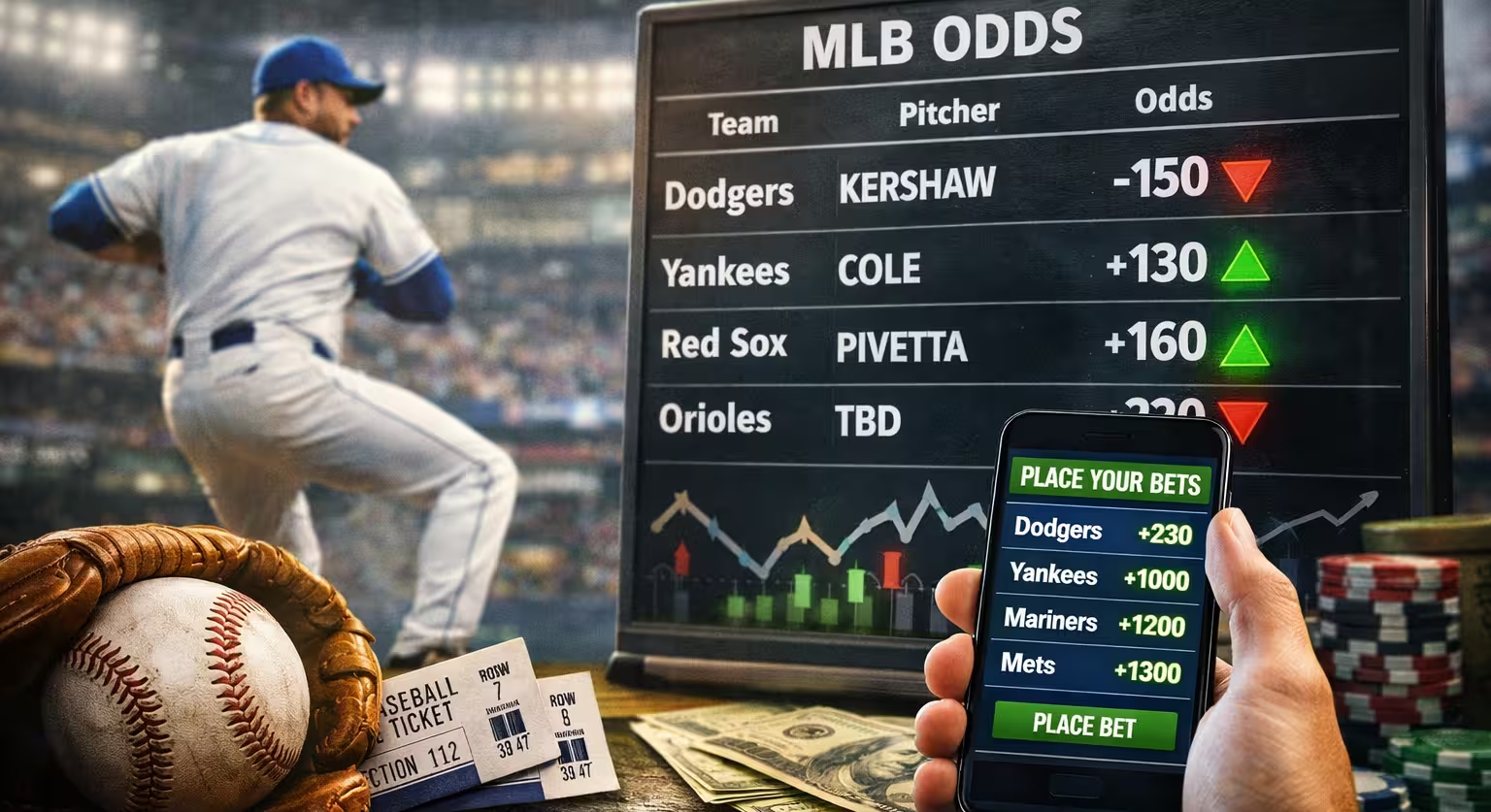
Ever wonder why an MLB game you’re looking to bet on suddenly jumped in pricing? A number of factors can contribute to changing MLB odds, but perhaps the biggest reason for line movement is who is on the mound.
That’s right, the starting pitcher can change everything. Whether it’s a starter being pulled, or a probable pitcher status going from “TBD” to an official name, the guy hurling the ball controls how we view MLB games, as well as how they’re priced.
Whoever toes the rubber sets up the entire matchup, and depending on how good they are, they can play a hand in the opposing team’s strategy – as well as all of the pricing for a given game.
The best part? Once you begin to understand how MLB betting sites price them you can consistently get ahead of line movement instead of merely reacting to it.
Why Starting Pitchers Are the #1 Driver of MLB Odds
Baseball is pretty unique compared to most other sports, as one guy can completely swing the outcome of a team game. You still get this in some regard with important positions in sports like hockey or football, while individual sports (tennis and golf) obviously can be impacted.
But as far as team sports go, nobody can dictate pricing or impact the outcome quite like a starting pitcher.
Just look at what MLB pitchers dictate:
- Every pitch
- Every at-bat outcome
- The pace and flow of the game
- How long the bullpen stays out of the game
- Batters being utilized in lineups
Naturally, that level of control and impact means online sportsbooks are forced to predicate their pricing on who the starting pitcher is.
Ever wonder why DraftKings and other big betting sites list the probable starting pitcher with the team odds? That’s why!
A dominant ace is typically a very good bet to stay in front of even the best of offense, while a middling arm could get chewed up and spit out in less than one full inning.
Suffice to say, if you’re not on top of your game in terms of knowing the ins and outs of every top arm in baseball, you’re doing yourself a great disservice.
How Sportsbooks Set MLB Lines Using Starting Pitchers
Let’s be clear: the starting MLB pitcher only plays a part in how odds are set. But it’s a substantial decision-maker for sportsbooks, seeing as that one guy has a hand in so much that can go right – or wrong.
Before you can prepare for pricing based on this idea, it’s helpful to understand how and why the books get to their decision.
The Opening Line Begins with the Pricing Matchup
The oddsmakers start things off with a baseline projection that considers both starting pitchers, the projected innings for both arms, and the expected runs allowed for each side.
Everything else comes after that is established. There is a lot more to be included and considered, but the basic framework starts the same for every matchup.
Advanced Metrics Matter More Than You Think
The top sportsbooks in the world don’t rely on surface data to maintain their edge. Sharp bettors don’t, either. If you’re still just looking at game logs or ranking pitchers on wins and losses, for instance, you may want to rethink your strategy.
Moreover, it’s important to dig deeper and find data that really explains why a pitcher is performing above or below expectations. And then there’s data going into each specific matchup, whether it be tied just to the pitcher or the opposition.
Here’s the stuff online bookmakers look at (that you should be analyzing, too):
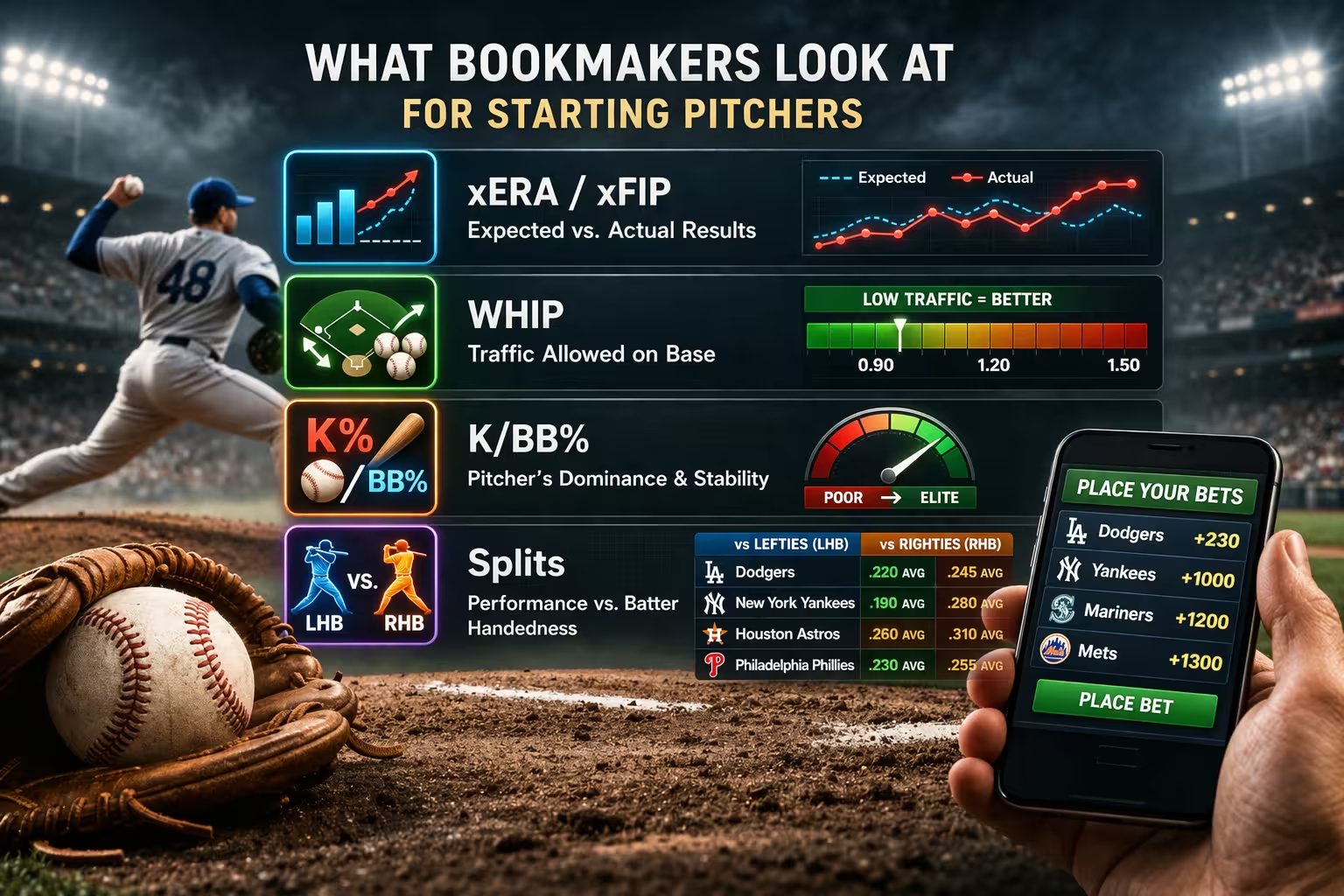
Surely there are even more advanced baseball betting metrics to dive into, but the point isn’t to give you a laundry list of research areas. It’s to show you that sportsbooks aren’t judging pitchers based on whether they have a good record or posted a good ERA.
Why? Because those stats are noisy and lack context.
The edge, whether it be for the bookmaker or you, lies in uncovering the true data that explains and even predicts pitcher performance.
How Much Can a Starting Pitcher Move MLB Lines?
Almost as important as establishing that MLB pitchers can dictate pricing – and that they are also responsible for having odds altered – is realizing just how much this matters.
The movement isn’t always massive, as certain situations should be handled differently. But you can approach it with this loose framework in mind:
| What Happens | Price Change |
|---|---|
Small gap between pitchers | Small |
Mid-tier vs. Strong pitcher | Medium |
Ace vs. replacement-level starter | Large |
Late scratch or unexpected change | Large |
The first two instances can see a -110 favorite move to -105 or -115, depending on what’s happening and who is involved. Bigger situations create more chaos, however, with lines flipping completely, turning a -110 favorite into a +110 dog.
There’s simply nothing else in baseball that can fluctuate the market like that, and in turn completely change the way the public wants to bet.
What Happens When a Starting Pitcher Changes?
Things tend to really get interesting when a starting pitcher is pulled or officially announced for the first time. For either situation, the actual approach by the sportsbooks tends to be similar, and there’s an edge you can tap into.
Here’s what happens when a pitcher is scratched:
- The book pulls the line instantly
- The matchup is reassessed
- A brand new price is posted
Ever wonder why “listed pitcher” bets are posted? Because this type of thing happens all the time. Injuries pop up, players get sick – the list goes on. But sometimes the guy we thought was going to start doesn’t, and we understandably want some protection from that burning us.
The good thing is we can react to that change and use it to our advantage, just the same. If you can target listed pitcher bets, definitely try to do that where and when you’re able. But if you can’t, you can simply hop on fresh lines if you already know the pitchers and matchup at hand.
How Pitchers Impact Each Betting Market
Who the starting pitcher is for a game doesn’t just impact the winner. It impacts the game total, the run line, and various prop bets.
Win probability is the thing this change tends to impact the most, but there are several bets you’ll want to jump on if you feel the change is advantageous.
- Moneyline – This is where starting pitchers matter the most. Their talent level, how deep they can go into the game, and how they fare in a given matchup can have major influence on the winner of a given contest.
- Run Line – Good pitchers can positively influence blowout risk and can play a hand in limiting runs late, assuming they can pitch deep into a game.
- Total – Good pitchers will typically limit opposing scoring and help lower the total. Bad pitchers will get targeted early and chased from the game, which can lead to even more runs if a team’s bullpen is weak.
- Props – When a good pitcher is on the mound, the opposing bats are poor bets to hit Overs, and vice versa. Pitcher data can mesh with splits, weather, and park factors to clue bettors into probability for home runs, strikeouts, and other MLB prop bets.
Real Examples of Pitcher-Driven Line Movement
Most of this should make sense, but sometimes it helps to have a clear example of a real-world situation. Want to know exactly what types of situations to be aware of and how you should react? Consider the following:
Example 1: Ace vs. Replacement Pitcher
Say a team opens as a -150 favorite with their ace (top pitcher) starting. Suddenly, he’s scratched, the odds adjust, and now they’re -110 favorites or worse, now they’re the underdog.
That is a significant swing from the status of just one guy. You can exploit this one of two ways:
- Your research tells you the replacement isn’t a steep downgrade, and you can still back the original favorite.
- The replacement pitcher is significantly worse, and you can now bet on the opposing favorite or target their team’s prop Overs.
Example 2: Public vs. Sharp Reaction
For this example, let’s pretend the betting public backs a star pitcher that happens to have a very low ERA. The sharps end up fading him due to poor underlying metrics, but the line ends up moving against the popular side.
In this case, a sound understanding of advanced baseball betting metrics can give you a big leg up when the books adjust pricing.
Example 3: Weather + Pitcher Combo
It’s always important to consider the weather when betting on baseball. For this example, let’s combine the idea of a groundball pitcher operating with the wind blowing in at Wrigley Field.
A baseball stadium like Wrigley is a hitter’s haven when it’s warm, and the wind blows out violently. But when it’s colder and/or the wind blows in? It’s a pitcher’s dream.
Add a groundball expert to the mix, and you’re looking at a steep decline in total. That can happen if the original pitcher was a fly ball pitcher, or it wasn’t yet known that the wind would be blowing in.
The line movement could look like this: a 9.5 total drops to 7 flat.
How Sharp Bettors Exploit Pitcher-Based Line Movement
Okay, now that we know how and why lines can move based on who is pitching, let’s look at some ways you – the bettor – can actually use this exact situation to your advantage.
It won’t always be the same type of pitcher, and circumstances can be different depending on so many factors, so here are a few things to keep in mind:
- Bet early before lines adjust – If you know the probable pitchers before the books can adjust, you can obtain soft numbers early.
- Fade mispriced pitchers – Eye pitchers with ERA that outperforms xERA, note unsustainable strand rates, and consider strikeout rates, barrel rates, WHIP, and more to discover pitchers (and teams) that aren’t properly priced.
- Attack first 5 innings bets – Isolate the starting pitcher alone to really maximize the data invested into your approach. Don’t let a bad bullpen or weak offense ruin your hard work.
Common Mistakes Bettors Make with Pitchers
Sometimes it’s not enough to know a lot about a specific strategy or to do all the research you can stomach. Often, it’s just knowing what to avoid doing.
Here’s a quick look at some key mistakes and traps when considering the impact of starting pitching:
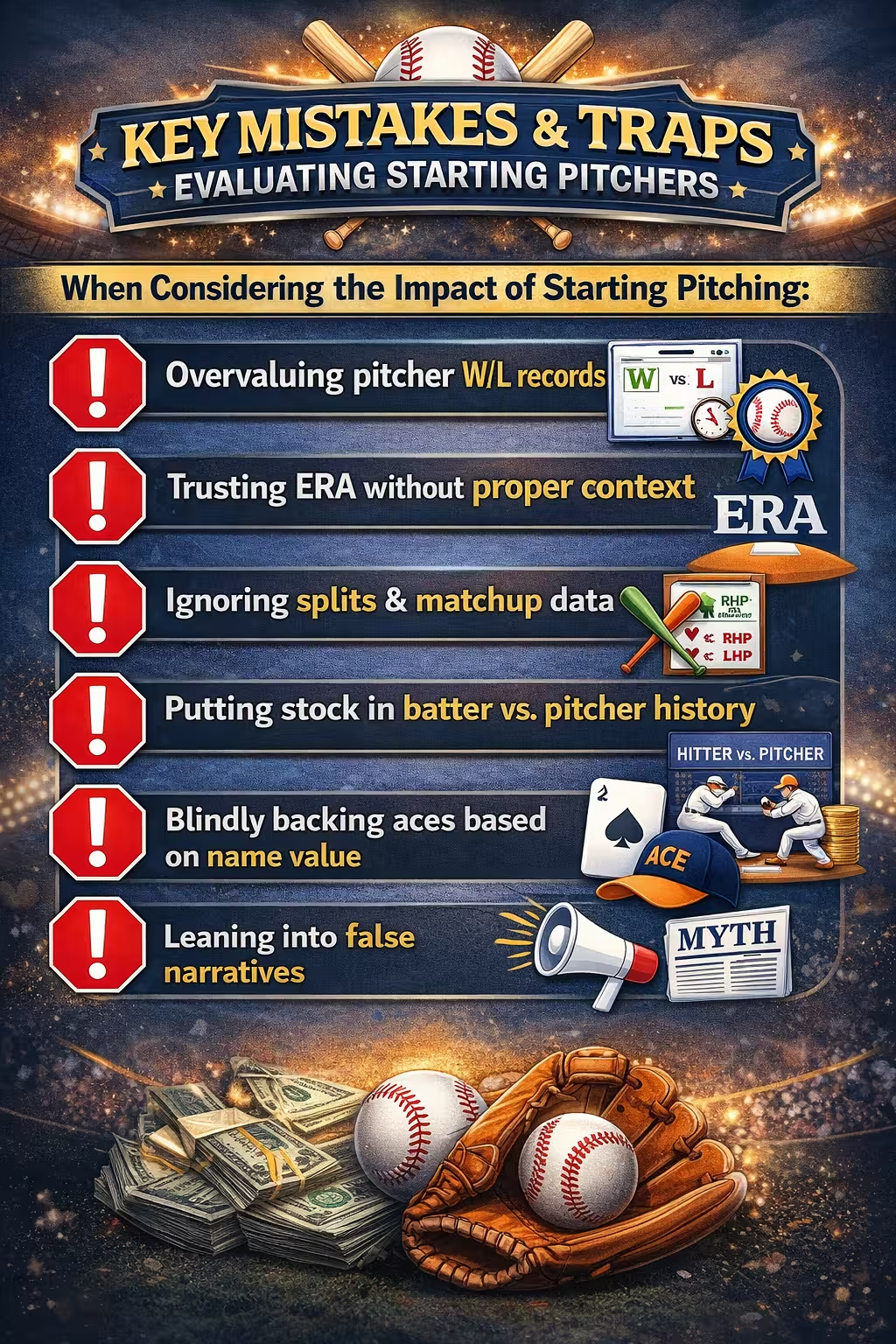
You can apply some of this to all sports betting genres. Even the best of sports bettors can fall into traps like narratives (he’s due, I tell ya!), whole noisy stats like wins, ERA, and batter vs. pitcher history can be frustrating because they tell us something, but they don’t tell us everything.
The biggest problem with most of the above traps and mistakes is time and effort. If you actually make the time to research the players, the data, and the situations they’re finding themselves in, you will organically dig deeper than surface-level data.
If the numbers feel too easy or the solution seems too obvious, they probably are. Make sure you never rely on any singular metric to formulate a stance or bet, either. Combine all of the meaningful data you can to come to the best decision – and best bet – you can possibly make.
Remember, Pitchers Are the Market in MLB Betting
That’s a lot to digest, but it’s important to remember that realizing how big of an impact starting pitchers have on baseball odds is only the beginning.
From here, you’ll want to familiarize yourself with the hard-hitting data that actually matters. Then apply that to every single matchup you plan on betting on. And within that framework, you can start identifying truly advantageous bets that are actually worth targeting.
When it comes to sports betting, it can be more than just entertainment. You have to treat it as such first, however. That involves truly caring about the money you’re risking, what goes into the odds you’re wagering on, and where the best path is to an edge.
Starting pitchers don’t just influence MLB betting lines. They define them, and everything else tends to come after. The sooner bettors can see that and tap into the upside baked into the process, the more they can profit from those last-second changes.