Casinos Inside Stadiums: The Future or the Final Nail in Sports’ Coffin?
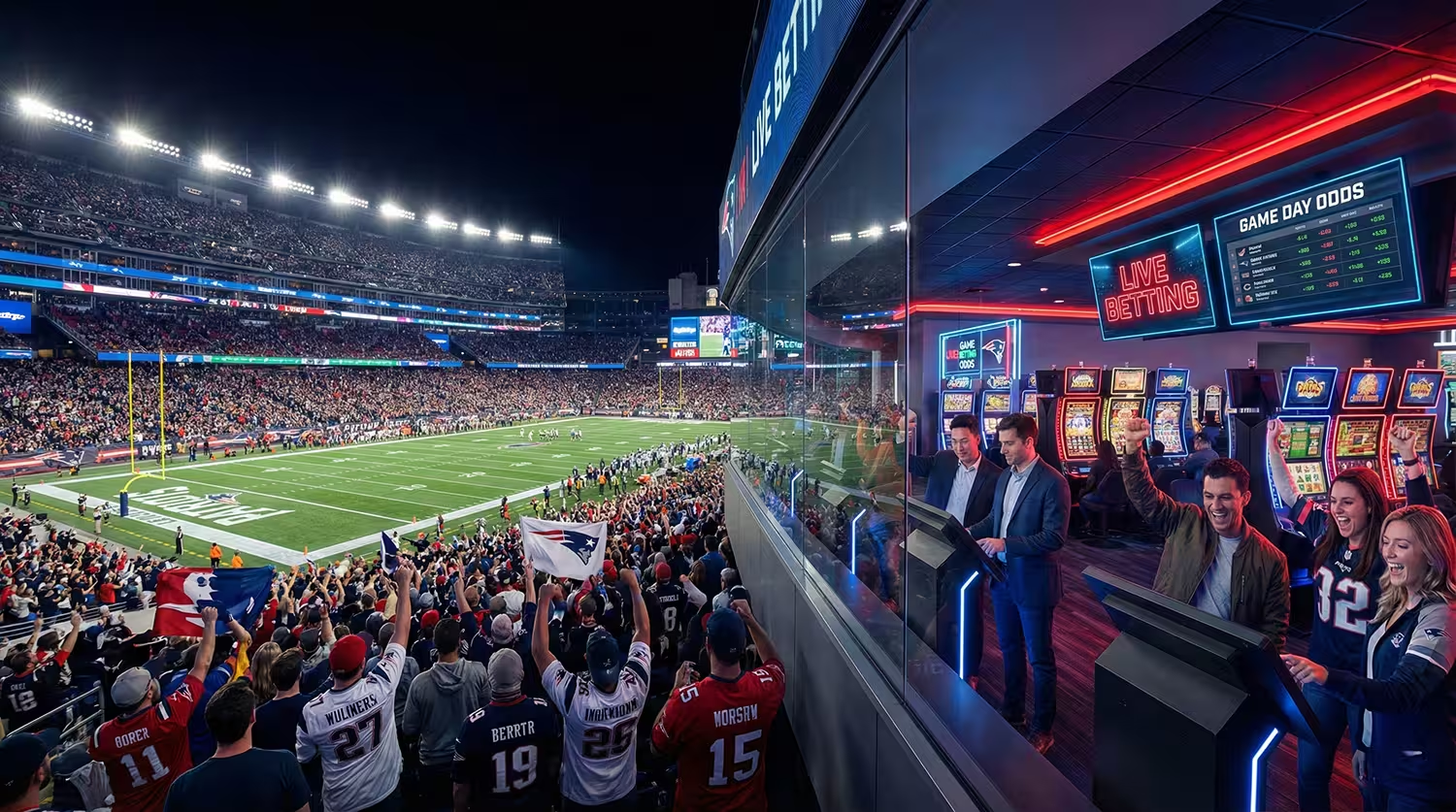
What happens when your favorite stadium starts to look less like a sports arena and more like a casino? Fans used to show up for kickoff, cold beer, and the roar of the crowd. Now they’re walking into sportsbooks, betting lounges, and touchscreen kiosks ready to take wagers before the anthem even ends.
Some people see this as the evolution of sports — a new era where fans are more connected, more entertained, and more involved than ever. Others see it as a warning sign that the soul of sports is slipping away one wager at a time.
And honestly? Both sides have a point.
The money flowing through stadium gambling is enormous. The technology is addictive. The fan experience is changing faster than most people realize. And the biggest question hanging over all of it is simple: Are in-stadium casinos the future of sports… or the spark that eventually cracks the whole system?
In this deep dive, we’re taking you inside that tension — how this trend exploded, who’s pushing it forward, what fans really think, and the hidden risks no one in the industry wants to talk about yet.
Because make no mistake: the stakes have never been higher.
How We Got Here: The Rise of Stadium Gambling
Stadium gambling didn’t appear out of nowhere. It’s the result of a perfect storm — legal changes, financial pressure, shifting fan habits, and sportsbooks looking for new ways to stand out in a crowded market. What once seemed unthinkable is now happening fast, and the speed of this shift has left leagues, fans, and even players trying to catch up.
The Legal Shift That Opened the Floodgates
When PASPA was overturned in 2018, it didn’t just “allow” sports betting — it unleashed an entirely new economy around it. Suddenly, teams and leagues weren’t just comfortable embracing sportsbooks… they were competing for partnerships.
What changed almost overnight:
- Betting ads became as common as beer ads
- Teams added “Official Sportsbook Partners”
- Stadiums built lounges for on-site wagering
- Operators realized physical presence drives loyalty and volume
This legal pivot laid the foundation for full in-stadium casinos to become a logical next step.
The First Movers: Stadiums Already Doing It
A small group of franchises tested the waters, and the response was too strong to ignore. Capital One Arena proved fans would bet a lot if given the chance. Wrigley Field pushed the concept even further with a massive DraftKings facility. In Arizona, BetMGM kiosks became part of the game-day flow.
Each example sent a message: fans aren’t just open to in-stadium gambling — they’re embracing it.
Why Stadiums Want This So Badly
For teams, this isn’t about gambling—it’s about securing a future-proof revenue model. Betting lounges bring in new income without disrupting ticket sales, and operators are more than willing to pay big to get inside the building.
Stadiums want to evolve into full entertainment districts… and integrating gambling is a major piece of that evolution.
Fans Love It… Right? The Real Reaction Inside Stadiums
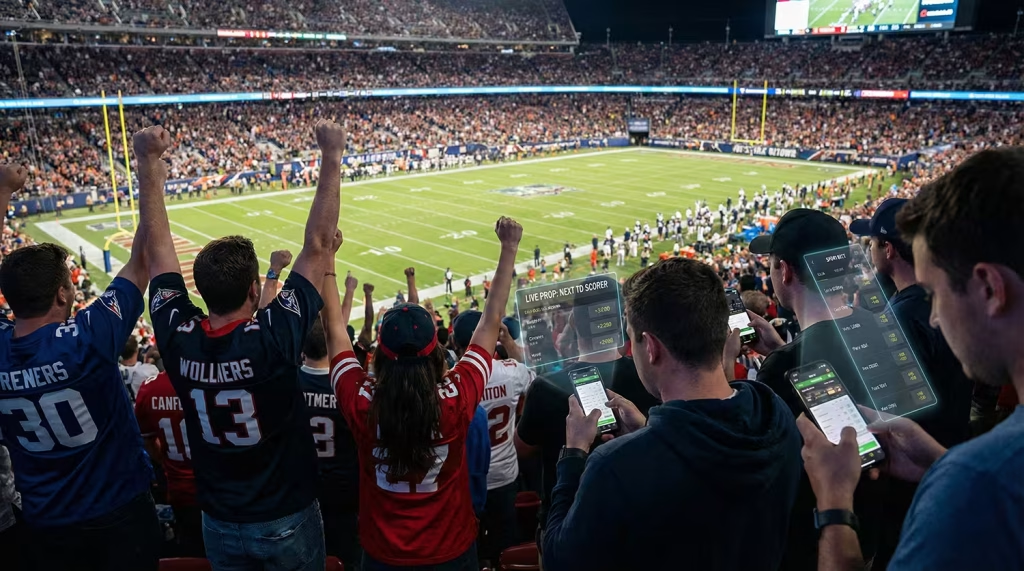
For teams and sportsbooks, in-stadium gambling looks like a win. But for fans, it’s far more complicated. The excitement is real — live betting adds a new layer of energy inside the arena — but so are the concerns about how it’s changing the live sports experience. What once felt like a communal event is slowly becoming a personalized, bet-driven experience where fans watch the same play for completely different reasons.
The Convenience Is Irresistible
Being able to bet without leaving your seat has reshaped the game-day routine. Fans can jump on:
- Next-drive bets in the NFL
- Pitch-by-pitch props in MLB
- Timeout wagers during NBA runs
- Live player props that update every few seconds
It’s instant. It’s interactive. And it’s addictive in a way that old-school betting never was.
These options turn every moment into a potential “win,” even if your team is losing on the scoreboard.
But the Pushback Is Real
Not everyone is thrilled with this direction. Some fans feel like the stadium is drifting away from what made it special — community, tradition, and pure competition. Families, especially, worry that the environment now feels commercialized and overly adult.
The recurring complaints:
- “The game feels secondary now.”
- “Everything is about apps and odds.”
- “My kids are seeing betting ads nonstop.”
- “It feels like a casino with a field attached.”
This isn’t just nostalgia talking — it’s a growing divide in what different generations expect from live sports.
Surveys Show a Deep Divide
Younger fans (Gen Z and Millennials) overwhelmingly support in-stadium betting. They see it as part of the entertainment package. But older fans and families are far more cautious. Casual fans — those who watch for fun, not wagers — say the atmosphere is shifting too quickly toward gambling obsession.
The result: stadiums are becoming a cultural battleground between those excited about modern sports entertainment and those who fear the heart of the game is being replaced by betting slips.
Why Teams & Leagues Can’t Resist the Money
If you really want to understand why stadium casinos are exploding, follow the money. Teams aren’t adding sportsbooks inside their venues because fans demanded it — they’re doing it because the financial upside is enormous and almost entirely risk-free for the franchises themselves.
In a world where media rights are plateauing and attendance is inconsistent, gambling has become the shiny new revenue engine leagues can’t afford to ignore.
Where the Cash Actually Comes From
Stadium gambling creates income on multiple fronts, many of which didn’t even exist a few years ago. For teams, these partnerships operate like a financial cheat code: sportsbooks handle the operations, and franchises enjoy the benefits.
Teams profit from:
- Licensing deals to allow sportsbooks to operate inside the stadium
- Revenue-sharing agreements on bets or food/beverage tied to betting lounges
- Massive sponsorship packages from top operators
- Premium seat upgrades connected to luxury sportsbook areas
- Year-round traffic, especially during non-game days
This mix of revenue streams gives teams something they desperately need: predictable, recurring income that doesn’t depend on wins and losses.
Why Sportsbooks Want In
Sportsbooks aren’t building these lounges for the ambience — they’re fighting for market share. In a hyper-competitive industry, physical presence inside a stadium is branding gold. Being the sportsbook inside a major arena increases trust, fan familiarity, and volume faster than digital ads ever could.
The benefits for operators include:
- Greater customer acquisition
- Stronger brand loyalty
- Higher betting frequency on game days
- A psychological edge — fans bet more when surrounded by live action
If betting is an arms race, operators want the best real estate possible. Stadiums deliver exactly that.
The Bigger Vision: Stadiums as Entertainment Districts
Teams are no longer thinking about stadiums as places where games happen. They’re thinking of them as multi-purpose entertainment hubs designed to generate revenue 24/7. Gambling is just one piece of a much bigger plan.
The long-term strategy includes:
- Casinos or casino-style gaming floors
- High-end restaurants and rooftop bars
- Esports lounges and VR experiences
- Year-round concert and event spaces
- Shopping zones tied to team brands
This shift turns a stadium from a “10 home games per year” investment into a year-round destination. Gambling is the spark that makes the economics work.
The Dark Side: Integrity, Addiction & Conflicts of Interest

For all the excitement around in-stadium gambling, there’s a growing undercurrent of concern — and it’s getting harder for leagues to ignore. More access creates more engagement, but it also introduces more risk. In some ways, the industry is racing ahead faster than regulators, players, and even fans can process. The result is a landscape full of opportunity… and full of potential cracks in the foundation of sports.
Integrity Red Flags Are Growing
Sports have always revolved around trust — trust that the game is fair, the effort is real, and the outcome is authentic. In-stadium gambling adds pressure points that leagues were never designed to handle.
The biggest concerns:
- Micro-betting volatility: When fans can wager on individual moments, suspicious betting spikes become harder to detect.
- Player vulnerability: Fringe players with low pay and high pressure are ideal targets for manipulation.
- Emotional pressure: Athletes know that thousands of fans inside the building have money riding on every move they make.
- Recent scandals: Multiple leagues have already suspended players for gambling-related violations, proving the threat isn’t hypothetical.
The more betting moves inside stadium walls, the more leagues must walk a razor-thin line between entertainment and integrity.
Gambling Harm Concerns Are Hard to Ignore
Stadiums aren’t casinos hidden off a highway — they’re filled with families, teens, and kids experiencing the sport for the first time. Embedding gambling directly into that environment normalizes it in ways that online ads never could.
What critics fear most:
- Children being exposed to constant betting prompts
- Casual fans feeling pressured to participate
- Gambling addiction rates rising among die-hard supporters
- Stadiums becoming high-risk environments for impulsive behavior
For many fans, sports are supposed to be an escape from life’s stress — not a gateway into financial danger.
The Optics Problem for Leagues
Even if integrity remains intact, the perception of integrity matters just as much. Fans watch how leagues respond to scandals, how aggressively they market betting, and how closely teams align with sportsbook partners. When every commercial break, scoreboard animation, and jersey patch feels tied to gambling, fans start to wonder:
“Are leagues protecting competition… or protecting revenue?”
That question alone can erode trust.
The conflict of interest is obvious:
Leagues want clean competition, but they also benefit financially when betting volume increases. If a suspicious outcome triggers fan outrage, it doesn’t matter whether anything illegal happened — the credibility hit is already done.
Are We Losing the Heart of Live Sports?
As stadiums evolve into betting hubs, a deeper question hangs in the air — one that goes beyond revenue, technology, and convenience. What happens to the soul of sports when the primary focus shifts from team loyalty to betting outcomes?
Fans can feel the atmosphere changing. The cheers sound different. The tension feels different. And for many, the emotional connection that once defined live sports is starting to blur.
The Atmosphere Is Changing
There was a time when 40,000 people rose to their feet because their team needed a big play. Now, in some stadiums, those reactions are split. One group wants a touchdown. Another needs a field goal. Others are cheering for an incomplete pass because they bet the under.
The unified roar that once made stadiums magical is slowly fracturing into a dozen competing agendas.
The Rise of the Betting-First Fan
A new type of fan is emerging — one who attends games not for the team, the atmosphere, or the tradition, but for the live betting action. They’re tracking props, monitoring apps, and making rapid-fire wagers between plays.
Common behaviors inside modern stadiums:
- Fans staring at odds instead of watching the game
- Groups celebrating individual stats instead of team success
- Emotional swings tied to micro-outcomes, not the scoreboard
- Loud reactions to plays that confuse traditional fans
This isn’t necessarily “bad,” but it’s undeniably different — and it’s transforming what it means to be part of a crowd.
What Purists Fear Most
Long-time fans see a slippery slope forming. If the culture inside stadiums keeps shifting toward betting-first engagement, the essence of live sports may begin to fade.
Their biggest fears:
- Kids growing up seeing sports as a betting product, not a competition
- Leagues adjusting rules or pacing to increase betting engagement
- Moments of authentic, emotional fandom being replaced by wagering logic
- Tradition and nostalgia taking a backseat to commercial interest
Sports have always been about connection, community, and shared experience. Purists aren’t worried about technology — they’re worried about losing the moments that make being a fan deeply human.
And whether fans agree or disagree, the question is real: If betting becomes the heartbeat of stadium culture, what happens to everything that made fans fall in love with sports in the first place?
The Future Scenario: Stadiums as Hybrid Casinos
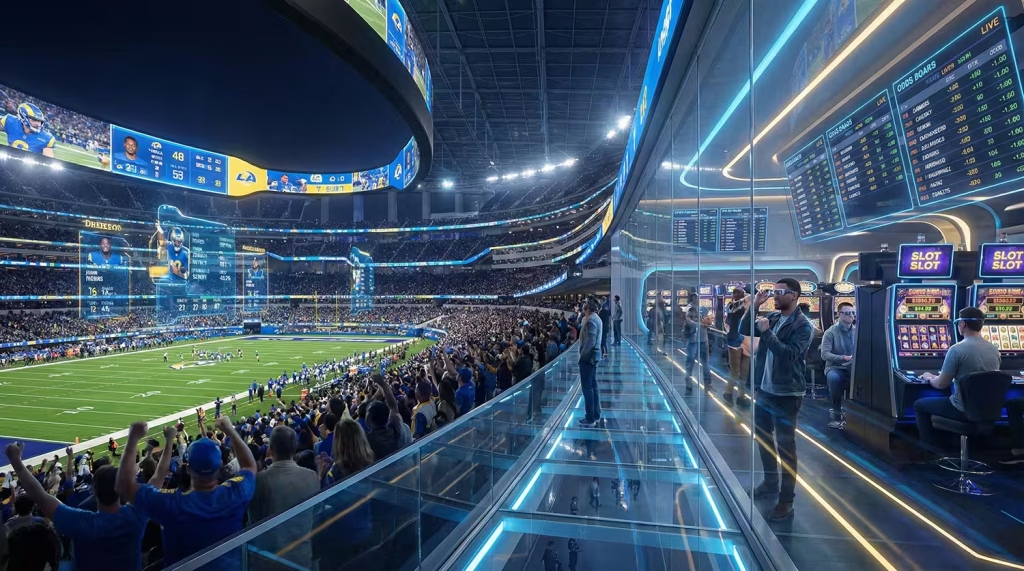
As sports betting becomes woven into the fabric of game-day culture, stadiums are quietly transforming into something entirely new. Not just venues. Not just entertainment hubs. But full-scale hybrid casinos built around live sports.
Some fans see this as an upgrade — a modern, high-tech evolution. Others see it as the moment sports drifts too far from its roots. The truth is: both futures are possible, and the path we choose today determines which one becomes reality.
The Optimistic Path: A Fan Experience Upgrade
For leagues and operators, the upside is enormous. Imagine walking into a stadium where every seat feels personalized, every moment has added depth, and technology enhances the game rather than distracts from it.
What the “future-forward” stadium could offer:
- AR betting overlays showing live odds through your phone or glasses
- Hyper-personalized offers based on your favorite teams or players
- Betting lounges that feel like luxury sports bars
- Interactive screens that let fans predict plays in real time
- Premium sections tied to exclusive betting promotions
- Faster, smarter concessions that integrate spending rewards with betting bonuses
This vision blends entertainment, technology, hospitality, and wagering into a seamless experience. To many fans — especially younger ones — this isn’t a threat. It’s an upgrade.
The Pessimistic Path: A Slow Decline
But the same transformation could go in the opposite direction — and fast. More access means more risk, more temptation, and more opportunities for the experience to shift away from sports entirely.
The worst-case version looks like:
- Stadiums that feel like casinos with fields attached
- Fans caring more about parlays than the actual game
- Frequent integrity controversies due to micro-betting
- Players facing harassment tied to betting outcomes
- Families and casual fans slowly disappearing
- A cultural divide between “betting fans” and everyone else
In this scenario, sports become secondary to the betting economy. The traditions, emotions, and shared moments that built generations of fans get overshadowed by wagering incentives and commercial pressure.
Which Way Are We Heading?
Leagues say they want balance. They talk about responsibility, integrity, and protecting fans. But the decisions being made behind the scenes — deeper partnerships, expanded betting menus, more in-stadium activations — point strongly in one direction: more gambling, not less.
The critical question isn’t whether stadium casinos will exist. They’re already here. The real question is how far leagues are willing to go before the costs outweigh the revenue.
What This Means for Bettors Right Now
As stadiums evolve into full betting environments, the game-day experience is changing most dramatically for one group: the bettors themselves. Whether you’re a casual fan tossing a few bucks on a prop or a seasoned bettor tracking every line movement, in-stadium gambling changes how you prepare, how you wager, and how you manage risk. The opportunities are bigger — but so are the temptations.
How In-Stadium Casinos Change the Betting Experience
Live sports already create emotional swings. Add gambling to that environment and the intensity multiplies. Odds move faster. Bets feel more urgent. And the social pressure around betting becomes impossible to ignore.
Here’s what bettors can expect going forward:
- More exclusive odds available only within the stadium
- Faster access to live bets as operators push micro-markets
- Higher frequency of impulse wagers, driven by the crowd and atmosphere
- Better promotions as sportsbooks fight for in-stadium dominance
- More creative bet types, especially player props and next-play predictions
- Targeted offers via geolocation, hitting your phone the moment you walk in
- Increased betting volume overall, simply because it’s so accessible
Stadium operators know the formula: excitement + convenience = more wagers. That’s why the environment is built to keep bets flowing all game long.
The Risk: Emotional Betting in a High-Energy Environment
Even smart bettors can get caught up in the moment. A loud stadium, a big crowd reaction, and the rush of live betting can trick you into thinking you’re seeing “momentum” that isn’t there. No environment increases the temptation to chase losses more than a stadium where thousands of fans are all betting at once.
Common emotional traps:
- Revenge bets after a bad beat
- Overconfidence after one win hits
- Pressure to keep up with the betting behavior of friends
- FOMO when odds shift and everyone reacts
- Chasing losses, believing the environment will “turn things around”
Recognizing these impulses is crucial for responsible betting.
Smart Ways to Stay in Control
If you want to enjoy in-stadium betting without letting it take over your night, a little structure goes a long way.
Practical tips:
- Set your unit limit before entering the stadium
- Decide your max loss and do not exceed it
- Avoid betting during emotional spikes — touchdowns, buzzer-beaters, bad beats
- Use fewer props and stick to bets with logic behind them
- Track your bets so you know where your money is going
- Take breaks from the sportsbook lounges and kiosks
- Treat betting as part of the entertainment — not the purpose of the event
In-stadium gambling can be fun, immersive, and even profitable. But the bettors who survive the long run are the ones who stay disciplined when the environment pushes them not to.
A New Era or the Beginning of the End?
Stadium casinos represent one of the biggest shifts in sports culture we’ve ever seen. On one hand, they offer innovation, excitement, and a modernized fan experience that aligns with where entertainment is heading. On the other, they raise real questions about integrity, addiction, and whether the emotional core of sports can survive when everything becomes a betting opportunity.
This isn’t a small change. It’s a fundamental rewriting of what it means to attend a game. For teams and operators, the revenue upside is enormous. For fans, the experience becomes more immersive and more intense. But with that intensity comes risk — not just financial, but cultural.
The future of stadium gambling will come down to balance. If leagues can innovate responsibly, protect fans, and preserve the heart of competition, stadium casinos could become a powerful part of the sports ecosystem. If not, the industry may find itself chasing revenue at the cost of credibility.
Because once the crowd stops cheering for the team and starts cheering only for their bets… the entire meaning of sports changes.
And that’s a gamble no league can afford to lose.