The “CEO” Bet: How to Make Money on Corporate Drama (Without Buying Stocks)
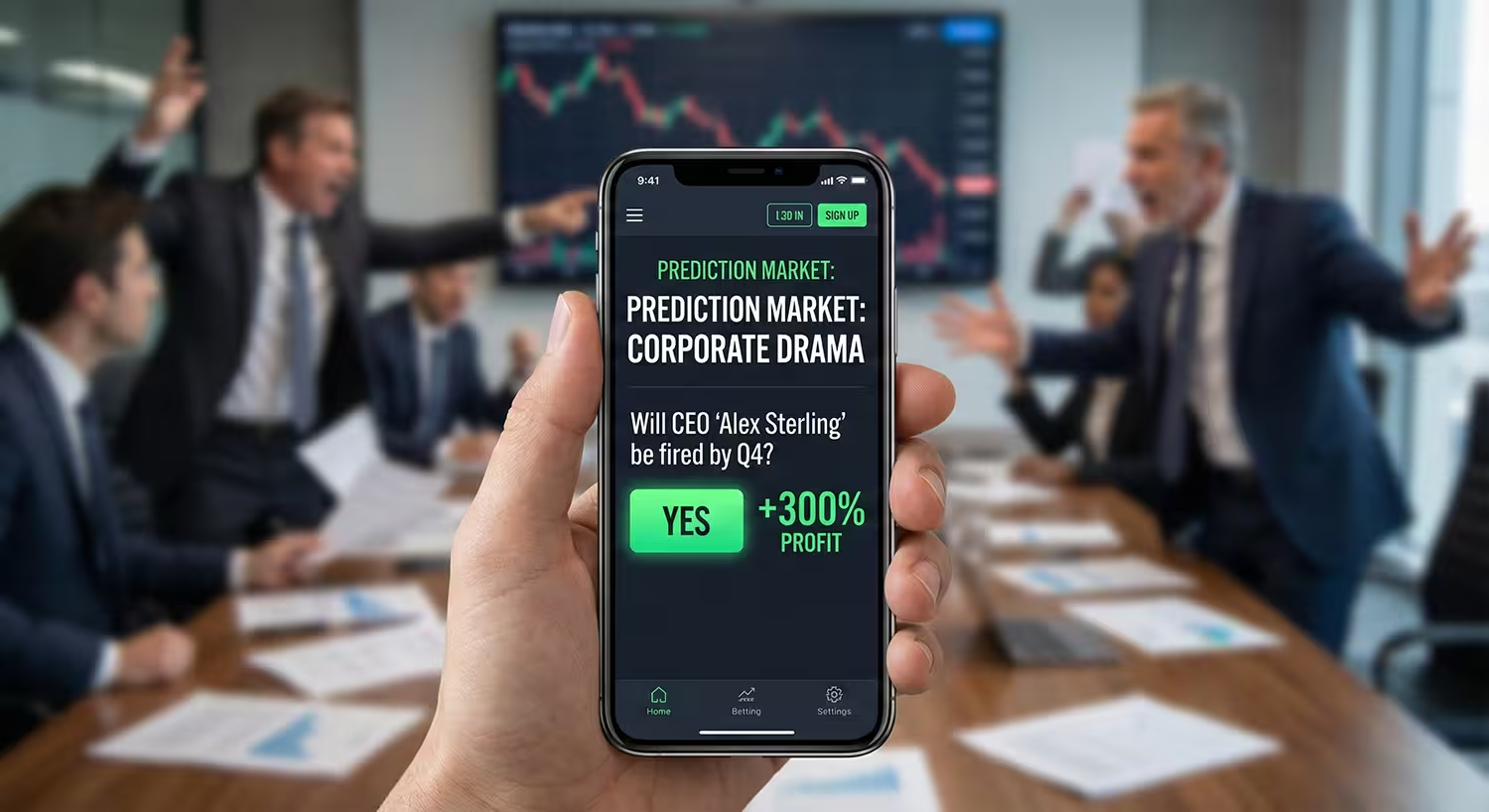
A CEO gets fired.
The headline breaks. The stock dips 2%. Maybe 3% if the press conference feels tense enough. CNBC debates “leadership uncertainty.” Twitter explodes with hot takes. Retail traders feel smart for seeing it coming—right up until they realize the trade barely paid for lunch.
That’s how this usually goes.
But somewhere else, a different kind of trader just locked in a 300% return on the exact same news. Not days later. Not after the earnings call. Before the story hit the New York Times.
They didn’t short the stock. They didn’t buy put options. They didn’t even log into a brokerage account.
They answered one question. Yes or No.
While most people were arguing about what the firing meant for the company, this trader was betting on whether it would happen at all. No balance sheets. No forecasts. No guessing how the market might react. Just outcome.
Welcome to the world of corporate event contracts—where internal drama pays better than revenue growth, rumors move faster than algorithms, and the real edge lives before the press release.
Once you understand how this market works, it becomes hard to look at corporate news the same way again.
Why Stocks Are Too Slow for Corporate Drama

Stocks are built to absorb facts. Corporate drama lives in anticipation.
That mismatch is exactly why trading leadership chaos through equities is such a blunt—and often frustrating—tool. By the time a CEO firing becomes official, the market has usually done most of its work behind the scenes.
The Market Moves Before the Headline
When people say, “It was priced in,” this is what they mean in practice:
- Algorithms scrape filings, sentiment, and unusual trading activity in real time
- Institutional desks react to whispers long before confirmation
- Options markets quietly reprice risk days—or weeks—ahead of news
By the time a firing hits your news feed, you’re not early. You’re reacting to something machines and professionals already adjusted for.
That’s not a skill issue. It’s a structure problem.
Stocks Mix Too Many Signals at Once
Even when you’re right about the event, stocks force you to be right about everything else too.
A CEO gets fired—but:
- Earnings beat expectations
- A strategic pivot gets announced
- The board signals “continuity” instead of disruption
Suddenly, the stock goes up.
You identified the correct outcome and still lost money because the market decided to care about a different variable that day. Stocks don’t reward precision. They reward alignment with the dominant narrative.
Why Event Contracts Are Faster (and Cleaner)
Prediction markets flip this dynamic entirely.
Instead of betting on how investors might react, you’re betting on whether something will happen. That’s it.
What event contracts strip away:
- Market sentiment
- Macro noise
- Earnings timing
- Analyst spin
What remains is a single question with a deadline.
Did it happen or not?
That simplicity is powerful. Corporate drama doesn’t unfold on earnings schedules—it unfolds through leaks, internal pressure, and reputational cracks. Event contracts move with those signals instantly, while stocks wait for permission.
That’s why, when it comes to leadership chaos, equities are often the slowest way to trade the fastest information.
The “CEO” Market: How These Bets Actually Work
At first glance, prediction markets sound complicated. They aren’t.
In fact, once you understand the structure, they’re often simpler than stocks, options, or futures—because they force the question down to its most honest form.
These Aren’t Stocks — They’re Event Contracts
You’re not buying ownership. You’re not forecasting revenue. You’re not guessing how emotional investors might react.
You’re trading event contracts—sometimes called binary markets.
Each market revolves around one clearly defined question, such as:
- Will this CEO be fired by a certain date?
- Will this executive still hold the role after Q4?
- Will the board announce a leadership change before earnings?
There are only two possible outcomes: Yes or No.
That’s the entire market.
How Pricing and Payouts Actually Work
This is where most people have their “oh… that’s it?” moment.
- Contracts trade between $0.01 and $0.99
- The price represents implied probability
- $0.25 = 25% chance
- $0.70 = 70% chance
- If the event happens, the contract settles at $1.00
- If it doesn’t, it settles at $0.00
Your profit is simply the difference between what you paid and the final settlement.
Example:
- You buy “YES” at $0.40
- The CEO is removed before the deadline
- The contract settles at $1.00
- You make $0.60 per share — a 150% return
No leverage. No margin calls. No guessing how the market felt about the news.
Why These Markets Move So Violently
Here’s the part equity traders often underestimate.
Prediction markets don’t wait for confirmation. They move on:
- Leaks
- Body language
- Media tone
- Board silence
- Abrupt executive behavior changes
Every rumor slightly reprices probability. Every denial either calms the market—or makes it more suspicious.
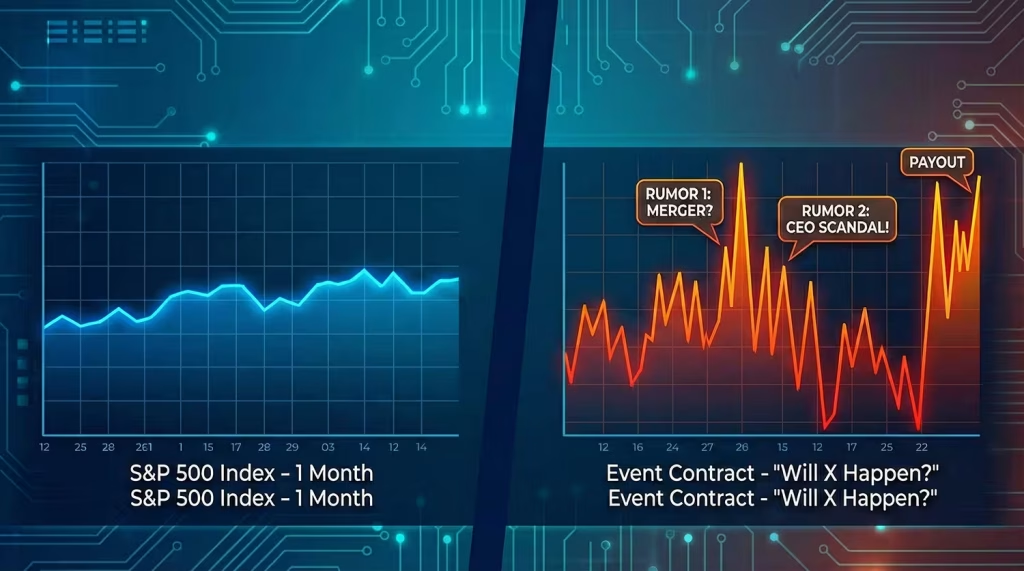
That’s why these charts often look nothing like stock charts:
- Long periods of calm
- Sudden, aggressive spikes
- Sharp reversals when narratives collapse
- Clean resolution when the event finally happens
Stocks tend to absorb drama slowly. Event contracts react to it instantly.
And when the outcome is binary, speed—not sophistication—is the edge.
Once you grasp that, you stop asking, “How will the stock react?” and start asking the far more profitable question: Is this actually going to happen?
Where the Real Edge Lives (This Is the Alpha)

Most traders assume these markets are hard to beat because they look unfamiliar. In reality, they’re often easier—not because the information is better, but because the competition is looking in the wrong place.
Prediction markets don’t reward better spreadsheets. They reward better judgment.
Why Wall Street Is Bad at This Game
Traditional analysts are trained to model outcomes, not people.
They excel at:
- Forecasting revenue
- Stress-testing balance sheets
- Valuing growth assumptions
They struggle with:
- Ego
- Power dynamics
- Internal politics
- Reputation collapse
Corporate drama doesn’t unfold in earnings calls. It unfolds in hallways, Slack messages, boardrooms, and carefully worded “interim” announcements.
That’s where the edge lives.
Information Asymmetry Without Illegal Information
This isn’t insider trading. It’s context trading.
The edge comes from observing signals that aren’t illegal—but are often ignored:
- Executives dodging direct questions instead of denying rumors
- Sudden leadership silence after months of visibility
- Multiple “temporary” roles stacking up at once
- Coordinated media leaks that feel too clean to be accidental
These signals don’t guarantee outcomes—but they shift probabilities. And in event markets, probability is the only thing that matters.
Sentiment Beats Math in Binary Markets
Unlike stocks, these markets don’t care about valuation models. They care about belief.
Belief moves when:
- Journalists change tone
- Employees start speaking anonymously
- Boards stop defending leadership
- Language shifts from “long-term vision” to “orderly transition”
If you’re good at reading people—spotting when confidence cracks, when narratives soften, when damage control replaces leadership—you have an edge most traders never develop.
This is why experienced bettors, political junkies, and sharp observers often outperform finance professionals in prediction markets.
They’re not smarter. They’re paying attention to the right signals. And in a market that settles on truth, not reaction, that’s real alpha.
Where to Place These Bets (Safe vs. Wild)
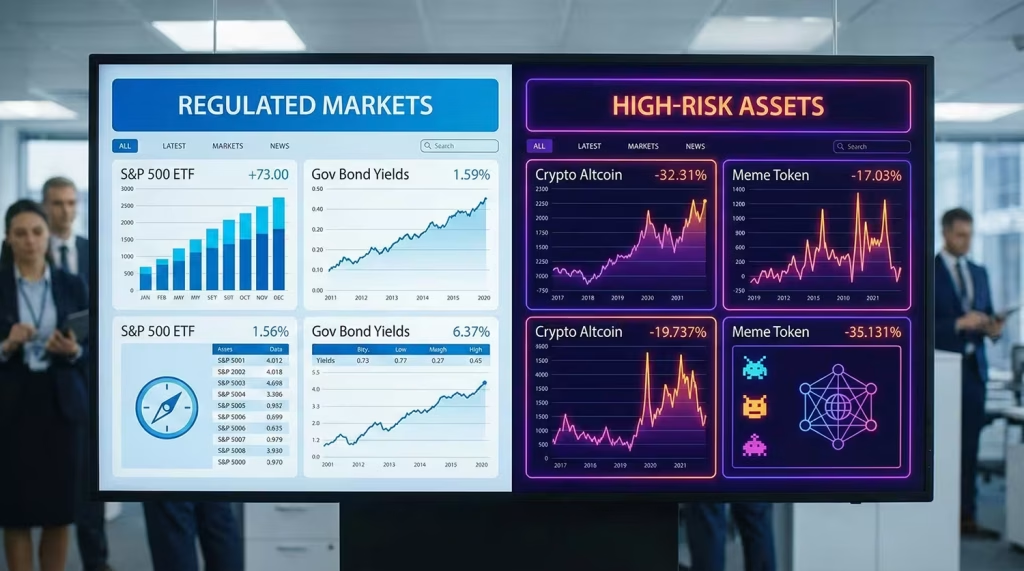
Not all prediction markets are created equal—and where you place these bets matters almost as much as what you’re betting on.
The biggest difference comes down to regulation, liquidity, and risk tolerance. Some platforms prioritize legality and structure. Others prioritize speed, volume, and early information. Knowing the difference keeps you from learning expensive lessons the hard way.
The “Safe” Route: Regulated and U.S.-Legal
If you want clean rules, clear resolution, and fewer surprises, start here.
- Kalshi: Kalshi is federally regulated by the CFTC, which already puts it in a different category than most platforms. Markets are clearly worded, resolution rules are public, and the user experience feels closer to a traditional exchange than a casino. Liquidity is improving quickly, especially around major political and corporate events.
- ForecastEx: ForecastEx operates through Interactive Brokers and attracts a more professional, risk-aware crowd. You won’t find wild mispricings here as often—but you also won’t deal with sudden market shutdowns or unclear settlement rules.
These platforms are ideal if you:
- Want legal clarity
- Prefer conservative position sizing
- Care more about consistency than moonshots
The “Wild” Side: Crypto and Offshore Markets
This is where things get faster—and riskier.
- Polymarket: Polymarket consistently has the deepest liquidity and fastest price movement. Markets often react to rumors in real time, sometimes before mainstream journalists acknowledge them. The tradeoff is complexity: crypto wallets, smart contracts, and regulatory uncertainty.
This is where:
- Prices move first
- Sharp money shows up early
- Mistakes get punished quickly
If you don’t understand crypto mechanics, this is not the place to “learn by doing.”
Traditional Sportsbooks (The Hybrid Option)
Some online sportsbooks have started offering:
- Corporate “specials”
- Political props
- Leadership outcome bets
These markets:
- Often have low limits
- Can be mispriced early
- Disappear quickly once attention spikes
Think of them as opportunistic side plays—not a core strategy.
A Simple Rule of Thumb
If you’re new:
- Start regulated
- Learn how resolution works
- Watch how prices react to news
If you’re experienced:
- Liquidity matters more than comfort
- Speed matters more than polish
- Risk management matters more than conviction
Prediction markets reward being early—but they punish being careless. Choosing the right venue keeps the edge working for you instead of against you.
The Warning: How People Get Burned

Prediction markets feel clean. Logical. Almost obvious once you understand them. That’s exactly why people get careless.
This isn’t a warning meant to scare you off—it’s meant to keep you from making the kinds of mistakes that quietly erase good edges.
The Three Most Common Ways Traders Lose
Most losses in event markets don’t come from bad reads. They come from bad assumptions.
1. Liquidity Isn’t Guaranteed
Unlike Apple stock, some markets are thin. That means:
- You may not be able to exit instantly
- You may have to accept a worse price than expected
- You may be forced to ride the contract to settlement
If you treat every position like it’s instantly tradable, you’ll eventually get stuck in one that isn’t.
2. Wording Decides Everything
Event markets don’t settle on intent. They settle on definitions.
Common traps:
- “Fired” vs. “resigned”
- “CEO” vs. “executive chairman”
- “Removed” vs. “placed on leave”
If the resolution criteria don’t match your assumption, being “basically right” still pays zero. Always read the fine print before sizing up.
3. You’re Playing Against Informed Participants
These markets attract:
- Journalists
- Policy professionals
- Corporate insiders who aren’t restricted from trading
When odds move suddenly without obvious news, it usually means someone closer to the situation just acted. That doesn’t mean you’re wrong—but it does mean the probability has shifted.
How to Protect Yourself Without Overthinking It
You don’t need complex risk models here. Just discipline.
- Keep position sizes small enough to hold to settlement
- Avoid markets with unclear or subjective resolution rules
- Respect sudden line movement instead of fighting it
The biggest mistake is assuming these markets are “easier” and letting your guard down. They’re simpler—but simplicity cuts both ways.
If you stay precise, patient, and humble about what you don’t know, prediction markets can be incredibly efficient. Ignore the structure, and they’ll teach you the lesson the expensive way. And in a market that settles in black and white, there are no consolation prizes for being close.
Corporate Drama Is an Asset Class Now
Corporate drama used to be something traders watched from the sidelines. A headline to react to. A narrative to argue about. An after-the-fact explanation for why a stock moved the way it did.
That era is over.
Prediction markets turn uncertainty into a price before the press release, before the analyst notes, and often before the official decision is made. They reward people who understand how organizations actually work—how pressure builds, how confidence cracks, and how boards move long before they speak.
This isn’t about being reckless or chasing rumors. It’s about recognizing that leadership instability is information—and information has value when you can trade it cleanly.
You don’t need insider access. You don’t need complex models.
You need attention, patience, and respect for probability.
The next time a CEO starts trending for the wrong reasons, don’t just scroll. Don’t just debate what it means for the stock. Check the odds.
If you want a deeper comparison of how prediction markets differ from traditional sportsbooks—so you know where the real opportunity lies—read our full guide on Prediction Markets vs. Sportsbooks. Because while most people are reacting to the news, a smaller group is already positioned for the outcome. And in markets like these, being early isn’t luck—it’s the entire edge.